Baroque 2.0: An AI Design Tool That Uses the Entire Internet as Its Reference
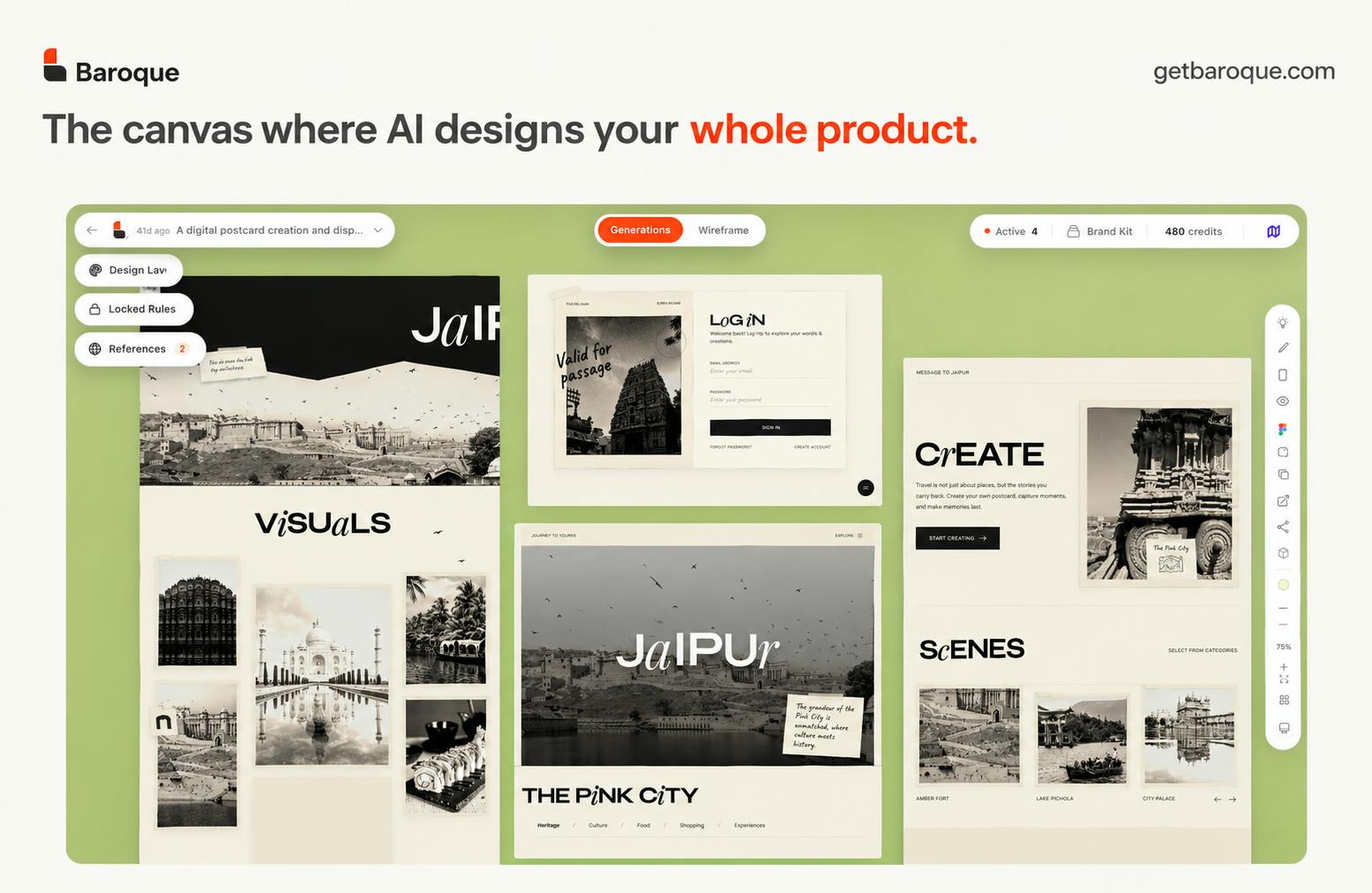
Baroque 2.0 uses real-time web crawling and design laws to generate polished, production-ready UI designs.
Baroque 2.0 is an AI tool at the intersection of design and development, differentiated by three features: a built-in web agent for real-time design reference crawling, hundreds of design laws enforcing a "Zero AI slop" quality standard, and dual export to production-ready React code and Figma files. Currently in early exposure on Product Hunt, it faces established competitors like Galileo, Uizard, and v0. Its logic is coherent, but real-world quality remains to be verified by professional users.
As AI-assisted design tools continue to multiply, the ability to generate interfaces that are both visually polished and production-ready has become the defining battleground. Baroque 2.0, which recently launched on Product Hunt, offers a notably ambitious answer to this challenge — treating the entire internet as a living design reference library.
What Is Baroque 2.0
Baroque 2.0 is an AI product positioned at the intersection of design tools and developer tools. Its core tagline is "AI design with the entire internet as reference." According to the official description, the tool can generate high-quality web and app interface designs faster than ever before.
Two key mechanisms are worth noting. First, it includes a built-in web agent that crawls the internet in real time to pull design references. Second, it relies on hundreds of design laws to maintain visual consistency across every screen. These two features address the two most failure-prone aspects of AI-generated design: the timeliness of inspiration sources, and visual coherence across multiple pages.
Real-Time References vs. Static Training Data
Most AI design tools rely on static data from training time, which means they tend to lag behind the latest design trends. Baroque 2.0's emphasis on real-time crawling theoretically allows it to generate results that more closely reflect what's actually trending on the internet right now. This is a key differentiator from comparable products.
A Complete Loop from Design to Code
Baroque 2.0 doesn't stop at producing mockups. It supports exporting results directly as production-ready React code, or to Figma for further editing. This means both designers and developers can integrate it into their existing workflows.
For development teams, receiving production-ready React code can significantly reduce the distance from prototype to implementation. For designers, the ability to export to Figma preserves room for fine-tuning. This dual-output capability — design and code — is precisely why the product is categorized under both Design Tools and Developer Tools.
The "Zero AI Slop" Promise
The team specifically emphasizes "Zero AI slop." "AI slop" is a criticism that has gained traction in the community to describe low-quality, generic, and unpolished AI-generated content. Baroque 2.0 aims to use its hundreds of design laws to constrain outputs and avoid the kind of rough, obviously auto-generated interfaces that developers and designers have come to dread. Whether it can truly deliver on this promise is the critical test of its real-world value.
The term "AI slop" gained widespread usage around 2024, originally describing the flood of AI-batch-generated images and articles on social media, before extending into UI design. In the context of interface design, it typically refers to outputs with repetitive layouts, bland color palettes, inconsistent spacing, and no brand identity — designs that could belong to any product, yet feel out of place in all of them. Using design laws as a constraint mechanism is conceptually similar to Airbnb's early open-source React Sketchapp or the Token specifications found in various design systems: encoding the accumulated expertise of professional designers into executable rules that intervene during generation, rather than relying on the model to self-learn "what looks good." The ceiling of this approach depends on the quality and coverage of the rules themselves — poorly defined rules can just as easily produce a different kind of homogeneity.
"Production-ready React code" is a capability that AI design tools have been racing to tout in recent years, but actual quality varies dramatically. Code that is truly production-ready must meet multiple criteria: clean component structure, extensible props, styling compatible with the project's tech stack (e.g., Tailwind CSS, CSS Modules, or styled-components), and proper accessibility attributes (ARIA labels). Most tools today generate code that runs structurally, but often suffers from hardcoded values, missing state management logic, and overly coarse component granularity — requiring significant developer rework. Figma export is a different path, preserving layer structure and design variables for scenarios requiring multi-person collaboration or further visual iteration. Supporting both output formats is a common strategy for AI design tools looking to serve a broader range of users across different workflow stages.
Market Position and Traction
Based on Product Hunt data, Baroque 2.0 has received 6 upvotes and 1 comment, ranking 16th. These numbers indicate the product is still in its early exposure phase, without yet generating large-scale discussion. It was built by makers including Saubhagya Dubey, and is primarily targeted at designers and frontend developers who have high standards for interface quality.
In the AI design space, products like Galileo, Uizard, and v0 are already competing for attention. For Baroque 2.0 to break through, the combination of real-time internet references, design law constraints, and dual code export will need to prove both sufficiently distinctive and capable of withstanding scrutiny from professional users — something that will require more real-world feedback to validate.
The competitive landscape in the AI design tools space is already fairly well defined: Galileo AI focuses on generating high-fidelity UI directly from text prompts; Uizard emphasizes low-barrier sketch-to-interface conversion; and Vercel's v0 is deeply integrated with the Next.js ecosystem, with generated code deployable directly on the Vercel platform — making it particularly attractive to frontend developers. The shared challenge for all these products is that design quality is inherently subjective, and professional users are extremely sensitive to the gap between "works" and "works well." Baroque 2.0's core differentiator — real-time web crawling — theoretically keeps it in step with evolving design trends, but it also introduces potential risks around data compliance, crawling reliability, and the copyright status of referenced content. These are dimensions that cannot be overlooked when evaluating tools of this kind.
What to Watch
Baroque 2.0 represents a particular direction in the evolution of AI design tools: moving beyond "can generate" toward "generates well and ships." Real-time references address the timeliness problem; design laws address consistency; code export addresses implementation. As a logical framework, it holds together.
That said, there is often a gap between marketing claims and actual experience. Phrases like "the most beautiful" and "zero AI slop" are strong assertions, and the real test will come when the tool faces complex, real-world requirements. For teams exploring AI design assistance, Baroque 2.0 is worth adding to the watchlist — but a limited trial run before deep adoption is advisable.
Related articles
Can 'Your Mother' Make Us Forget Marvel's Blade Disaster?
Marvel's Blade reboot starring Mahershala Ali collapsed due to mismanagement. We explore why its failure may not be the worst outcome — and what 'Your Mother' has to do with it.
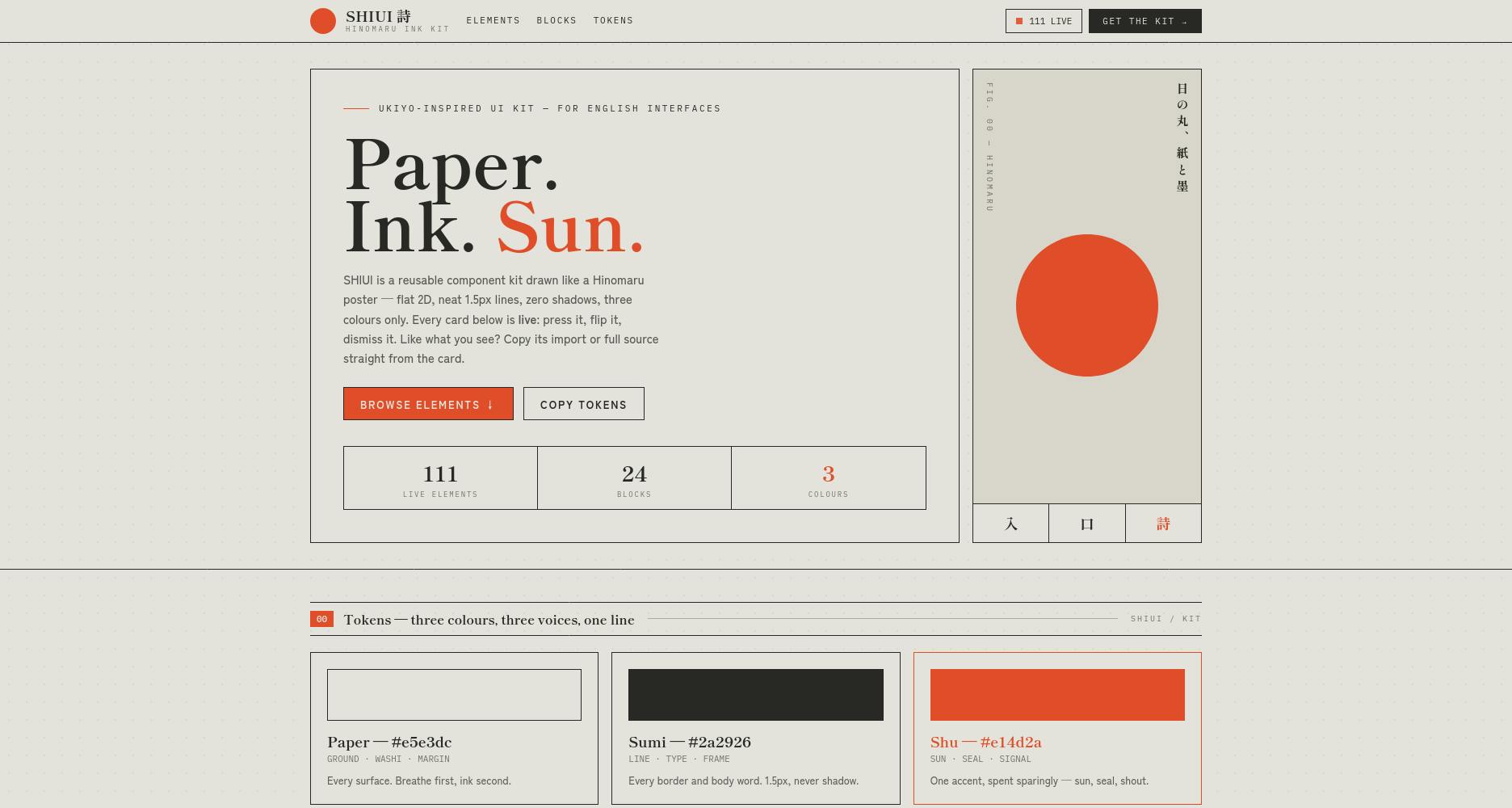
SHIUI: A Minimalist Ink-Wash UI Kit Inspired by Japanese Hinomaru Aesthetics
SHIUI is a flat ink-wash Web UI kit inspired by Japanese Hinomaru poster aesthetics, built around paper, sumi ink, and vermilion with zero shadows. A design breakdown.
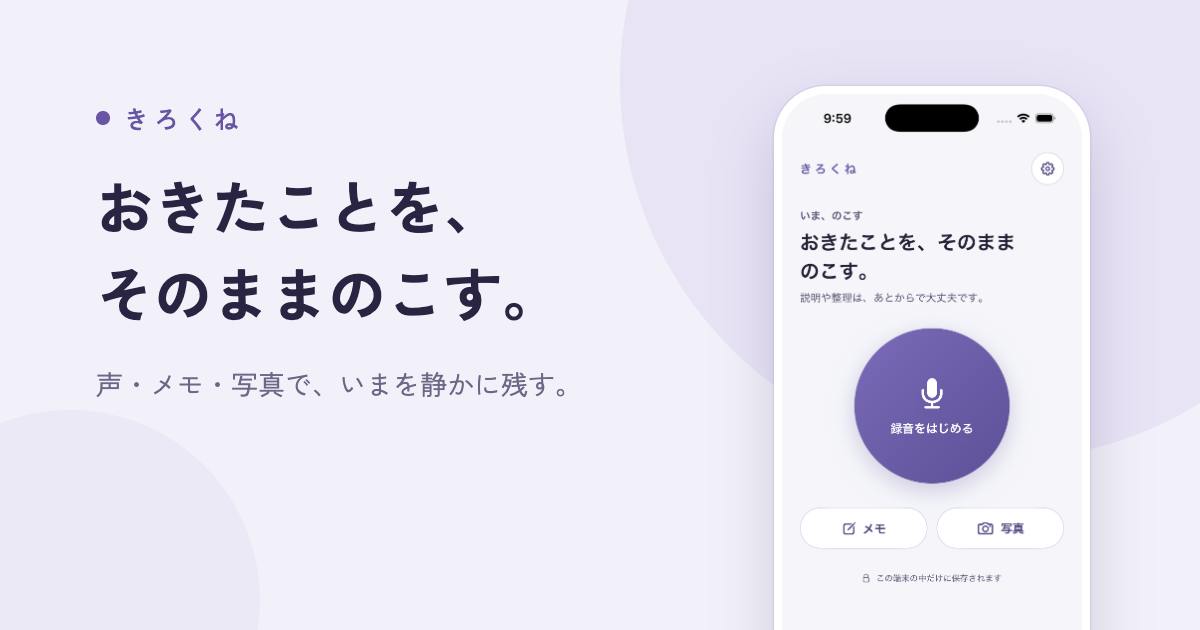
Kirokune: An iPhone Work Incident Logger That Requires No Account
Kirokune is an iPhone app for logging workplace incidents — no account required. Combines text, audio, and photos in a timeline. Ranked #9 on Product Hunt with 86 votes.