Behind Anthropic's IPO: How Early Investors View AI Software Opportunities

Anthropic's S1 filing is seen as the watershed that opens the public market for AI software and the LP liquidity gate.
Bessemer partner Byron Theta sees Anthropic's S1 filing as the first chance for public investors to buy pure software exposure to a frontier AI lab. With private-market DPI at historic lows and LP cash returns blocked, Anthropic's narrow Q4 listing is the opening of the gate, with a bigger wave expected in 2027. The S1's risk factors cite open-source price pressure and specialized-model advantages, which Byron answers with a layered framework: frontier models set the pace, downgraded models improve unit economics.
Anthropic's S1 filing sent shockwaves through the investment world far bigger than a typical IPO. Bessemer Venture Partners' Byron Theta said plainly in an interview that this was "the one everyone was waiting for." As an early investor that first bet on the Claude parent company back in 2024 and has put in a cumulative $650 million across four rounds, Bessemer's perspective combines excitement over financial returns with a judgment about the revaluation of value at the AI software layer.
Why this company's IPO is a watershed
Over the past few years, the AI targets available to public market investors have been concentrated in hardware and infrastructure. Beyond Nvidia, almost all of the leading AI companies on the pure software side have stayed in the private market. Byron describes Anthropic as "the monster on the software side"—its listing means the public market can, for the first time, directly buy pure software exposure to a frontier AI lab.
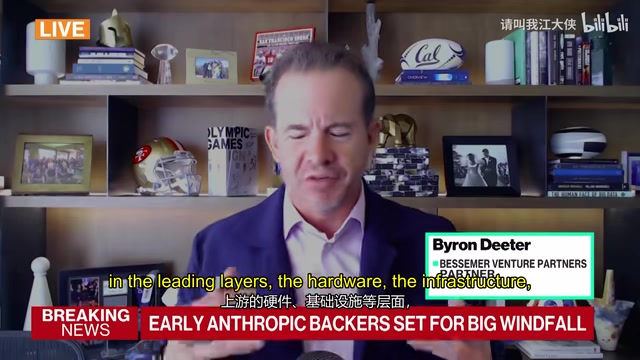
The key to this judgment isn't the valuation of Anthropic as a single company, but what it unlocks. The interview mentions a rather ironic data comparison: this year's IPO market has tripled by dollar amount, but is only one-third by number of issues, and has distributed almost no capital to LPs. In other words, assets are appreciating, but cash isn't returning to the hands of the capital providers.
S1 filing is the registration statement that a foreign private issuer (or an emerging growth company under the 2012 JOBS Act) submits to the SEC before a U.S. IPO under the U.S. Securities Act of 1933, serving the same function as the S-1 form for domestic U.S. companies. Compared with S-1, the S1 form has slightly simplified disclosure requirements, but it likewise contains core content such as the business overview, risk factors, management discussion, and financial data. Tech media often use "filing an S1" to refer generally to the formal launch of an IPO, because this document is the first public window through which outsiders systematically see a company's real operating data.
Software-layer exposure refers to investors directly holding equity in AI application and model companies through public stocks, rather than participating in the AI theme indirectly through chipmakers such as Nvidia. Between 2023 and 2025, the leading AI labs basically remained in the private market, and the public market lacked pure software AI targets—this is the factual basis for the "watershed" characterization.
The LP liquidity bottleneck and the "gate" effect
Industry growth is enormous, but DPI (Distributions to Paid-In Capital) is at historic lows—this is the structural contradiction Byron repeatedly emphasizes. The private market has accumulated a large number of high-quality companies; he revealed in advance that on Bessemer's forthcoming AI 100 list, every single one is a multi-billion-dollar entity, and public market investors have been unable to access these targets.
Anthropic's timing also has its logic. The interview notes that the Q4 window is inherently narrow: wedged between the election and the Thanksgiving holiday, with only a few short weeks between Thanksgiving and Christmas. No company would want to challenge Anthropic's offering head-on in this window. Byron's judgment is that the real wave of offerings will open in 2027, and "we hope and believe more companies will follow."
Two things need to be distinguished here: Anthropic's listing itself is a liquidity event, while its "unlocking" effect on the entire LP ecosystem is the longer-term impact. The interview sees SpaceX as the first lock waiting to be released, with OpenAI possibly following close behind, forming a deferred wave of listings.
DPI (Distributions to Paid-In Capital) is a core performance metric for private equity and venture capital funds, measuring the proportion of cash already returned to LPs relative to the LP's paid-in capital. A DPI of 1.0 means the LP has recovered all principal; only above 1.0 does it represent genuine profit. Alongside it is TVPI (Total Value to Paid-In capital, including unrealized portions).
In recent years AI company valuations have risen rapidly and TVPI has looked impressive, but because IPO and M&A exit channels have narrowed, cash distributions have been minimal, keeping DPI at historic lows. LPs (pension funds, university endowments, family offices, and other capital providers) therefore lack cash inflows to meet their own spending commitments or allocate to new funds—this is the so-called "liquidity bottleneck." The significance of large-cap IPOs like Anthropic's is that they convert paper TVPI into actual cash distributed to LPs, thereby restoring the entire fundraising cycle.
The industry map hidden in the risk disclosures
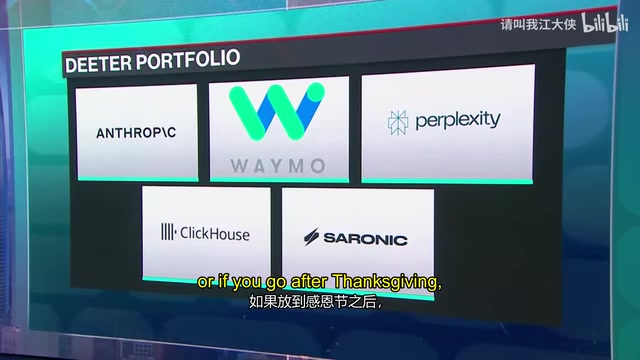
The risk factors section of the S1 is also worth reading closely. Anthropic flags two types of pressure: open-source models may drive down prices, and specialized models may win on specific workloads. What makes Byron unusual is that Bessemer's portfolio covers all of these directions, so his interpretation isn't defensive but layered.
His framework is roughly this: frontier models continue to set the pace for the industry, and the best companies with the most advanced projects will rely on them long-term—this is strong demand on a multi-year horizon; on top of that, customers can layer in downgraded models to achieve better unit economics, and frontier labs will proactively offer such alternatives; open-weight models play an important role in the value chain; and specialized models for scenarios such as physical AI—autonomous driving, defense tech, medical devices—are often built on frontier models but use smaller models in actual deployment.
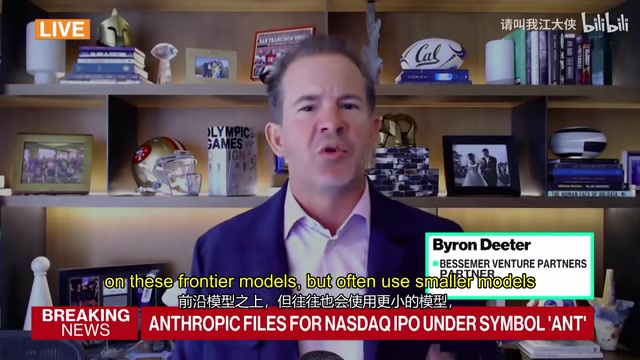
This layered view effectively responds to the concern that "open source will kill frontier labs": price pressure is real, but demand is structured in layers, with different tiers of models serving different cost constraints and task complexities. For software entrepreneurs, this means the opportunity lies not only in frontier models themselves but also in the composition and orchestration layer between models.
Open-source/open-weight models refer to models whose weights are publicly downloadable and that allow free use and fine-tuning, such as the Llama and Mistral series. They exert price pressure on closed-source frontier labs: customers can complete large volumes of routine tasks at much lower cost, compressing API pricing space. Specialized models refer to models deeply optimized for a single task or industry—for example, autonomous driving perception models or medical imaging models—which are smaller and have lower inference costs, and may outperform general-purpose large models on specific workloads.
Downgraded model is not an industry-standard term; in the context of the interview it refers to a smaller, cheaper, or slightly older version of a model offered by the same provider, used to improve unit economics on tasks with lower accuracy requirements. Model routing is the engineering practice of dispatching different requests to models of different sizes according to complexity, balancing cost and quality—a key technical means of putting the model-layering framework into practice.
Implications for AI software entrepreneurs
Placing the interview content in an entrepreneurial context yields several actionable inferences. First, the public market's hunger for pure software AI exposure has been underestimated; when subsequent listing windows open, companies with clear revenue models will command valuation premiums. Second, model layering means that "using only the strongest model" isn't necessarily the optimal engineering decision—cost structures require entrepreneurs to learn to route between frontier models, downgraded models, and small models. Third, physical AI and vertical scenarios (autonomous driving, defense, healthcare) are direct beneficiaries of capability spillover from frontier models, and the valuation logic of such companies will increasingly resemble AI infrastructure rather than traditional software.
Byron didn't give any specific return figures in the interview, but the phrase "major windfalls" says it all. For early investors this is a realization of value; for broader market participants, it is the starting point for repricing the value of the AI software layer.
One-line Summary
Anthropic's S1 filing is seen as the watershed event that opens the public market for the AI software layer and the gate for LP liquidity.
Paragraph Summary
Bessemer partner Byron Theta believes Anthropic's S1 filing is the landmark event marking the first time the public market can directly buy pure software exposure to a frontier AI lab. Previously, public investors could only participate in the hardware and infrastructure layer, while the private market accumulated a large number of multibillion-dollar AI companies, DPI sat at historic lows, and LP cash returns were blocked. Anthropic's choice of the narrow Q4 window is seen as the starting point for opening the gate, with a larger wave of offerings expected in 2027, possibly followed by SpaceX and OpenAI. The S1 risk disclosures mention price pressure from open-source models and the scenario advantages of specialized models, and Byron responds with a layered framework: frontier models set the pace for the industry, downgraded models improve unit economics, and open-weight and specialized models each play their own role. For entrepreneurs, model routing and the orchestration layer, along with physical AI and vertical scenarios, are the more realistic opportunities for implementation.
Related articles

34 AI Coding Assistants Battle It Out in the Terminal — How to Avoid Picking Wrong
34 AI coding assistants are flooding the terminal, and Orca supports multi-agent parallelism. This article analyzes the consolidation trend behind the gold rush, the cost traps of multi-agent parallelism, and how to maintain an agent-neutral workflow to avoid picking the wrong tool.

Gemini CLI in Practice: An AI Coding Agent in Your Terminal
A deep dive into Gemini CLI: from installation and authentication to building a task management app hands-on, covering plan mode, auto-debugging, GEMINI.md context persistence, and token cost tracking.

Open Design: A Free Open-Source Alternative to Claude Design That Activates Your Coding Agent
Open Design is a free, open-source Claude Design alternative that runs locally with 250+ design skills, auto-detects 16 coding agents, and supports prototypes, slides, and mobile UIs.