Behind SpaceX's Acquisition of Cursor: The Systemic Oxygen Deprivation of China's Deep Tech

SpaceX's $60B Cursor acquisition exposes the systemic oxygen deprivation plaguing China's deep tech ecosystem.
SpaceX's all-stock acquisition of Cursor at a $60B implied valuation isn't just about an AI coding tool—it's about controlling the developer gateway in the AI era. Backed by Starlink's $4.4B operating profit, SpaceX has built a complete flywheel from rockets to developer workflows. Meanwhile, China's deep tech faces chronic oxygen deprivation: short fund cycles, founder buyback clauses, and ecosystems where startups get absorbed by big tech. The article argues China needs long-term orders, open ecosystems, and patient capital to turn rare breakthroughs like DeepSeek into repeatable industrial phenomena.
$60 Billion Buys Not a Tool, But a Gateway
SpaceX acquired Cursor through an all-stock deal at an implied valuation of approximately $60 billion. The number seems insane—how can an AI coding tool be worth that much? But if you understand SpaceX's systems logic, the core of this deal isn't about buying a code-writing software at all. It's about buying the gateway to the developer workflow in the AI era.
Cursor is an AI-native code editor built on the VS Code (Visual Studio Code) architecture, launched by Anysphere in 2023. The IDE (Integrated Development Environment) has always been the central battleground of the developer ecosystem—Microsoft recaptured developer mindshare in the late 2010s with VS Code, while JetBrains products carved deep into the enterprise market. Cursor's innovation lies in deeply embedding large language models into the editor workflow rather than bolting them on as plugins, achieving native integration of code completion, multi-file context understanding, and natural language programming. By the end of 2024, Cursor had over 1 million monthly active users and annual recurring revenue (ARR) exceeding $100 million, making it the fastest-growing independent product in the AI coding tools space.
What makes Cursor truly valuable is this: which IDE developers open every day, which model writes their next line of code, which API they call, which tech stack they trust—all these decisions happen at this gateway. Whoever controls the gateway controls downstream model invocations, compute consumption, and ecosystem direction.
One more detail worth noting about the deal structure: all-stock payment. SpaceX didn't pay cash—it used its highly valued stock to purchase the future. This itself is the ultimate exercise in capital efficiency.
SpaceX's Super Business Flywheel
SpaceX was able to make this deal because it has already built a complete business flywheel:
- Reusable rockets → Lower launch costs
- Starlink → Build a global communications network
- Communications network → Generate cash flow (~$11.4 billion revenue in 2025, ~$4.4 billion operating profit)
- Cash flow → Fund AI compute and model investments
- Models → Feed into Cursor
- Cursor → Connect the developer workflow back into the entire system
Starlink is SpaceX's low Earth orbit (LEO) satellite internet constellation, currently with over 6,000 satellites in orbit at approximately 550 km altitude. Compared to traditional geostationary orbit (GEO) satellites at roughly 36,000 km, LEO satellites can compress signal latency to 20–40 milliseconds, approaching terrestrial broadband levels. Starlink uses phased array antenna technology to enable Inter-Satellite Links (ISL) via laser, completing global routing without ground-based relays. Commercially, Starlink employs tiered pricing across individual, enterprise, aviation, maritime, and military markets, with monthly fees ranging from $120 to several thousand dollars. Of its approximately $11.4 billion in 2025 revenue, the share from enterprise and government contracts continues to grow—this is the core driver behind its improving profit margins.
The key to making this flywheel spin is that Starlink is no longer a concept—it's a real profit pool. $4.4 billion in operating profit allows SpaceX to absorb losses in its AI business, compute investments, and M&A integration. This is the most brutal truth about deep tech—frontier businesses can lose money, but somewhere in the system, one segment must be responsible for supplying blood.
China's Deep Tech: No Shortage of Rockets, But a Shortage of Flywheels
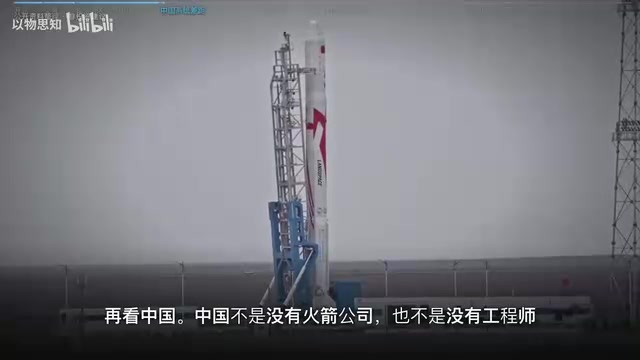
China doesn't lack rocket companies, nor does it lack engineers. LandSpace was founded in 2015, and Zhuque-2 marked a critical milestone for China's private aerospace in liquid oxygen-methane rocketry.
Liquid oxygen-methane (LOX/LCH4) propellant is the core technology pathway for next-generation commercial aerospace. Both SpaceX's Raptor engine and LandSpace's TQ engine use this approach. Compared to traditional liquid oxygen-kerosene and liquid hydrogen-oxygen configurations, methane's advantages include: specific impulse performance between the two alternatives, less coking (beneficial for engine reuse), the ability to be manufactured in-situ from Mars's atmosphere (supporting interplanetary missions), and more relaxed cryogenic storage requirements than liquid hydrogen. Zhuque-2 successfully reached orbit in July 2023, becoming the world's first liquid oxygen-methane rocket to achieve orbital insertion—ahead of SpaceX Starship's orbital-class tests—marking China's private aerospace completion of a critical validation in core propulsion technology.
But compared to SpaceX, the real gap isn't whether you have a rocket. It's whether behind that rocket you have:
- Large-scale constellation orders
- Communications revenue
- Cash flow to invest in next-generation technology
SpaceX was founded in 2002 and survived near-death after three consecutive failures before Falcon 1 reached orbit on its fourth attempt around 2008. More importantly, it secured NASA's commercial resupply contract—that was an order, not just a subsidy. The order gave it the oxygen to keep iterating.
The satellite internet gap can't be measured solely by how many satellites are in orbit. Starlink is already a globally operational network. China's Qianfan constellation launched 54 satellites throughout 2024—not a slow pace—but what really needs to be caught up on are five things: high-frequency launches, mass satellite manufacturing, low-cost terminals, service revenue, and the underlying software network. Satellite internet doesn't end when you put satellites in space. It's the sum of routing and scheduling, link handoffs, billing, terminal experience, and enterprise services.
AI Coding Tools: The Essential Difference Between Independent Gateways and Big Tech Appendages
Now look at the AI coding tools space. China certainly has products—ByteDance, Alibaba, Tencent, Baidu, and Huawei all have AI coding capabilities. But most of these products grow within big tech ecosystems, naturally serving their parent companies' cloud, models, and existing businesses.

Cursor is different. It first emerged as an independent startup, then was integrated into a larger system. Its value isn't just functionality—it's an independent gateway. The U.S. has many strong companies, but startups can still carve out new gateways. China's big tech companies are also strong, but many new gateways tend to get absorbed into big tech ecosystems, making it very difficult for startups to grow into independently priced super-nodes.
This is a difference in ecosystem structure, not simply a technology gap.
Systemic Oxygen Deprivation: The Deep Contradictions in Deep Tech Financing
Deep tech founders face not just technical challenges but systemic pressure from financing structures. Deep tech R&D cycles can span 7, 10, or even more years, but many funds have exit deadlines, LPs want to see DPI, and local government funds demand landed output value and IPO progress.
As a result, investment agreements frequently include: buyback rights, VAM (Valuation Adjustment Mechanism) clauses, performance commitments, and founder joint liability. The original intent of these terms is to protect investor exits, but the side effect is transforming equity risk into personal debt pressure on founders.

In the standard U.S. venture capital document framework (NVCA standard terms), liquidation preference is typically 1x non-participating—meaning investors get their principal back first in a liquidation event but don't additionally participate in remaining distributions. Anti-dilution provisions mostly use weighted-average rather than full-ratchet methods, resulting in relatively moderate dilution for founders. More critically, U.S. VC funds are typically structured as 10-year vehicles (with 2-year extensions), LPs have higher tolerance for portfolio losses, and fund performance is measured by overall IRR and DPI—a single project failure doesn't trigger recourse against the founder. China's market is unique in that: a large share of capital comes from government guidance funds and state-owned LPs, whose assessment cycles are shorter and impose hard requirements on landed output value and tax contributions. Combined with long and uncertain A-share IPO review timelines, investors tend to embed buyback clauses in agreements as exit backstops, transferring fund-level portfolio risk onto founders' personal balance sheets.
The problem isn't that Chinese VCs are all short-sighted. Rather, the entire exit environment, fund duration, and assessment framework push investors toward short-term certainty. For long-cycle engineering like rockets, chips, and foundation models, this becomes systemic oxygen deprivation.
Musk had it hard too—Falcon 1 failed consecutively, and the company nearly died. But he had personal capital, NASA orders, stock options to attract engineers, capital markets willing to price a grand narrative, and a social environment more tolerant of failure. Chinese deep tech entrepreneurs face a different kind of hardship: not a sudden fall off a cliff, but chronic oxygen deprivation.
What DeepSeek Proves
DeepSeekAd proves that China can absolutely do 0-to-1 innovation. Model architecture, training efficiency, engineering optimization, and open-source diffusion all achieved world-class impact. But DeepSeek also illustrates a reality: it's not a company that grew naturally from ordinary entrepreneurial soil.
DeepSeek was founded in 2023 by High-Flyer, a quantitative hedge fund giant whose parent company had accumulated massive GPU compute resources and top-tier algorithmic talent. The core technical breakthroughs of the DeepSeek-R1 series include: efficient implementation of Mixture of Experts (MoE) architecture, Multi-head Latent Attention (MLA) for dramatic KV cache compression, and a reinforcement learning training pipeline based on the GRPO algorithm. These innovations reduced inference costs by an order of magnitude compared to comparable closed-source models. DeepSeek's choice to open-source (MIT license) its strategy enabled its model weights to be widely deployed by developers globally, creating ecosystem influence beyond any single company's boundaries. Its organizational uniqueness lies in: no dependence on external financing, no IPO pressure, and founder Liang Wenfeng directly steering the technical direction. This structure is extremely rare in China's AI startup ecosystem—closer to a Bell Labs-style research organization than a typical VC-driven startup.
Behind it lies long-term capital, the founder's capital conviction, and the space to not rush fundraising, not rush to IPO, and not rush short-term profitability. It's more like a "superhuman player."

What China truly needs isn't for every entrepreneur to become a superhuman. It's to enable ordinary excellent teams to survive until their technology matures, their product matures, and their business flywheel matures.
China Needs to Build Its Own Deep Tech Flywheel
For China to catch up, the answer isn't to replicate a Musk or clone a SpaceX. The more realistic path is to build its own flywheel:
- Use long-term orders to pull deep tech forward, rather than just offering one-time subsidies
- Let LEO constellations become real demand for commercial rockets—only high-frequency launches can force out reusability capabilities
- Big tech should open up models, cloud, and developer interfaces, leaving independent ecological niches for AI application startups
- Establish capital instruments better suited for deep tech, reduce unreasonable personal liability backstops, and let investment truly bear portfolio risk
- Allow engineering failures and encourage post-mortems, rather than disbanding teams after a single failure
What stings about SpaceX buying Cursor isn't the $60 billion price tag—it's that SpaceX has already connected rockets, Starlink, compute, models, and the developer gateway into a single flywheel. When young teams dare to independently build AI tools, when commercial rockets can continue testing after failures, when long-term orders can sustain 10 years of R&D, when capital is willing to accompany deep tech through the valley—China's 0-to-1 breakthroughs won't remain exceptions achieved only by rare geniuses, but will become a continuous industrial phenomenon.
Key Takeaways
Related articles

Understanding DeepSeek in 3 Minutes: The Rise from a Quant Hedge Fund to an Open-Source AI Leader
DeepSeek's history in 3 minutes: from High-Flyer Quant's compute build-up to V2's MLA inference cost cuts, V3's $5.576M training bill, R1's open-source global shock, and V4 with a $7B Series A.

Local Creative Writing Model Showdown: Fine-tuned Qwen3.8 27B Wins, DeepSeek v4.1 Underwhelms
Bilibili creator tests seven local creative writing models: Hemingway and HumanLike Chat based on Qwen3.8 27B perform best, DeepSeek v4.1 is plain, Dongfang Shuo ranks last with confused characters. Includes three test prompts, scores, and usage advice.

Liang Wenfeng's Three Big Bets: Why Did DeepSeek Open-Source Its 82% Gross Margin?
Why did DeepSeek open-source DeepInfer, its 82% gross margin inference framework, and then launch a hundred-billion funding round? An analysis of Liang Wenfeng's three big bets and the open-source strategy.