Behind the Nvidia CEO Scandal: The Key Person Risk of AI Infrastructure
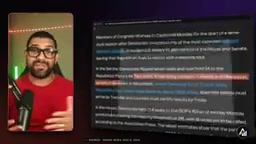
Jensen Huang's scandal triggers Nvidia key person risk, affecting AI infrastructure and real estate investment logic.
After Nvidia CEO Jensen Huang admitted to an extramarital affair, the board launched an independent investigation, prompted by reports that he had become a target of foreign intelligence activity. Capital markets reacted in split fashion: the chip sector surged nearly 7% while Nvidia fell alone, losing about $192 billion in market value—a clear "key person discount." The article notes that Nvidia is not only an AI chip supplier but also partners with asset management giants to mobilize over $500 billion in capital, playing the role of an AI infrastructure "bank." The high concentration of its chips and financing means downstream data center and land investors bear an unsigned key person risk. The author recommends hedging through contract terms such as non-refundable deposits and backup buyers. In addition, local data center moratoriums offset White House support for superintelligence, and multi-agent research warns that teams are not necessarily better than the strongest individual, requiring human oversight.
An internal email from Nvidia CEO Jensen Huang has pushed the "key person risk" of the entire AI infrastructure chain into the spotlight. According to analysis by the podcast AI with REI, this seemingly tabloid scandal could directly affect data centers, land valuations, and real estate investment logic.

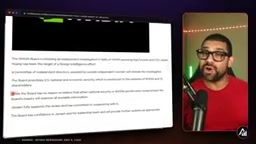

Event Recap: A Chain Reaction Sparked by One Email
On Sunday, Nvidia made public an email Huang sent to all employees. In it, he admitted to "infidelity toward his wife" and apologized to family and colleagues, without naming any third party, asking only for family privacy.
On the same day, Nvidia's board launched an independent investigation, led by independent directors with outside counsel参与. The board's statement said the move stemmed from "recent reports that founder and CEO Jensen Huang has become a target of foreign intelligence activity."
According to The New York Times and Financial Times, citing anonymous people familiar with classified intelligence, U.S. officials believe an executive at Singapore chip purchaser Mega Speed was recruited by China's top intelligence agency, and NBC reported that the Financial Times said the U.S. side believes she had a romantic relationship with Huang. China's Foreign Ministry called the allegations baseless, and Mega Speed also denied earlier claims that its chips were diverted to China. Nvidia's board said there is no reason to believe national security or company secrets were compromised.
According to the podcast's account, three House committee chairmen have asked Huang to give a closed-door briefing on the 18th.
A Split Vote in Capital Markets
Monday's price action was telling. According to CNBC data, the chip index surged nearly 7%, rebounding about 11% from its post-Thursday-crash low, with AMD up 13% in a single day. Nvidia, by contrast, fell as much as 8.8% intraday and closed down roughly 4% to 7%, with CNN saying about $192 billion in market value was wiped out—already below its "crash day" closing level.
The entire chip sector was invited to the barbecue, but Nvidia was left outside the gate. CNN noted that even before the scandal broke, Nvidia had been underperforming other chip stocks. Dan Ives of Wedbush called Huang the "core DNA" of Nvidia and said any discussion of a leadership change is absurd; Jeffrey Sonnenfeld, interviewed by TechCrunch, put the odds of Huang staying at roughly "50-50."
Huang's management style is notably flat—by his own account, he has about 60 direct reports; CNN's Jacob Ward noted the company has no clear successor. The board expressed confidence in Huang and his leadership team.
Nvidia Is More Than a Shovel Seller
TechCrunch called Nvidia the "bank behind" this infrastructure cycle: the company previously announced partnerships with Apollo, BlackRock, Blackstone, Brookfield, Goldman Sachs, and KKR to mobilize more than $500 billion in external capital for AI infrastructure. Jim Clement of Palmer Liberum told CNBC that for now the damage is confined to Nvidia itself, but if Huang's position were to wobble, Nvidia might pull back support for other companies to control risk.
"Selling shovels" comes from the gold rush metaphor, referring to providing tools rather than digging for gold yourself. Nvidia is often called the shovel seller of the AI gold rush because its GPU chips are essential for training large models. But this article points out that Nvidia has gone beyond merely selling shovels: it has joined asset management giants such as Apollo and BlackRock to mobilize over $500 billion in external capital for AI infrastructure, playing the role of a "bank." This means Nvidia not only provides computing hardware but is also deeply involved in project financing, credit endorsement, and risk pricing. Once its own credit or leadership stability is questioned, its ability to mobilize capital could contract, transmitting to data center developers and real estate investors who depend on its ecosystem, creating systemic risk.
Key Person Risk: Real Estate Investors' Hidden Exposure
This is the part of the episode most worth heeding for real estate professionals. The author offers an analogy from personal experience: every fund he raises has a "key person clause"—if the person investors bet on leaves or stops devoting enough time, the clause gives investors a say before the next capital outflow.
But Nvidia's shareholders have no key person clause; they got only a board statement.
If your business depends on AI infrastructure—selling land to data center developers, or buying land near data centers—you are downstream of a key person risk you never signed up for. Chips and a large share of the financing flow through one company and one very central person. CNN noted that Nvidia chips underpin models from Anthropic's Claude to Meta's Muse.
A Three-Step Key Person Check
The author's operational advice is specific:
- Figure out who the deal really depends on: the developer's tenants, chip supply, and financing sources—the single large tenant or single lender is your key person.
- Ask what happens if that link disappears, and get the answer in writing: Crusoe did site selection in Wyoming, secured government approvals, and planned power, yet still failed to lock in Google as a tenant.
- Write protections into the contract: deposits that become non-refundable on a schedule, real closing deadlines, backup buyers—in this market you really do need backup buyers.
A key person clause is a common risk-control arrangement in private equity and venture capital funds: if a core manager resigns, becomes incapacitated, or stops devoting the agreed time, investors have the right to suspend further capital contributions, replace the manager, or even liquidate early. The logic is that fund performance depends heavily on individual judgment, so investors need to lock in an exit mechanism before betting. As a public company, Nvidia has no such clause; shareholders can rely only on board oversight and information disclosure. For real estate investors, if a project depends on a single tenant, a single lender, or a single chip supplier, they are effectively bearing similar risk without contractual protection. Hence the author suggests using contractual tools such as non-refundable deposits, real closing deadlines, and backup buyers to make hidden key person risk explicit and hedge it.
Also Showing: Local Moratoriums and White House Hedging
Data center approvals are continuing to tighten at the local level. According to the podcast's review, Guilford County unanimously voted to extend a data center moratorium to 18 months; Dade County, Georgia, passed a 90-day moratorium after an Atlanta company began exploring a 300-megawatt facility—the Chattanooga Times Free Press said that is enough to power about 250,000 homes for a year; the Boise City Council held a hearing on the mayor's large data center moratorium.
Interestingly, the Guilford County chair admitted that "no one is knocking on our door right now," and Boise has no applicants either. The author likened it to a bouncer standing outside a nightclub with no line.
On the other end, the White House is pushing in the opposite direction. According to the podcast, Trump said on Friday he "100% supports superintelligence" and on 60 Minutes called himself bullish on AI, not opposed to guardrails but unwilling to let America fall into "deep second place." The author sums it up: the AI industry has a bull in the White House and a bunch of bears in city hall.
Real-World Lessons from Two AI Tools
The Cost of Free Tools
At the National Association of Realtors NXT conference, NAR data science director Mike Woodward used the fable of "two pigs who love a free barn and free feed" to warn about free AI tools—you know how the story ends when you eat bacon in the morning. His advice: when real or confidential data is involved, pay and check the option to block data retention and training. He also had Claude pull records on his own house; five of seven facts were wrong.
Multi-Agent Does Not Mean Stronger
The closing Easter egg comes from research summarized by CNBC. Studies from Emory University and Stanford found that agent teams often perform worse than the strongest member—even when told who the expert is, they "compromise" between the expert and other members, and the effect worsens as the team grows. Emory researcher Hanxin Xiao put it this way: "A team of capable AI agents is not necessarily a capable AI agent."
Tests by Anthropic and the MAT project showed that agent teams achieved goals better than a single agent on business tasks, but the ethics of their answers were worse, and agents that ignored ethics disregarded emails from agents raising ethical concerns. The author's own approach: split tasks by topic among different agents, use another model to check all numbers, have four models cross-check key steps, and have a human sign off at the end.
A multi-agent system refers to an architecture in which multiple AI agents divide labor and collaborate on tasks, with common patterns including debate, voting, and hierarchical scheduling. Its original design intent is to improve performance on complex tasks through role division and cross-validation. But the Emory and Stanford research revealed a "compromise effect": when agents are asked to reach consensus, they tend to gravitate toward the middle ground; even when there is a clear expert on the team, other members drag down its judgment, and the effect worsens as the team grows. Tests by Anthropic and the MAT project further found that multi-agent systems may outperform single agents on business goal achievement but are worse at ethical judgment—agents that ignore ethics disregard peers who raise concerns. This suggests that in real deployments, it is necessary to retain a single-expert role, set up human sign-off steps, and use independent models to check key numbers.
Editorial View
The value of this episode is not the scandal itself but how it braids three threads into one: AI infrastructure's capital and compute are highly concentrated in a few companies and individuals; local approvals are tightening while the federal stance is loosening; and real estate professionals, while using Claude to handle listings, mortgages, and estate records, may be exposing themselves to the dual risks of data liability and key person dependence.
The author's reminder is worth copying down: treat every seller's file as if it were your own bank statement—because to that seller, it is.
Nvidia's earnings and that closed-door briefing are both this week; the answers will come soon.
One-line Summary
Jensen Huang's scandal triggers Nvidia key person risk, affecting AI infrastructure and real estate investment logic.
Paragraph Summary
After Nvidia CEO Jensen Huang admitted to an extramarital affair, the board launched an independent investigation, prompted by reports that he had become a target of foreign intelligence activity. Capital markets reacted in split fashion: the chip sector surged nearly 7% while Nvidia fell alone, losing about $192 billion in market value—a clear "key person discount." The article notes that Nvidia is not only an AI chip supplier but also partners with asset management giants to mobilize over $500 billion in capital, playing the role of an AI infrastructure "bank." The high concentration of its chips and financing means downstream data center and land investors bear an unsigned key person risk. The author recommends hedging through contract terms such as non-refundable deposits and backup buyers. In addition, local data center moratoriums offset White House support for superintelligence, and multi-agent research warns that teams are not necessarily better than the strongest individual, requiring human oversight.
Related articles
Anthropic's Agent Memory Architecture: The Memory Philosophy of Less Is More
Anthropic's Pokemon Red experiment reveals a counterintuitive conclusion about agent memory: a Claude saving 413 files performed worse than one maintaining a short dashboard. This article analyzes the four-layer memory architecture, the Dreams offline correction mechanism, and CLAUDE.md best practices.

What Happens When AI Sleeps? Anthropic Agent Memory #TechMalayalam #AgenticAI #ClaudeAI
Starting from Anthropic's Claude and Agent Memory mechanisms, this article explains how AI agents load, organize, and discard memory between sessions, and what self-evaluation loops and note-taking rules mean for developers.
13 Practical AI Tips: Save Money, Protect Privacy, Upgrade Your Digital Life
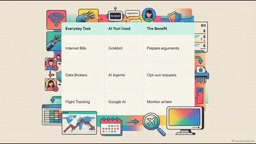
A roundup of 13 practical AI tips from The Explainer: AI agents for cost-saving negotiations, data deletion requests, Claude Code for computer diagnostics, local offline models, in-car voice learning, and motion pose analysis—with emphasis on human oversight and safety boundaries.