Behind Viral AI Videos: The Generative Tool Ecosystem and Creative Trends

A viral AI video reveals the state of AI video generation, community dynamics, and why creativity still wins.
Starting from a viral AI-generated video on Reddit, this article examines the distinctive visual characteristics of AI video, how community automation amplifies quality content, the regional accessibility challenges facing tools like Sora, the diversification of alternatives including open-source solutions, and why creative ideas — not tools — remain the true driver of compelling AI video content.
Behind a Viral AI Video
On Reddit, an AI-generated video titled "You're out of mana! Take this!" sparked a wave of discussion. The post not only climbed to the top of the community's hot list but was also featured on the official Discord channel, making it a textbook case of viral content in the AI video generation space.
On the surface, it's just a fun short clip. But underneath, it reflects the current maturity of AI video generation technology, community-driven content amplification, and the very real challenges surrounding these tools. This article takes a deep dive into the phenomenon, drawing on community feedback.
Analyzing the Visual Characteristics of AI-Generated Video
Why the Unique Visual Quality Sparked Debate
One of the most frequently mentioned observations in the comments was about the video's overall aesthetic. Some users remarked that the visual quality "felt reminiscent of early '90s film styles," while others said the female character "looks like a grown-up version of the princess from Conan the Destroyer."
Though tongue-in-cheek, these comments reveal a common trait of current AI-generated video: the footage often carries an indescribable "synthetic" or "retro" quality. This stems from specific tendencies in training data, lighting processing, and character detail rendering within video generation models. When a model tries to produce "photorealistic" visuals, it paradoxically creates a unique effect that sits somewhere between real and fictional — and this effect is precisely one of the telltale signs that a video was AI-generated.
From a technical perspective, today's leading AI video generation models (such as Sora, Runway Gen-3, etc.) are mostly built on Diffusion Models or Transformer architectures. During training, these models ingest massive amounts of image and video data from the internet, but this training data suffers from uneven temporal distribution — early digitized film footage and low-resolution web videos make up a significant portion of the datasets. This causes models to unconsciously reproduce the color saturation, lighting quality, and camera movement patterns of certain eras. Additionally, the way diffusion models handle details during the denoising process produces a variant of the "uncanny valley effect" — something between photorealistic and digitally painted — which is the technical root of the "synthetic feel" that users perceive.
The Viral Logic of Creative Content
The video's core creative concept is equally worth examining. One commenter explained it this way: "Cats hate vacuum cleaners, so the most powerful weapon they can bring to the battlefield is a vacuum cleaner." This absurdist creativity — combining everyday knowledge with gamified narrative ("out of mana") — is exactly what makes AI video content go viral on social platforms.
From a communications theory perspective, the way AI-generated content spreads overlaps heavily with traditional Meme culture. The core characteristics of a meme are replicability, mutability, and strong context-dependence — a successful meme requires its audience to share specific cultural knowledge. In this case, "out of mana" is a classic RPG concept, while "cats fear vacuum cleaners" is common internet pet culture knowledge. When these cultural symbols from different domains are visually fused together through AI video, it produces a humor that's "unexpected yet perfectly logical" — which aligns precisely with what "Incongruity Theory" in communication studies describes as the mechanism of humor.
You might not have noticed, but the viral spread of quality AI-generated content typically relies on a dual boost of "creativity + technology." Technology lowers the barrier to creation, but what truly ignites virality is the content's humor and emotional resonance.
Community Ecosystem: Content Curation and Incentive Mechanisms
How Automation Amplifies Quality Content
Once the post went viral, community bots automatically executed a series of actions: recommending the content to Discord and granting contributors special flair. This automated incentive system reflects how mature communities approach content operations — using instant feedback and recognition-based incentives to encourage users to consistently produce quality AI video content.
From an implementation standpoint, automated community operations on platforms like Reddit typically rely on bot programs such as Reddit's AutoModerator or custom Python scripts built on API libraries like PRAW. These bots execute actions based on preset rules: when a post's upvote count reaches a certain threshold, the content is automatically pushed to a linked Discord server; based on a user's contribution frequency and content quality, different tiers of flair are automatically assigned. The underlying logic of this system draws on Gamification theory — using psychological incentives like instant feedback, level progression, and community recognition to maintain long-term user engagement. This mechanism is especially important in AI creative communities, because while AI has lowered the barrier to content creation, consistently producing high-quality content still requires creators to invest significant time in prompt optimization and creative ideation.
This kind of mechanism is becoming increasingly common in AI creative communities. It not only boosts creator motivation but also helps communities quickly filter and amplify high-quality content, creating a positive feedback loop. For operations teams looking to build AI creative communities, this is a model worth studying.
The Accessibility Dilemma of AI Video Generation Tools
"Sora Isn't Available in My Country"
The most thought-provoking question in the comments section was: "Which AI was this video made with? Sora has been discontinued in my country."
This seemingly simple question exposes a sharp reality in the AI video generation field — regional disparities in tool accessibility. Leading video generation models like OpenAI's Sora are often restricted by regional policies, compliance requirements, and business strategies, leaving a large number of users unable to access them directly.
Specifically, Sora is built on the Diffusion Transformer (DiT) architecture and can understand the physical world's motion dynamics to generate high-quality videos up to one minute long. However, Sora's service availability is constrained by multiple factors: first, differences in national data privacy regulations, such as the EU's GDPR and various countries' AI regulatory frameworks that impose strict requirements on model training data sources; second, regional deployment of computing resources — video generation requires massive GPU compute power, and OpenAI's server clusters are primarily located in North America and parts of Europe; additionally, there are content review policies, export control regulations (such as U.S. technology export restrictions on certain countries), and other geopolitical factors. This means a significant portion of global users — especially those in developing countries and sanctioned regions — cannot directly access the most cutting-edge AI video generation tools.
The Diversification Trend in AI Video Generation Tools
This dilemma is actually driving diversification in the AI video generation tool landscape. Beyond Sora, multiple alternatives have emerged:
- Runway: A comprehensive video generation and editing platform
- Pika: An AI video generation tool known for its simplicity and ease of use
- Luma Dream Machine: Specializes in 3D scenes and dynamic video generation
- Kling (by Kuaishou): A leading AI video generation model from China
- Various open-source solutions: Offering developers more flexible customization options
In the open-source domain, the community is rapidly filling gaps left by restricted commercial tools. Stability AI's Stable Video Diffusion (SVD) is one of the most influential open-source video generation models currently available, allowing users to run it on local GPUs without relying on cloud services. AnimateDiff achieves video generation by adding motion modules to existing image generation models, while CogVideo (developed by a Tsinghua University team) offers yet another technical approach. The advantages of open-source solutions include: no regional restrictions, customizable training and fine-tuning, and full control over data privacy. But the drawbacks are also clear — high hardware requirements (typically requiring GPUs with at least 24GB of VRAM), a usage threshold orders of magnitude higher than commercial products, and generation quality that still lags behind top commercial models. However, with advances in model compression and quantization techniques, this gap is narrowing rapidly.
When users can't access a particular tool, they often turn to these alternatives. This "find another way when one path is blocked" phenomenon objectively promotes competition and innovation across the industry. For everyday creators, what matters isn't obsessing over a single "star tool" but rather flexibly choosing the right solution based on regional availability, cost, and output quality.
The Current State and Future Outlook of AI Video Creation
Opportunities and Challenges of Technology Democratization
The entire lifecycle of this viral video — from generation, to posting, to going viral, to community discussion — offers a complete picture of today's AI video creation ecosystem. The democratization of technology empowers ordinary people to create video content with viral potential, which is undeniably a positive development.
The concept of "Democratization of Technology" in AI video generation traces back to the long-term vision of the MIT Media Lab — making tools once exclusive to professional institutions accessible to everyone. In the video domain, this trend has particularly profound implications: traditional film production requires studios, professional actors, post-production teams, and budgets in the millions of dollars, whereas now a single prompt can generate video content with reasonable visual appeal. However, this also raises deeper discussions about AI-Generated Content (AIGC): copyright attribution (does the copyright belong to the prompt writer, the model developer, or the original creators of the training data?), deepfake risks, and the impact on traditional creative industry professionals. Currently, regulations like the EU AI Act and China's "Interim Measures for the Management of Generative AI Services" have begun addressing these issues, but a globally unified governance framework has yet to take shape.
At the same time, tool fragmentation, regional restrictions, and uneven content quality present new challenges. As more AI-generated content floods social platforms, how to verify content origins, how to evaluate creative quality, and how to establish industry standards will be ongoing issues that communities and platforms must address.
Creativity Remains the Core Competitive Advantage
No matter how AI video generation tools evolve, the lesson from this case remains clear: technology is the means; creativity is the soul. At the heart of an AI video that resonates widely and gets organically recommended by a community is always that one idea that makes people smile. The evolution of tools will never change this fundamental truth.
Conclusion
From the viral success of a fun video clip, we've witnessed the growing maturity of AI video generation technology, the continuous refinement of community amplification mechanisms, and the real-world bottleneck of tool accessibility. For content creators, rather than agonizing over "which AI tool to use," it's better to invest energy in polishing your creative ideas — because in the age of AI, what truly moves people has never been the technology itself.
Related articles
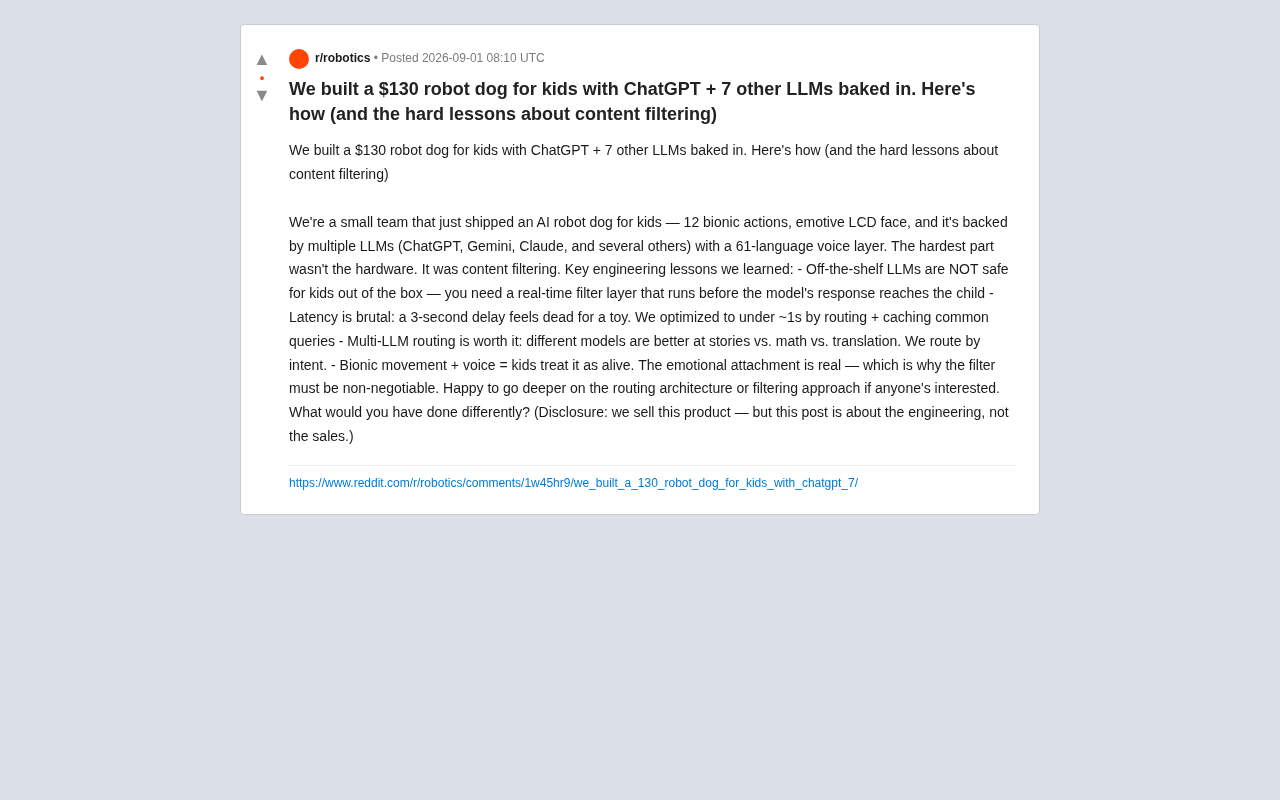
Building an AI Robot Dog for Kids: Multi-Model Routing, Content Filtering, and Latency Optimization
A $130 AI robot dog for kids integrates 8 LLMs with 61-language voice interaction. The team shares key engineering lessons on content safety filtering, multi-LLM intent routing, and sub-1-second latency optimization.

Can Omarchy Dominate the Sub-$1000 Laptop Market? An In-Depth Analysis
Omarchy, based on Arch Linux, shows unique advantages in the sub-$1000 laptop market. This analysis compares Windows and MacBook performance bottlenecks on low-spec hardware and examines why Omarchy enables cheap laptops to run smoothly, plus the ecosystem challenges and market prospects it faces.

AI Agent Beginner's Guide: Building a Creative Strategy Intelligent Assistant from Scratch
A complete guide to building a creative strategy AI Agent from scratch. No coding required — use tools like Dify and Coze to quickly build an intelligent assistant.