Ben Affleck's New Film 'Animals' and Netflix's AI Production Controversy
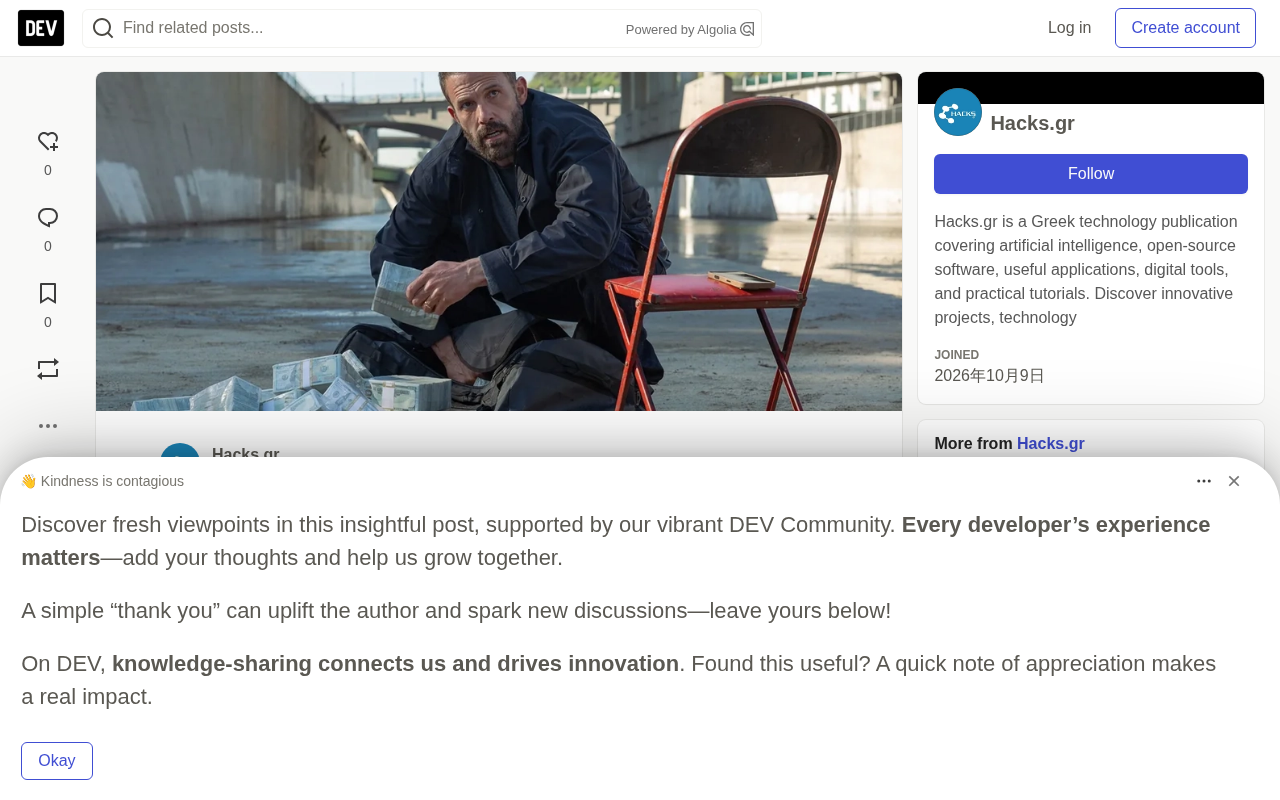
Netflix's new film 'Animals' becomes a focal case in the AI production controversy due to its use of AI tools at multiple stages.
Netflix is pushing the R-rated thriller 'Animals,' starring Ben Affleck, this week. The film tells the story of a Los Angeles politician rescuing his kidnapped son, with an IMDb rating of 5.7 — a lukewarm reception. What truly sparked discussion was Affleck's acknowledgment that the film used AI tools at multiple production stages, plus a physics-defying scene near the ending that went viral on social media, making the film a symbolic case in AI film production. Meanwhile, Netflix is bundling kidnapping-themed films like 'Extraction,' 'Havoc,' and 'Kidnapping Stella' into genre-based programming to boost user engagement. The article notes that AI's role in film production is moving from behind the scenes to center stage, and streaming platforms need to find a balance between efficiency gains and creative ethics.
Netflix is pushing a slate of thrillers and action films this week (October 16–23), among which Animals, starring Ben Affleck, stands out — not just for its plot, but for its heavy use of artificial intelligence tools in production. The discussion surrounding this film reflects new developments in how streaming platforms approach content production and AI application.
'Animals': Affleck and Netflix Team Up Again
Animals is an R-rated thriller about a Los Angeles politician trying to rescue his son from kidnappers. Ben Affleck not only stars but also shares the screen with Kerry Washington and Gillian Anderson. The film holds a 5.7 rating on IMDb — a middling reception — but the discussion around its production has generated far more heat than the plot itself.
In interviews, Affleck personally acknowledged that the film relied on artificial intelligence tools at multiple stages. That statement quickly became a focal point of controversy, drawing Animals into the ongoing debate about AI's role in the film and television industry.
Why a "Physics-Defying" Scene Went Viral
What truly made the film go viral on social media was a specific scene near the ending. The scene clearly defies the laws of physics, and its visual effects sparked a wave of online mockery and fan recreations. Some argue this is one of the telltale "traces" of AI involvement in production; others point out that surreal action design has always been a common technique in thrillers. Regardless of the truth, the scene has become a symbolic case in the AI production controversy.
Netflix's Weekly Slate: A Kidnapping-Themed "Combo Punch"
If Animals' kidnapping-and-rescue premise left you wanting more, Netflix is offering several thematically similar titles in the same period, forming a deliberate content lineup:
- 'Extraction' (2020): Written by the Russo Brothers, starring Chris Hemsworth as a mercenary hired to rescue a drug lord's son. The film once became the most-watched original film in Netflix history, with an IMDb rating of 6.8.
- 'Havoc' (2025): TV-MA rated, Tom Hardy plays a homicide detective investigating the troublemaking son of a mayoral candidate. IMDb rating 5.6.
- 'Kidnapping Stella' (2019): Directed by German filmmaker Thomas Sieben, starring Max von der Groeben, Jella Haase, and Clemens Schick. The story revolves around the kidnapping of a wealthy businessman's pregnant daughter. IMDb rating 4.9.
These films span ratings from 4.9 to 6.8 — varying in quality — but their shared kidnapping narrative motif provides the platform with a clear recommendation logic. Netflix is clearly leveraging genre tags to boost user engagement and watch time.
'Extraction' deserves special mention: it launched in April 2020, during global pandemic lockdowns when theaters were shuttered. With its action sequences and low-barrier narrative, it quickly gained popularity and was once called Netflix's most-watched original film. This success largely shaped Netflix's subsequent investment logic in high-concept action films — using clear genre tags and replicable narrative frameworks to lower users' decision-making costs. Understanding this is key to seeing the intent behind this week's packaging of Animals with multiple kidnapping-themed titles: this is not coincidental scheduling, but genre aggregation based on user behavior data, aimed at extending session time after a single click and converting one film's traffic into continuous consumption of same-genre content.
The AI Production Controversy: Efficiency Tool or Creative Crisis?
The core of the discussion sparked by Animals is not whether it used AI, but "how" and "where" it was used. From Affleck's statements, AI was used in "multiple stages" of production, which leaves considerable room for interpretation.
For producers, AI can reduce costs and accelerate VFX and post-production workflows — a practical consideration for streamers in the content arms race. For creators and audiences, concerns center on two points: first, whether AI dilutes the authorship of performance and direction; second, when "physics-defying" scenes are attributed to AI, whether technology is replacing aesthetic judgments that should be made by humans.
The debate remains unresolved. The Animals case demonstrates that AI's presence in film production is moving from behind the scenes to center stage, even becoming part of marketing and hype. For platforms like Netflix, finding the balance between efficiency and creative ethics will be a question that must be answered going forward.
To understand this controversy, one must distinguish between several typical uses of AI in film production. Industry applications currently fall into roughly three categories: first, post-production and visual effects, such as AI-assisted rotoscoping, denoising, de-aging, scene extension, and rendering acceleration — these tools mainly replace repetitive labor; second, pre-production and creative stages, such as using generative models to produce concept art, storyboards, or script drafts; third, performance and voice, including digital doubles, voice synthesis, and lip-sync. The intensity of controversy correlates with the depth of involvement — the closer to the core creative work of performance and directing, the greater the backlash. One of the core demands of the 2023 SAG-AFTRA strike in Hollywood was precisely to establish consent and compensation mechanisms for digital doubles and AI replication of actors' likenesses. The Animals discussion is therefore not an isolated event, but a continuation of this industry battle playing out over a specific work.
The AI Pivot in Streaming Content Strategy
Placing Animals within Netflix's overall weekly slate, a trend becomes increasingly clear: the platform is treating AI production as part of its differentiated competition, while using genre-based programming (such as consecutive kidnapping-themed recommendations) to retain users. These two threads — technology application and content operations — are advancing in parallel.
For those following the AI industry, AI-ification of film production is a deployment scenario worth tracking. It is not as abstract as generative AI — it appears directly on screen before audiences, subject to the most intuitive scrutiny.
From an industry perspective, Netflix's AI applications are not limited to production. The platform has long used machine learning for recommendation ranking, thumbnail personalization, content investment decisions, and demand forecasting — these systemic algorithmic capabilities are the foundation of its business model. AI tools on the production side can thus be understood as an extension of the same logic — handing quantifiable processes to models and leaving unquantifiable judgments to humans. The real tension lies in this: recommendation algorithms pursue engagement and completion rates, while creation pursues authorial expression — the two are not always aligned. When AI participates in both production and distribution decisions, platforms must confront not only technical questions but also institutional ones about who is responsible for aesthetic judgment.
One-line Summary
Netflix's new film Animals has become a focal case in the AI production controversy due to its use of AI tools at multiple stages.
Paragraph Summary
Netflix is pushing the R-rated thriller Animals, starring Ben Affleck, this week. The film tells the story of a Los Angeles politician rescuing his kidnapped son, with an IMDb rating of 5.7 — a lukewarm reception. What truly sparked discussion was Affleck's acknowledgment that the film used AI tools at multiple production stages, plus a physics-defying scene near the ending that went viral on social media, making the film a symbolic case in AI film production. Meanwhile, Netflix is bundling kidnapping-themed films like Extraction, Havoc, and Kidnapping Stella into genre-based programming to boost user engagement. The article notes that AI's role in film production is moving from behind the scenes to center stage, and streaming platforms need to find a balance between efficiency gains and creative ethics.
Related articles

WorkBuddy Step-by-Step Tutorial: Get an Automated Workflow Running in Half an Hour
A step-by-step breakdown of the WorkBuddy automated workflow: why most people only use it as a chat app, how the 27-anchor course and 12 templates help beginners get up and running in half an hour, plus notes on usage boundaries.

The Truth About Free Claude Code: Three Legitimate Paths and One Scam
Is free Claude Code possible? We break down the real cost of Pro and Max (with exchange rates and taxes), how community free methods work and their privacy trade-offs, plus fake installers and phishing traps—and three legitimate free paths.

Codex Cloud Mode Explained: Environment Setup and Use Cases
This article explains how Codex cloud mode works, environment setup steps, and use cases, including how to create environments, connect GitHub repositories, set scheduled tasks, and compare cloud vs. local mode.