Beware of 'Free GPT 5.6' Scams: A Complete Breakdown of Fake AI Tutorials

A complete breakdown of viral 'free GPT 5.6' scam videos and how to avoid them.
Videos claiming to offer free, unlimited access to a nonexistent 'GPT 5.6' are circulating on Bilibili, packed with fabricated model names, stolen account pools, and phishing links. This article dissects every tactic used — from fake version numbers to engagement-gating — and explains how to use AI tools safely through official channels.
A 'Bombshell Release' That Doesn't Exist
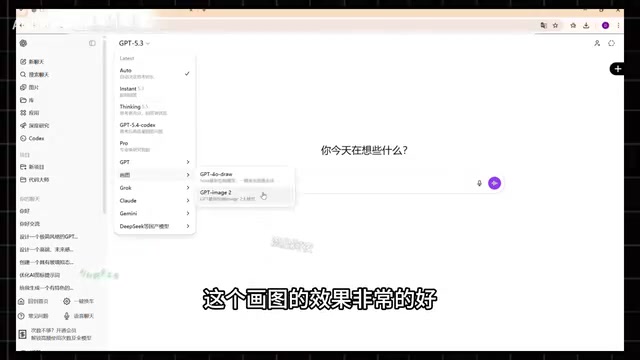
Recently, a video titled ChatGPT 5.6 Shockingly Released — Latest Free Usage Tutorial has been circulating widely on Bilibili and other platforms. It claims that OpenAI has dropped a "bombshell," officially releasing a so-called "GPT 5.6 series," with capabilities that "even surpass the banned Fable 5" — and that users can access ChatGPT, Gemini, Grok, and even Claude completely free and without usage limits through some "super treasure site."
As someone who closely follows the AI industry, let's be direct: this is a classic piece of misleading content, riddled with false information and potentially serious security risks. This article breaks down each red flag to help readers recognize and avoid this type of "free AI" scam.
Model Names That Simply Don't Exist
To understand why these names don't hold up, it helps to know how AI model naming actually works. Major AI companies like OpenAI, Google, and Anthropic each have well-defined naming conventions: OpenAI's GPT series follows a major integer versioning logic (GPT-3, GPT-4, GPT-4o, etc.), with variants using letter suffixes rather than decimal version numbers (e.g., GPT-4 Turbo, GPT-4o mini); Google's Gemini series uses tiers like Ultra/Pro/Flash; xAI's Grok series increments with integers. These conventions are industry norms — and fake content exploits the fact that most users aren't familiar with them, cobbling together "higher-sounding" version numbers to manufacture authority.
With that context in mind, the product names in the video fall apart under any scrutiny:
- "GPT 5.6" / "GPT 5.5 Syncing": OpenAI has never released a model called "5.6" or "5.5 Syncing." The claim that it was "held up by the U.S. government for over a week before being released" is pure nonsense — there is no such thing as a government approval process for AI model releases.
- "The banned Fable 5": No well-known model by this name exists in the industry. It reads like a fabrication designed purely to generate mystery.
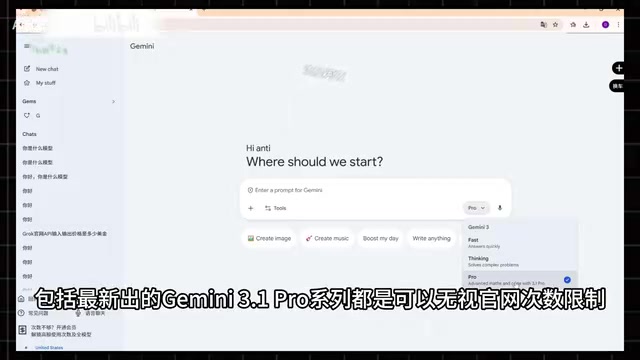
- "Grok 4.2" / "Gemini 3.1 Pro" / "DeepSeekAd V4": These version numbers don't correspond to any real product lines. They're made-up "future versions" designed to create the illusion of exclusive, cutting-edge access.
These nonexistent product names alone are enough to conclude that this content has essentially zero credibility.
Breaking Down the "Free Unlimited Access" Playbook
The core hook of these videos is the promise of completely free, unlimited access to every top-tier AI model in the world — and that's precisely what should raise the biggest alarm.
It Defies Basic Business Logic
To understand why "free and unlimited" is commercially impossible, you need to understand the real cost of running large language models. Every time an LLM generates a response, it performs matrix computations across billions or even hundreds of billions of parameters on GPU clusters — a process called "inference." For GPT-4-class models, OpenAI's official API charges per "token" (roughly 0.75 English words or 0.5 Chinese characters), billing input and output separately. Industry estimates put the cost of processing 1 million tokens at anywhere from a few to tens of dollars for GPT-4 — and even the heavily optimized GPT-4o hasn't reached a scale where unlimited free access is viable. Anthropic and Google face the same compute cost pressures, which is exactly why every major provider caps free tiers or uses subscription models.
Any third-party site claiming to offer "zero-cost, unlimited" access to paid AI models is commercially untenable — full stop.
The video's description of "hundreds of built-in official accounts you can freely choose from" and "click to switch to another official account on the right" points directly to stolen or bulk-registered account pools. This type of operation typically relies on one of two methods: bulk-registering large numbers of free accounts (violating platform terms of service, with accounts at constant risk of being banned), or purchasing or stealing other users' paid accounts or API keys (potentially illegal). Users of such services face multiple risks: their entire conversation history is fully exposed to the third-party operator and may be used to train private models or resold; if the API key belongs to someone else, users may unwittingly become beneficiaries of theft, creating potential legal liability; and these services are inherently unstable, liable to disappear the moment accounts get banned.
"Like, Follow, and Comment First" to Get the Link
The video repeatedly insists that users must "follow, triple-tap, and comment" before receiving the link. Understanding the mechanics here helps expose the scheme: recommendation algorithms on platforms like Bilibili use engagement rate (likes, coins, favorites, comments) as a core ranking signal. The "interact to get the link" pitch is a precise exploit of this system — creators use sensational titles to generate initial clicks, then inflate engagement with "exchange interaction for resources" promises, which triggers the algorithm to further amplify distribution, creating a snowball effect. The final private-message link or comment-section URL typically leads to a third-party site requiring registration or payment, completing the full loop from traffic to monetization.
This is a clear warning sign: genuinely useful technical tutorials provide directly verifiable information — they don't put high-friction engagement requirements in front of the content. This "phishing funnel" approach first harvests traffic with a sensational title, then funnels users toward uncontrolled third-party pages via DMs or comment links.
Those links may lead to: phishing websites, "mirror sites" that require top-ups, forms collecting sensitive personal information, or downloads carrying malicious software.
Why Does the Demo Footage Look "So Real"?
The video does show what appears to be genuine operation footage: generating interactive mini-games, switching models while retaining conversation context, AI-generated images that look almost real. These features genuinely exist in legitimate AI products — but the fact that the features are real does not mean the source is legitimate or the service is trustworthy.
Real Features, Misrepresented Origins
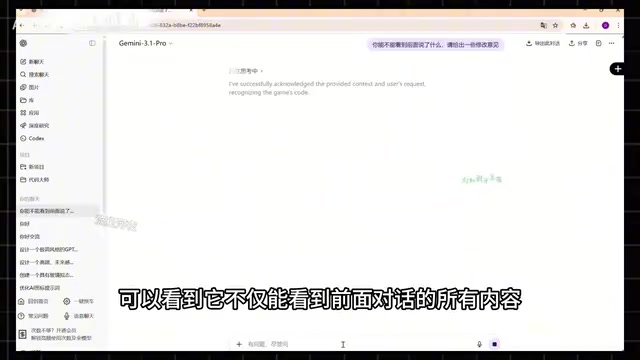
"Switching between different models in a single chat window while maintaining context" is a feature that legitimate AI aggregation platforms can genuinely offer via official APIs. There are real, legal AI aggregation platforms (such as Poe, LobeChat, etc.) that access multiple models through official APIs, with users consuming API credits purchased by the platform — typically requiring a paid subscription. So-called "mirror sites," by contrast, are unauthorized services that copy official interfaces and obtain API access through illegitimate means. The core difference: whether the platform has a legitimate API agreement with the model provider, whether it openly discloses its data handling practices, and whether it bears legal responsibility for service quality and data security.
The video takes these common features, packages them as "exclusive full-power versions" and "direct official connections," and bundles them with fake model names and account-theft rhetoric — misleading users who lack the context to know better.
Response Speed Proves Nothing
The video uses response speed as a selling point, claiming "Grok's advantage is that it answers fast and feels the most human." But speed says nothing about whether the backend is a legitimate official service. In fact, fast responses may indicate a cheap, small-parameter model impersonating a "full-power" one. Truly capable models often respond slightly slower because of the greater computational load — "instant replies" can actually be a signal that a low-capability substitute model is being used.

How to Use AI Tools Safely and Legitimately
In the face of never-ending "free access tutorials," here are the criteria worth establishing:
Stick to Official Channels
Whether it's ChatGPT, Gemini, or Claude, the most reliable approach is always to register and use these tools through official websites or official apps. Official platforms have free tier limits, but they guarantee data security and service stability. Users in China can prioritize compliant domestic large models — such as Tongyi, Wenxin, Doubao, or the official DeepSeek — whose free tiers are more than adequate for everyday needs. For multi-model aggregation, choose platforms that are registered with the MIIT and clearly publish their privacy policies, rather than unknown "mirror sites."
Watch for These Three Red Flags
- Exaggerated, nonexistent product names: When you see words like "latest," "exclusive," "full-power," or "unlimited" alongside version numbers that don't match official releases, be highly suspicious. Knowing the naming conventions of major AI companies is the first line of defense against misinformation.
- Links gated behind engagement or payment: Legitimate tools don't require "triple-tap plus DM" as an access condition. This design is fundamentally about traffic arbitrage, not genuine sharing.
- Promises of zero-cost access to paid models: "Free lunches" that defy basic commercial logic almost always come at the cost of your data security and account safety.
Protect Your Personal Data
Never enter anything involving personal privacy, account credentials, or business secrets into unknown "mirror sites" or "aggregation platforms." These platforms are fully capable of logging every single input you send — from a technical standpoint, every message you send to their server passes through their infrastructure, and operators can retain data at any point. Once that data leaks or gets repurposed, the consequences are hard to predict.
Conclusion
The "GPT 5.6" story is, at its core, a carefully engineered engagement trap for the traffic era — using a nonexistent "bombshell product" to generate anxiety and curiosity, then deploying the promise of "free access" to short-circuit rational judgment, and finally using engagement-gating to complete the traffic-to-monetization funnel. This playbook works repeatedly because it precisely exploits common blind spots: unfamiliarity with AI naming conventions, no intuition for inference costs, and no awareness of how platform recommendation algorithms work.
The democratization of AI is genuinely a good thing — but the hotter a field gets, the more it attracts content that rides the hype and plays in grey areas. For everyday users, the real and sustainable path to using AI safely is simple: stay skeptical of anything that sounds too good to be true, and always get your tools and information from official sources.
Key Takeaways
Related articles
What Is Vibe Coding? The AI Programming Skill Every Developer Needs
What is Vibe Coding? Learn how AI programming is reshaping dev teams, why traditional programmers face displacement, and why Cursor & Claude Code matter.
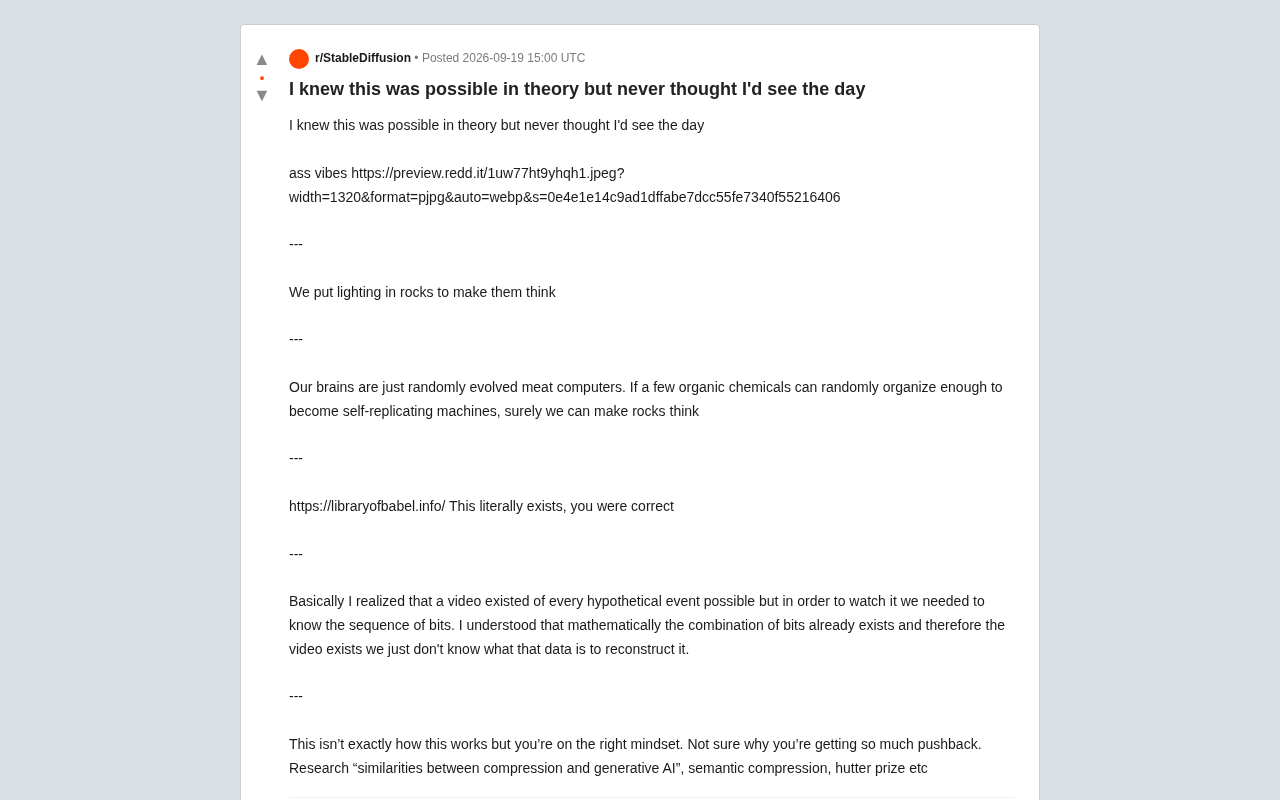
Making Rocks Think: A Philosophical Exploration of Generative AI and Information Compression
From a viral Reddit post to deep AI theory: why compression equals understanding, the Library of Babel thought experiment, semantic compression, and the Hutter Prize.
Irregular Warns: Four AI Lab Security Breaches Traced to the Same Root Cause
Irregular reveals four AI lab security breaches share a single root cause, exposing systemic risks from technology stack homogeneity across the AI industry.