Beware the 'Free GPT-6' Scam: The Truth About Local AI Deployment
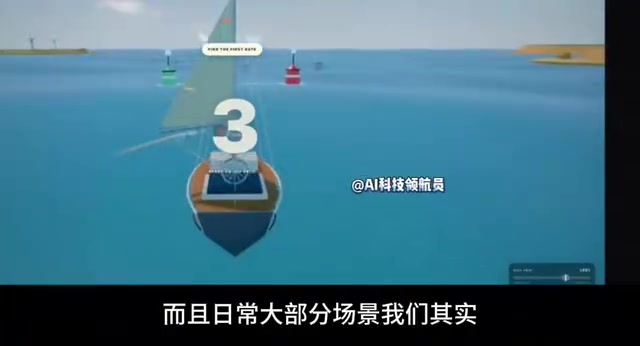
Fake AI product names wrapped around tiny open-source models — a textbook knowledge-gap scam.
Viral tutorials claiming 'GPT-6 Astra' runs free on low-end laptops contain two fundamental fabrications: the product names ('GPT-6 Astra,' 'Gemini3.8 Image2') don't exist, and consumer laptops physically cannot run models that match cloud-based flagship performance. Quantization reduces VRAM needs but at a steep capability cost — 'full-power, zero compromise' is impossible. These videos follow a standard playbook of manufactured anxiety, vague technical details, and comment-section funneling to sell paid courses or untrusted toolkits. The rational approach is deploying verified open-source models like Llama or Qwen via tools like Ollama, with clear eyes about their real limitations.
Behind a Suspicious 'Free Tutorial'
Recently, content with titles like GPT-6 Astra Free Usage Tutorial in China and With Gemini3.8 Image2 has been circulating on certain video platforms. These videos claim that with just a laptop or old PC with a few gigabytes of VRAM, anyone can follow along for three minutes and run a 'full-power' top-tier AI model locally — with reasoning and coding capabilities that are 'completely uncompromised.'
This kind of content is highly appealing, but a closer look from both a technical and factual standpoint reveals numerous claims that simply don't hold up. As a reader, it's worth understanding which parts are marketing spin and which parts reflect technical reality.
The Core Problem: These 'Products' Don't Exist
The 'GPT-6 Astra' and 'Gemini3.8 Image2' mentioned in these titles have no corresponding officially released products in any public record. Both OpenAI's GPT series and Google's Gemini series follow clear official release schedules and naming conventions. Version numbers that appear out of nowhere are typically fabricated by stitching together trending keywords to attract traffic.
Packaging non-existent or unreleased model names as 'free to use in China' or 'exclusive tutorials' is fundamentally a way to exploit users' curiosity about cutting-edge models and their knowledge gaps. The primary goal of such titles is rarely to share technical knowledge — it's to generate comments, direct messages, or funnel users toward third-party channels.
The Technical Reality: Running 'Full-Power' AI on a Laptop Is Not Feasible
These videos claim that 'an old PC with a few GB of VRAM can effortlessly run the same full-power AI as the hottest products out there.' This is wildly inconsistent with actual large model requirements.
Truly flagship large language models have hundreds of billions of parameters. Even with quantization compression, locally deploying a model with capabilities close to a cloud-based flagship demands far more VRAM and system memory than a typical thin-and-light laptop can provide. The open-source models currently runnable on personal computers — such as various 7B and 13B quantized versions — have a significant capability gap compared to top-tier closed-source cloud models. This is an objective consequence of compute and parameter scale, not some 'marketing downgrade.'
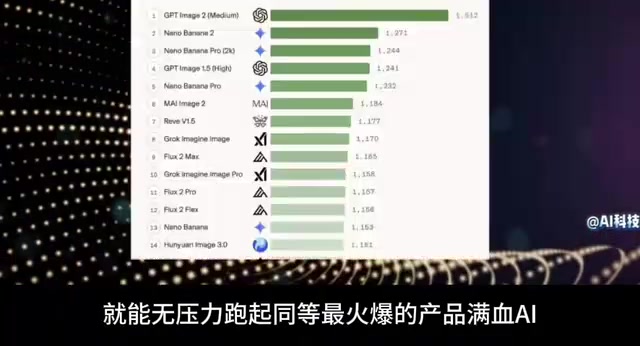
In other words, local small models have genuine value — for privacy, offline use, and low-latency specific tasks — but equating them with 'full-power GPT-6' is outright misleading. The laws of physics and the cost of hardware don't disappear just because someone calls it a 'paradigm shift.'
A note on quantization: Quantization is the core technique that allows large models to run on consumer hardware. It works by reducing model weights from high-precision floating-point numbers (e.g., FP16/BF16, 2 bytes per parameter) to lower-precision integers (e.g., INT8, INT4), dramatically reducing VRAM usage and computation. Take a 70B parameter model: at FP16 full precision it requires roughly 140GB of VRAM; 4-bit quantization brings this down to around 35–40GB — still requiring a professional multi-GPU setup. A 7B model at 4-bit quantization needs approximately 4–6GB of VRAM, which is the range consumer graphics cards can barely handle. Quantization inevitably introduces precision loss, and the smaller the model and the higher the compression ratio, the greater the capability degradation. The claim of 'running a full-power top-tier model with just a few GB of VRAM' is mathematically impossible — it's either a heavily quantized model with severely diminished capabilities, or it simply isn't the model being claimed.
The Classic Playbook of Manipulative Messaging
This type of content consistently follows a highly formulaic rhetorical structure that's worth recognizing:
Manufacturing Anxiety and False Dichotomies
These videos typically open by disparaging 'expensive graphics cards costing tens of thousands of yuan,' stoking a 'you've been ripped off' sentiment, then present a 'budget solution' as the antidote. This structure — set up a villain, then offer salvation — is textbook emotional marketing.
Obscuring Technical Details
The entire video emphasizes 'done in three minutes,' 'just follow along step by step,' and 'no complex coding required,' yet never specifies the actual model name, quantization method, or genuine source of the runtime framework. A real technical tutorial will clearly document the toolchain and version numbers — not gloss over everything with vague phrases like 'curated treasure toolkit.'

Funneling Users to Private Channels
The ending almost always involves 'drop a comment if you want it' or 'see you next time,' redirecting users to the comment section or direct messages. This step is typically the entry point for subsequent upsells of paid courses, paid 'toolkits,' or even outright information theft.
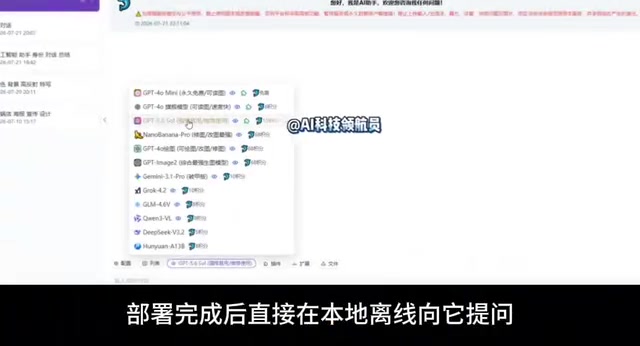
The underlying scheme: This type of content is essentially a form of 'information asymmetry arbitrage.' Creators exploit ordinary users' unfamiliarity with large model technical details, repackage freely available open-source tools (such as Ollama paired with a small quantized model), slap on a fictional top-tier product name, then use comments or direct messages to funnel that traffic into paid monetization channels. The entire pipeline requires zero genuine technical innovation — it only consumes users' time and trust. A quick way to spot this: search whether the product name in the title has a corresponding official release announcement; check whether the video provides a verifiable link to the model's source; and ask whether the 'tutorial's' core value is knowledge transfer or driving action (comments, follows, DMs).
How to Think Rationally About Local AI Deployment
Deploying AI models locally is a legitimate and genuinely valuable technical practice — but it needs to be grounded in an accurate understanding of reality:
- Use legitimate open-source models: Choose models with clear provenance and community support, such as Llama, Qwen, or Mistral, deployed through mature tools like Ollama or LM Studio.
- Accept capability limits: Local small models are well-suited for privacy-sensitive, offline, and lightweight tasks. Don't expect them to replace the comprehensive capabilities of cloud-based flagship models.
- Be skeptical of 'free full-power' claims: Any assertion that a low-end device can freely run a top-tier closed-source model at full capability is almost certainly false.
- Don't trust unknown toolkits: 'Configuration files' or 'cracked weights' from unverified sources may carry malware or infringe on intellectual property.
For reference: Among mainstream local deployment toolchains, Ollama is the most beginner-friendly cross-platform runtime, supporting one-command pull-and-run for major open-source models including Llama, Qwen, and Mistral, with automatic quantization version selection. LM Studio offers a graphical interface suited for users unfamiliar with the command line. On the domestic open-source side, Alibaba's Qwen2.5 series stands out for Chinese language comprehension and coding tasks — its 7B quantized version runs smoothly on devices with 8GB of VRAM, making it one of the more cost-effective local deployment options available today. To assess whether a local model fits your needs, refer to standardized benchmark scores like MMLU or HumanEval rather than unverifiable self-proclaimed claims like 'obliterates GPT-4.'
Conclusion
Enthusiasm for cutting-edge AI is entirely understandable — but the more a keyword trends, the more easily it gets weaponized as clickbait. When you encounter titles like 'Free GPT-6' or 'Run Full-Power AI with a Few GB of VRAM,' maintaining basic technical judgment is what protects you from losing your time, money, or personal information. What's genuinely worth investing in is learning about the real capabilities and limitations of open-source models through legitimate channels — not chasing a 'miracle' that doesn't exist.
Related articles
Automattic Executives Signed Reciprocal Severance Agreements During Mullenweg's Brief Ouster
Automattic's CFO and General Counsel signed reciprocal severance agreements during Matt Mullenweg's brief ouster, covering one year's salary and accelerated equity vesting, raising corporate governance concerns.
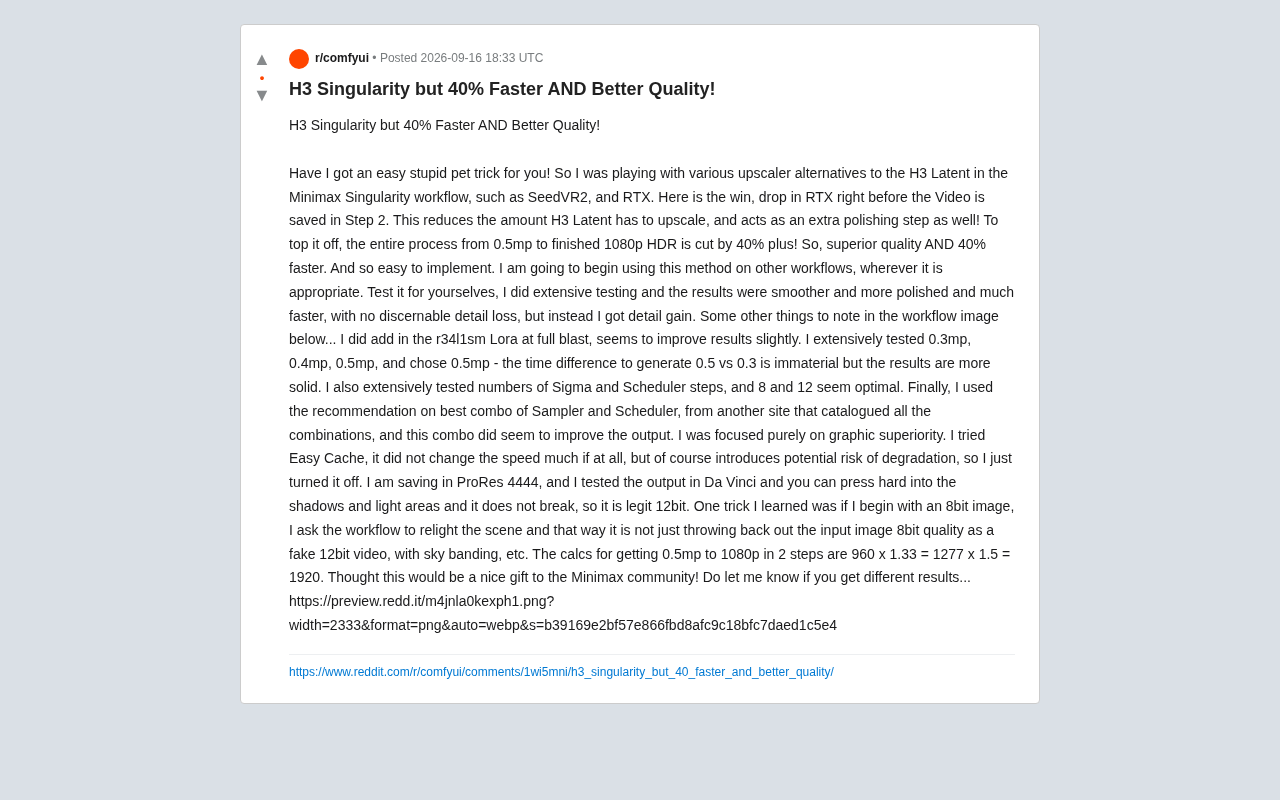
H3 Singularity Optimization: 40% Speed Boost With Better Image Quality
A Reddit user's Minimax Singularity workflow tip: insert an RTX upsampler before H3 Latent for 40%+ speed gains and better quality. Covers parameters, 12-bit output, and more.
Glyph: A Multi-Strategy Agent System for Automated Enterprise Data Catalog Annotation
Glyph is a multi-strategy LLM agent system for enterprise data catalogs that automates column description generation and sensitivity ontology tagging, grounding outputs in pipeline source code to improve accuracy.