Bilibili Live Stream Transcript: A Late-Night Conversation About AI Short Dramas, Self-Control, and Virtual Interaction

A late-night Bilibili stream reveals virtual gifts, self-reflection on AI short dramas, and persona negotiation in live-stream social life.
Using a late-night stream by Bilibili host Ling Xiaoxiao as a sample, the article reconstructs the interactive texture of a late-night live room. From exchanges of virtual gifts like "Myriad Phenomena Fireworks" and "Papaya Pearl" to the streamer's self-mockery about binge-watching AI short dramas, and to boundary negotiations over private topics such as height and bare-faced photos, the stream presents a fragmented yet genuine emotional density. The streamer responds to bullet comments while thanking viewers for gifts, maintaining relationships through improvised dialogue; viewers participate with lines like "money flows." The article argues that this themeless stream fully reflects how young people use live streaming to relieve loneliness, manage attention, and shape personas.
When the Live Room Becomes a Late-Night Emotional Sounding Board
In the early hours of the morning on Bilibili, streamer Ling Xiaoxiao's mic is hosting what looks like a casual conversation. Viewers drift in and out, gift effects flicker, and topics jump from everyday greetings to the trivia of life. This scene is familiar in the live-streaming ecosystem—it is both entertainment consumption and a social ritual through which young people today relieve loneliness.
"You're not telling me you just got back today? Long time no see, Brother Xiao Wang"—the opening line carries the ease of old acquaintances. The streamer thanks viewers for lighting up the room while responding to questions about gatherings. This multi-threaded mode of interaction forms the basic texture of live-stream content. Viewers participate in the conversation through bullet comments and gifts, and the streamer must maintain the rhythm amid fragmented information.
Virtual Gifts and Social Currency
The "Myriad Phenomena Fireworks" and "Papaya Pearl" that recur in the conversation are the platform's virtual gifts. The streamer mentions "four Papaya Pearls short, four short," and viewers respond with "Myriad Phenomena Fireworks times two." This seemingly gamified interaction is in essence the basic unit of the live-streaming economy—viewers spend real money to buy a sense of social presence, and the streamer reinforces interactive feedback by thanking them by name.
You may not have noticed that this interaction is not a one-way giving. When a viewer says "money flows," the streamer immediately picks up: "It's precisely because it flows that there's more motivation to earn." This instant rationalization of consumption behavior shows the streamer's skill in maintaining relationships with viewers.
Virtual gifts are a tipping mechanism designed by live-streaming platforms. Viewers recharge with real currency and then purchase virtual items within the platform (such as the "Myriad Phenomena Fireworks" and "Papaya Pearl" mentioned in the article), which they give to streamers in the live room. Platforms usually share revenue with streamers proportionally, and some platforms also have growth systems such as "nobles" and "fan badges," tying tip amounts to user levels and exclusive identifiers. This design turns economic behavior into visible social symbols, making gifts a quick way for viewers to express support and gain the streamer's attention, and it also constitutes one of the main sources of income for platforms and streamers.
From "Reading Cursive Script" to "Watching AI Short Dramas": A Moment of Self-Reflection on Content Consumption
In the middle of the stream comes a thought-provoking piece of self-disclosure. The streamer mentions, "These past two days I've been reading cursive script—too dumb, too bad," and then immediately pivots: "People still need a bit of self-control. Watching AI short dramas every day makes me want to give myself two slaps."

This seemingly casual complaint touches on a common predicament in contemporary content consumption. AI-generated short dramas rapidly fill information feeds at extremely low production costs, and users often consume large amounts of time in the inertia of "just one more episode." Behind the streamer's self-mockery is a plain reflection on attention management—"still better to sleep earlier." This advice is directed at viewers, but it also sounds like a reminder to herself.
Sleep and Bodily Perception
The topic naturally extends to sleep schedules. The streamer admits, "If I don't sleep well during the day, I feel terrible," while one viewer responds with the exaggerated claim, "I eat two tons a day." These fragmented bodily narratives reflect the living conditions of late-night live-stream audiences: disordered schedules, irregular eating, and yet obtaining a certain comfort from virtual companionship.
AI short dramas generally refer to vertical-screen short dramas created with the assistance of generative AI tools or fully automatically generated. Each episode usually lasts one to three minutes, with fast pacing and dense plot twists. Compared with traditional film and television production, their costs are extremely low and output is fast, so supply on short-video platforms has expanded rapidly. Algorithmic recommendation then pushes similar content to users continuously, creating the viewing inertia of "one episode after another." The streamer's line about wanting to slap herself for watching AI short dramas every day points precisely to this continuous encroachment of low-cost content on attention and time, and it also shows that AI content production has penetrated the level of everyday entertainment consumption.
Height, Age, and Persona Construction in the Live Room
A conversation about height is quite representative. The streamer mocks herself: "I'm only 1.6 meters" and "completely a potato," while also mentioning, "A lot of people say my face is the kind that belongs to a tall girl." This contrast between self-description and viewer perception precisely creates the tension of a live-room persona.

When a viewer mentions "the eldest is six years old," the streamer quickly calculates the age gap: "Twenty-three minus six makes him seventeen years younger than me." This improvised age arithmetic is both a response to viewer information and an inadvertent exposure of the streamer's own age range.
Bare Face and the Promise of "I'll Send You One After I Remove My Makeup"
The streamer repeatedly mentions during the conversation, "Wait until I remove my makeup and I'll send you one" and "A bare face is more innocent, right?" This practice of using a private image as an interactive bargaining chip is a common boundary negotiation in live-stream relationships. Viewers exchange gifts for more intimate displays, while the streamer seeks a balance between maintaining mystery and meeting expectations.
In the context of live streaming, "persona" refers to the public image a streamer shapes for the camera, which may include physical features, personality labels, or speaking style. There is often a distance between it and the streamer's real self, and viewers continuously participate in shaping and testing this image through bullet comments, gifts, and questions. In the article, the self-deprecating remarks about height, the "tall-girl face," and the promise of a bare-faced photo are all materials the streamer uses to maintain the persona: self-mockery closes the distance, while promising a private display prolongs viewers' anticipation. This negotiation requires the streamer to grasp the right measure, and it also reflects that live-stream relationships are built on continuous interactive performance.
Music, Fitness, and Fragments of Daily Life
Near the end of the stream, a lyric fragment appears: "I like my beats fast and my bass down," and the streamer repeats "Bass down" along with the rhythm. This improvised musical interaction provides a breathing rhythm for the ongoing textual conversation.

The topic then turns to fitness: "After eating, I'll rest for half an hour and then go train my shoulders." The streamer mentions, "I need to do something about my face" and "my face isn't awake enough," juxtaposing anxiety about appearance with fitness plans and presenting the streamer's dual self-management before and behind the camera.
Technical Details: Lag and Scenes
"How can it be so high on Xinglin Bridge?" "Coming to Jimei Kase Bridge today, it will definitely lag a bit"—these discussions about network lag point to the technical dimension of live streaming. Streaming while mobile places extremely high demands on network stability, and both the streamer and viewers are clearly aware of this.
Conclusion: Live Streaming as a Slice of Contemporary Social Life
This stream has no clear theme, yet it fully presents multiple facets of live-stream culture: the economic logic of virtual gifts, self-reflection on AI content consumption, negotiation between persona and the real self, and the emotional density peculiar to late-night hours. The improvisational responsiveness that streamer Ling Xiaoxiao displays while handling fragmented bullet comments is itself a form of content productivity worth noting.
When a viewer says "money flows," the streamer replies, "That means you'll earn even more in the future"—this rhetoric that transforms consumption into positive psychological suggestion may be precisely the most subtle part of live-stream interaction.
Related articles
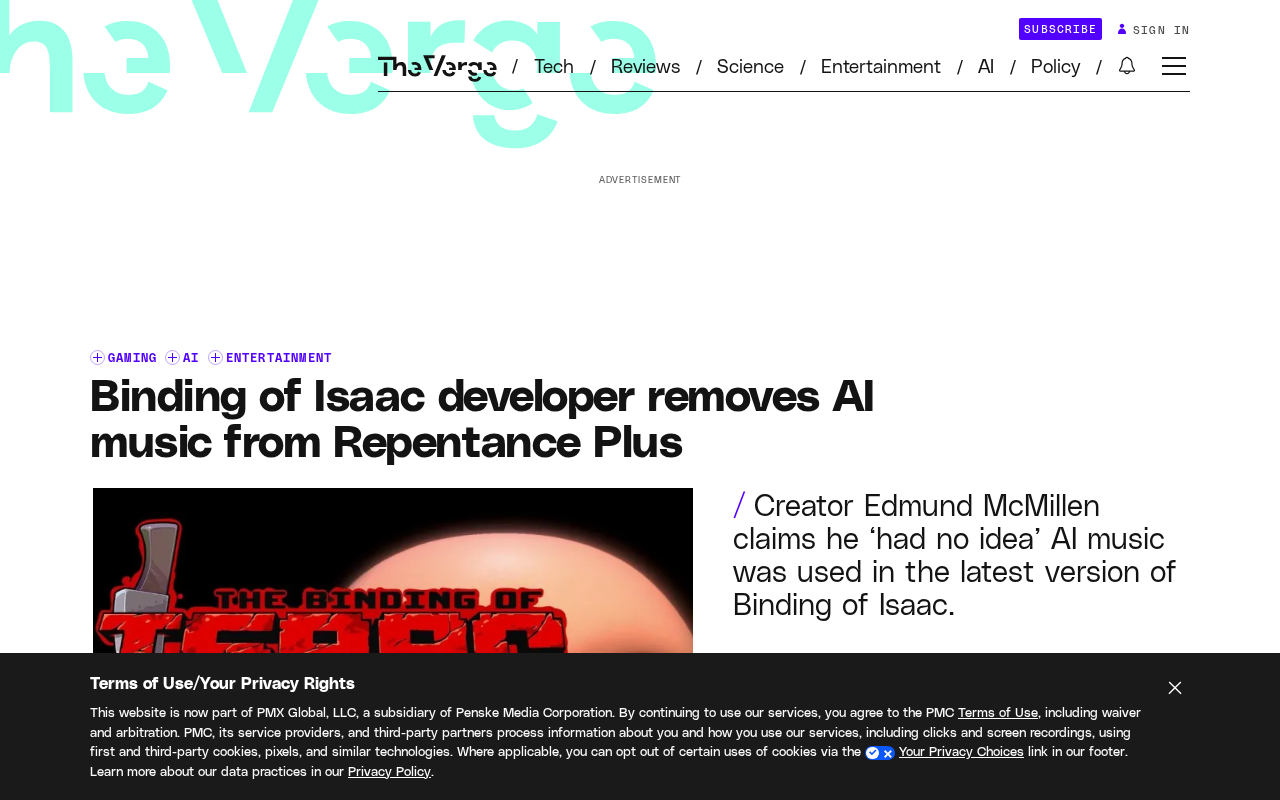
The Binding of Isaac Developer Removes AI Music, Steam Review Bombing Subsides
The Binding of Isaac: Repentance+ faced Steam review bombing over AI music, and the developer has removed the tracks. This article reviews the incident, analyzes player anxiety about AI replacing human creation, and explores transparency and trust costs around AI content in the game industry.

Why Data Centers Have Become the Center of Big Tech's Backlash
Tech journalist Paris Marx's book Hyperscale reveals how data centers became the flashpoint for Big Tech backlash—from resource costs and environmental impacts to policy battles.

Astra 6.2 and Sol 6.2 Unexpectedly Flop on Simple Bench
Astra 6.2 and Sol 6.2 underperformed on the Simple Bench benchmark, sparking heated discussion on Hacker News. This article analyzes the background, Simple Bench's testing logic, and implications for evaluating model capabilities.