Bitrise RDE: A Cloud Mac That Spins Up in Seconds for Your AI Coding Agents
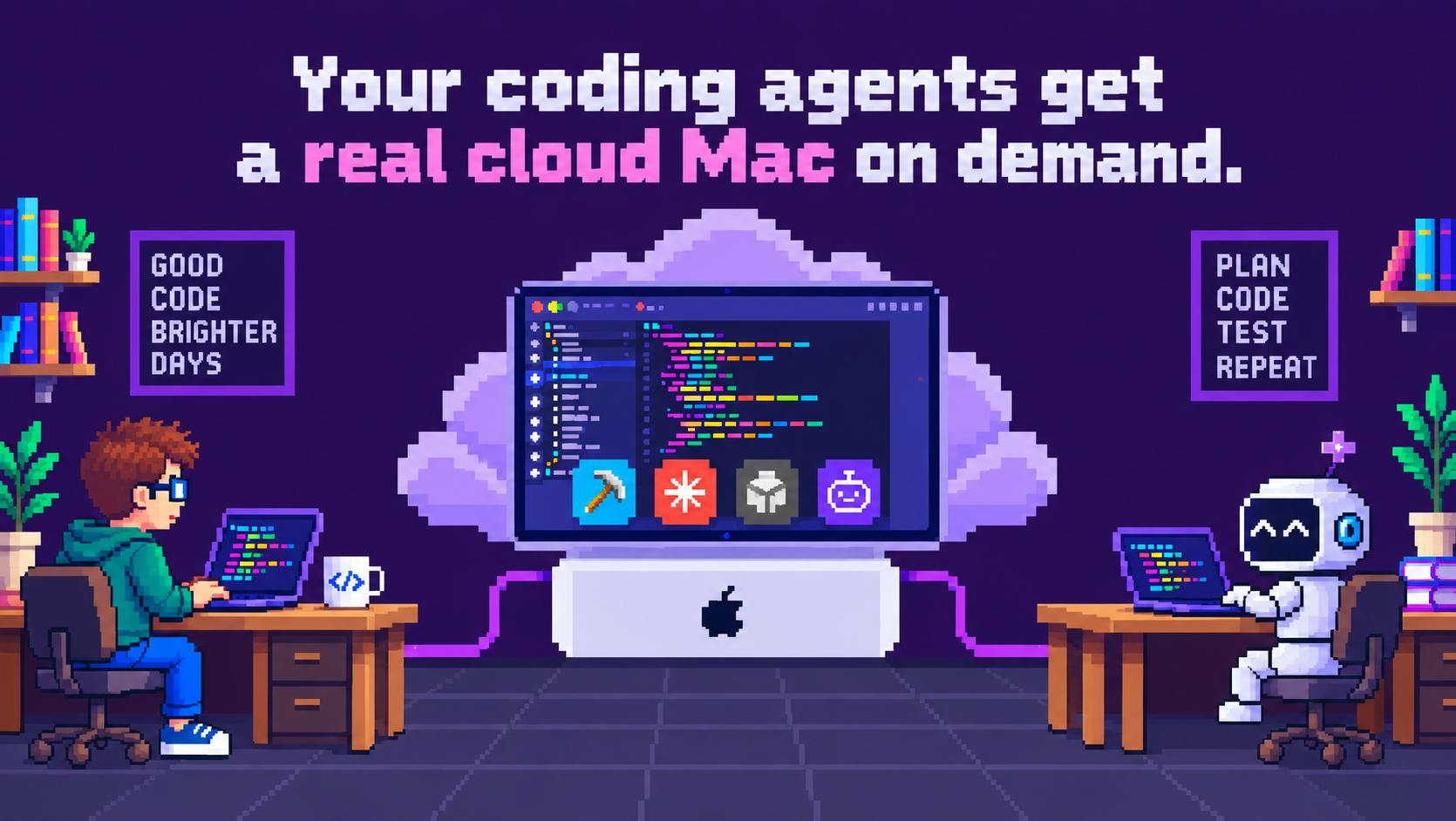
Bitrise RDE gives AI coding agents instant-start cloud Macs with parallel builds via MCP.
Bitrise Remote Dev Environments (RDE) is a cloud Mac/Linux service built for AI coding agents, targeting a core pain point in AI-assisted development: agents need more than code generation — they need a real environment to compile, build, and test. RDE provides instant-start cloud Macs that share the same machines, stack, and cache as your CI pipeline, eliminating environment drift. Its standout feature is MCP-based orchestration that gives each AI agent its own isolated machine for parallel builds. It also supports VS Code, Cursor, and Claude Code, with an archive/restore mechanism to keep costs in check.
When Coding Agents Need a Machine That Can Actually Build
As AI coding tools like Claude Code and Cursor become more widespread, a new pain point has emerged: these agents don't just write code — they need an environment where they can actually compile, build, and run tests. This is especially true for iOS and macOS development, where builds require Mac hardware. Local Mac resources are limited, and things get even more constrained when multiple agents are working in parallel.
Bitrise Remote Dev Environments (RDE) was built precisely for this scenario. Its tagline is blunt and on point — "Cloud Macs your coding agents can actually build on." The product earned 160 upvotes and 65 comments on Product Hunt, landing at #2 for the day, a clear signal of genuine developer demand.
Core Capability: Cloud Dev Machines That Start in Seconds
RDE provides cloud-based Mac and Linux machines that, according to the team, spin up in seconds. More importantly, they use the exact same machines, tech stack, and cache as your CI (continuous integration) pipeline. This means build results in local or agent environments closely match what you'd see in CI — fundamentally eliminating the classic "it works on my machine" problem.
For iOS/macOS developers, cloud Macs are particularly valuable. Maintaining a local Mac build cluster is expensive, and an on-demand, ephemeral cloud approach can significantly reduce hardware and operational overhead. The shared cache with CI also ensures build speed stays fast, so you're not pulling dependencies from scratch every time.
"Works on my machine" is a long-standing pain point in software development, rooted in configuration drift between dev and CI/production environments — OS versions, dependency versions, environment variables, cache states, and other subtle differences can all cause inconsistent build results. For iOS/macOS projects, this is especially tricky: mismatches in Xcode versions, iOS SDKs, code signing certificates, or CocoaPods/Swift Package Manager dependency caches can all trigger build failures or divergent outputs. RDE addresses this at the root by having dev and CI environments share the same infrastructure images and cache layers. Builds that pass in RDE are far more likely to reproduce cleanly in the CI pipeline, shortening debugging cycles significantly.
Parallel Architecture Built for AI Agents
RDE's most forward-looking design is its workflow for AI coding agents. The product supports assigning each agent its own dedicated machine, with multiple agents running in parallel via the MCP (Model Context Protocol).
This directly addresses the direction AI-assisted development is heading. When you have multiple agents simultaneously working on different feature branches or exploring parallel implementation approaches, each one needs an isolated, clean environment with full build capabilities. RDE exposes these cloud machines to agents through MCP, allowing them to invoke real build resources autonomously — not just generate code inside a sandbox.
Beyond agent workflows, RDE also supports traditional human development: developers can connect VS Code, Cursor, Claude Code, and other editors directly, using the cloud machine as an extension of their local environment.
MCP (Model Context Protocol) is an open protocol introduced by Anthropic to establish a standardized communication interface between AI models and external tools and resources. The core idea is to wrap various external capabilities — file systems, databases, API services, compute resources — as "tools" that AI models can call, enabling agents to interact with different systems in a unified way without needing custom integrations for each resource type. In RDE's context, MCP acts as the orchestration layer between AI agents and cloud Mac machines: agents issue build commands through the MCP interface, and RDE routes them to the appropriate isolated environment and returns results. The advantage of this architecture is that the agent side doesn't need to know anything about the underlying machine implementation, while RDE can flexibly extend support for new agent types — as long as they follow the MCP protocol, tools like Claude Code and Cursor can plug into the same resource management system.
Archive and Restore: Pay Only for What You Use
Another pragmatic feature is the environment archive and restore mechanism. When you stop working, you can archive your environment and restore it whenever you need it again. This design preserves continuity of your work state while avoiding charges for idle resources — a sensible fit for cloud economics.
For projects with intermittent work or long-running configurations that need to be preserved, this mechanism effectively balances cost and convenience.
Positioning and Significance
Bitrise itself is a veteran CI/CD platform in the mobile DevOps space. RDE can be seen as a strategic expansion from "automated builds" toward "interactive cloud development." The product sits at the intersection of three categories — Mac, developer tools, and AI — a cross-positioning that accurately describes its target users: teams doing mobile development with AI assistance.
As AI coding assistants rapidly improve, "code generation" is increasingly no longer the bottleneck. The real bottleneck is shifting toward giving agents a reliable environment to execute and validate their work. RDE is trying to fill exactly that infrastructure gap. Rather than being yet another AI coding tool, it aims to be the machine behind the agent — one that can actually get things done.
For teams evaluating this kind of tool, the key questions remain: actual startup latency, machine specs, integration cost with existing CI pipelines, and the stability of MCP under multi-agent workloads. Those factors will determine whether RDE can truly land in day-to-day development workflows.
Related articles
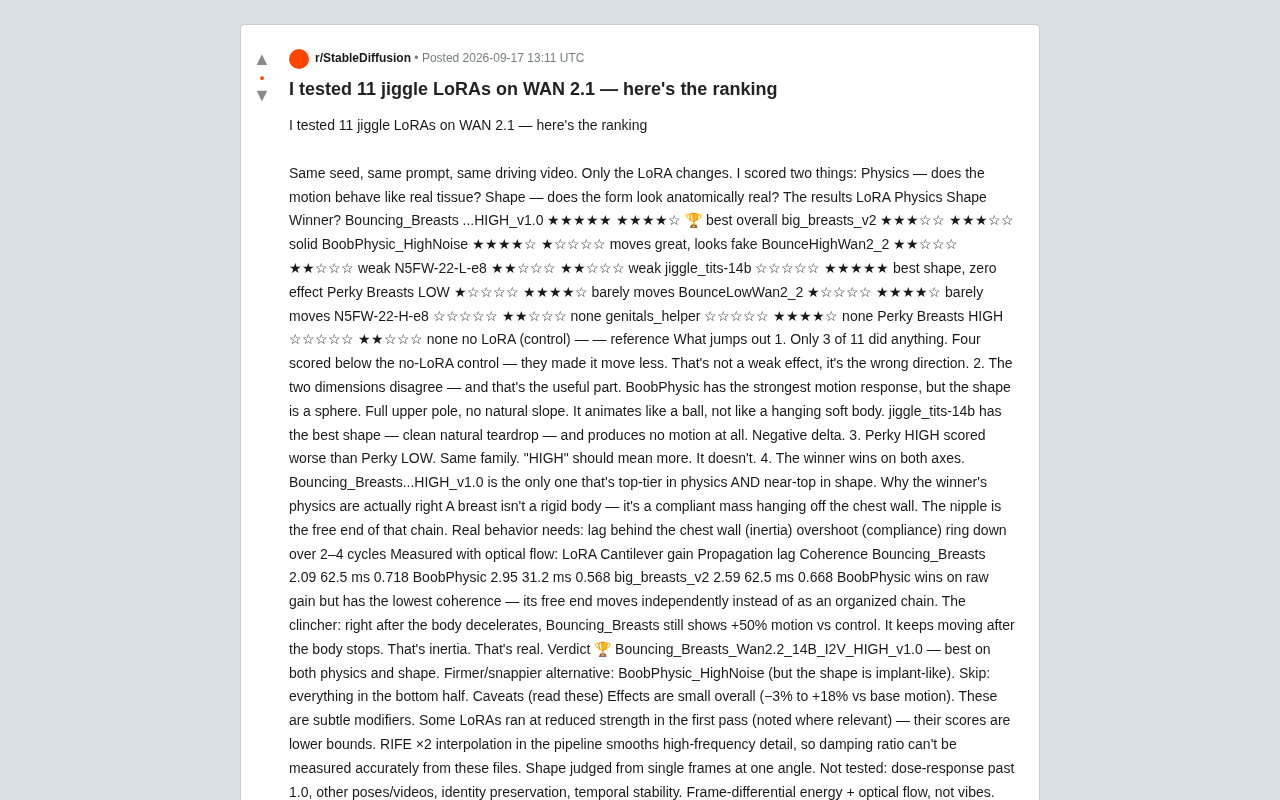
WAN 2.1 Physics Motion LoRA Benchmark: Rankings and Methodology for 11 Models Tested
A Reddit user benchmarked 11 physics-motion LoRAs on WAN 2.1 using optical flow analysis. Only 3 worked meaningfully; 4 scored below the no-LoRA baseline. Full rankings and methodology inside.
Lucid Partners with Bolt to Target European Robotaxi Market
Lucid Motors has signed a letter of intent with European mobility platform Bolt to explore Robotaxi services in Europe, though no vehicle orders have been placed yet.
AI Assistants Enter the "Phone Call" Era: Instinct and Meta Muse Add Voice Task Execution
AI assistants Instinct and Meta Muse now make phone calls on your behalf — booking restaurants, canceling subscriptions — marking a leap from chat tools to real-world agents.