Bitwarden's Dual License Model Sparks Heated Debate in the Open Source Community

Bitwarden's dual license model sparks community debate over the commercial sustainability of open source security tools.
A Bitwarden version update announcement sparked 384 points and 283 comments on Hacker News, focusing on its dual-licensing model: GPLv3 for the client and AGPLv3 plus a commercial license for the server. The community split into three camps—supporters, skeptics, and neutral observers—reflecting the fundamental tension between transparency and sustainability in open source security tools.
A Debate Over the Definition of Open Source
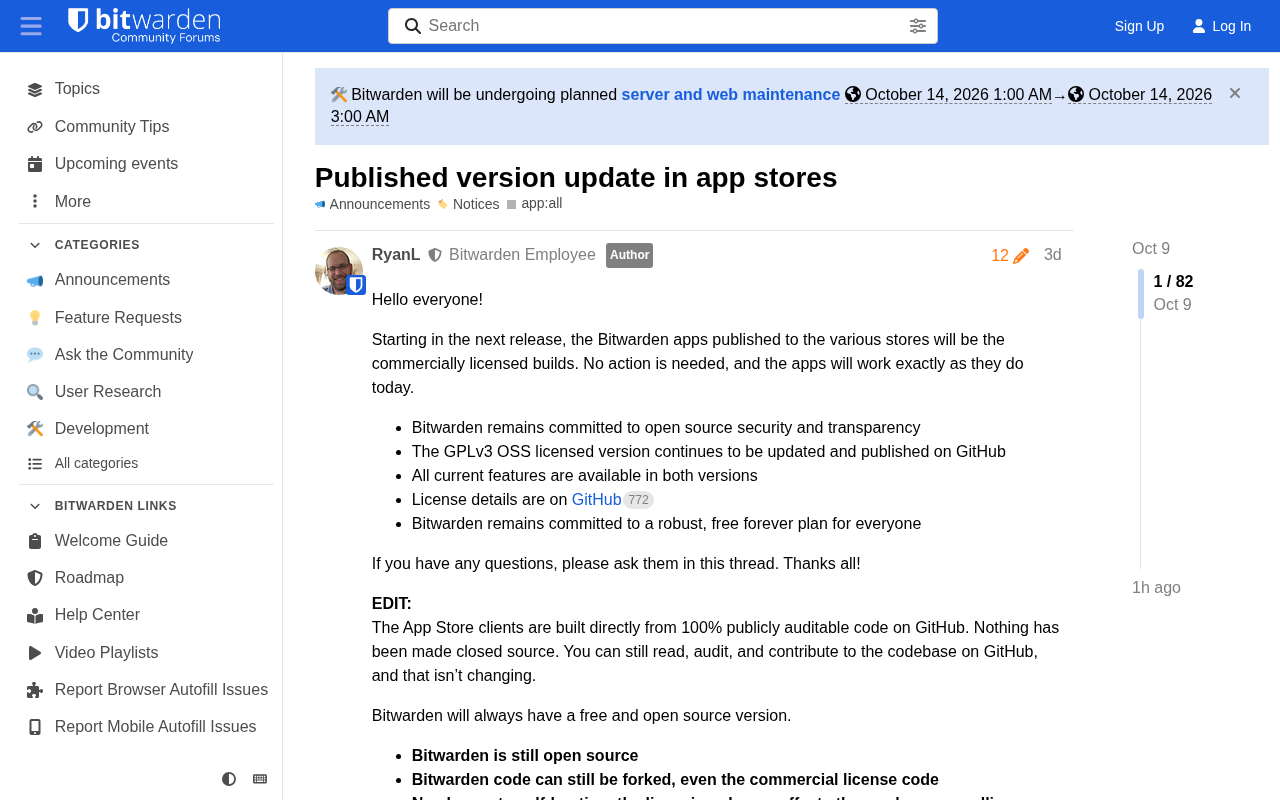
A recent version update announcement posted by password manager Bitwarden on its community forum unexpectedly ignited a fierce discussion about its dual license model. The post garnered 384 points and 283 comments on Hacker News, with engagement far exceeding that of a typical product update notice.
The core of the controversy: Bitwarden uses the GPL license for its client applications, while employing a dual-licensing model of AGPL plus a commercial license for its server-side components. This arrangement is nothing new, but community members hold clearly divergent views on whether it aligns with the spirit of open source and whether it restricts the growth of third-party service providers.
What the Dual License Actually Means
According to the breakdown in the community discussion, Bitwarden's code repositories are effectively split into two parts: the client side (including browser extensions, mobile apps, and desktop applications) is released under GPLv3, while the server side (including the API, database migration scripts, etc.) is released under both AGPLv3 and the Bitwarden commercial license.
The key to this model: any third party that wants to offer a hosted service based on Bitwarden's server-side code must purchase a commercial license from Bitwarden if they don't want to comply with AGPL's open source obligations. Bitwarden has previously stated that this arrangement is intended to keep core functionality open while ensuring the company's own commercial sustainability.
Key Differences Between GPLv3 and AGPLv3
GPLv3 (GNU General Public License version 3) is the most widely known strong copyleft license: anyone distributing a derivative work based on GPL code must open-source it under the same license. But the trigger for its obligations is "distribution"—if you merely deploy the software on your own server for others to use over a network, that doesn't constitute distribution, and therefore you don't need to disclose the source code.
AGPLv3 (GNU Affero General Public License) was created precisely to close this "network service loophole." It adds Article 13 on top of GPLv3: as long as users interact with the software over a network, the operator must provide those users with the corresponding source code. This means any vendor offering a hosted service based on Bitwarden's server-side code must open-source its modifications even without "distributing" the software. If they're unwilling to take on this obligation, they can only purchase a commercial license—this is precisely the licensing foundation that makes Bitwarden's dual-licensing model viable.
Three Camps in the Community
The comment section roughly split into three voices.
Supporters view this as a reasonable choice for an open source company to sustain its operations. One user pointed out that password managers involve extremely high security sensitivity, and hosting service operators need to be accountable for auditing, compliance, and user data security—a commercial license can filter out truly capable service providers.
Skeptics worry that the dual license creates a "closed ecosystem under an open source facade." They note that AGPL already requires network service providers to contribute source code back, and layering a commercial license on top may deter small self-hosted service providers in legally ambiguous territory.
The neutral camp focuses more on practical impact: does the licensing itself hinder community contributions? Some developers said their upstream patches mainly target the client side, and the server-side license changes have virtually no impact on their daily work.
The Unique Dilemma of Security Products
This discussion is worth paying attention to because it touches on a fundamental contradiction in open source security tools: users want code to be fully transparent and auditable, but maintainers need sustained funding to address security vulnerabilities, compliance audits, and infrastructure costs.
Bitwarden is not the only project facing this problem. Similar dual-license or open core models have precedents in password management, identity authentication, monitoring and alerting, and other fields. The community debate over Bitwarden is, to some extent, charting a course for the business models of the entire open source security ecosystem.
Precedents for the Open Core Model in the Open Source Security Ecosystem
"Open core" refers to vendors releasing core functionality under an open source license while placing enterprise-grade features (such as SSO, audit logs, and high-availability support) under a commercial license. This model is quite common in infrastructure software: GitLab, Elastic, MongoDB, Redis, and others have all adopted or adjusted similar strategies. MongoDB and Elastic later even shifted from AGPL to the more restrictive SSPL, sparking even broader controversy.
In the security field, this contradiction is especially acute. The value of products like password managers, identity authentication, and key management depends heavily on code auditability—users must be able to verify that "my master password won't be secretly uploaded." But on the other hand, ongoing penetration testing, CVE response, SOC 2 and other compliance certifications all require a stable engineering team and funding. Projects relying purely on donations or volunteer maintenance (such as some early password managers) often struggle to keep up with security response over the long term. The Bitwarden debate is essentially asking: between transparency and sustainability, is there a balance point that is both acceptable to the community and capable of sustaining a team?
What It Means for Ordinary Users
If you only use Bitwarden's official client or official hosted service, this license discussion won't change your experience. For users who choose to self-host, existing deployments are not retroactively affected by license changes—it's only that if you want to offer a commercial hosted service based on its code in the future, you'll need to read the terms carefully.
What's truly worth watching is whether community contribution activity changes as a result, and whether any new forks or alternative projects gain momentum.
One-line Summary
Bitwarden's dual license model has sparked community debate over the commercial sustainability of open source security tools.
Paragraph Summary
A Bitwarden version update announcement sparked 384 points and 283 comments on Hacker News, with the focus being its dual-licensing model: GPLv3 for the client and AGPLv3 plus a commercial license for the server. The community split into three camps: supporters believe the commercial license can filter qualified hosting providers, skeptics worry about a "closed ecosystem under an open source facade," and neutral observers focus on the actual impact on community contributions. The debate reflects a fundamental contradiction in open source security tools—users want fully transparent, auditable code, while maintainers need sustained funding to handle vulnerabilities, compliance, and infrastructure costs. There's no direct impact on ordinary users or existing self-hosted deployments, but third-party commercial hosting requires attention to the terms, and community contribution activity and the trajectory of alternative projects are worth continued observation.
Related articles

Amphibious Transforming Drone: Beyond 100x Power Savings, What Are the Real Needs?
Is the amphibious transforming drone just a gimmick? Starting from the 100x power difference of the M4 Morphobot, explore real application scenarios and thesis topic ideas, analyzing boundary conditions where pure drones and pure ground robots both fail.

Warhound Raises $200 Million: Genetically Engineered "War Dogs" Paired with Anduril Gear
Warhound raises $200M, backed by Ben Lamm and Palmer Luckey, to genetically engineer dogs for military and law enforcement use and equip them with Anduril gear. This article analyzes its technology direction, funding logic, and ethical controversy.

Claude API Comes to Google Cloud: IAM Integration and SDK Access Guide
Anthropic hosts the full Claude API on Google Cloud with IAM-controlled permissions and unified billing. This guide covers the Vertex AI and Anthropic-hosted entry points, IAM role configuration, and SDK access.