Black Friday Game Deals Roundup: Consoles Absent, Games and Peripherals Worth Buying

Black Friday console and core PC hardware discounts are weak, while game software, peripherals, and monitors are the real deals worth grabbing.
This article reviews the overall landscape of this year's Black Friday game promotions, noting that unlike previous years, discounts on consoles and key PC components are scarce and not worth dedicated recommendations, while video games, gaming peripherals, and monitors carry the banner for this sale event. The article analyzes the underlying logic: core hardware has inelastic demand with insufficient incentive for discounts during peak season, while software and peripherals face fierce competition and inventory pressure, making real price cuts more likely. The advice for gamers is to allocate budget toward expanding their game library and upgrading their desktop setup rather than waiting endlessly for console price drops. It also reminds consumers to stay rational, judge discount value based on actual needs, and promptly verify price and inventory changes.
Overall Observations of Black Friday Game Promotions
This year's Black Friday promotional landscape differs somewhat from previous years: discounts on consoles and key PC components are either scarce or not compelling enough to tempt buyers. But that doesn't mean gamers have no worthwhile opportunities—video games, gaming peripherals, and monitors are carrying the banner for this sale event.
Judging from the aggregated discount information, truly attractive deals are concentrated in software and peripheral hardware. For gamers on the fence, rather than endlessly waiting for console price drops, it makes more sense to allocate budget toward expanding their game library or upgrading their desktop setup.
Which Categories Are Worth Watching
Video Games: The Main Force of Discounts
Game software is the most noteworthy category this Black Friday. Multiple popular titles have seen decent price cuts, making this a good low-cost window for players looking to fill out their library or try new releases. Compared to hardware, software discounts have broader coverage and more options.
When understanding game discounts, it helps to distinguish the pricing logic of digital vs. physical editions. Digital games are priced directly by platform holders (such as Steam, PlayStation Store, Xbox Store), with discounts often appearing as limited-time promotions and no inventory costs—meaning price cuts can be substantial. Physical editions are affected by retailer inventory clearance, channel rebates, and other factors, and end-of-year sales seasons often bring clearance prices below digital editions.
Additionally, when comparing prices, players can use historical low price tools (such as price-tracking websites) to avoid being misled by "original price strikethrough" marketing tactics. A genuinely good deal typically approaches or reaches the game's historical low, rather than merely showing a large percentage off.
Peripherals and Monitors: Upgrading Your Desktop Setup
Gaming accessories and monitors have also seen many noteworthy deals. If you've been considering replacing your mouse, keyboard, headset, or monitor, this promotion offers a relatively friendly opportunity to buy. The original article specifically mentions "numerous fantastic discounts" among these products, indicating that both the depth and range of options for peripherals and monitors are considerable.
Why Consoles and Core Components Are Absent
The original article explicitly states that during Black Friday, discounts on consoles and key PC components are "in short supply"—either limited in availability or "not good enough to warrant covering," meaning they don't reach the threshold of being worth a dedicated recommendation.
The logic behind this isn't complicated: demand for core hardware is relatively inelastic, and manufacturers and retailers lack the incentive to offer substantial concessions during peak season. Meanwhile, game software and peripherals face fiercer competition and greater inventory pressure, making real price cuts more likely. For consumers, this means focusing on software and accessories offers better value.
Price inelasticity is the key economic concept for understanding this phenomenon: when demand for a product is insensitive to price changes, manufacturers lack incentive to cut prices. Game consoles and high-end GPUs, CPUs, and other core components are often in short supply during peak season, with stable customer bases even at full price—so retailers have no need to sacrifice profit for volume.
In contrast, game software and peripherals fall into the elastic demand category: intense competition among similar products, abundant substitutes, and highly price-sensitive consumers. Coupled with the near-zero marginal inventory cost of digital games and the clearance pressure on peripherals facing generational turnover, retailers are more willing to drive conversions through substantial discounts. This also explains why Black Friday's "real deals" often concentrate on software and peripheral hardware.
How to View Promotion Lists Rationally
When facing various discount roundups, maintaining judgment is more important than following the crowd. It's advisable to first clarify which categories you genuinely need: Are you missing a particular game, or are your peripherals aging and in need of replacement? Only when discounts correspond to actual needs do they have meaning.
Also, promotional information is often updated frequently, and inventory and prices can change at any time. When you see a deal that matches your needs, verifying and acting promptly is more practical than repeatedly comparing prices.
Promotion roundup content has an inherent timeliness bias: prices and inventory at the time of publication may change within hours, especially for limited-time flash sales or lightning deals. Readers should treat such lists as "leads" rather than "promises," and verify on the merchant's page as soon as they see an item they like.
Also beware of the anchoring effect—merchants often use inflated "original prices" as reference points to make discounts seem more attractive. A more reliable way to judge whether something is worth buying is to compare the product's actual transaction prices over recent months, rather than just looking at the stated discount percentage.
Summary
This Black Friday's game promotions show clear structural characteristics: consoles and core PC components are absent, while game software, peripherals, and monitors are the main sources of discounts. For gamers, this is a window to expand their game library and upgrade their desktop setup—not the best time to replace a console or core hardware.
(This article is based on publicly available promotion roundup information; please refer to merchant pages for actual prices and inventory.)
Related articles
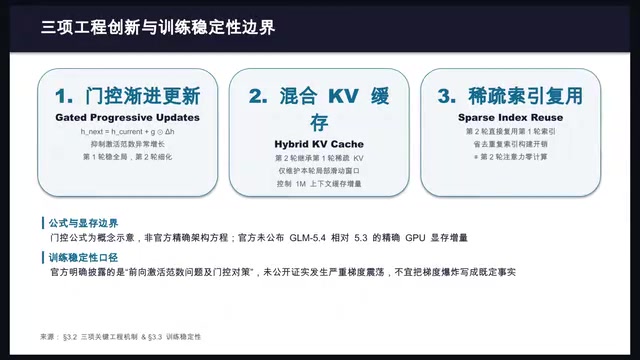
GLM-5.4 Loop Transformer Deep Dive: Architecture and Cost-Effectiveness
An in-depth analysis of GLM-5.4's Loop Transformer architecture: shared-weight looping, 30B ablation data, multi-model API cost simulations, strong-weak collaboration strategies, and the challenges of scaling computational depth.

Zhipu GLM-5.4 Debuts Loop Transformer, Upgrading Coding and Vision
Zhipu releases GLM-5.4, debuting the Loop Transformer architecture, adding vision capabilities and stronger coding, with existing users' quota raised to 1.5x. Also covers MiniMax H3's low-VRAM runtime, the information compression perspective, and subscription ecosystem developments.
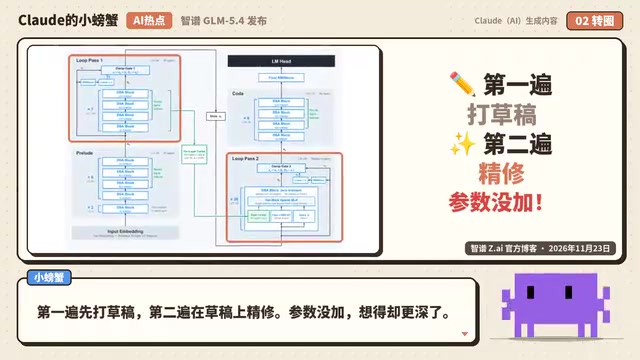
Zhipu GLM-5.4 Released: 750B Model Achieves 2-3 Trillion Parameter-Level Intelligence
Zhipu releases GLM-5.4, a 750B model achieving 2-3 trillion parameter-level intelligence via repeated layers, with a 30B experiment showing major math reasoning gains plus new vision capabilities and generalized programming applications.