Black Friday TV Deals: Sony, LG, and TCL Top Picks at Up to 50% Off
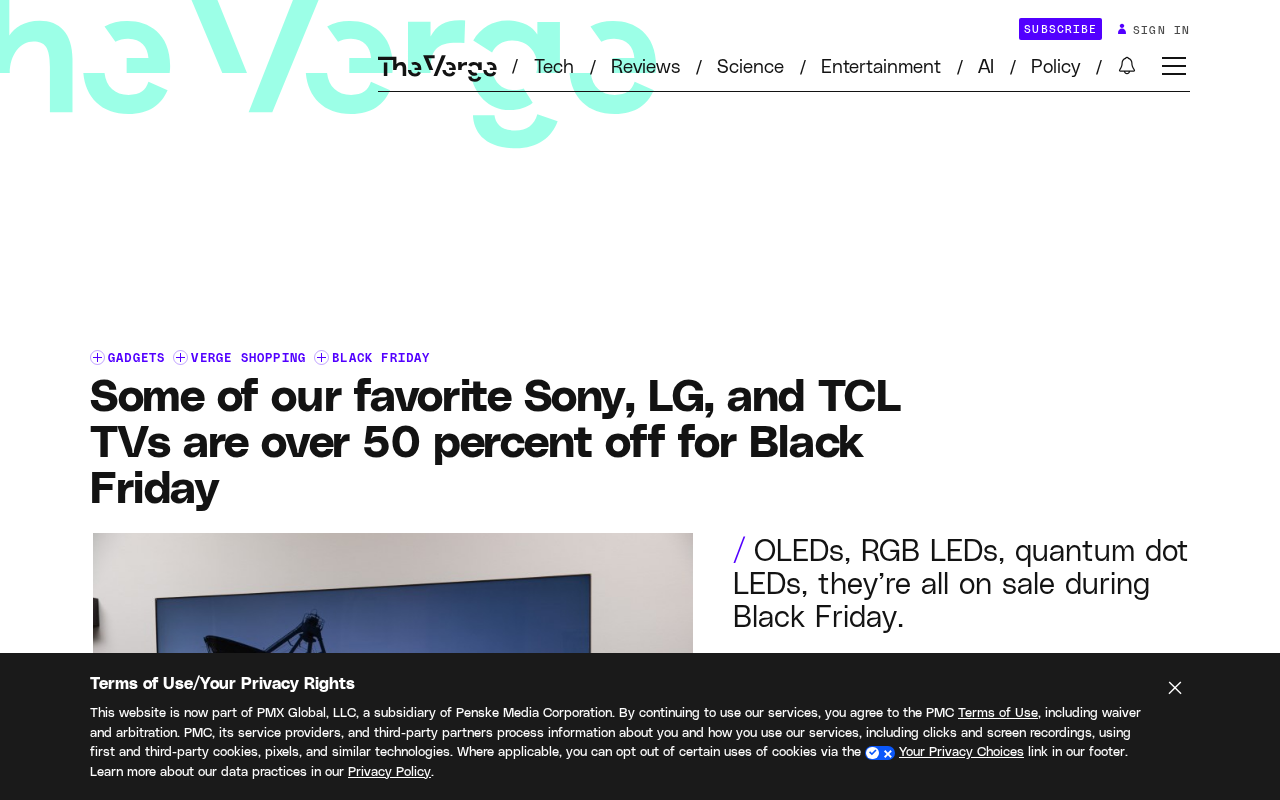
Sony, LG, and TCL editor-pick TVs are over 50% off this Black Friday—a great time to upgrade.
The article covers Black Friday TV deals, noting The Verge reports over 50% off on editor-favorite Sony, LG, and TCL models. Black Friday cuts come from manufacturers clearing stock and retailers pushing volume, so half price means upper-mid-range specs at near-entry prices. The three brands represent three paths: Sony's picture tuning, LG's OLED focus, and TCL's Mini LED value. The article advises that discounts shouldn't drive the decision—size, picture quality, HDR, and HDMI 2.1 matter most. It suggests setting budget and size first, then comparing models, while watching the sale window and stock.
A TV is a big purchase no tech enthusiast can avoid—whether you're watching movies, binge-watching shows, catching the news, or gaming, it accounts for most of our screen time. Because we use it so heavily, a TV usually has to last for years, but there always comes a day when you feel it's time for a new one. Black Friday season is exactly that window for an upgrade: according to tech outlet The Verge, several "editor-favorite" TV models from Sony, LG, and TCL are on sale at discounts of over 50%.
Why Black Friday Is a Good Time to Upgrade Your TV
Black Friday has long been one of the deepest discount periods for TVs. Manufacturers need to clear inventory and shelf space for next year's product lines, and retailers are willing to use steep discounts to drive overall sales volume, so previous-generation flagships and upper-mid-range models often hit prices you rarely see any other time of year. The Verge's report specifically highlights the "50% off" tier—for mainstream brands like Sony, LG, and TCL, half price means you can get upper-mid-range picture quality and features at a price close to entry-level.
For users still on the fence, deals like these aren't just about saving money. A TV's replacement cycle is measured in years, so getting it right once secures your viewing and gaming experience for years to come; conversely, if you pick a mismatched model just to save a little budget, it's hard to make up for that later with external devices.
Three Brands, Three Priorities
The Verge's recommendations cover three brands—Sony, LG, and TCL—and these three names happen to represent three typical paths in today's TV market.
Sony's strength lies in picture quality tuning and overall audiovisual experience, and it has long been a major player in the high-end LCD and OLED market; LG has deep investments in OLED panels, and its OLED lineup is the first choice for many home theater enthusiasts when upgrading; TCL has rapidly gained ground in the upper-mid-range market in recent years thanks to technologies like Mini LED, with value for money as its core label. The report doesn't go into the specs of each model one by one, but the phrase "our favorite models" indicates that all the picks are products the editors have actually experienced and that stand out in their respective price segments.
The Difference Between OLED and Mini LED
Each pixel in an OLED (organic light-emitting diode) panel emits its own light, enabling pixel-level light control that delivers near-infinite contrast and true blacks, along with advantages in viewing angles and response time; however, its peak brightness is relatively limited, and there's a risk of burn-in with long-term display of static images. Mini LED is an upgraded version of LCD backlight technology: by making LED beads smaller and packing them more densely, and dividing the backlight into hundreds or thousands of dimming zones for precise light control, it offers the advantages of high brightness, long lifespan, and more controllable costs at large sizes, with the drawback of possible halo effects at boundaries between light and dark areas. LG champions OLED while TCL bets on Mini LED—essentially two different technological paths, which also determine the viewing scenarios each is best suited for.
HDR and HDMI 2.1
HDR (high dynamic range) refers to technology that lets a picture simultaneously display brighter highlights and deeper shadows while expanding the color range; common standards include HDR10 and Dolby Vision, and whether a TV supports them and how well it performs directly affects the viewing experience. HDMI 2.1 is a new-generation interface standard with bandwidth increased to 48Gbps, supporting 4K 120Hz, variable refresh rate (VRR), and auto low latency mode (ALLM)—a key metric for next-gen console gamers judging whether a TV is "good enough." When shopping, the panel type determines the picture quality foundation, while HDR and HDMI 2.1 determine whether that foundation can be fully utilized by content and game consoles.
What 50% Off Means
"Over 50% off" is the most direct signal of this promotion. For consumers, the bigger the discount, the more calmly you need to judge: whether a TV is worth buying depends not on how much you save, but on whether its picture quality, size, ports, and system experience match your use case.
For example, users who mainly watch movies will care more about panel type, HDR performance, and color accuracy; users who mainly play console games need to pay attention to high refresh rates, low latency, and ports like HDMI 2.1. The Verge editors' recommendations can serve as a starting point for filtering, but the final decision should still come back to your room size and viewing distance—a TV that's too big feels oppressive, while one that's too small wastes the promotional opportunity.
Trade-offs During the Promotional Window
Black Friday discounts usually have time limits, and popular models sell out quickly. The Verge's report itself is more of a reminder: if you've already been considering a new TV, this round of promotions deserves serious attention; but if you're only attracted by "half price" and order on impulse, you're more likely to end up with a product that doesn't meet your needs.
A practical approach is to first set your budget range and size, then compare picture quality and ports among candidate models from Sony, LG, and TCL, and finally see which one falls to your target price during Black Friday. A TV is a device you'll use for years, and spending an extra half hour on research is far more valuable than snagging a discount coupon.
One-line Summary
During Black Friday, several editor-recommended TVs from Sony, LG, and TCL are over 50% off—a great window to upgrade.
Paragraph Summary
The article centers on Black Friday TV promotions, noting that The Verge reports several "editor-favorite" models from Sony, LG, and TCL at over 50% off. Black Friday price cuts stem from the cyclical pattern of manufacturers clearing inventory and retailers pushing volume, and half price means upper-mid-range specs can be had at near-entry-level prices. The three brands represent three paths: Sony excels at picture quality tuning, LG goes deep on OLED panels, and TCL focuses on value with Mini LED. The article reminds consumers that the discount level shouldn't be the core of the decision—what matters is whether size, picture quality, HDR performance, and ports like HDMI 2.1 match viewing or gaming needs. Finally, it suggests setting budget and size first, then comparing candidate models, and paying attention to the promotional window's time limits and stock.
Related articles
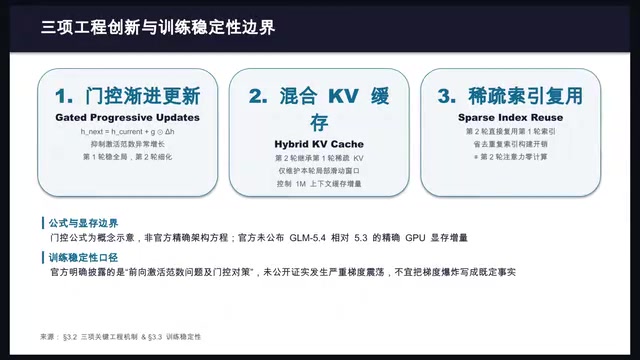
GLM-5.4 Loop Transformer Deep Dive: Architecture and Cost-Effectiveness
An in-depth analysis of GLM-5.4's Loop Transformer architecture: shared-weight looping, 30B ablation data, multi-model API cost simulations, strong-weak collaboration strategies, and the challenges of scaling computational depth.

Zhipu GLM-5.4 Debuts Loop Transformer, Upgrading Coding and Vision
Zhipu releases GLM-5.4, debuting the Loop Transformer architecture, adding vision capabilities and stronger coding, with existing users' quota raised to 1.5x. Also covers MiniMax H3's low-VRAM runtime, the information compression perspective, and subscription ecosystem developments.
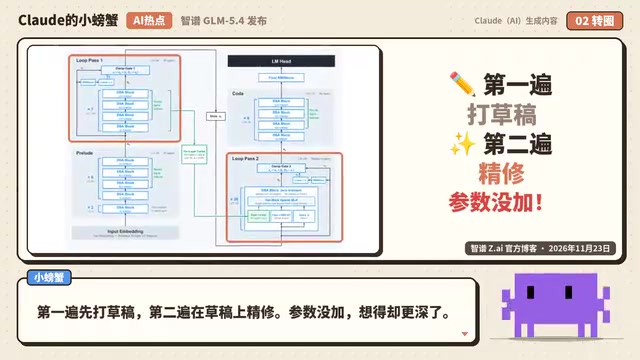
Zhipu GLM-5.4 Released: 750B Model Achieves 2-3 Trillion Parameter-Level Intelligence
Zhipu releases GLM-5.4, a 750B model achieving 2-3 trillion parameter-level intelligence via repeated layers, with a 30B experiment showing major math reasoning gains plus new vision capabilities and generalized programming applications.