Bonsai-27B Extreme Quantization: Running 1-bit LLMs on Consumer Hardware

Bonsai-27B runs a 27B LLM on 8GB VRAM via extreme 1-bit/ternary quantization with 89–95% quality retention.
Bonsai-27B from PrismML-Eng uses binary and ternary quantization to compress a 27B-parameter model to fit in 8GB VRAM, achieving ~30 t/s on an RTX 4060 laptop. With llama.cpp mainline support progressing backend by backend and quality retention at 89.5% (binary) and 94.6% (ternary), it's a practical—if limited—option for everyday chat and writing tasks on consumer hardware.
Extreme Quantization in Practice: Bonsai-27B and Its Ternary Variant
As LLM deployment increasingly emphasizes cost efficiency, the community has been actively exploring ways to run 27B-parameter models on consumer-grade hardware. Bonsai-27B and its ternary variant from the PrismML-Eng team are a prime example of this approach.
Background on Quantization: Quantization is the process of compressing neural network weights from high-precision floating-point representations (e.g., FP16/BF16, 16-bit) to low-bit integer formats. Traditional quantization typically targets 4-bit (INT4) or 8-bit (INT8), while extreme quantization — as embodied by Bonsai — pushes precision all the way down to 1-bit (binary) and approximately 1.58-bit (ternary). Binary quantization represents each weight with just 0 or 1, while ternary quantization allows three states: -1, 0, and +1. The latter offers significantly greater expressive capacity. This direction is theoretically grounded in research like BitNet, which demonstrates that even at extremely low bit-widths, very large models can retain a substantial portion of their capability.
The core value proposition is straightforward: through extreme quantization (binary/ternary), model size and VRAM requirements are compressed to their limits — enabling a 27B-parameter model to run smoothly on a laptop GPU with just 8GB VRAM, or even more constrained devices.
The project has been steadily merging PRs into the llama.cpp upstream, signaling that extreme low-bit models are transitioning from "experimental branches" toward mainline support. This article synthesizes the latest community updates, covering technical progress, real-world benchmarks, and practical limitations.
Upstream Support: From Fork to Mainline
About llama.cpp and the GGUF Ecosystem: GGUF (GPT-Generated Unified Format) is the model file format defined by the llama.cpp project. Introduced in 2023 as a replacement for the earlier GGML format, it has become the de facto standard for local inference. llama.cpp, initiated by Georgi Gerganov, is a lightweight LLM inference framework written in pure C/C++ that supports multiple backends including CPU, GPU (CUDA/Metal/Vulkan). It remains the most widely used toolchain for consumer-grade local deployment. When a PR is merged into mainline, the feature enters the official stable release — users no longer need to compile and maintain private forks, which dramatically lowers the barrier to entry.
Broad adoption of extreme quantization models depends heavily on native support in inference frameworks. Bonsai's upstream support currently follows two tracks.
Binary Q1_0: Ready Out of the Box
The binary (Q1_0) format now has full upstream support in llama.cpp, covering CPU (generic, NEON, and optimized x86), Metal, CUDA, and Vulkan backends. Users can run it directly without compiling any special branch.
The one exception is the MLX (1-bit) path, which still depends on an upstream PR (mlx#3161) being merged. Until then, users need to use the PrismML-Eng maintained mlx branch (the prism branch, auto-built via setup.sh).
Ternary Format: Backend-by-Backend Migration in Progress
Ternary support is currently in a "half-migrated" state — backends are being merged into the llama.cpp mainline one by one, and the mixed use of mainline and team fork will persist in the short term.
Understanding bpw and Quantization Density: bpw (bits per weight) is the key metric for measuring compression in quantized models. Full-precision FP16 is 16 bpw, INT4 quantization is 4 bpw, and Bonsai's binary version is approximately 1 bpw, with the ternary version at roughly 1.58 bpw (theoretically log₂3 ≈ 1.585). However, ternary formats are typically deployed using 2-bit slots in practice (i.e., 2.25 bpw including group metadata overhead), because existing hardware and memory alignment naturally supports power-of-two bit widths, and native ternary kernels still require dedicated engineering work. This is the fundamental reason why the actual ternary model size (7.2 GB) exceeds its theoretical target (5.9 GB).
The project currently offers three ternary GGUF variants, each requiring a matching runtime environment:
*-Q2_0.gguf(group size 128): The format used in this demo, compatible with the team fork. Will be replaced by PQ2_0 once llama.cpp migration is complete. Note: it cannot be loaded in mainline (same type id but different block size).*-Q2_0_g64.gguf(group size 64, 2.25 bpw): The official llama.cpp format, to be renamed Q2_0 in the future. Currently supports CPU and Metal in mainline.*-PQ2_0.gguf: Not yet supported; planned as a future fork format using a separate ggml type id to coexist with upstream Q2_0.
On backend migration progress: CPU (ARM NEON + generic scalar) and Metal have been merged into mainline; the Vulkan PR has been approved and is pending merge; CUDA is still under review; and x86 (AVX-512-VNNI) is yet to be scheduled. While the ternary ecosystem is advancing rapidly, users should still pay close attention to version and backend compatibility in the near term.
Performance Optimization: Multiple PRs Queued for Merge
Beyond feature support, the community is also actively pushing performance improvements. Several pending PRs relevant to Bonsai are worth noting:
- On the CUDA side, extracting Q1_0 elements via
__byte_perm(#25628) is expected to deliver a 5–10% improvement in token generation speed and a 1–2.5% improvement in prompt processing; - ARM Repack kernels for ggml-cpu (#23492) specifically optimized for Q1_0;
- Optimized ARM NEON CPU q1_0 dot (#23358, with plain/DP/I8MM multi-path implementation).
ARM Instruction Set Background: ARM NEON is the built-in SIMD (Single Instruction, Multiple Data) extension for ARM processors, enabling parallel processing of multiple integer or floating-point operations in a single instruction. It's widely used in mobile devices (iOS/Android chips) and Apple Silicon (M-series). I8MM (Int8 Matrix Multiply), introduced in ARMv8.6-A, is a matrix multiplication acceleration instruction optimized for INT8 inference. On the x86 side, AVX-512-VNNI (Vector Neural Network Instructions) is Intel's dedicated neural network inference extension, supporting efficient integer dot product operations. Targeted optimizations for these instruction sets are critical for achieving practical inference speeds on CPUs with extreme low-bit models — and represent a core technical challenge for Bonsai's mobile deployment.
The optimization direction is clear: squeeze higher inference throughput from CPUs and mobile chipsets. For a model series whose main selling point is running on low-resource devices, ARM-side performance optimization is especially critical.
Benchmark Results: Running a 27B Model on 8GB VRAM
A community user shared real-world results running Bonsai-27B on an RTX 4060 laptop GPU (8GB VRAM): using default llama-bench parameters, prompt processing reached approximately 600 t/s and token generation approximately 30 t/s.
These numbers aren't spectacular in isolation, but given that this is a 27B-parameter model running on a device with only 8GB VRAM, a generation speed of 30 t/s is more than sufficient for smooth chat and writing use cases. The user acknowledged they weren't expecting miracles — they were simply pleased to get a model of this scale running on "mini VRAM" and are looking forward to future optimizations unlocking more performance.
Real-World Limitations: Don't Expect Too Much from 1-bit Quantized Models
Some community users have complained that these models perform poorly on tasks like agentic coding. The reasonable take is: expecting that from a 1-bit model exceeds its design parameters in the first place.
The model authors have explicitly documented the limitations in the model card — worth going through them carefully.
Bonsai-27B (Binary) Limitations
- Quality-size tradeoff: The binary model retains 89.5% of full-precision average quality. The gap is moderate and predictable. Core reasoning capabilities (math, code) are only a few percentage points behind the baseline, with differences concentrated in the most demanding benchmark categories. For those prioritizing quality, the ternary GGUF version (94.6%) is worth considering.
- Agentic coding is not the target: Long-horizon, multi-file, run-test-fix workflows are not a strength of this release. A Bonsai 27B variant specifically tuned for agentic coding is on the roadmap.
- KV cache compression headroom: This release standardizes on a 4-bit KV cache. The KV Cache (Key-Value Cache) is the VRAM structure used by Transformer architectures to cache intermediate attention states during autoregressive generation. Its memory usage grows linearly with sequence length and can exceed model weight memory in long-context scenarios. Early results suggest the key cache can be pushed below 2-bit, which would significantly expand the effective context window within a fixed VRAM budget — offering meaningful value for RAG retrieval, long document processing, and similar applications.
Ternary-Bonsai-27B (Ternary) Limitations
- Higher quality retention: The ternary model retains 94.6% of full-precision average quality, noticeably better than the binary version.
- Too large for phones: At approximately 7.2 GB, it exceeds the roughly 6 GB per-app memory budget on iOS. Mobile deployment requires the 1-bit version instead (via MLX Swift).
- Currently deployed in 2-bit slots: The actual deployment size (~7.2 GB) exceeds the ~5.9 GB target of the native representation. Native ternary kernels remain an active engineering challenge — once implemented, they will directly translate into improvements in latency and energy consumption.
- Also not suited for agentic coding, and shares the same KV cache compression improvement opportunities.
Conclusion: The Value and Direction of Extreme Quantization
The significance of the Bonsai series isn't in replacing full-precision large models — it's in validating a pragmatic path: delivering 27B-scale model capability on consumer-grade and even mobile devices with an acceptable quality trade-off (89.5%–94.6%). For everyday scenarios like chat and writing, this trade-off is entirely worthwhile.
As the authors candidly acknowledge, we look forward to ongoing iteration from the team and the llama.cpp community: whether that's native ternary kernels, sub-2-bit KV cache, or new variants tuned for agentic coding. The boundaries of extreme quantization continue to be pushed — and that's exactly where open-source communities add the most value.
Key Takeaways
Related articles
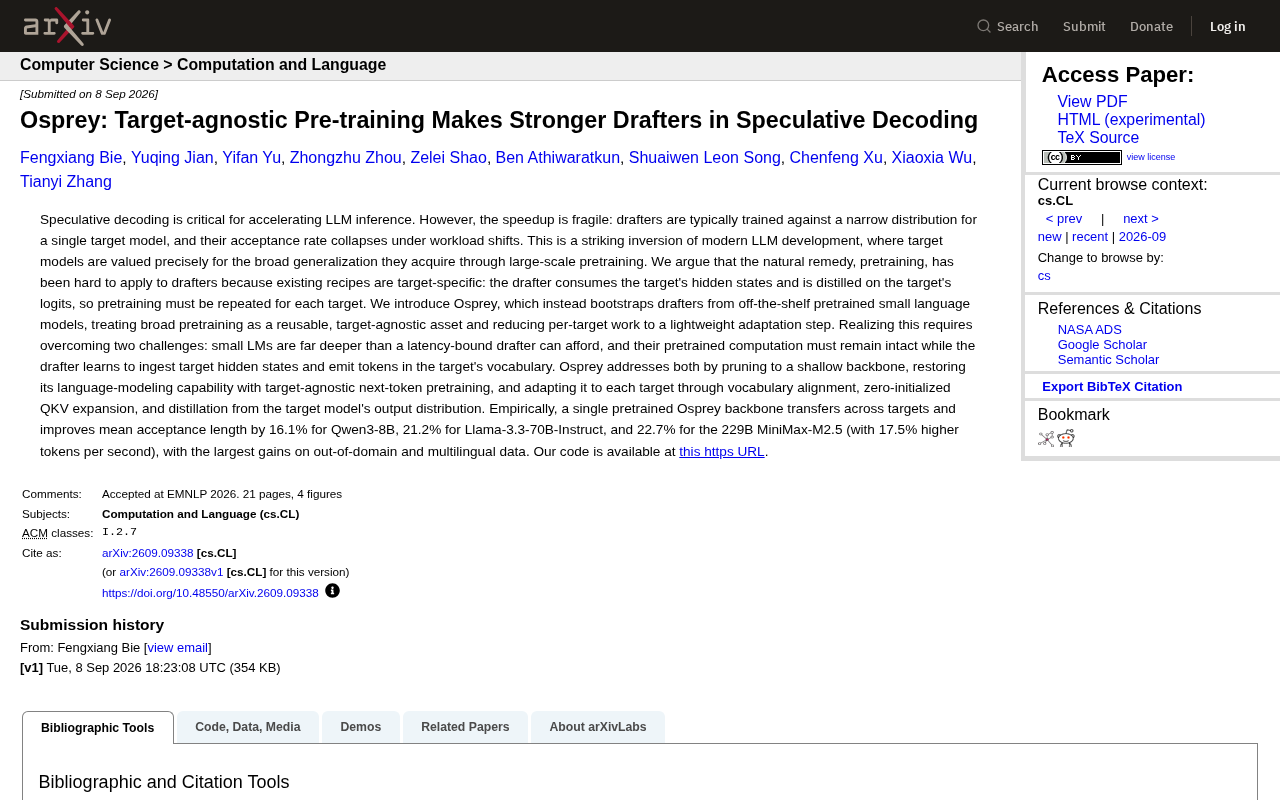
Osprey: General-Purpose Pretraining Makes Speculative Decoding Draft Models More Efficient
Osprey treats pretraining as a reusable, target-agnostic asset. Through pruning and lightweight adaptation, a single draft model transfers across multiple LLMs, boosting mean acceptance length by 16%-22%.
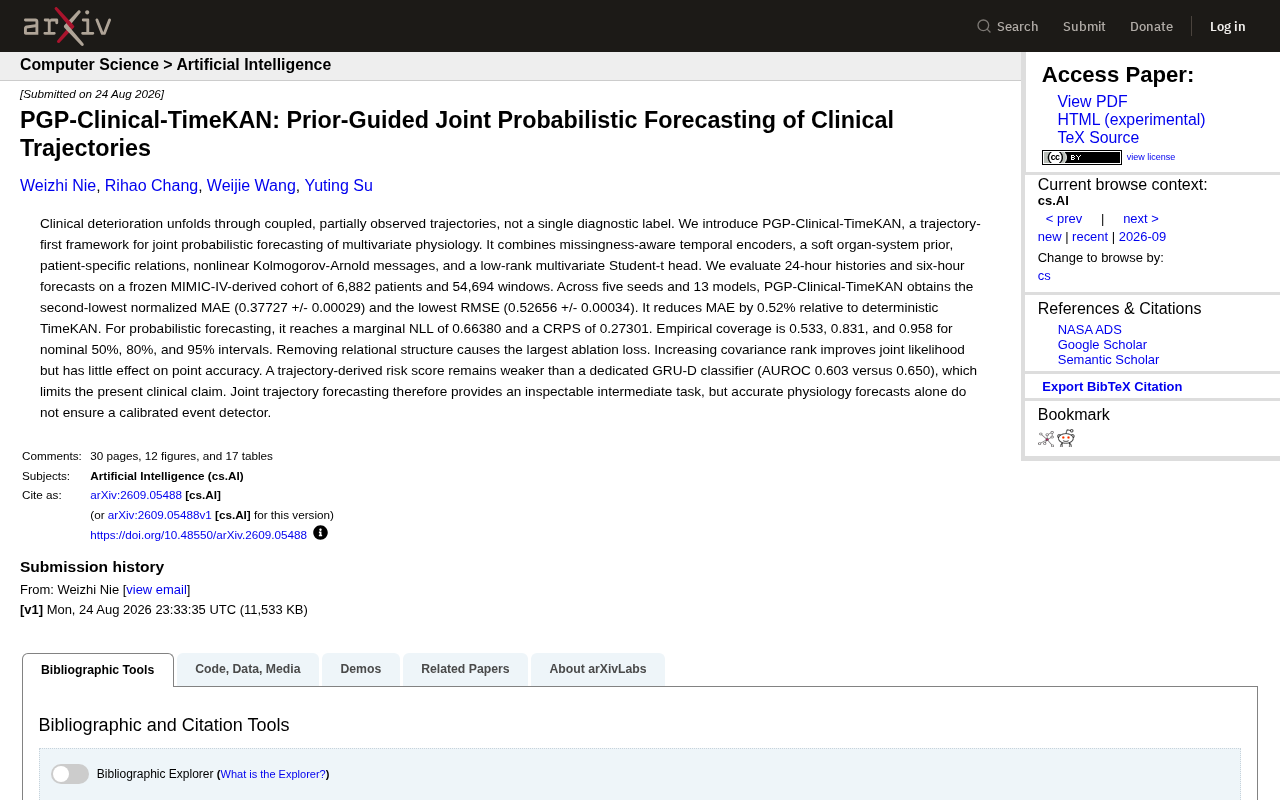
PGP-Clinical-TimeKAN: A Detailed Guide to the Multivariate Physiological Indicator Joint Prediction Framework
An in-depth analysis of the PGP-Clinical-TimeKAN framework for joint probabilistic prediction of multivariate physiological indicators, covering trajectory-first paradigm, KAN message passing, MIMIC-IV validation, and ablation studies.
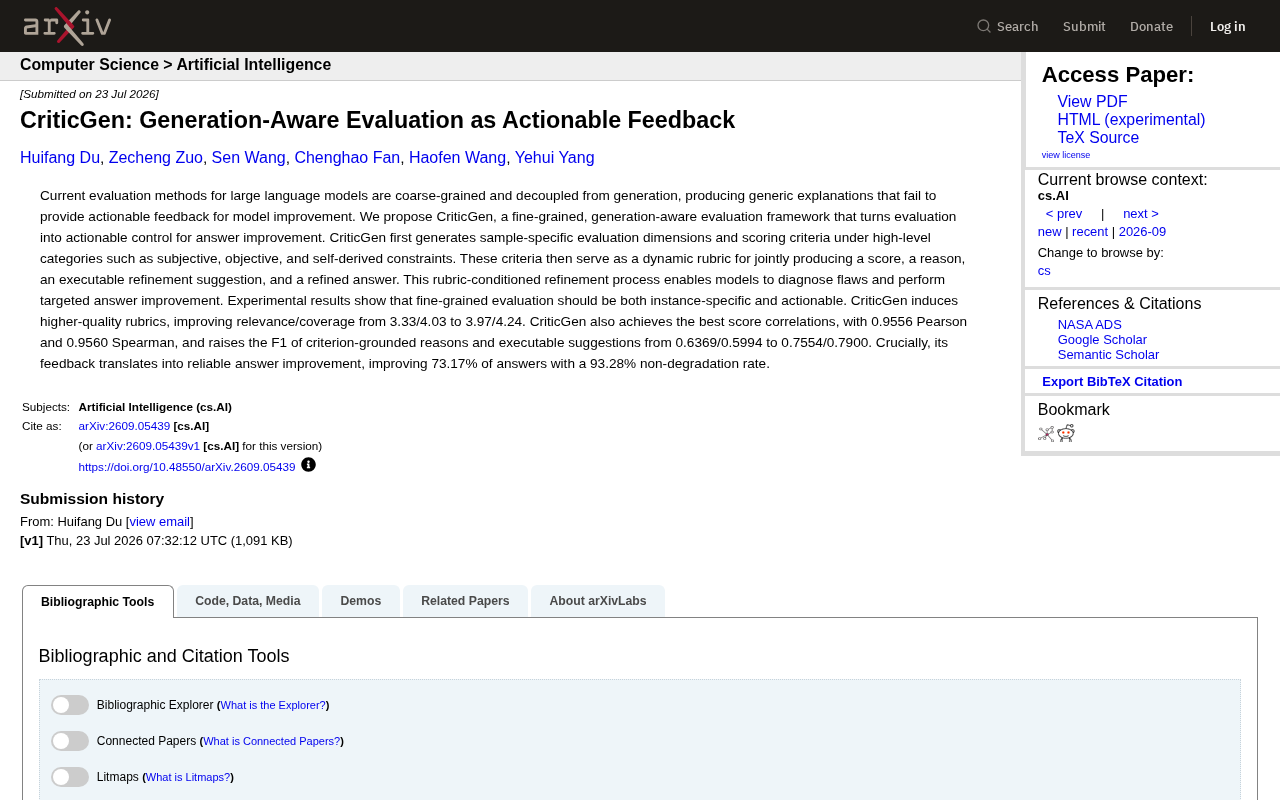
CriticGen: A New Framework That Transforms AI Evaluation into Actionable Improvement Feedback
CriticGen proposes a generation-aware evaluation framework that transforms AI assessment from passive scoring to an active optimization loop, achieving 73.17% answer improvement and 93.28% non-degradation rate.