Boycotting Software That Doesn't Support Linux: One Developer's Philosophy of Choice
How one developer uses tool choices to vote for Linux, and why AI coding agents make that easier than ever.
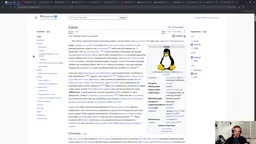
A YouTube creator shares his "Linux-first" philosophy: choose Linux-supporting tools wherever possible without sacrificing productivity, and boycott software that has no good reason to exclude Linux. The key new insight is that coding agents like Claude Code are rapidly closing the feature gap between open-source and commercial software — users can fork open-source projects and let AI fill in missing functionality. He also opposes kernel-level anti-cheat that deliberately blocks Linux in gaming, and highlights Valve's SteamOS/Proton and DHH's Omarchi distro as the two forces driving Linux toward mainstream adoption.
A Turning Point Is Coming
This YouTube creator throws out a slightly radical take: he's actively boycotting all tools that don't support Linux, and thinks more people should join him. Rather than packaging this as a tutorial, he honestly calls it a "rant" — sharing his way of thinking, not forcing it on anyone else.
His reasoning rests on one key premise: Linux is at a critical inflection point on its way to becoming a mainstream desktop operating system. With multiple factors converging, the barrier for everyday users to switch to Linux has dropped dramatically — and every user's choice could be one more vote pushing the ecosystem toward maturity.
It's worth emphasizing that he's not advocating the kind of productivity-sacrificing moral pressure that says "use GIMP instead of Photoshop, use Kdenlive instead of Premiere." If your work genuinely depends on Photoshop or Premiere, you should keep using them — even if they don't support Linux. What he's boycotting is software that has no good reason not to support Linux, yet doesn't anyway.
Drawing the Line: No Sacrificing Productivity
The author explicitly hands the decision back to the user. His core logic is: choose Linux-supporting tools wherever possible, as long as it doesn't lower your quality of life or productivity.
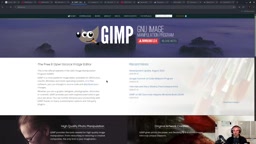
He uses himself as an example: he's neither skilled at image editing nor video editing — his needs are basic. Since he'd have to learn both Photoshop and GIMP from scratch, he might as well choose GIMP — it's free, supports the open-source ecosystem, and now there's a third reason that only recently came into existence.
Coding Agents Changed the Game
This is the most valuable insight in the entire piece. The author points out that a few years ago this factor simply didn't exist, but now you can easily extend open-source software's functionality using coding agents:
You can download GIMP, fork its repository, and then have Claude Code or Codex add whatever feature from Photoshop you love.
He's practiced this himself. He forked the video editor Shotcut, and even though he's "not great at C++," he directed a coding agent to write C++ code and successfully got Shotcut to do what he wanted. This means the "feature gap" between open-source and commercial software is being rapidly closed by AI coding tools.
This logic is especially compelling for everyday users: if you just need basic video editing and are missing a feature or two, fork Kdenlive or Shotcut, have the agent fill in the gaps, and you end up with a version that's "fully customized to your exact needs" — something Premiere could never give you.
What is a Coding Agent? A coding agent is an AI tool that understands natural language instructions and can autonomously write, debug, and commit code. Claude Code is Anthropic's command-line coding assistant; Codex is OpenAI's code generation model. Unlike ordinary code completion, these agents can accept high-level instructions like "add a batch export feature to this software," automatically break down the task, browse the codebase, and generate and modify multiple files. A fork is a common operation in open-source development — copying a project's codebase under your own name so you can modify it independently without affecting the original. Combining forks with coding agents means that even users without professional programming skills can make meaningful, functional customizations to open-source software — something that was nearly impossible before AI tools became widespread.
Gaming: Against Kernel-Level Anti-Cheat
Gaming is another major obstacle to switching to Linux. The author calls out League of Legends and Fortnite — games that, due to kernel-level anti-cheat mechanisms, either actively block Linux distributions or simply can't run on Linux at all.
His position is nuanced: he understands that shipping a AAA game or a complex title with native Linux support is genuinely difficult, and he won't ask die-hard fans to abandon the only game they play. But he opposes deliberately putting up barriers — when the Proton compatibility layer could make a game run just fine, yet developers insist on using kernel-level anti-cheat to actively block Linux.
His alternative suggestion is a "gentle boycott": if you just enjoy the MOBA genre, you don't have to stick with League of Legends — try Dota, which supports Linux, or Deadlock, which he's recently started playing. Vote with your feet, and make those games that deliberately block Linux a little less popular.
What is Kernel-Level Anti-Cheat? Kernel-level anti-cheat is an anti-cheat mechanism that runs with the highest system privileges. Notable examples include Riot Games' Vanguard (used in League of Legends and Valorant) and Epic's EasyAntiCheat (used in Fortnite). Unlike ordinary user-space anti-cheat, kernel-level programs run at the very bottom of the operating system and can monitor nearly all system behavior. These mechanisms inherently conflict with Linux's security model — the Linux kernel has strict restrictions on third-party drivers, and compatibility layers like Wine and Proton can't provide the privileged access they require. So even if Proton can run the game itself smoothly, kernel-level anti-cheat will often actively detect and reject the Linux environment, resulting in players being kicked or accounts being banned. This isn't technically unsolvable — it's more of a deliberate choice by developers in their security strategy. Proton is a compatibility layer developed by Valve on top of Wine, integrating DirectX translation, memory management optimizations, and more. It has enabled thousands of Windows games to run on Linux; compatibility data can be found in the ProtonDB community database.
Two Forces Driving Linux Forward
The author believes two key players are currently pushing Linux toward the mainstream.
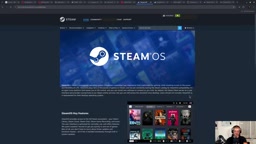
The first is Valve (the company behind Steam). They're driving SteamOS, based on Arch, enabling large numbers of games to natively support Linux, and developing the Proton compatibility layer so games that don't natively support Linux can still run. Except for a handful of games that developers deliberately block, Proton has already solved the vast majority of problems.
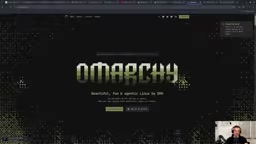
The second is DHH (the creator of Ruby on Rails) and the Linux distribution he helped build, Omarchi. The author doesn't use this distro himself, but he's deeply optimistic about it: it's an Arch-based "agentic Linux" with a clear design philosophy, built by someone who combines technical chops with design sensibility and real influence. He even predicts: Omarchi has the potential to become "the macOS of Linux distributions."
With SteamOS, Proton, Omarchi, and other projects working in tandem, the author believes that for developers today, there's almost nothing standing in the way of switching to Linux — the remaining obstacles are just a handful of software tools and games.
Who is DHH? David Heinemeier Hansson is the creator of the Ruby on Rails framework and co-founder of project management software company Basecamp and email service Hey. He's long been known for speaking his mind, and in recent years he publicly migrated from macOS to Linux and documented the entire process, sparking widespread discussion in the developer community. Omarchi, which he helped create, is an Arch Linux-based distribution positioned as a desktop system "designed for creators and developers" with a clear aesthetic vision — intentionally filling the void in the Linux world for a polished, design-conscious distro comparable to macOS. Arch Linux is known for its rolling updates and high customizability, but has traditionally had a steep installation and maintenance curve; Omarchi aims to preserve Arch's underlying strengths while lowering the barrier to entry. The author's comparison to "the macOS of Linux" implies it could achieve both ease of use and strong developer credibility, rather than remaining a toy for technical purists.
What the Author Actually Does
The author puts this philosophy into practice — and quite thoroughly:
- He runs Linux exclusively, with no Windows or Mac devices, so every tool he uses must support Linux;
- He refuses sponsorships from companies whose tools don't support Linux;
- For simple developer tools that could easily support Linux, he won't accept a "no Linux version" stance from vendors, even if Wine can make them barely work.
He gives two examples. The first is Claude Desktop (the desktop app that includes Claude Code): it was Mac- and Windows-only for a long time, and the author actually canceled his subscription over it — "a company building AI models and AI tools that doesn't ship a product for Linux — I can't accept that." The second is Whisperflow, an AI voice dictation tool that only supports Mac, Windows, iPhone, and Android.
In his view, tools like these — aimed at developers, related to AI/ML/software development — treating Linux as an optional afterthought is unacceptable:
When a tool doesn't release for Linux, the signal it sends me personally is that Linux isn't part of their business plan at all.
Closing: A Stance You Can Dial Up or Down
The author repeatedly stresses that the "intensity" of the boycott is entirely up to you. He himself is at the most extreme end — tools that don't support Linux, he doesn't even bother learning about: "I won't miss what I don't even know exists." But he fully understands that people already accustomed to a particular piece of software or game can find switching difficult.
The practical takeaway of this philosophy is straightforward: within the bounds of not sacrificing productivity, vote for the Linux ecosystem with your choices. And with the arrival of AI coding agents, the cost of making that choice is lower than it's ever been — features missing from open-source software are now something you have the power to add yourself. That might just be an underappreciated force driving Linux toward the mainstream desktop.
Related articles

AI Agent Learning Roadmap: A Four-Stage Guide for Complete Beginners
A four-stage AI Agent learning roadmap for beginners: from core concepts and model deployment to RAG, LangChain, LoRA, and interview-ready projects.
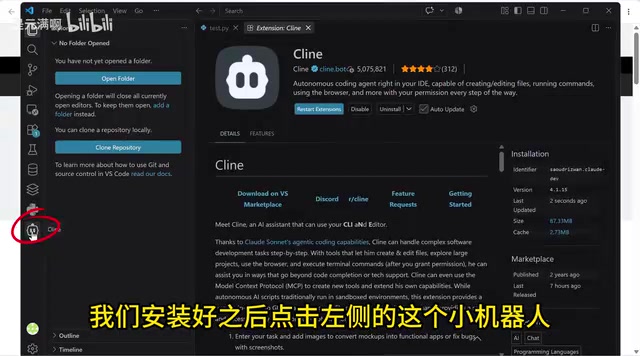
Free Access to Mystery Model & DeepSeek V4 via Cline: Complete Setup Tutorial
Learn how to use DeepSeek V4 and the mystery "Niumai" model for free on Cline — covering IDE extension and CLI installation, account setup, and model selection.
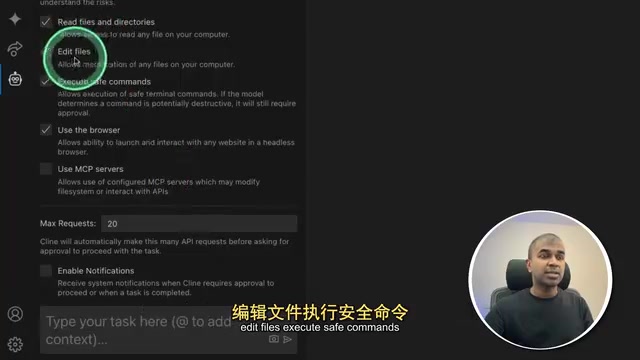
Cline + VS Code in Practice: Generate a To-Do App from a Single Prompt
Cline is an autonomous coding agent inside VS Code. This hands-on guide shows how to generate a to-do app from one prompt and compares Claude, Ollama, and Groq integrations.