Brain: A Minimalist Agent Framework Challenging LangChain — Is It Production-Ready?

Brain: a minimalist Agent framework challenging LangChain—can simplicity meet production demands?
Brain is an open-source Agent framework aiming to replace LangChain's complexity with a minimal, extensible design. Inspired by Anthropic's managed agents and pi.dev, it focuses on production readiness without over-abstraction. The article examines whether lightweight frameworks can balance simplicity with real-world requirements like observability, cost control, and ecosystem integration.
Yet Another LangChain Alternative?
In the AI Agent development landscape, LangChain has become almost the default choice. However, controversies surrounding it have never ceased—too many features, layers upon layers of abstraction, high barriers to entry—these are common complaints among developers. Recently, a developer shared their project on Reddit: a minimalist Agent platform called Brain (github.com/aexhq/brain), positioned as a lightweight alternative to LangChain and Mastra.
According to the author, this project was inspired by two articles: Anthropic's engineering practices on managed agents, and the design philosophy of pi.dev. The author's core argument is straightforward—existing Agent frameworks "should adapt to production Agent use cases, rather than forcing developers to accommodate the framework."
Brain's Product Motivation: Starting from Developer Pain Points
The author's criticism is well-founded. In the post, they explicitly pointed out dissatisfaction with existing solutions:
"I've used Agent platforms like LangChain and found them too complex; Mastra is better but still lacks flexibility."
This actually reveals a typical contradiction in the current AI Agent framework ecosystem. LangChain is an open-source framework created by Harrison Chase in late 2022, originally designed as a development toolkit for "chaining" large language models (LLMs) with external tools and data sources. It introduced multi-layer abstract concepts such as Chain, Agent, Memory, and Retrieval, attempting to provide a unified programming paradigm for LLM application development. With its first-mover advantage, LangChain quickly gained massive stars and funding (its parent company LangChain Inc. was once valued at several billion dollars), but as the community deepened its usage, the problem of over-abstraction became increasingly prominent—developers often need to traverse 5-6 layers of encapsulation to understand how a simple API call executes, jokingly referred to as "abstraction hell." The result is a steep learning curve and difficult debugging, with many developers reporting that "the time spent understanding the framework itself exceeds the time spent writing business logic."
Mastra, as a rising star, is a TypeScript-first AI Agent framework created by one of the co-founders of Gatsby.js, attempting to find a middle ground between LangChain's comprehensiveness and the flexibility of pure hand-written code, emphasizing type safety and Developer Experience (DX). Although it has improved the developer experience, providing core capabilities such as workflow orchestration, RAG pipelines, and tool integration with a cleaner API design, when it comes to complex production environments where developers need to deviate from its preset patterns for deep customization, the ceiling on flexibility still exists.
Brain's design philosophy is therefore positioned around two keywords: minimal and extensible. These two seem contradictory—minimalism often means limited functionality, while extensibility can easily lead to bloat. How to strike a balance between the two is the core proposition of whether such lightweight Agent frameworks can succeed.
How Can a Minimalist Framework Meet the Stringent Requirements of Production Environments?
What's worth deeper consideration is that the positioning of "production agent" itself is full of challenges. Production environments impose far more requirements on Agent systems than simply "getting it to run":
Real Requirements for AI Agents in Production Environments
- Observability: Every step of the Agent's reasoning and tool invocation needs to be traceable and debuggable
- Error handling and retry: The uncertainty of LLM calls requires robust fault tolerance mechanisms
- State management: Reliable persistence of multi-turn conversations and long-term memory
- Cost control: Monitoring and optimization of token consumption
- Concurrency and performance: Stable performance under high load
Among these, token cost control is a severely underestimated engineering challenge in production environments. Taking GPT-4o as an example, input tokens and output tokens are priced differently, and Agent systems, due to their cyclic reasoning characteristics—resending the complete conversation history (including tool return results) to the model after each tool call—exhibit super-linear growth in token consumption. An Agent performing 5 tool calls may consume 15-20 times the total tokens of a single call, not simply 5 times. Mature production systems need to implement token budget mechanisms, conversation history compression (context window management), intelligent caching (semantic caching, reusing previous responses for semantically similar requests), and model degradation strategies (using cheaper models like GPT-4o-mini for simple subtasks). Whether these capabilities should be built into the framework or implemented by developers themselves is at the heart of the "minimal vs comprehensive" design philosophy debate.
How can a truly "minimal" framework meet these production essentials while keeping the core lightweight? Brain's answer is "extensible"—keeping the core lightweight while introducing capabilities on-demand through plugins or extension mechanisms. This design approach is consistent with the "microkernel" architecture philosophy in software engineering in recent years. The microkernel architecture originally came from operating system design, with the core idea of placing the most basic and stable functions of the system in an extremely small kernel, while running all other functions (such as file systems, device drivers, network protocols) as pluggable modules outside the kernel. The advantage of this architecture is that the kernel itself is simple, reliable, and easy to verify, while achieving high extensibility through modularization—the Eclipse IDE, VS Code's extension system, and web frameworks like Fastify have all successfully adopted this pattern. In the Agent framework context, this means the core is only responsible for the most basic functions such as LLM call scheduling, tool execution loops, and message passing, while capabilities such as observability, persistent storage, and specific LLM provider adaptation are loaded on-demand through the plugin system.
This direction also coincides with the modular Agent design advocated by Anthropic in their technical blog. The core argument of Anthropic's article on "managed agents" engineering practices is: rather than building complex multi-Agent orchestration systems, it's better to let a single Agent autonomously complete tasks with a good set of tools and clear instructions, while an external "management layer" is responsible for monitoring, timeout control, error recovery, and other operational duties. This design decouples the Agent's "intelligent behavior" from "operational management," making the system easier to debug and maintain. Anthropic also explicitly pointed out in their early Agent design guidelines that most real-world scenarios don't need complex frameworks—simple prompt chaining and routing patterns can solve 80% of problems.
Brain Framework's Opportunities and Challenges
At the end of the post, the author sincerely seeks feedback: "Do you think this idea is viable? Really appreciate any genuine feedback." As an early-stage open-source project, Brain's prospects need to be viewed dialectically.
Brain's Market Opportunities
First, market demand is real. Complaints about LangChain's complexity are extremely common in the developer community, leaving room for lightweight alternatives. Anthropic officially advocates for more streamlined Agent design patterns, which means the industry trend is tilting toward "less is more." A framework focused on production usability and removing redundant abstractions does have a place.
Challenges and Risks That Cannot Be Ignored
However, the challenges are equally severe:
- Ecosystem barriers: LangChain's biggest moat isn't the code itself, but its massive integration ecosystem—ready-made access to hundreds of tools, vector databases, and LLM providers. New frameworks need to build all of this from scratch.
- Homogeneous competition: The "LangChain alternative" track is already quite crowded. The current competitive landscape of AI Agent frameworks covers multiple layers: LlamaIndex initially focused on RAG (Retrieval-Augmented Generation) scenarios and gradually expanded into a general-purpose Agent framework, with advantages in deep optimization of data indexing and retrieval; Haystack, developed by deepset, originated from NLP pipeline orchestration, emphasizing production-ready and composable Pipeline design; CrewAI focuses on multi-Agent collaboration scenarios, allowing developers to define Agent teams with different roles and goals to collaboratively complete complex tasks; additionally, Microsoft's AutoGen, OpenAI's Swarm (experimental project), and Google's Agent Development Kit are also competing for developer mindshare. These frameworks each have their focus, but the common problem they face is: LLM capabilities themselves iterate extremely fast, and each major update to the underlying model may make certain abstractions of the framework redundant or even obstructive. In such a crowded track, differentiated positioning is crucial.
- The paradox of minimalism: As user needs grow, any "minimal" framework faces the temptation of feature bloat and may eventually repeat LangChain's mistakes.
Conclusion: Lightweight Agent Frameworks Are a Trend, But Execution Is Key
The Brain project itself is still in a very early stage, and code maturity, community size, and documentation completeness all need to be observed. But the direction it represents—a minimalist Agent framework tailored for production environments—undoubtedly hits the real pain points of the current Agent development ecosystem.
For developers, rather than dwelling on the fatigue of "yet another LangChain alternative," it's better to pay attention to the evolution of design philosophy behind such projects. From large and comprehensive to small and beautiful, from framework-driven to use-case-driven, this may be the necessary path for AI Agent engineering to mature. Whether Brain can truly succeed ultimately depends on whether it can find that delicate balance between minimalism and production readiness.
Related articles

GPT-6 Astra Completes All 48 Levels of 'I'm Not A Robot' Game
GPT-6 Astra successfully completes all 48 levels of the 'I'm Not A Robot' game, demonstrating remarkable visual understanding, logical reasoning, and task adaptation. This article analyzes the technical capabilities behind this breakthrough and its implications for CAPTCHA verification and AI safety.
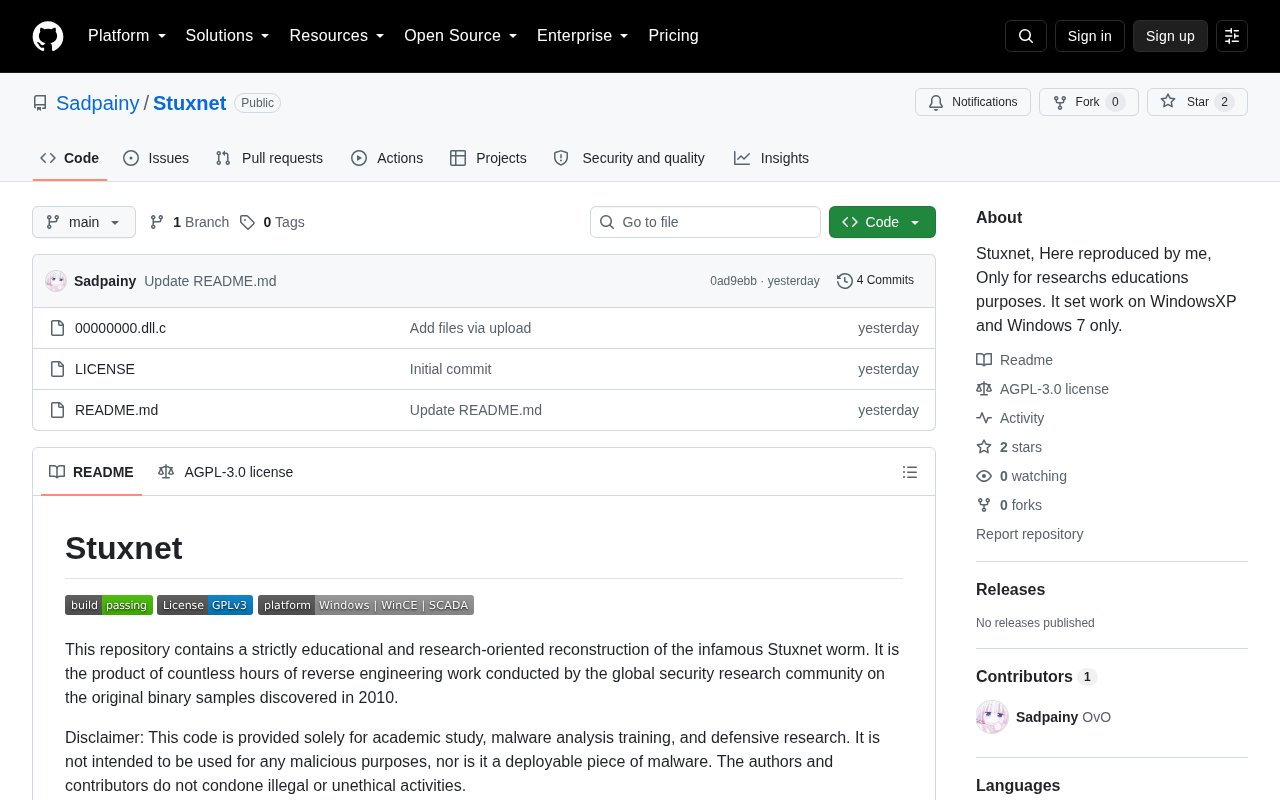
Stuxnet Source Code Reconstruction: Dissecting the Attack Chain of History's Most Complex Cyber Weapon
In-depth analysis of the Stuxnet source code reconstruction open-source project, examining how this cyber weapon targeting Iranian nuclear facilities exploited four zero-day vulnerabilities, stole digital certificates, covertly manipulated PLC centrifuges, and exploring industrial security lessons and ethical controversies of open-source reconstruction.

Minimalist Aesthetic Puzzle Game Development: Insights from Independent Creation
An in-depth analysis of an independent developer's aesthetic puzzle project shared on Hacker News, exploring minimalist design philosophy, Show HN community culture, and aesthetics-first product thinking in independent development.