Brain-Computer Interface Company Science Corp Valued at $3.5B with $400M Series D

Science Corp raises $400M Series D at $3.5B valuation to scale anti-blindness business.
Science Corporation announced a $400 million Series D round at a $3.5 billion valuation, with funds explicitly earmarked to scale its anti-blindness business. The article notes this is a landmark event in the BCI field, reflecting investors' high expectations for technical maturity and market prospects. The company has moved beyond pure research into commercialization, though product pricing, indication scope, and regulatory progress remain undisclosed.
The brain-computer interface (BCI) sector has landed another major funding round. Science Corporation announced the completion of a $400 million Series D round, valuing the company at $3.5 billion. The funds will be used primarily to scale up its anti-blindness business.
Funding Overview: $400M Series D at $3.5B Valuation
According to the RSS source, Science Corporation's Series D round totaled $400 million, bringing its post-money valuation to $3.5 billion. For a company focused on brain-computer interfaces and vision restoration, this valuation places it at the forefront of its peers.
The stated use of funds is to "scale up its anti-blindness business." This signals that the company's current focus is not on exploratory basic research, but on pushing existing technology toward larger-scale application and commercialization.
Anti-Blindness Business: From Lab to Scale
Science Corporation's core mission is to solve blindness. While the original report did not disclose specific product forms or technical details, the phrase "anti-blindness business" suggests the company has moved beyond the pure research stage and now has a business line worthy of the name.
The BCI and vision restoration field has long faced dual challenges of engineering and clinical deployment. Securing a large funding round explicitly earmarked for scaling indicates that its technical approach has earned recognition from investors.
Technical Pathways in BCI and Vision Restoration
The mainstream approach to vision restoration via BCI is to bypass damaged retina or optic nerve and directly activate the visual pathway through electrical stimulation. One pathway is retinal implantation: placing electrode arrays on or beneath the retina, converting images captured by a camera into electrical pulses that stimulate surviving retinal ganglion cells. Another is cortical implantation: placing electrodes directly on the visual cortex to generate phosphene patterns through stimulation, suitable for patients whose optic nerve or retina can no longer function. Optic nerve stimulation is another approach.
The common engineering challenges across these pathways involve electrode density, long-term biocompatibility, and power consumption control. The number of pixels a patient can "see" depends on the number of effective stimulation sites, while heat dissipation and packaging constraints of the implant limit channel count. Understanding these constraints helps clarify what "scaling" means in vision restoration: not just expanding the patient population, but also standardizing surgical procedures, mass-producing implants, and building post-operative tuning services.
Capital Signals from the BCI Sector
A $3.5 billion valuation and a $400 million single round are landmark events in the BCI field. Funding at this magnitude typically signals that investors hold high expectations for technical maturity and market prospects.
For the anti-blindness segment specifically, scaling requires capital to support clinical advancement, manufacturing, and market education. The Series D funding provides ammunition for these efforts.
Funding Stages and Valuation Logic in BCI
BCI companies typically endure lengthy R&D and clinical trial cycles, often taking years from prototype to market approval, and must pass medical device regulatory review (such as the FDA's IDE and PMA pathways in the U.S.). Against this backdrop, Series D rounds generally occur when a company approaches commercialization or has already begun early commercial rollout, with funds shifting from R&D to clinical advancement, production, and marketing.
High valuations in this field are typically based not on current revenue but on expectations regarding addressable patient population size, technical barriers, and first-mover advantage. A valuation of $3.5 billion implies investors assume the company can capture a substantial share of the vision restoration market, where unmet need is high. For readers, such valuations should be understood in the context of clinical progress, regulatory milestones, and payer coverage—not simply taken as direct proof of technical maturity.
Key Questions to Watch
A large funding round is only the starting point. Whether the anti-blindness business can deliver on scale depends on the technology's stability in real-world use, accessibility, and payer acceptance. The original report did not cover product pricing, indication scope, or regulatory progress—these will be key variables in judging the strength of its commercialization.
For readers following BCI, Science Corporation's next moves are worth tracking: how the funds are allocated, to what extent the business scales, and whether public technical and clinical data will be disclosed.
One-line Summary
Science Corporation closes a $400M Series D at a $3.5B valuation to scale its anti-blindness business.
Paragraph Summary
Science Corporation announced a $400 million Series D round, bringing its post-money valuation to $3.5 billion, with funds explicitly earmarked to scale its anti-blindness business. The article notes that this valuation and single-round funding size are landmark events in the BCI field, reflecting investors' high expectations for its technical maturity and market prospects. The company has moved beyond pure research and now has a business line worthy of the name, with its focus shifting from basic exploration to scaled application and commercialization. However, whether scaling can be delivered still depends on the technology's stability in real-world use, accessibility, and payer acceptance, while key information such as product pricing, indication scope, and regulatory progress has not been disclosed and warrants continued tracking.
Related articles

Garmin Forerunner 265S Drops to Lowest Price of the Year: A Balanced Choice for Small-Wristed Runners
Garmin Forerunner 265S drops to $300, its lowest price of the year. This small-wrist-friendly running watch features an OLED touchscreen, good battery life, and was called a balanced choice in testing.
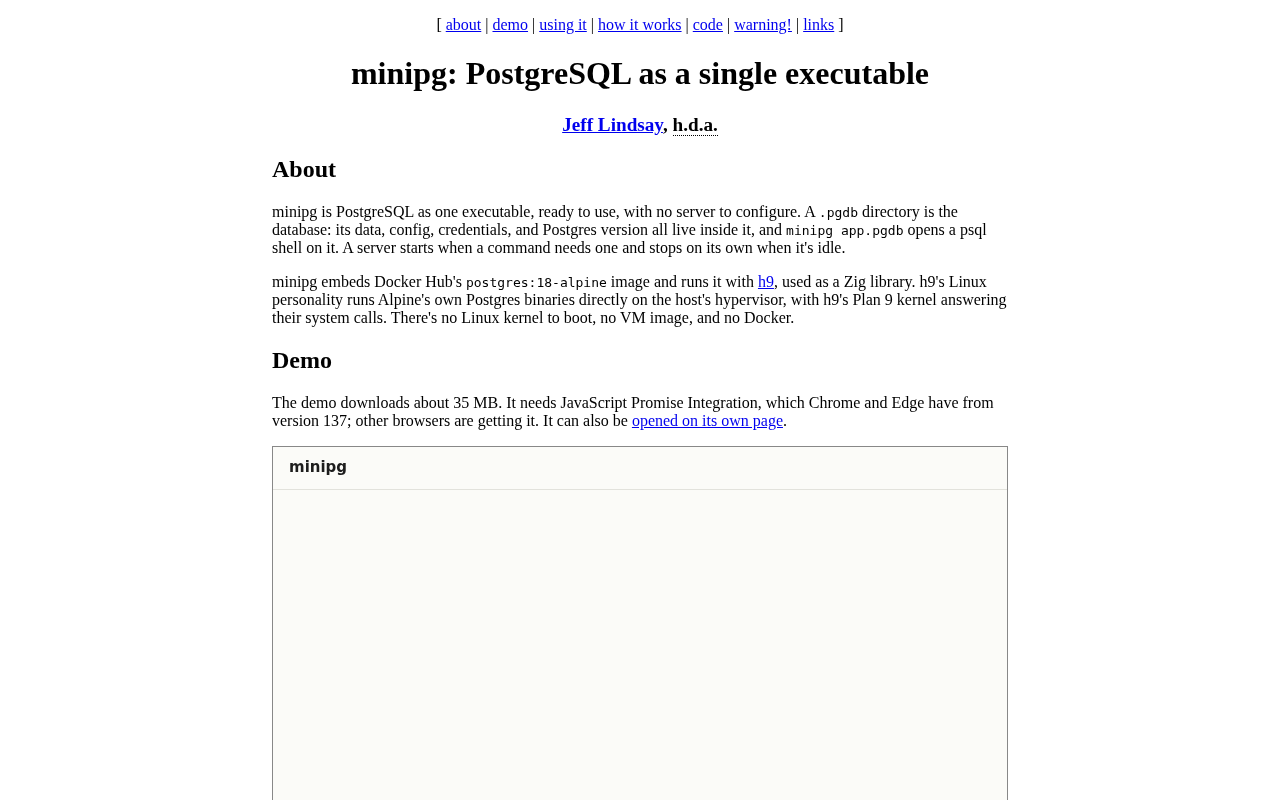
Minipg: Packaging PostgreSQL into a Single Executable File
Minipg packages PostgreSQL into a single executable that runs without dependencies. We analyze its technical approach, use cases, and limitations, exploring how single-file databases impact development and deployment.

Will AI End Our Careers?
Hacker News buzzes over 'AI may end our careers.' This article analyzes the real basis of this anxiety, the difference between task replacement and occupational reshaping, and response strategies for tech professionals.