Garmin Forerunner 265S Drops to Lowest Price of the Year: A Balanced Choice for Small-Wristed Runners

Garmin Forerunner 265S drops to $300, its lowest price this year—a balanced choice for small-wristed runners.
The Garmin Forerunner 265S has dropped to $300, its lowest price this year. While not Garmin's newest or most flagship product, testing rated it a "Goldilocks" balanced choice: the 42mm compact dial suits slim-wristed runners and avoids loose fit and unstable heart rate readings. It has an OLED touchscreen plus physical buttons, clear display, and quite good battery life. The price cut reflects normal lifecycle adjustment, not any flaw.
The Garmin Forerunner 265S has hit its lowest price of the year, dropping to $300. This product isn't Garmin's newest or flashiest model, but it has consistently earned high praise in hands-on testing, especially for runners with smaller wrists.
Why the 265S Is Worth Your Attention
According to the original report, the Forerunner 265S was described in testing as a "Goldilocks" watch—meaning it strikes just the right balance. It doesn't carry the bulk of flagship models, yet retains core sports features, and its wearing comfort stands out among comparable products.
Small-Wrist-Friendly Design
For runners with slimmer wrists, the 265S's dimensions are well-proportioned, avoiding the problems of an oversized dial and a loose fit. This detail directly affects the stability of heart rate monitoring and the willingness to wear the watch during long runs.
OLED Touchscreen and Battery Life Balance
The model features an OLED touchscreen with clear display quality, while battery life is described as "quite good." The combination of touchscreen and physical buttons balances operating convenience during workouts with screen durability.
The Forerunner 265S belongs to Garmin's mid-range Forerunner series aimed at runners, and is a same-generation product as the concurrently released 265. The main difference between the two is size: the 265 has a roughly 46mm dial, while the 265S is a 42mm "S" compact version that's also lighter. The series launched in early 2023, positioned between the entry-level 55/165 and the higher-end 965, and was the first to bring AMOLED screens down to the mid-range running watch line, replacing the earlier 255/255S. Understanding this product lineup helps assess price trends: the 265S has been on the market for some time, successor models have gradually arrived, and the current $300 price reflects normal discounting within a clearance cycle rather than any shortcoming in the product itself.
It's worth distinguishing that the screen technology Garmin uses is strictly speaking AMOLED (active-matrix organic light-emitting diode), which media often abbreviate as OLED. Unlike traditional MIP (memory-in-pixel) reflective screens, AMOLED relies on self-emitting pixels, offering saturated colors, high contrast, and clarity even in bright light—but at relatively higher power consumption. Garmin's approach is to offer both always-on and raise-to-wake modes, and to allow lowering brightness during workouts to extend battery life. This is also why the 265S retains physical buttons: touchscreens are prone to mis-taps when sweating, wearing gloves, or in the rain, while button operation is more reliable mid-run—the two complement each other as the mainstream interaction design for sports watches.
Pricing and Buying Advice
$300 is the lowest price for this product this year. Considering it's not the latest model, this discount reflects normal price adjustments over the product lifecycle rather than any functional flaw. For runners who don't chase the newest model and value wearing comfort and core features more, the current price is attractive.
Who It's For
- Runners with smaller wrists who are sensitive to dial size
- Users who need a balance between an OLED screen and good battery life
- Everyday trainers who don't need flagship features and prioritize value for money
If you're looking for a sports watch with the right size and reliable battery life, the 265S at $300 is worth considering.
When choosing a sports watch, "wrist size matching" isn't purely an aesthetic issue. The optical heart rate sensor depends on how well the back of the watch contacts the skin; if the dial is too large or the strap can't be tightened, light leaks and motion artifacts occur, causing heart rate readings to run high or become intermittent. Derived metrics like wrist-based running power and blood oxygen also depend on a stable fit. Generally speaking, keeping an appropriate ratio between dial diameter and wrist circumference, with the watch back lying flat above the wrist bone, gives more reliable measurement quality. This is also why compact versions have long had independent demand among runners with slim wrists.
One-line Summary
Garmin Forerunner 265S drops to $300, its lowest price this year—a balanced choice for small-wristed runners.
Paragraph Summary
The Garmin Forerunner 265S has dropped to $300, its lowest price this year. The article notes that while the model isn't Garmin's newest or most flagship product, it was rated in testing as a "Goldilocks" balanced choice: the 42mm compact dial suits runners with slim wrists, avoiding the loose fit and unstable heart rate monitoring caused by an oversized dial; it features an OLED touchscreen while retaining physical buttons, with clear display and quite good battery life. The $300 price cut reflects normal product lifecycle adjustments rather than any functional flaw. For everyday trainers who don't chase the newest model and value wearing comfort and core sports features, the current price is attractive.
Related articles

Minipg: Packaging PostgreSQL into a Single Executable File
Minipg packages PostgreSQL into a single executable that runs without dependencies. We analyze its technical approach, use cases, and limitations, exploring how single-file databases impact development and deployment.

Will AI End Our Careers?
Hacker News buzzes over 'AI may end our careers.' This article analyzes the real basis of this anxiety, the difference between task replacement and occupational reshaping, and response strategies for tech professionals.
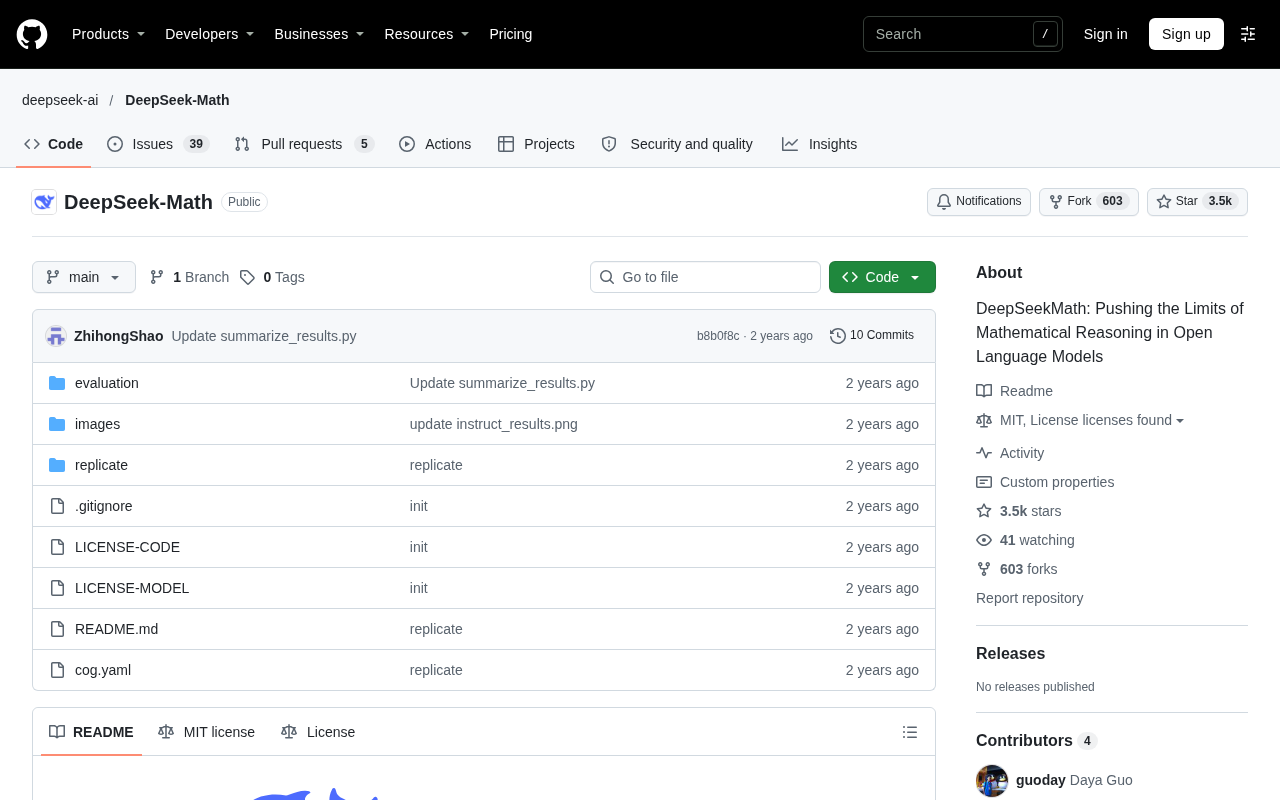
DeepSeekMath: An Open-Source Model Pushing the Limits of Mathematical Reasoning
DeepSeekMath is the math-reasoning-focused direction in the DeepSeek series, aiming to push the boundaries of LLM mathematical derivation. This article explains its positioning, community concerns, and practical implications for developers.