Bring Them to Life: An AI Animation Tool That Brings Your Product Mascots to Life

AI tool that animates product mascots into 12 expressive reactions with Lottie/WebP/PNG export, starting at $1.
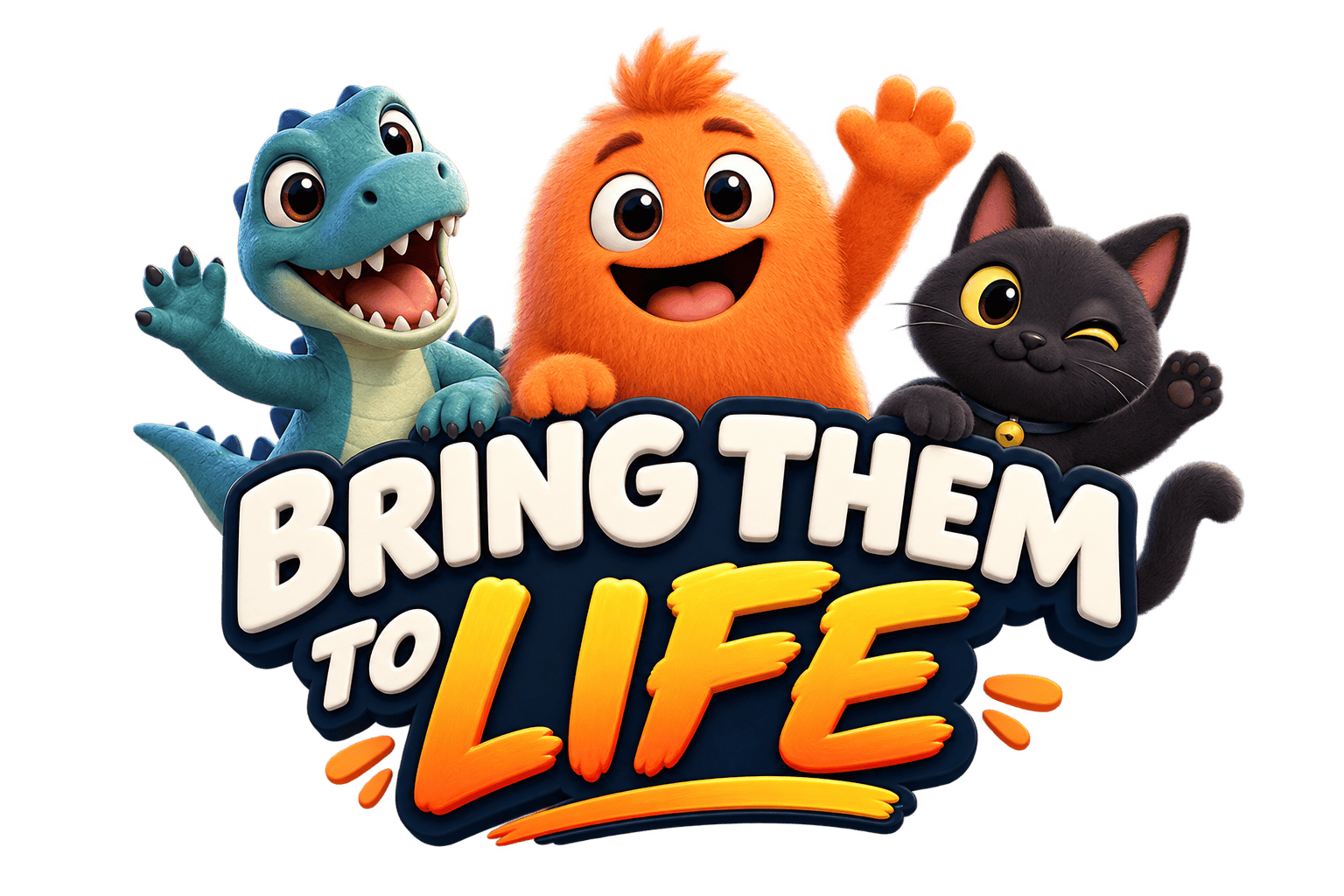
Bring Them to Life is an AI animation tool aimed at indie developers and small teams. Its core value is turning static mascots into 12 emotionally expressive animated characters — no professional animation software required. It supports WebP, Lottie, and PNG export with transparent backgrounds for easy reuse across mobile, web, and desktop apps. Users can upload existing illustrations or create a new mascot from scratch, starting at just $1. The product earned 82 upvotes on Product Hunt, but with only 5 reviews, actual generation quality and brand style consistency still need real-world validation.
Give Your Product a Mascot That Can Express Emotions
In an app market saturated with look-alike products, a mascot with personality can become the defining memory of your brand. Bring Them to Life, which recently launched on Product Hunt, is built around exactly this need — it helps developers and independent creators transform static mascots into animated characters that "express emotions," making app interfaces feel warmer and more approachable.
The tool was created by Christopher Rizzo and has garnered 82 upvotes and 5 comments on Product Hunt, ranking 17th overall, with tags spanning Design Tools, Developer Tools, Artificial Intelligence, and OpenAI Day.
Core Features: 12 Reactions, Multiple Export Formats
From the product description, Bring Them to Life has a clear value proposition: no need to learn professional animation software or cobble together various AI tools — just turn your mascot into a series of expressive animated moments.
It offers 12 preset "reactions" covering a range of emotions and scenarios, allowing the same character to display the appropriate expression at different UI touchpoints — welcome screens, loading states, error messages, success feedback, and more. This kind of anthropomorphic detail is precisely what makes a product feel "alive."
For export, the tool supports three mainstream formats:
- WebP: Transparent background, lightweight for web embedding
- Lottie: Vector animation, scales without quality loss across platforms, widely used in mobile apps
- PNG: Static frames, maximum compatibility
The transparent background means these animations can be reused across any background or context — whether it's a mobile app, web application, or desktop software, you can overlay them directly. Create once, reuse everywhere.
Lottie is a JSON-based vector animation format open-sourced by Airbnb. It works by exporting Adobe After Effects animations as lightweight description files, which are then rendered in real time on the device by corresponding runtime libraries (available for iOS, Android, and Web). Compared to GIF, Lottie files are typically over 90% smaller and remain crisp at any resolution — making them ideal for mobile UI animations that need to adapt across devices. This is why many major apps — such as Twitter's like animation and Duolingo's character feedback — use Lottie as their standard animation solution. Bring Them to Life's direct Lottie output means developers can bypass the After Effects workflow entirely and integrate the generated assets straight into their existing projects.
Who It's For: Indie Developers and Builders
Bring Them to Life has a clear target audience: "builders" — indie developers and small teams who want their apps to feel more personable but lack the resources for dedicated animation design.
It offers two paths: bring your own original illustration, or create a brand-new mascot directly on the platform. The former serves products with established brand identities; the latter lowers the barrier to starting from scratch. For technically-minded creators without a design background, this "upload and generate" workflow eliminates the time-consuming back-and-forth of tweaking things in After Effects or a Lottie editor.
Worth noting is its pricing strategy — the product claims you can get started for as little as $1. The ultra-low entry point is clearly designed to attract developers to give it a try, and fits the typical acquisition playbook for indie tools launching on Product Hunt.
Some Observations and Thoughts
From a product logic standpoint, Bring Them to Life addresses a real but often overlooked pain point: the hidden impact of micro-interactions and emotional design on user retention. Large companies typically have dedicated motion design teams, while indie developers, constrained by time and skill, often settle for interfaces that are merely "functional." Tools like this democratize animation capabilities and could theoretically help small teams close the experience gap.
That said, it's worth being realistic about the limitations. The publicly available information is primarily from the Product Hunt promotional page. The actual generation quality, the expressiveness of the 12 reactions, and how faithfully the AI reproduces uploaded illustrations all need to be validated through real-world use. With only 5 reviews, there isn't enough user feedback to draw meaningful conclusions. Additionally, style consistency across animations — and whether the output can meet brand coherence requirements — is a common pitfall for automated tools of this kind.
For indie developers looking for a lightweight animation solution, Bring Them to Life offers a low-cost option. But if your product has high standards for animation quality, it's still advisable to run a test with your own assets before committing to it.
Microinteractions are small, time-limited, single-purpose animations within an interface — such as a button deforming on press, a checkmark appearing after a form submission, or a loading progress indicator. Emotional Design is a concept introduced by Donald Norman in his book of the same name, emphasizing a product's impact on user emotions across three levels: the visceral (visual appeal), the behavioral (operational fluidity), and the reflective (brand identity). Research shows that anthropomorphic interface elements can significantly reduce user frustration during errors or wait times, and improve brand recall. For independent products, these details are often a low-cost path to building differentiated perception when core features become commoditized.
Related articles
uGAP: An AI Platform Unifying 100+ African Geospatial Datasets
uGAP is an African geospatial AI platform by a University of Cape Town team, unifying 120+ African datasets with a Python SDK for discovery, processing, and model training, already used in cyclone flood mapping.

Cursor Can Now Control Your Computer: AI Agents Can Drive Desktop Apps for Testing
Cursor adds desktop control: AI agents can drive desktop apps like the iOS Simulator to test their own features. We analyze the impact on dev workflows, possible technical approaches, and reliability concerns.

Vibecoding a Custom Inference Engine: High Hopes, Harsh Reality
A Reddit developer shares the real experience of vibecoding a custom inference engine: running GGUF Q4 models in the browser with WebGL2 and GLSL, only to fall into tokenizer debugging hell. This article analyzes the engineering challenges of browser-side LLM inference and why cloning llama.cpp is the more rational choice.