Bringing a Child's Doodle to Life: How Gemini Powered a $10,000 Challenge

A creator used Gemini to identify a doodle's real-world prototype, plan the trip, and verify the results, completing a $10,000 recreation challenge.
The article documents YouTube creator Austin's challenge to recreate a child's doodle in real life and win $10,000 with Gemini's help. Gemini identified the horse-shaped sculptures as Scotland's The Kelpies to lock in the destination, provided bus route options for travel planning, and finally analyzed real-world photos with a "you should pay up" verdict as a technical reference for the reward. Gemini handled knowledge retrieval, route planning, and image recognition, but physical execution like the handstand and scene setup still required people—AI acted more as an "intelligent co-pilot" than a fully autonomous executor.
When a Doodle Becomes the Mission Brief
On YouTube, a seemingly impossible challenge drew a lot of attention: creator Austin set out to recreate a child's doodle in the real world, with $10,000 on the line if he succeeded. The doodle featured Scotland's giant horse-head sculptures, a painter at work, and a girl doing a handstand with a drink balanced on her foot. That wildly imaginative combination became a real-world test of AI's practical capabilities.
The key tool for the challenge was Gemini. Rather than fumbling around blindly, Austin went straight to Gemini and asked: "How do I make these horses?" When Gemini identified the sculptures as Scotland's The Kelpies, he immediately locked in his destination.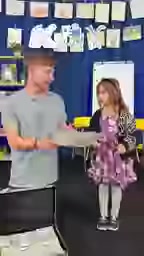
The Kelpies are two giant horse-head sculptures located near Falkirk, Scotland, beside the Forth and Clyde Canal. Standing about 30 meters tall, they were designed by sculptor Andy Scott and completed in 2014. The name "Kelpies" comes from Scottish folklore's water horse spirits, said to take the form of horses and drag people into the water. Modeled on two horses bearing loads, the sculptures symbolize Scotland's industrial and horse-transport history and have become a local landmark. Gemini's ability to identify this prototype from nothing more than the horse-shaped outline in a doodle relies on the visual and textual associations with famous sculptures around the world stored in its training data; and Austin's ability to quickly lock in the destination came from the close match between the doodle's "giant horse shape" feature and the Kelpies' distinctive form. This identification step was the key turning point that moved the challenge from an abstract doodle to real-world execution, and it also illustrates the boundary of multimodal models' cross-modal association abilities—they can offer the most likely candidates, but human confirmation and on-site verification are still required.
AI Navigation and On-the-Ground Execution
After arriving in Scotland, Austin used Gemini to look up the fastest way to get to the Kelpies. Gemini returned a bus option that helped him reach the destination efficiently. Meanwhile, he found a gymnastics facility that could accommodate the handstand, and by offering to cover transportation costs, he invited a girl who was willing to appear on camera.
This stage showcased AI's versatility, from information retrieval to itinerary planning. In the video, Austin says, "I found my painters," and then set about preparing the handstand scene.
When querying transit, Gemini provided specific route suggestions, though final execution still required human coordination.
Image Verification and Reward Decision
The climax of the challenge was the final comparison. Austin placed the child Lemon's doodle side by side with the real-world photos and asked Gemini to analyze the shots. Gemini's verdict was "you should pay up," and so the $10,000 reward was delivered.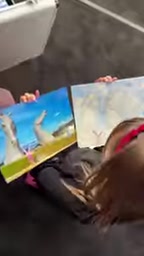
This process raises a question worth discussing: to what extent can AI's visual judgment replace human subjective evaluation? In the video, Gemini's approval served as the "technical endorsement" for releasing the reward, but the final decision was still made by the challenge's creator.
Visual judgment by multimodal models generally refers to a model's ability to process image and text inputs simultaneously and to describe, classify, or compare image content. In this case, Gemini was asked to compare real-world photos against the doodle and judge whether the recreation was "close enough." This kind of judgment is essentially a semantic-level similarity assessment rather than a strict pixel-level comparison: the model focuses on whether key elements—the horse sculptures, the painter, the handstand girl—are present, but it struggles to quantify subjective dimensions like "fidelity" or "artistic quality." So Gemini's "you should pay up" is more of a lenient recognition based on element coverage than a reproducible objective score. This also explains why the challenge creator retained final decision-making authority—AI's visual judgment can serve as a reference endorsement, but when real-world consequences like reward payouts are involved, human discretion remains a necessary checkpoint.
The Boundaries and Possibilities of Multimodal AI
From this challenge, we can see that Gemini took on three types of tasks: knowledge retrieval, route planning, and image recognition. Its answers directly drove real-world action, but the limitations were also exposed: the handstand still had to be performed by a real person, scene setup depended on human coordination, and AI did not solve the problem end to end.
According to the YouTube channel's video record, Gemini's involvement throughout the challenge was more like an "intelligent co-pilot" than a fully autonomous executor. This aligns with the current practical application level of multimodal models: they excel at providing information and judgments, but real-world implementation still requires human creativity and action.
One-line Summary
A creator used Gemini to identify a doodle's real-world prototype, plan the trip, and verify the results—completing a $10,000 recreation challenge.
Paragraph Summary
The article documents YouTube creator Austin's challenge to recreate a child's doodle in real life and win $10,000 with the help of Gemini. Gemini first identified the horse-shaped sculptures in the doodle as Scotland's landmark The Kelpies, helping lock in the destination; it then provided bus route options to assist with travel planning; and finally it analyzed the real-world photos and delivered a "you should pay up" verdict, serving as a technical reference for releasing the reward. The article notes that Gemini took on three types of tasks—knowledge retrieval, route planning, and image recognition—but physical execution such as the handstand and scene setup still required real people. AI was more of an "intelligent co-pilot" than a fully autonomous executor, which reflects the current practical application level of multimodal models.
Related articles

A 19-Year-Old's Rental Horror Story: Ceiling Collapse, Bug Infestation, and the Lessons It Taught Me
At 19, my first off-campus rental brought bug infestations, no heat, a collapsed ceiling, and a ruined laptop with no renter's insurance. Here are the hard-won lessons for first-time student renters.

Veda Nurse's Cranial Nerve Exam: Why ASMR Role-Play Is Going Viral
Bilibili creator Veda's cranial nerve exam ASMR video goes viral, blending humor and sensory triggers through nurse role-play. This article analyzes its unique appeal and the audience psychology behind ASMR role-play.

LG Cinebeam AI Review: 120-Inch Giant Screen + 3000 Lumens, a New Choice for the Living Room Theater
LG Cinebeam AI projector review: 3000 ANSI lumens, 4K, 100 inches from about 8 cm and 120 inches from about 18 cm. Built-in webOS, AI Concierge voice recommendations, AI Sound Pro 11.1.2 virtual surround, and Game Optimizer—positioned for fixed living room installation, complementing the portable Cinebeam S.