Brown University Student Maps the Global Invisible Labor Force Behind AI

A Brown student maps AI's invisible global human supply chain, questioning labor visibility and fairness.
The article starts from a Brown University student's project mapping the global AI workforce, noting that public debate focuses on models, compute, and funding while ignoring the human foundation of data annotation, cleaning, categorization, and rating done through crowdsourcing and outsourcing worldwide. The map shows geographic and economic stratification between researchers in high-income countries and annotation workers in low-cost regions, connected by platforms yet highly asymmetric. Hacker News discussion centers on pay, working conditions, and visibility, but the article stresses that visualization is not change; the real challenge is making buyers and platforms take responsibility. Practitioners should build annotators' working conditions into data pipeline design rather than treating them as a black box.
When we talk about AI, who is actually working for it?
A Brown University student did something few people bother to do amid the AI boom: map out the global labor network that keeps artificial intelligence running. This Hacker News discussion (41 points, 27 comments) points to a dimension long overlooked by mainstream narratives—AI is not a technological miracle that grew out of thin air; behind it lies an invisible supply chain laid down by human labor.
From "Algorithm Myth" to "Human Foundation"
Public discussion about AI almost always revolves around model parameters, compute scale, and funding figures, as if intelligence naturally emerges from code and chips. But anyone who has touched dataset construction knows that a large part of making models "smart" is having people annotate, clean, categorize, and rate massive amounts of data. This work is scattered around the world in the form of crowdsourcing, outsourcing, and micro-tasks, forming the "human foundation" of the AI industry. What makes the Brown student's project noteworthy is precisely that it uses visualization to bring this foundation to the surface.
The heat of the Hacker News discussion itself also shows that the tech community is beginning to realize: discussing the ethics and sustainability of AI cannot focus only on model outputs; it must also examine the labor structure on the input side.
Data annotation and RLHF: The "annotation, cleaning, categorization, and rating" mentioned in the article have a more specific form in contemporary large-model training—reinforcement learning from human feedback (RLHF). The model first produces multiple candidate responses, and human annotators rank and score them according to criteria such as helpfulness and harmlessness. These preference data are then used to train a reward model, which in turn fine-tunes the language model's behavior. This means the model's "alignment" and "politeness" are not purely algorithmic products but the result of a large amount of human judgment compressed into parameters. Similarly, content moderation, data deduplication, and toxicity filtering also rely on human labor. This kind of work is usually paid per task and is highly fragmented and remotely doable, so it is naturally suited to organization by cross-border crowdsourcing platforms and naturally difficult to count in formal employment statistics.
The "Human Supply Chain" Structure Revealed by the Map
Although the original discussion did not elaborate on specific country distributions or numbers of workers, the project's positioning suggests that the map attempts to answer "which regions' people are doing which types of AI work." Such maps usually present a layered structure: at one end are engineers and researchers in high-income countries; at the other are data annotators, content moderators, and crowdsourced workers in low-labor-cost regions. The two are connected through platforms and outsourcing contracts, geographically far apart and economically highly asymmetric.
This asymmetry is key to understanding the AI industry. Performance improvements in models often depend on large amounts of cheap, flexible, easily scalable labor, and this work is almost invisible in the final product. What users see is a dialog box; they do not see the hundreds or thousands of human judgments behind it.
Crowdsourcing and micro-task platforms: The organizational forms supporting this human supply chain are mainly crowdsourcing platforms and business process outsourcing (BPO) companies. The former, such as Amazon Mechanical Turk, Appen, and Scale AI, break annotation tasks into minute-level micro-tasks and distribute them to registered workers worldwide; the latter set up operations centers in places such as Kenya, India, and the Philippines to take on full-package data service contracts. Platforms play an intermediary role, responsible for task distribution, quality spot checks, and settlement, but they usually do not recognize workers as employees, thereby avoiding obligations such as minimum wage, social insurance, and workers' compensation. This "platformized" structure allows labor to scale quickly with project demand, and also makes labor conditions, pay levels, and responsibility attribution dispersed and blurred—precisely the institutional basis for what the article calls "geographically far apart and economically highly asymmetric."
Focus of the Discussion: Visibility and Fairness
Among the 27 comments, it is reasonable to infer that the discussion centered on several directions: whether this kind of labor receives due pay and attribution, what working conditions data annotators face, and what practical change a map that "makes the invisible visible" can bring. The Hacker News audience is mainly engineers and entrepreneurs, and their discussion of the "AI supply chain" often carries a sense of self-examination—many of the training data toolchains people use have these dispersed workers upstream.
One unavoidable question is: the map itself is a form of revelation, but revelation is not the same as change. Whether visualizing invisible labor can push buyers to improve working conditions and make platforms take on more responsibility is the real question facing such projects.
Ethical controversies in data annotation: Around this supply chain, several specific controversies have emerged in recent years that can serve as background for understanding the focus of the discussion. The first is pay levels; multiple surveys show that hourly wages for annotation tasks on some platforms are far below local minimum wages. The second is psychological harm; content moderators must be exposed to violent, hateful, and other harmful content over long periods, yet often lack psychological support. The third is labor status; workers are mostly classified as independent contractors, making it difficult to organize unions or assert rights. The fourth is informed consent regarding data sources; annotation content sometimes involves users' private data. Together, these controversies constitute the input-side dimension of "AI ethics" that is often obscured by model-output issues, and they are also the real source of the self-examination mood in the Hacker News comments.
What This Means for AI Practitioners
For people building products and doing research, this project offers a practical perspective: when designing data pipelines, incorporate "who does the annotation, under what conditions, and whether the pay is reasonable" into system design considerations, rather than treating it as a black-box outsourcing step. For readers concerned with AI governance, it reminds us that AI sustainability is not only about energy consumption and copyright but also about the transparency of the human supply chain.
This map by the Brown student will not provide all the answers, but it puts a question on the table: when we enjoy AI capabilities, should the labor supporting them also be seen, counted, and treated fairly?
One-line Summary
A Brown student uses a map to reveal the invisible global human supply chain behind AI and asks about labor visibility and fairness.
Paragraph Summary
Starting from a Brown University student's project mapping the global AI labor force, the article notes that public discussion has long focused on models, compute, and funding while ignoring the human foundation that keeps AI running—data annotation, cleaning, categorization, and rating work scattered worldwide in crowdsourcing and outsourcing. The map shows the geographic and economic stratification between researchers in high-income countries and annotation workers in low-labor-cost regions; the two are connected through platforms but highly asymmetric. The Hacker News discussion focuses on pay, working conditions, and visibility for this labor, but the article stresses that visualization is not change; the real challenge is pushing buyers and platforms to take responsibility. For practitioners, the working conditions of annotators should be incorporated into data pipeline design rather than treated as black-box outsourcing.
Related articles

Mistral Large 4 Open-Sources a Trillion Parameters, Microsoft Offers Voluntary Severance to 60,000 Employees
Mistral Large 4 open-sources a trillion-parameter multimodal model with a coding agent score of 48; SanDisk earnings show AI inference reshaping NAND demand; Google Gemini adds in-app file editing, OpenAI raises Codex quotas, and Microsoft offers voluntary severance to 60,000 employees.
Mistral Large 4 Opens Its Weights: AI Morning Brief Roundup of Models and Ecosystem Trends
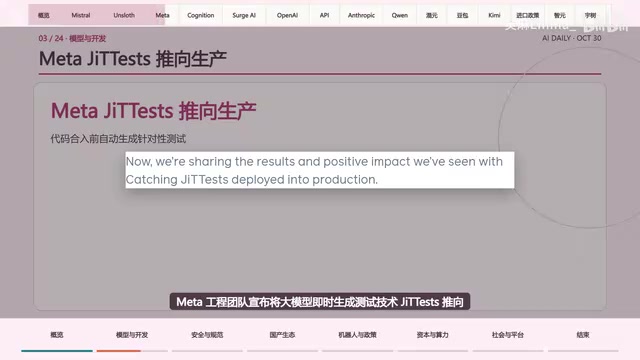
Mistral Large 4 opens its weights, a 1-trillion-parameter MoE architecture that can run locally on MacStudio; Meta's test-generation technology enters production; top tax benchmark pass rate only 10.8%; Canadian government takes a stake in Cohere; Doubao Work opens third-party model calls. This AI Morning Brief rounds up model, ecosystem, capital, and policy developments.
Mistral Large 4 Goes Open Source: A 1T-Parameter European Qwen Challenging DeepSeek
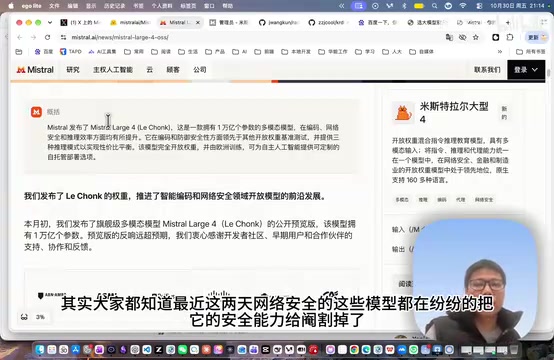
Mistral Large 4 is now open source: 1T total parameters, 52B activated, focused on coding and cybersecurity, with ~610G NVFP4 weights. We analyze its comparison with DeepSeek V4 Flash, API pricing, demo realism, and local deployment value.