Buc-ee's Trademark Enforcement Controversy: Lawsuit Against Small Beaver Creek Store Sparks Public Backlash

Buc-ee's trademark lawsuit against a small Beaver Creek store sparks community backlash and media scrutiny.
Buc-ee's, the Texas-based convenience store chain, faces growing public criticism for its aggressive trademark enforcement against small businesses. Its latest target is Beaver Mini-Mart in Beaver Creek, accused of using a similar beaver logo. The local community has rallied behind the small shop, while HBO's Last Week Tonight satirized Buc-ee's pattern of lawsuits, raising questions about the line between legitimate IP protection and trademark bullying.
A Trademark War Over "Beavers"
American convenience store chain Buc-ee's has once again found itself in the eye of a public relations storm. The company, known for its cartoon beaver mascot, has drawn widespread attention and criticism for frequently filing trademark infringement lawsuits against small businesses. According to HBO's Last Week Tonight, Buc-ee's has previously sued multiple businesses using similar imagery—from a cartoon moose, to a koala, and even an alligator that "looks nothing like a beaver."
Founded in 1982 and headquartered in Texas, Buc-ee's is famous for its massive gas station/convenience store complexes. Individual locations typically exceed 50,000 square feet with over 100 gas pumps, earning the title of "world's largest convenience store." The company is known for its clean restrooms, extensive private-label merchandise, and cartoon beaver mascot "Buc-ee," making it an iconic symbol of American road trip culture. As of 2024, Buc-ee's operates dozens of stores across multiple southern states with estimated annual revenue in the billions, and its brand strategy relies heavily on emotional connection and a "fun, friendly" image.
This large-scale, seemingly indiscriminate enforcement behavior has gradually transformed Buc-ee's from a "fun brand" to one labeled as a "bully." The show's host, in his characteristically biting satirical style, compared Buc-ee's persistence to "never giving up," highlighting public resentment toward this legal pressure tactic. This behavior has a specific term in legal circles—"Trademark Bullying"—where large trademark holders leverage their superior legal resources to file lawsuits or send cease-and-desist letters against small businesses unlikely to cause actual market confusion. The U.S. Patent and Trademark Office (USPTO) published a dedicated report studying this phenomenon in 2011, noting that small businesses are often forced to settle because they cannot afford litigation costs, even when their usage doesn't actually constitute infringement.

Buc-ee's Latest Litigation Target: Beaver Creek's Beaver Mini-Mart
The latest development involves Buc-ee's targeting a local shop called "Beaver Mini-Mart." This business located in Beaver Creek has been accused of using a name and logo "too similar" to Buc-ee's signature beaver brand.
According to court filings, Beaver Mini-Mart's March promotional materials share similarities with the Buc-ee's mascot, including "wide eyes, a smiling expression, and a primarily red color scheme." However, many view such allegations as quite a stretch—after all, the store is located in a place literally called "Beaver Creek," where "beavers are everywhere," and using beaver imagery is practically a natural regional characteristic.
Notably, under U.S. trademark law, names that purely describe a geographic location are typically considered "geographically descriptive" marks and are difficult to afford strong trademark protection. Section 2 of the Lanham Act explicitly provides that primarily geographically descriptive marks cannot be registered as trademarks unless the applicant can demonstrate that the mark has acquired "secondary meaning" through long-term use. This means that when a business located in Beaver Creek uses the word "Beaver," its use may be considered a reasonable geographic description rather than trademark use, providing Beaver Mini-Mart with an important legal defense.

The Core Dispute Over Trademark Image Similarity
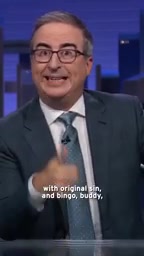
The show's host humorously pointed out the obvious differences between the two beaver images: Buc-ee's logo wears a hat, while the Mini-Mart beaver is in its "unclothed" natural state. This exaggerated comparison effectively questions the reasonableness of the infringement claim—how visually similar are the two cartoon images, really, and do they genuinely create consumer confusion?
The core standard for trademark infringement is typically "Likelihood of Confusion." In U.S. judicial practice, courts generally consider multiple factors in making this determination, including: the strength of the mark, the similarity of goods or services, the similarity of the marks themselves, evidence of actual confusion, overlap in marketing channels, and the degree of consumer attention. This multi-factor test originates from landmark cases in the various federal circuit courts, such as the Second Circuit's Polaroid factors test. For a remote, small-scale local shop, the vast gulf between its marketing channels, consumer base, and brand awareness compared to the nationally franchised Buc-ee's raises serious questions about whether actual market confusion would genuinely occur.
Strong Community Backlash Against Buc-ee's Lawsuit
The lawsuit has triggered clear resentment in the Beaver Creek community. Local residents widely consider the lawsuit "really stupid" and have spontaneously patronized Beaver Mini-Mart to show their support.
One interviewee said: "This makes me want to come support them, to help this local small business that's being bullied by a big corporation." Another resident expressed disappointment: "After looking deeper and finding out Buc-ee's has sued other companies too, it gives them a bad reputation. They seemed like a fun company, and seeing them go after a small business like this makes me uncomfortable."

As a detail worth noting, this community support itself reflects subtle shifts in brand reputation. When a company's legal actions begin to damage its "fun, approachable" brand image, the risk of counterproductive outcomes emerges. In the social media age, this "David vs. Goliath" narrative spreads extremely fast—a local trademark dispute can escalate into a national brand crisis within hours.
Balancing Over-Enforcement and Public Image
From both business and legal perspectives, this incident reveals a thought-provoking issue: while companies are well within their rights to actively protect intellectual property, over-enforcement can backfire.
It's important to note that trademark holders do face a genuine dilemma: under U.S. trademark law principles, trademark owners have an obligation to actively maintain their trademark rights, or they may face the risk of trademark "dilution" or "genericization"—where a brand name becomes a generic term due to lack of enforcement (as "aspirin" went from brand name to generic drug name), causing the trademark owner to lose exclusive rights. However, there is a clear boundary between this maintenance obligation and overextending enforcement scope.
For consumer brands like Buc-ee's that rely on affability and brand goodwill, aggressive litigation strategies can produce the following negative effects:
- Brand reputation damage: The "big corporation bullying small business" narrative easily triggers public sympathy for the underdog
- Community boycott risk: Local community solidarity can translate into substantive support for the defendant
- Amplified media effect: Mainstream and social media attention can magnify a local dispute into a national story
Last Week Tonight with John Oliver, which premiered in 2014, has become one of America's most influential investigative comedy programs. The show combines in-depth investigative reporting with satirical comedy and has repeatedly driven public policy discussions and corporate behavior changes—its influence is referred to in academic and media circles as the "John Oliver Effect." In this instance, the show even set up its own branded merchandise store as a satirical response and raised nearly $500,000 for Hunger Free America. The show's team frequently creates real-world projects (such as purchasing and forgiving medical debt, registering satirical trademarks, etc.) as performance art-style protests. This approach of using humor to counter legal pressure perfectly highlights public attitudes toward corporate over-enforcement.
Where Are the Boundaries of Trademark Enforcement?
The Buc-ee's trademark controversy is a textbook case of "legal but not necessarily wise." Companies have the right to protect their intellectual property, but when the enforcement target is a local shop in "Beaver Creek" using beaver imagery, tension emerges between legal legitimacy and business wisdom.
From a broader perspective, this incident reflects a structural problem in the American intellectual property legal system: the asymmetry of litigation costs gives large corporations an inherent ability to "regulate through lawsuits." The cost of defending a trademark lawsuit can easily reach hundreds of thousands of dollars. For a local shop, even when the legal prospects for victory are clear, the economic pressure of merely responding to the lawsuit may force them to settle. This phenomenon of "litigation as a business tool" is the institutional root cause of the trademark bullying problem.
For all brands, this incident serves as a reminder: intellectual property protection strategies need to find a balance between legal rights, market realities, and public perception. Overly aggressive enforcement may ultimately damage a brand's most valuable asset—public goodwill.
Key Takeaways
Related articles

RisenX Explained: The Coding Agent Officially Recommended by DeepSeek
RisenX is a DeepSeek-native coding agent featured in DeepSeek's official API docs. It supports cache-first loops, tool-call repair, and Flash/Pro smart switching.

ChordViz Review: A Real-Time Visualization Workbench for MIDI and Audio
In-depth review of ChordViz music visualization tool with real-time MIDI and audio input, chord visualization, notation, and audio-reactive visuals, plus OBS, TouchDesigner and Resolume integration.

3D-Printed Robot Desk Lamp: How to Make a Machine Feel Alive Like a Pixar Character
See how an indie developer uses 3D printing, ROS 2, and a custom animation editor to turn Pixar's iconic desk lamp into a real robot with personality, vision, and RL-driven autonomy.