Build a WhatsApp Lead Automation with n8n: AI-Powered Lead Scoring So No Opportunity Slips Away
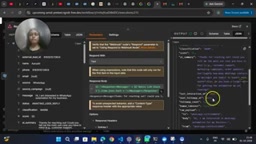
n8n WhatsApp AI agent auto-classifies leads into 4 tiers with dynamic scoring, alerting humans only for hot leads.
This article breaks down an n8n-powered WhatsApp automation workflow that uses AI agents to handle all inbound inquiries, classify leads into hot/warm/cold/unclassified tiers, and dynamically score them based on conversation history. Only hot leads trigger an email notification to the business owner — complete with an auto-generated summary and lead score. Two specialized AI agents handle classification and response separately, while fallback logic handles edge cases like empty messages or missing contact info.
In most businesses, inbound leads never stop flowing — but the real challenge is this: most people are just asking about services or pricing, and won't commit on the spot. Assigning someone to manually handle every message is both costly and inefficient. This article breaks down a WhatsApp automation workflow built on n8n, showing how it uses AI to automatically tier leads, decide whether to involve a human based on urgency, and focus human effort on customers who are genuinely ready to convert.
The Core Problem This Workflow Solves
The fundamental tension in lead management is a mismatch between quantity and quality. Inquiry volume is high, but most of them are lukewarm — undecided buyers — while only a small fraction are high-value customers who need the service right now. The approach here is straightforward: let an AI agent take over all inbound messages, handle initial responses and classification automatically, and only push information to a human when a customer signals genuine urgency.
The value is clear — business owners no longer waste time on every "just looking into it" message. They only step in when the system flags a "hot lead." In other words, the AI handles the filtering and nurturing, while human effort is reserved for the highest-converting touchpoints.
The Four-Tier Lead Classification System
The workflow classifies all incoming messages into four categories: hot, warm, cold, and unclassified. The core logic evaluates two things: the customer's urgency and their intent to buy.
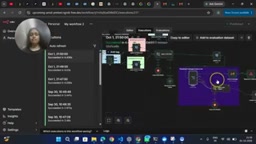
The author tested this with several different messages during the demo:
- Sending "I'm interested in WhatsApp automation" → classified as warm, because it expresses interest but shows no clear urgency or buying signal.
- Sending "I urgently need WhatsApp automation" → interestingly, still classified as warm, because the agent determined the customer hadn't yet demonstrated a concrete action signal.
- Sending "Schedule a call today, I want to talk to the owner" → immediately classified as hot, triggering an email notification to the business owner.
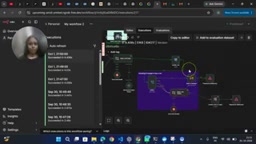
This tiered judgment reflects a key design principle: it's not about whether the word "urgent" appears — it's about whether the customer has sent a real action signal (like "schedule a call" or "discuss pricing and payment").
The four-tier system is essentially a combination of Intent Detection and Urgency Scoring. Traditional rule engines rely on keyword matching (e.g., triggering high priority when words like "urgent" or "today" appear), which is easily bypassed by paraphrasing. LLM-based classification instead understands semantics to determine whether a customer is sending an "action signal" — phrases like "schedule a call," "discuss pricing," or "ready to start today" can be identified as high intent even without the word "urgent." The advantage of this approach is strong generalization; the downside is that classification boundaries are less transparent than hard rules, and occasionally produce puzzling results (as seen in the demo, where "I urgently need" was classified as warm rather than hot). In real deployments, this typically requires iterative refinement of system prompts, adding few-shot examples, and sometimes aligning classifications against historical data to improve consistency and accuracy.
The AI Response and Scoring System
For warm and cold leads, the AI agent replies directly without involving the owner. For example, in response to a general inquiry, the agent replies: "Thanks for reaching out — could you tell me your main use case, and roughly how many WhatsApp contacts or messages you handle?" This is a standard lead nurturing approach: ask questions to draw out more information from the customer.
When a lead is classified as hot, the system sends an email to the business owner with an automatically generated lead score. In the demo, the "schedule a call today" message received a score of 90. The email also included an auto-generated summary: the customer needs WhatsApp automation immediately, is ready to implement, and wants to schedule a call today to discuss pricing and payment. This means the owner can instantly understand the customer's status without scrolling through the full chat history.
Memory and Dynamic Scoring
One of the most interesting aspects of this workflow is its memory mechanism. The system continuously stores the conversation history for each customer and dynamically adjusts scores based on it.
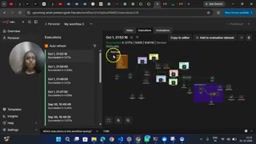
The author demonstrated this scenario: the customer who had previously sent "schedule a call" later sent a simple "hi." The system sent another email to the owner, but the score dropped from 90 to 85. The reasoning: the system inferred that "the owner was busy and the customer followed up," but since the new message was just "hi" with no substantive information, the score was revised downward.
The author also explained why the same person's messages can be classified as hot at one point and warm or cold at another: it often comes down to insufficient information — the system can't be certain whether the customer is truly urgent. Once the customer explicitly writes "I need an urgent call," the memory updates and the lead is upgraded back to hot. This kind of score that evolves with the conversation is far more representative of real sales situations than a one-time static label.
The "memory" here is technically implemented as a Conversation History Window — the customer's previous messages are concatenated into the prompt for each new model call, giving the model context when making its judgment. n8n provides built-in memory nodes (such as Window Buffer Memory) that can store conversation history isolated by session ID (typically the customer's WhatsApp phone number). One important caveat: this memory is ephemeral by default (stored in memory or a local database) and is cleared when the service restarts. For persistent cross-session memory, you need to connect an external database (such as Postgres or Redis). The dynamic scoring logic works like this: the model rescores the entire conversation so far with each new call, rather than incrementally adjusting a previous score. This is what makes it flexible — but it also means scoring consistency depends on keeping the system prompt stable and well-defined.
Fallback Design for Unexpected Inputs
A robust automation must account for non-standard inputs. This workflow includes two fallback handlers:
- Empty messages: If a customer sends a blank message, the system replies: "Thanks for reaching out — could you briefly tell us what service you're looking for, or what problem you're trying to solve?"
- Missing contact details: If the customer hasn't provided contact information, the system follows up: "Please share your phone number and email so we can get in touch with you."
These fallbacks ensure the workflow never breaks due to unexpected input, and always steers the conversation back toward collecting actionable lead information.
Why Two AI Agents Are Needed
The author specifically highlights that this workflow uses two AI agents (requiring two separate LLM calls). The first agent is responsible for updating information and completing classification (determining hot / cold / unclassified). Once that result is produced, the second agent handles the actual conversation response based on the classification outcome. This division of labor keeps "classification decisions" and "response generation" separate, making the overall logic cleaner and easier to maintain.
This "dual-agent" architecture is known in AI engineering as the Task Decomposition pattern. Splitting a complex task into multiple specialized agents — rather than having a single model handle classification, reasoning, and generation all at once — offers several practical advantages. First, each agent can have its own system prompt, allowing each model to perform more reliably within its specific role. Second, the output of the classification agent is a structured label (e.g., hot/warm/cold) that can directly serve as the condition for branching logic in downstream nodes, reducing the uncertainty of parsing natural language. Finally, running the two agents independently makes troubleshooting easier — if the email notification is wrong, check the classification agent; if the response wording is off, adjust the conversation agent. In low-code automation platforms like n8n, each AI agent node typically corresponds to one independent LLM API call, so the dual-agent approach doubles the cost — but the tradeoff is greater controllability and maintainability.
Summary
Although the demo couldn't receive messages in a real WhatsApp environment due to a missing API key, this n8n WhatsApp automation case fully demonstrates a practical lead management approach: AI-driven automatic responses and nurturing, four-tier urgency-based classification, dynamic lead scoring, memory-driven continuous judgment, and fallback handling for unexpected inputs. For small and medium-sized businesses dealing with high inquiry volumes and limited staff, this kind of workflow can precisely direct valuable human effort toward the customers most likely to convert.
Related articles

@ai-sdk/workflow-harness 1.0.146 Release Notes
@ai-sdk/workflow-harness 1.0.146 is a patch-level update that syncs the @ai-sdk/harness dependency to 1.0.146. Auto-published via GitHub Actions with a verified signature.

Googlebook In-Depth Review: Can Google's New Laptop Replace the Chromebook?
In-depth Googlebook review: Google Book OS on Android 17, Pixel ecosystem integration, Gemini semantic search, and how it stacks up against Chromebook and MacBook Air on price and apps.

Python in Practice: Build an MCP Server from Scratch to Give LLMs Real-Time Web Data
Step-by-step guide to building an MCP server with Python and FastMCP, connecting it to Claude Code and Claude Desktop, and enabling LLMs to answer questions with live web data.