Build an AI Agent from Scratch in ~200 Lines of Python: Core Concepts and Practical Roadmap

Build a minimal AI Agent in 200 lines of Python by breaking down its five core components.
This article covers a tutorial that implements a simple AI Agent in roughly 200 lines of Python using an incremental, code-first teaching approach. It breaks down five core Agent components: prompts (setting model behavior), memory (enabling contextual continuity), tool calling (turning the model from a talker into a doer), RAG (injecting external knowledge to reduce hallucinations), and skills (reusable capability modules). Suited for learners with basic Python knowledge, the tutorial helps build foundational intuition before tackling larger frameworks like LangChain — though "learn in 7 days" marketing claims should be taken with a grain of salt.
Understanding the Essence of AI Agents in 200 Lines of Code
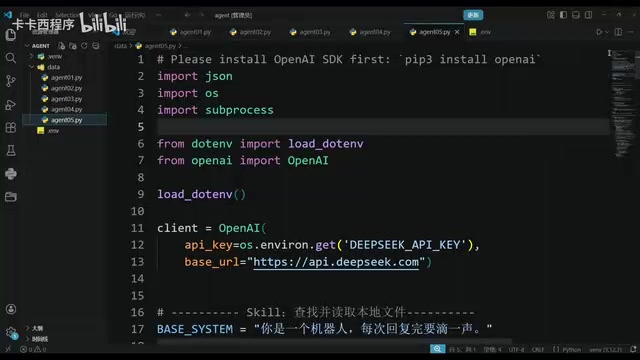
Many people assume that building an AI Agent requires massive frameworks and complex engineering skills. But based on the approach outlined in this Bilibili tutorial, a working minimal AI Agent can actually be implemented in roughly 200 lines of Python. The entire project is built in pure Python, with no heavy third-party abstractions — the focus is on breaking down each core component of an Agent, explaining it clearly, and then assembling everything into a complete system step by step.
The real value here is that it transforms the abstract question of "what exactly is an Agent?" into code you can read line by line. For learners with basic Python skills, this path builds a much stronger foundational intuition than jumping straight into large frameworks like LangChain or AutoGPT.
From Concepts to Code: How the Tutorial Is Structured
The tutorial follows a "define the term first, then show the code" teaching structure. Each lesson introduces an Agent-related concept, then immediately demonstrates what that concept does in practice through actual code. This learn-as-you-go approach avoids the tedium of pure theory, and lets learners see how abstract ideas translate into working implementations.
Starting from lesson seven, the tutorial moves into actually building and using the agent. The entire process emphasizes "adding code incrementally" — each new concept gets a corresponding implementation layered on top of the existing codebase, naturally growing into a complete Agent project. This incremental construction is very beginner-friendly because every change is understandable and traceable.
The Five Core Components of an AI Agent
According to the tutorial's structure, a basic Agent consists of the following key parts — which also represent the common paradigm used in modern agent development:
Prompt
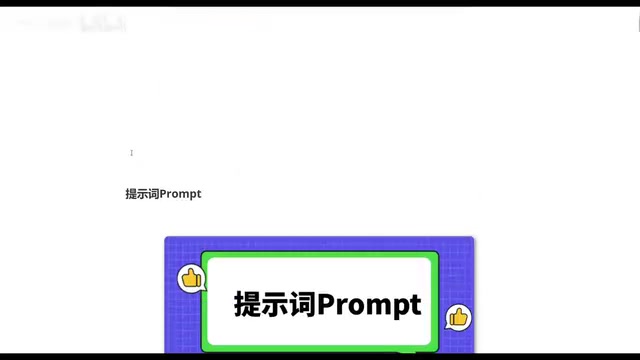
The prompt is the interface between the Agent and the LLM. It determines how the model interprets tasks, what role it takes on, and how it formats its responses. A well-designed prompt is often the single biggest factor in the quality of an Agent's behavior.
Memory
Memory gives the Agent contextual continuity — the ability to remember previous conversations or operation results, rather than starting from scratch every time. This is what transforms a model from a simple Q&A tool into a continuously collaborating assistant.
In practice, Agent memory is typically split into two types: short-term memory refers to the conversation history from the current session, which is directly concatenated into the context window of each request; long-term memory involves persisting important information to external storage (such as a database or vector store) and retrieving it on demand in future sessions. Since LLM context windows are finite (ranging from a few thousand to hundreds of thousands of tokens), the core challenge in memory module design is figuring out how to retain the most relevant history within that limited window. Simple implementations typically keep only the last N turns of conversation; production-grade systems require more sophisticated strategies like summarization or selective forgetting.
Tool Calling
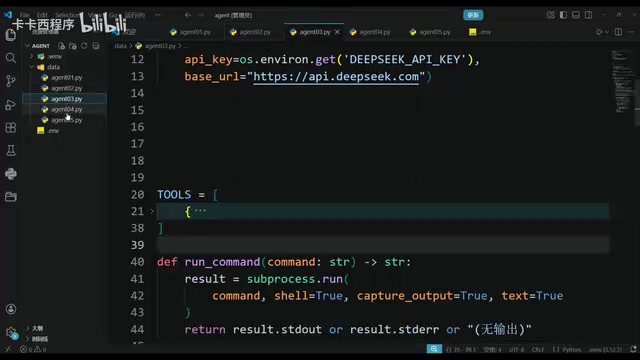
Tool calling gives the Agent the ability to act — querying data, calling APIs, running calculations. A model without tool calling can only "say" things; with tool calling, it can actually "do" things.
At the technical implementation level, tool calling typically relies on the LLM outputting a structured "function call request" (such as OpenAI's Function Calling or Tool Use interface). The Agent framework parses this output, executes the corresponding function locally or remotely, and feeds the result back to the model to continue reasoning. This loop of "model decision → external execution → result feedback" is what fundamentally distinguishes an Agent from an ordinary chatbot. Common tools include: web search, code execution sandboxes, database queries, file read/write, and third-party API calls. It's worth noting that the quality of tool design directly affects Agent reliability — poorly described tool definitions cause the model to misfire, and tools lacking error handling can break the entire reasoning chain.
RAG (Retrieval-Augmented Generation)
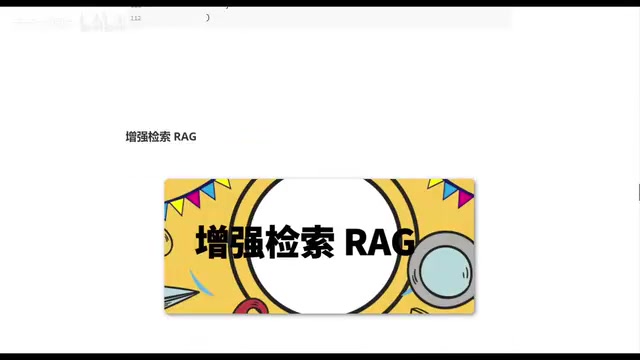
RAG supplements the model's knowledge gaps through external knowledge bases, enabling the Agent to answer questions based on up-to-date or proprietary data — effectively reducing hallucinations.
The basic RAG pipeline works as follows: external documents are chunked and converted into vector embeddings, then stored in a vector database. When a user asks a question, the system first retrieves the most semantically similar chunks from the database, then sends those chunks along with the question to the LLM to generate an answer. This mechanism allows models to "read" new knowledge without retraining, making it one of the most widely used techniques for enterprise AI deployment today. Common vector databases include Chroma, Faiss, and Pinecone. RAG effectiveness depends heavily on chunking strategy, embedding model quality, and retrieval recall rate. In a minimal 200-line implementation, these are typically greatly simplified to illustrate the conceptual workflow.
Skills
Skills is a concept that has been gaining traction recently. Think of it as packaging a set of capabilities into a reusable module, allowing the Agent to more flexibly combine and orchestrate its own functions.
Chaining these five components together forms a complete agent skeleton with perception, memory, action, and knowledge retrieval capabilities.
Who Is This Learning Path For?
The tutorial explicitly states that anyone with basic Python fundamentals can follow the entire content. This means it's aimed at developers or students with some beginner-level programming experience who want to quickly understand how Agents work — not at people with zero coding background.
One caveat worth mentioning: while the title claims things like "go from beginner to expert in seven days" and "get hired after finishing," these are largely marketing phrases. The reality is that a 200-line project is excellent for building a conceptual framework and hands-on confidence, but reaching production-grade engineering quality still requires significant additional work in areas like error handling, concurrency, security, and cost control. The most reasonable way to frame this tutorial is as a "minimum viable sample" for understanding what Agents really are.
Summary
The core value of this tutorial isn't the sheer number of lessons — it's that it uses minimal code to break down the five fundamental elements of an AI Agent: prompts, memory, tool calling, RAG, and skills. For learners who want to understand how intelligent agents actually work, starting with a runnable 200-line project is far more effective than diving straight into complex frameworks. Once you understand this skeleton, working with mainstream Agent frameworks will come much more naturally.
Related articles

Chain of Thought Isn't Just for AI: How Humans Can Use CoT to Improve Thinking Quality
Chain of Thought isn't just a prompt trick for large models. Starting from a Hacker News discussion, this article analyzes why CoT works for human thinking too, breaks down actionable ways to transfer it, and highlights the key differences between human CoT and machine CoT.
Cloudflare Teams Up with OpenAI: Closi…
Cloudflare Teams Up with OpenAI: Closing the Loop from Vulnerability Discovery to Defense with AI
Cloudflare uses OpenAI Daybreak to investigate security vulnerabilities and generate reviewable remediation plans, while developers use Codex to boost coding efficiency and quality.

Orca Multi-Agent Orchestration in Practice: A Guide to Parallel Collaboration with Claude and Codex
Orca is Stable AI's free open-source agent workbench supporting 34 agents like Claude Code and Codex in parallel. Learn its Git worktree isolation, multi-model orchestration, and mobile management.