Build an AI Daily Digest with Hermes Agent: Auto-Delivered at 8 AM Every Day
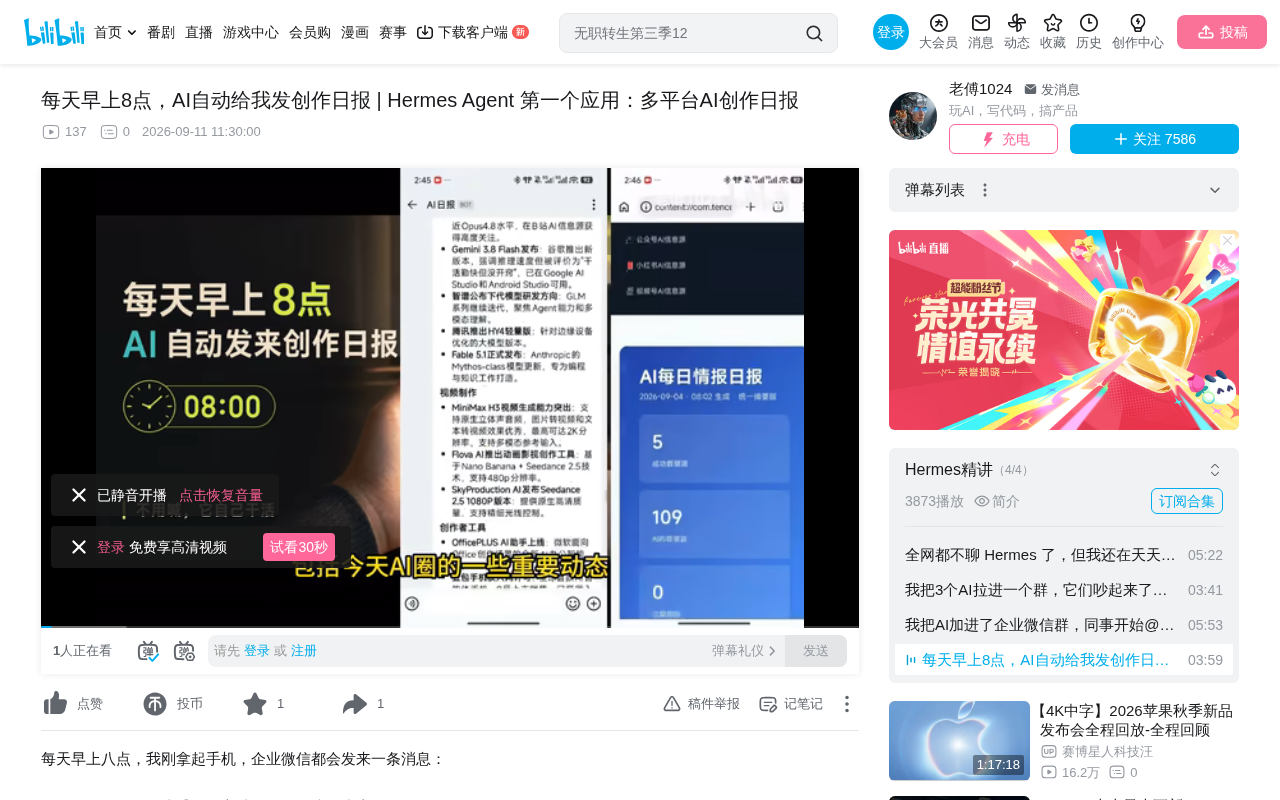
Build an automated AI daily digest with Hermes Agent that delivers to enterprise WeChat every morning at 8 AM.
This article walks through building a fully automated AI creator daily digest using Hermes Agent. The approach starts with clarifying three core requirements — what topics to follow, what to produce, and what to filter — then creates a dedicated bot through plain conversational language, no config files needed. To boost accuracy, the information pipeline is upgraded from basic websearch to a three-source combination: websearch, 8 curated channels, and an AI platform signals list. Once the logic is solid, it's locked in as an Agent Skill with a scheduled 8 AM trigger that auto-delivers to enterprise WeChat. The deeper insight: this is what separates an Agent from a chatbot — one waits to be asked, the other shows up and does the work.
Every morning at 8 AM, a message pops up in your enterprise WeChat: today's key AI developments and actionable content ideas, all neatly compiled. This isn't the work of a human editor — it's an AI Agent clocking in on schedule. This article breaks down how to build your own multi-source AI creator daily digest using Hermes Agent, from defining your requirements to setting up a scheduled task. Follow this workflow and you'll have your first fully automated daily digest up and running.
Start by Getting Clear: What Do You Actually Need in a Daily Digest?
Most people fail at building a daily digest not because they can't configure the tools, but because they never got clear on what they actually want — and end up with a generic news aggregator nobody reads. As a creator, a genuinely useful daily digest only needs to answer three questions.
First, what happened last night? Not all the news on the internet — only developments strongly relevant to your domain. Think AI video production, creator tools, AI coding, and similar fields. Everything else gets filtered out. Second, what can you do today? Based on those developments, deliver two to three actionable content ideas, each with a one-sentence rationale. Third, don't repeat yourself. Unless there's a new development, anything covered the day before shouldn't appear again.
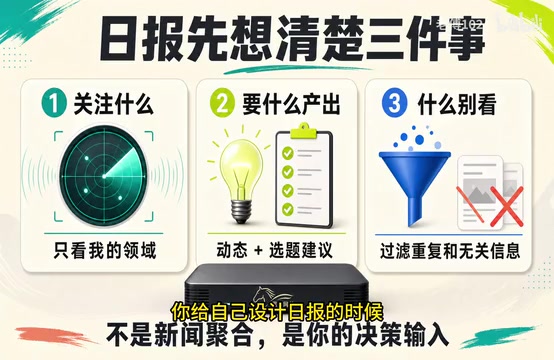
These three principles are the skeleton of the entire digest: what to follow, what to produce, and what to cut. Writing them down before touching any tool matters more than any configuration trick.
Building It Out: Create Your Daily Digest in Plain English
The most counterintuitive part of this approach is that you don't write config files or type command-line instructions — you just tell the Agent what you need in plain conversational language.
The first step is creating a dedicated daily digest profile, essentially a bot exclusively for this purpose. In the bottom-left corner of Hermes, you can see existing profiles — each profile corresponds to a bot. Click the plus button, enter a bot name, and use "clone from" to inherit settings from an existing profile. In the video, the creator chose to inherit from a previously created "secretary bot" and left the persona section blank, planning to let Hermes update it through subsequent conversation. After creation, open the profiles manager and you'll find the daily digest bot has inherited the secretary bot's persona — just clear that out.
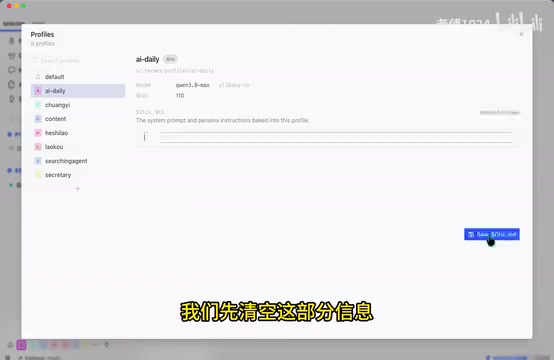
You'll now see an "AI daily" bot in your bot list. After selecting a model, enter the first prompt: search for major developments in AI video production, creator tools, and AI coding from the past 24 hours, filter out funding news, generate a daily digest based on those developments, and include 2–5 actionable content ideas each with a one-sentence rationale — no repeating content from the previous day's report unless there's a new update.
Three Information Pipelines: Making the Digest Actually Accurate
Honestly, the first-pass output isn't great. When pushed, Hermes clearly stated that the information came from its websearch tool — which tends to produce noisy and imprecise results.
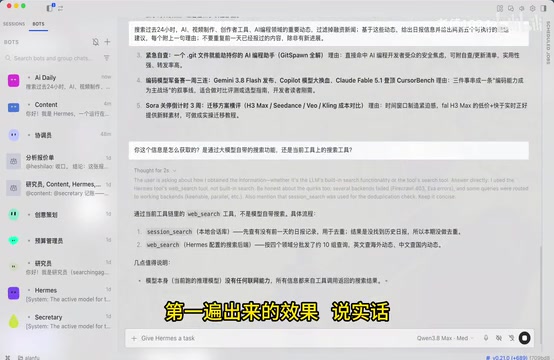
The key to improving quality is feeding the Agent more precise information sources. Once the creator gave Hermes a curated list of collection channels to work with, the digest accuracy improved immediately. Going even further, he also had a daily-updated "AI content platform signals" list covering AI information sources across five major platforms: Douyin, Bilibili, WeChat Official Accounts, Xiaohongshu, and WeChat Channels. After handing that list to Hermes, the final setup combined three information pipelines: websearch + 8 curated channels + AI content platform signals. With three sources cross-referencing each other, the digest consistently surfaces what you actually need to pay attention to each day.
This process also highlights the difference between an Agent and a regular chatbot — it can be progressively trained. The more precise your information sources, the higher the output quality.
Locking It In as a Skill and Setting Up the Scheduled Task
Once the digest logic is running smoothly, it's time to make it permanent. Hermes can continuously update its own persona based on conversation, which is what "gets smarter the more you use it" actually means. The creator had Hermes encode the entire workflow as a skill, then simply told it in plain language: set up a daily scheduled task at 8 AM to automatically send the digest to the connected enterprise WeChat.
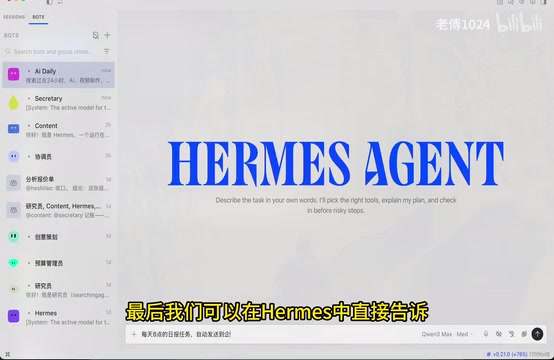
From that point on, enterprise WeChat receives Hermes's digest every day at 8 AM. For instructions on connecting the bot to enterprise WeChat, refer to the previous installment in this series. The author recommends letting it run for three to five days before giving feedback in rounds — Hermes will keep updating itself until the digest truly fits your needs.
The Line Between an Agent and a Chatbot
The entire workflow condenses into four steps: get clear on three things (what to follow, what to produce, what to filter out); build the digest in plain language; test it immediately, don't wait until tomorrow; give feedback iteratively like you're coaching someone — it will adjust the task and remember your preferences.
The author captures the essence in one line: a chatbot waits for you to speak; an Agent shows up on schedule. The moment AI starts doing its job without being prompted — simply because it's time — it crosses the line from conversational tool to automated assistant. That's the real value of an Agent: handing off repetitive information curation and decision support to a digital assistant that keeps learning and executes on time.
For creators, this approach has broad transferability. The daily digest is just the first use case. The same "define requirements → configure in natural language → test → iterate → scheduled execution" workflow can be replicated across many other day-to-day automation scenarios.
Related articles
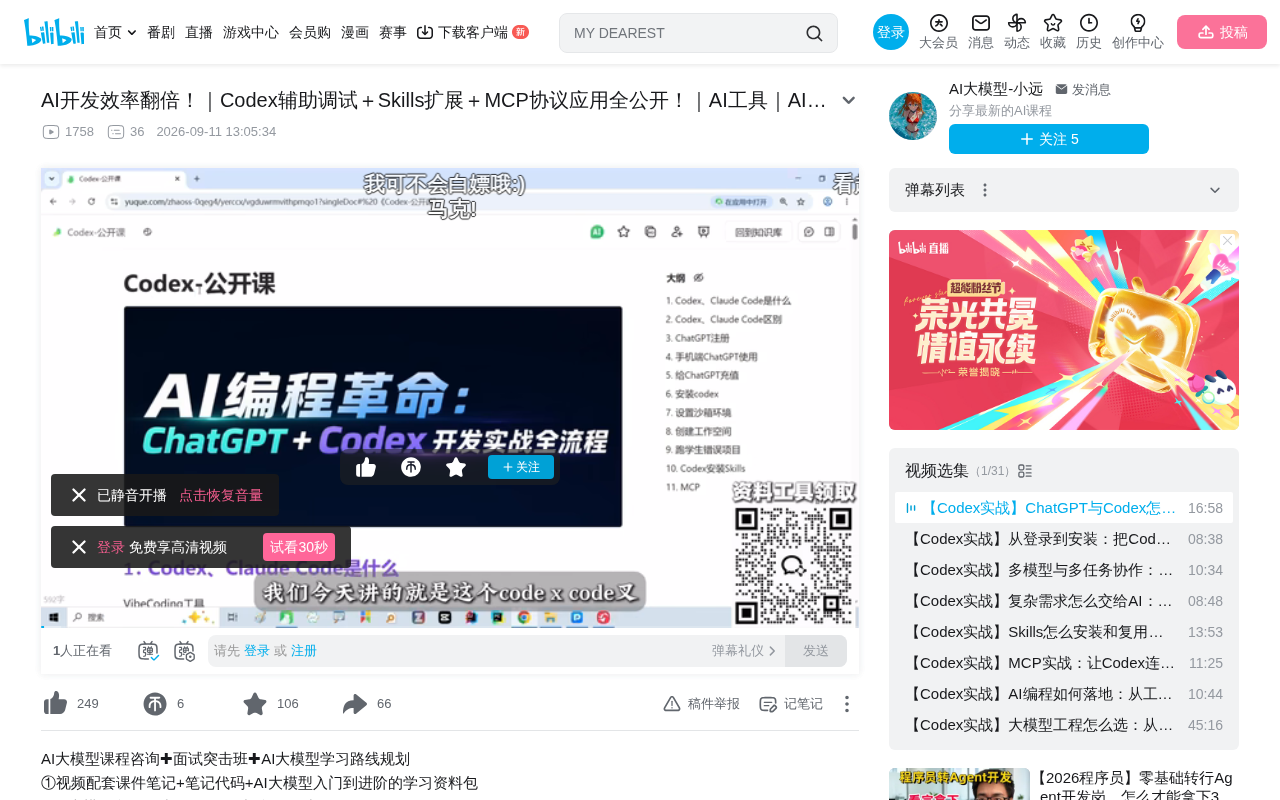
Codex vs. Claude Code: A Beginner's Guide to AI Coding Agents
Codex vs. Claude Code: which AI coding agent should you use? This guide compares both tools and walks beginners through GPT account setup, virtual number platforms, US App Store switching, and subscription cost-saving tips.
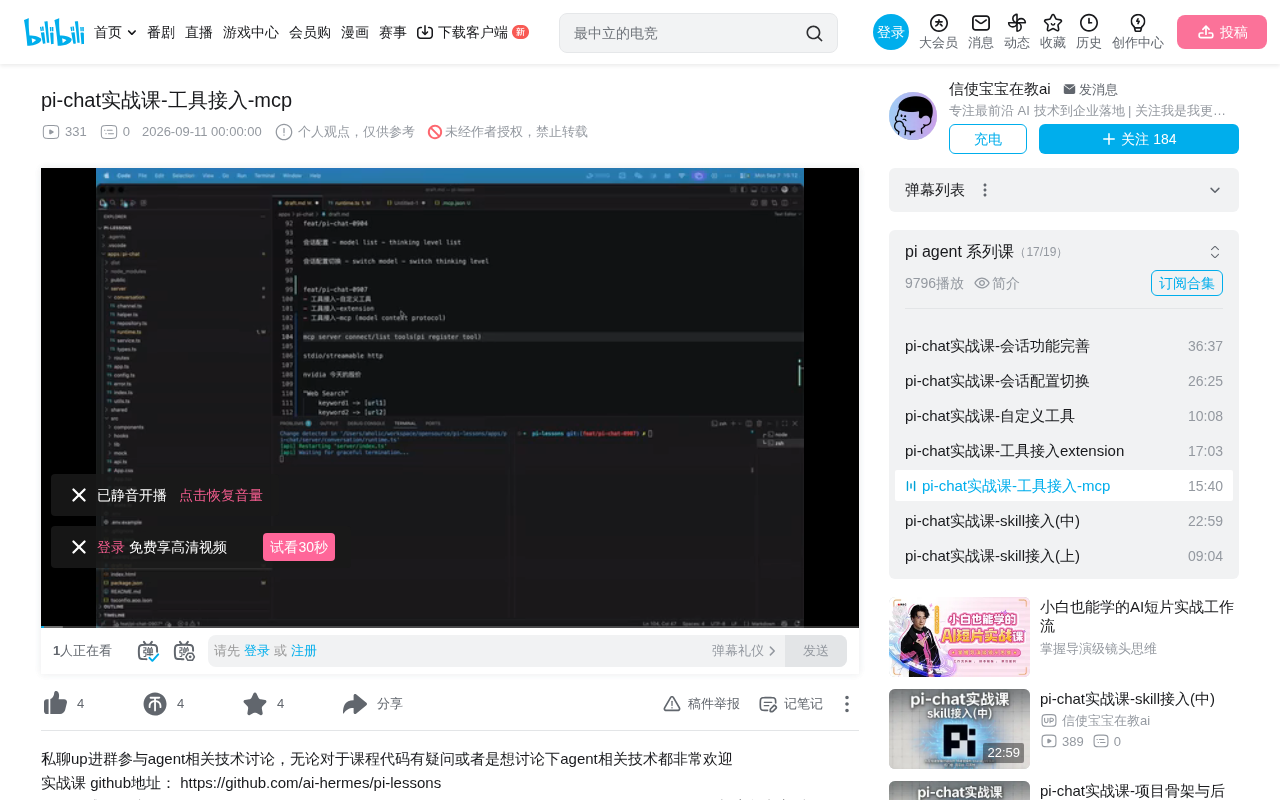
Pi-chat in Practice: Connecting External Tools to AI Agents via MCP Protocol
Learn how to integrate external tools into AI Agents using MCP protocol with Pi framework. Covers pi-mcp-adapter setup, .mcp.json config, Extension Factory initialization, and a live 12306 train ticket query demo.
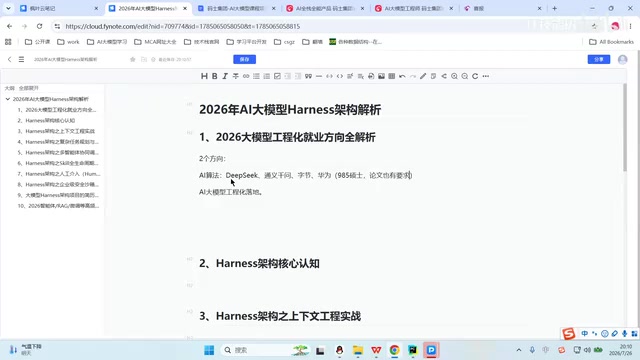
AI Large Model Engineering Careers Decoded: Algorithm Research vs. Engineering Deployment — Which Path Is Right for You?
AI large model jobs split into algorithm research and engineering deployment. Learn the skill requirements, core competencies like RAG and Multi-Agent, and why Harness architecture is the 2026 interview differentiator.