Building a Custom Fridge-Cleaning App with Gemini Vibe Coding — No Code Required

A non-programmer uses Gemini Vibe Coding to build a gamified fridge management web app via natural language.
The article recounts how a YouTube creator with no coding knowledge used Gemini's Vibe Coding to develop Fridge Quest, a fridge ingredient management web app. Using colloquial prompts, she got a runnable pixel-art app that tracks freshness with HP bars, estimates shelf life, recommends recipes from available ingredients, and sends three daily reminders. The piece also notes that such apps are currently only for personal use and that publishing to app stores still requires professional engineering.
From "Fridge Amnesia" to Gamified Cooking: The Birth of an App by a Non-Programmer
According to a share from the YouTube channel "ผู้หญิงแก้มกลม" (Round-Faced Girl), she used Gemini's Vibe Coding feature to successfully build a fridge ingredient management web app called "Fridge Quest" — all without knowing how to code at all. The app not only solves the pain point of expired food waste but also makes everyday cooking as fun as playing a game through a pixel art style and gamification mechanics. This article breaks down her creative process in depth and analyzes how Vibe Coding lowers the barrier to app development, along with the maturity and limitations of the AI toolchain behind this "build tools for yourself" trend.
Core Feature Design: Describing Requirements in Natural Language
The creator's requirements were very specific: a mobile-first web app named Fridge Quest, whose core features are tracking fridge ingredients, flagging items nearing expiry, and recommending recipes based on available ingredients. She particularly emphasized that the design style should use Pixel Art, paying homage to 1990s Game Boy games. In the Gemini interface, she selected the "Task" feature and enabled the latest Gemini 4 Argon model (requires a Pro subscription or above), entered the above requirements as a colloquial prompt, and clicked generate — and out came a runnable initial version. The entire process required no coding whatsoever, relying entirely on AI to understand natural language and translate it into functionality and interface.
Vibe Coding is a concept proposed by Andrej Karpathy in early 2025 that quickly gained popularity. It refers to a programming approach in which developers (or non-developers) describe intent in natural language and have a large model generate and iterate on the code. Its core characteristic is "description as development": users don't need to memorize syntax or APIs but instead express requirements as if talking to a product manager, and the model translates them into a runnable program. Vibe Coding emphasizes rapid prototyping and immediate feedback and is often used in combination with tools like Cursor, Replit Agent, and Gemini. It lowers the entry barrier to programming but also introduces new issues around code quality, maintainability, and security — especially when an app needs long-term iteration or multi-person collaboration, professional engineering practices are still needed as a fallback.
Gamified Interaction: Making Ingredient Management Intuitive and Fun
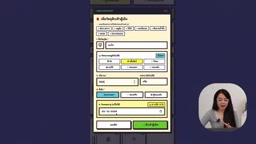
The app's home page displays all ingredients in the fridge as elongated cards, each with a pixel-style icon and color status indicator: green means fresh, yellow reminds you to eat soon, and red means nearing expiry. Even more fun, each ingredient comes with an HP bar like in a game, visually showing freshness decay. Users can tap plus/minus buttons to adjust quantities or use the "Add Ingredient" button at the bottom to enter new items. AI automatically identifies the ingredient category (e.g., entering "chicken breast" classifies it as meat) and estimates a default shelf life based on the category, and users can also manually modify the specific date. This design turns tedious inventory management into a game experience with strong visual feedback, lowering the psychological barrier to use.
Pixel Art is a digital art style that uses individual pixels as the smallest drawing unit, building images through limited palettes and grid arrangements. It flourished during the 8-bit and 16-bit console era (such as Game Boy and NES). Its visual characteristics are noticeably jagged edges, a limited number of colors, and highly summarized details. In web development, pixel style is usually achieved through CSS image-rendering: pixelated, SVG grids, or pixel fonts to maintain hard edges that don't blur when scaled up. Pixel art is often used in gamified products because it evokes nostalgia, reinforces the psychological suggestion of "game," and has relatively low asset production costs, making it suitable for individual developers to quickly build a unified visual language.
Smart Recipe Recommendations and Scheduled Reminders: Closing the Loop on "What to Eat"
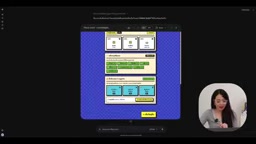
Tapping the "What to Eat Today" button, the app generates recipe suggestions based on available ingredients and prioritizes flagging expiring items to encourage users to consume them first. Each recipe detail page lists required ingredients, quantities, and steps; after completion, tapping "Finish Cooking" earns points and displays the estimated amount of money saved. The creator further asked Gemini to add push reminders three times a day (7 AM, 11 AM, and 4 PM), each containing three recipe suggestions and marking which expiring ingredients they use. Notifications pop up as "Daily Quest Alert" with a sound, and users can view recipes directly from the notification or tap "Shuffle" to regenerate. This feature turns passive lookup into proactive reminders, forming a complete loop from inventory management to recipe decisions.
What Vibe Coding Can and Cannot Do: Rapid Delivery of Personal Tools

According to the creator's testing, Gemini 4 Argon performs "quite well" in understanding complex requirements and generating interactive interfaces, making it especially suitable for rapidly building small tools for personal use. She deployed the app on Google Sites via a share link and manually updated mock data (such as 500g of kimchi, 1000g of miso, etc.) to make the app closer to a real fridge inventory. But she also clearly pointed out that apps generated this way are currently only suitable for personal use; publishing to the App Store or Google Play for others to use would require additional engineering steps. In addition, although the free version of Gemini also supports Vibe Coding, its generation speed and quality may fall short of the Pro version. This reveals the current boundaries of AI programming tools: they can greatly accelerate prototyping, but productization still cannot do without professional development.
The productization gap between Web Apps and native apps is worth explaining here. Web apps run in the browser and can be accessed via a link, with low deployment costs (such as Google Sites, Vercel, Netlify), making them suitable for personal tools and rapid validation; but to publish on the App Store or Google Play, they usually need to be packaged with native or cross-platform frameworks (such as Swift, Kotlin, React Native, Flutter) and meet a series of engineering requirements including store review guidelines, privacy policies, account systems, crash monitoring, and version updates. In addition, production-grade apps also need backend databases, user authentication, data persistence, and security protection, whereas prototypes generated by Vibe Coding often use front-end mock data and lack this infrastructure. Therefore, there is still an obvious engineering gap between "it runs" and "it can be published."
Trend Observation: How AI Is Reshaping the Paradigm of "Building Tools for Yourself"
From counting calories to planning trips, more and more people are starting to use AI to create small apps that meet their specific personal needs. The rise of Vibe Coding is essentially transforming programming from "syntax memorization" into the ability to "describe requirements and break down logic." Multimodal models like Gemini can not only generate code but also directly produce interactive prototypes with UI, further reducing the cost of trial and error. However, this model also depends on users clearly expressing requirements and having basic debugging thinking. For non-technical people, it opens the door to "creating tools"; for developers, it becomes a sharp tool for rapidly validating ideas. In the future, as models deepen their understanding of context and complex state management, the boundary between personal apps and production-grade apps may become further blurred.
One-line Summary
A non-programmer uses Gemini's Vibe Coding to build a gamified fridge management web app using natural language.
Paragraph Summary
The article recounts how the creator of the YouTube channel "ผู้หญิงแก้มกลม" developed a fridge ingredient management web app called "Fridge Quest" using Gemini's Vibe Coding feature without knowing how to code at all. She described requirements in colloquial prompts and obtained a runnable initial version; the app adopts a pixel art style, visually displays ingredient freshness with color statuses and HP bars, and automatically estimates shelf life based on ingredient category. Tapping "What to Eat Today" recommends recipes based on available ingredients, prioritizes expiring items, and awards points upon completion along with an estimate of money saved; three daily "Daily Quest Alert" push notifications further form a closed loop of inventory–recipes–consumption. The article also points out that such apps are currently only suitable for personal use and that publishing to app stores still requires professional engineering, and it discusses the significance and boundaries of Vibe Coding in lowering the development barrier.
Related articles
27-Model Code-to-Video Test: Claude Opus 5.5 Takes the Crown, But the Real Value King Is Someone Else
Artificial Analysis' Code2Video Benchmark has 27 models write HTML videos from pure code: Claude Opus 5.5 tops at 1536, while GPT 6.1 ranks fourth at ~1/10 the cost.

Writing Code with Claude Code Means Passing a Network Admin Exam First: The Pain of Configuring AI Programming Tools
Claude Code's real barrier isn't coding ability but account, network, and regional configuration. Why AI programming tools are painful to set up — and how developers should choose pragmatically.
Jev in Practice: A Decision Model That Replaces Token-by-Token Decoding with a Single Prefill
Breaking down Jev's inference paradigm: skip token-by-token decoding and use a single prefill forward pass to output choices, ordinal scores, and booleans. Comparing encoder and decoder paths, multi-question mask design, duplicate token pitfalls, and RLCD with GRPO for probability calibration training.