Building a No-Code Admissions AI Agent: Voice + MCP in Practice

A no-code admissions AI Agent connects to calendars and databases via MCP, automating bookings and lead capture across all channels.
The article presents a case study from AI MCP Agent platform developer George Snyder demonstrating an admissions consulting assistant. Embedded on a university website, it calls scheduling calendars in real time to book campus tours and creates lead records in the admissions database, returning real confirmation numbers and lead IDs for a 24/7 automated loop. The build is fully no-code in a visual designer, with key tools connected via MCP. The same Agent supports embeddable web chat, ChatAssist copilot, and SIP phone delivery.
In university admissions offices, inquiries tend to surge during specific periods, while prospective students' questions can come in at any time. An AI Agent that can automatically check the campus tour calendar, complete bookings, and sync records into the admissions system is becoming a viable solution to this pain point in the education sector. George Snyder, a developer on the AI MCP Agent platform, fully demonstrates in his Use Case series how to build an admissions consulting assistant from scratch and have it serve web, online chat, and phone channels simultaneously.
What Problem Does an Admissions Consulting Agent Actually Solve?
In the traditional admissions process, a student who wants to book a campus tour usually has to fill out a form and wait for staff to confirm via email or phone, a chain that can take hours or even days. The admissions consulting assistant demonstrated by George Snyder is embedded directly on the university's official website. When a prospective student says "I'd like to visit campus this week," the Agent calls calendar tools in real time to find available slots, completes the booking, and creates a lead record in the admissions database—all in a single conversational flow.
According to his video demo, the Agent returns real confirmation numbers and lead IDs, not simulated data. This means the admissions office can close the loop from inquiry to lead capture without human intervention, and it can run 24/7.
Visual Designer: Tool Connections Are Just Dragged-and-Dropped Tasks
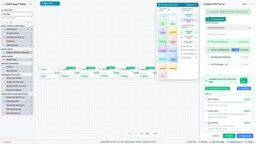
The build process happens entirely in the visual designer, with no code written. The whole solution appears as a left-to-right workflow: the start point connects to the language model, which connects to two tool servers—the admissions client database and the scheduling calendar. There's also a voice service task that gives the Agent listening and speaking capabilities, follows admissions instructions, and ultimately returns answers.
Each capability—including tool connections—is just a task node on the canvas that you drag and configure. What really makes the Agent "able to do things" are two tool tasks connected via MCP (Model Context Protocol). MCP is an open standard for giving Agents real operational capabilities.
One tool connects to the client database, providing tools such as finding contacts, creating new leads, and logging activities; the other connects to the scheduling calendar, providing tools such as finding open slots, booking, and canceling bookings. The Agent is connected to both, so it can actually register prospective students and book campus tours for them.
MCP (Model Context Protocol) was open-sourced by Anthropic at the end of 2024, aiming to unify how large language models interact with external tools and data sources. Before MCP, if developers wanted to connect a calendar service or database to an Agent, they often had to write custom plugins or API wrappers for each model platform, resulting in highly coupled and hard-to-reuse integration logic. By defining standard server-client communication specifications, MCP abstracts tool capabilities into discoverable, callable resource interfaces: a tool server only needs to expose operations like "find slots" and "create leads" according to the spec, and any MCP-compatible Agent can call them directly without worrying about underlying implementation details. This design is similar to what USB-C means for hardware peripherals—connect once, use everywhere. The admissions Agent in this article uses two separate MCP tool servers to connect to the admissions database and scheduling calendar, gaining real business operation capabilities without writing code.
Real-Time Testing and Cost Transparency
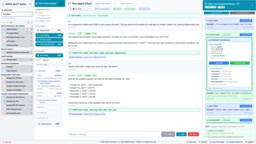
Before going live, developers chat with the Agent through the testing panel as a prospective student. During testing, the Agent calls the calendar to find open tour times, books the earliest slot, creates a lead in the admissions database, and returns real confirmation and lead IDs. When asked about other available times, the Agent calls the calendar again.
Interestingly, every conversation turn is metered. The chat history shows the precise per-turn cost, the model used, the number of tokens, and the cumulative session total. This granular cost visibility offers practical value for educational institutions evaluating the operating expenses of AI Agents. Additionally, because it includes a voice task, the same Agent can run as a voice Agent via WebSocket or WebRTC.
Three Delivery Methods Cover Omnichannel Inquiries
Once saved, the Agent is published with a unique code and offers multiple delivery methods.
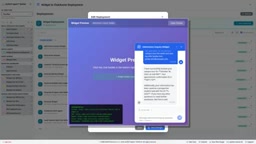
Embeddable chat widget: Place the widget on admissions pages, and every visitor gets an assistant that can book tours anytime. Prospective students submit tour requests in the widget, and the Agent instantly finds times, completes the booking, and captures details—no staff intervention needed.
ChatAssist live agent copilot: Admissions offices typically have counselors handling real-time messages. In ChatAssist, counselors can hand a student's tour request to the assistant, and the same admissions Agent completes the booking and drafts a confirmation message. The counselor reviews it, adds a personalized greeting, and sends it. AI handles scheduling and lead capture, while counselors focus on relationship building.
SIP phone line: Because this is an AI MCP Agent, the same assistant—or an entire multi-Agent team—can connect to standards-based SIP telephony providers and answer real phone calls. Students can simply call in and book a tour by voice. Phone settings let you manage numbers, call history, and diagnostics.
One Agent serves web, live chat, and phone channels simultaneously, all without writing code.
SIP (Session Initiation Protocol) is an application-layer signaling protocol developed by the IETF, widely used for establishing, modifying, and terminating VoIP calls, video conferences, and instant messaging. In AI Agent scenarios, a SIP phone line means the Agent is no longer limited to text conversations but can directly answer real calls from the public telephone network. The basic flow is: after the student dials, the SIP provider forwards the audio stream via WebSocket or RTP to the Agent's voice task; the Agent converts speech to text, understands intent, calls backend tools to complete the booking, and then replies to the student via text-to-speech. Compared with traditional IVR keypad menus, LLM-based voice Agents can understand natural language, handle multi-turn follow-ups, and complete the entire booking process in a single call. The article mentions that phone settings allow managing numbers, call history, and diagnostics, indicating that the platform treats SIP lines as a first-class delivery channel.
MCP Is Becoming the Universal Interface for Extending Agent Capabilities
The value of this case isn't just the admissions scenario itself. It shows how MCP, as an open standard, lets Agents connect to external tools—whether databases or calendar services—in a standardized way. For technical teams at educational institutions, this means they don't have to rewrite integration logic for every new tool; they just add the corresponding task node on the canvas.
In the video, George Snyder emphasizes that every solution is a workflow, and every capability is a configurable task. This model lowers the technical barrier to deploying AI Agents in the education sector while preserving the ability to connect to real business systems. For schools looking to improve admissions response efficiency without adding development resources, this path is worth watching.
One-line Summary
A no-code admissions consulting AI Agent that connects to calendars and databases via MCP, automating bookings and lead capture across all channels.
Paragraph Summary
The article introduces a case study demonstrated by George Snyder, a developer on the AI MCP Agent platform, of an admissions consulting assistant. Once embedded on a university's official website, the Agent can call the scheduling calendar in real time during conversations to find available slots, complete campus tour bookings, and create lead records in the admissions database, returning real confirmation numbers and lead IDs for a 24/7 automated loop. The entire build is done in a visual designer with no coding; all capabilities are drag-and-drop task nodes on a canvas, with two key tools connecting to the customer database and scheduling calendar via the MCP protocol. The testing panel shows precise per-turn cost, model, token count, and cumulative session cost. The same Agent supports three delivery methods—embeddable web chat widget, ChatAssist agent copilot, and SIP phone line—covering web, live chat, and phone channels. The article argues that MCP, as an open standard, is becoming the universal interface for extending Agent capabilities, lowering the technical barrier to deploying AI Agents in the education sector.
Related articles

Huberman's Rational Supplement Guide: A Five-Layer Health Framework and Scientific Decision-Making
Stanford neurobiology professor Huberman proposes a rational supplement framework: behavior and nutrition are the foundation, basic combination supplements serve as insurance, and sleep/hormonal/cognitive directions should stick to single-ingredient experiments. Omega-3 is the top single-ingredient choice, and melatonin is not recommended.

The Unsung Painter Behind Gilded Age Manhattan Interior Design
HN discussion highlights the painter behind Gilded Age Manhattan interiors: he created murals and decorative paintings but was long overlooked as his work was seen as architectural appendage.

Can AI Agents Be Socially Engineered? Understanding Prompt Injection and Tool Permission Risks
Through Invariant Lab's GitHub Issue injection and Brave's AI browser attack, this article analyzes how Prompt Injection induces AI Agents to perform unauthorized actions, and offers protection advice across three layers: least privilege, tool validation, and operation auditing.