Building a Real-Time AI Tutor for 5-Year-Olds: Technical Challenges and the Educational Balance

The technical and educational challenges of building a real-time AI tutor for 5-year-olds.
Building a real-time AI tutor for 5-year-olds involves overcoming low-latency voice interaction, children's ASR optimization, and content safety guardrails. Beyond engineering, it requires AI to act as a Socratic guide that inspires curiosity rather than an answer machine—balancing technology, pedagogy, and ethics.
The New Frontier of AI Education: From Adults to Young Children
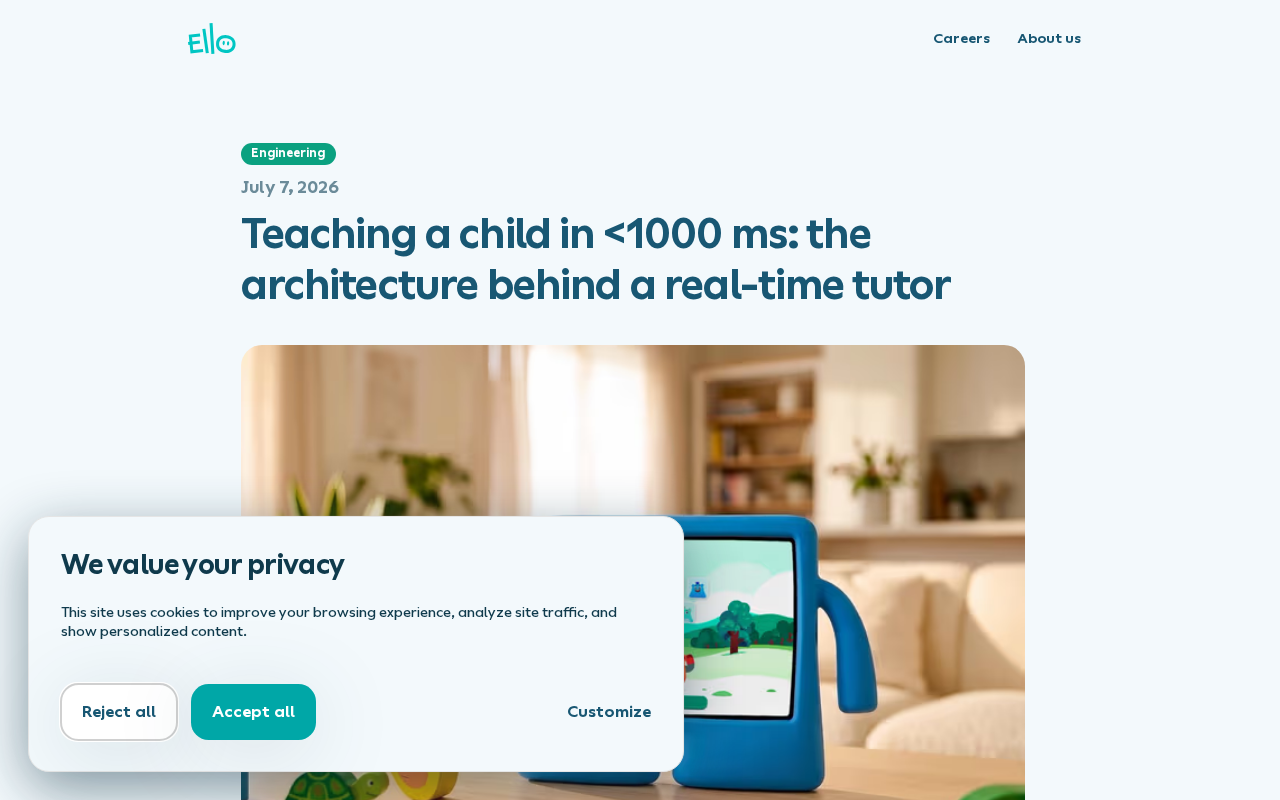
Most of today's discussions around AI education applications revolve around adult learners, coding tutorials, or professional skill development. However, a more challenging and thought-provoking direction is quietly emerging—building real-time AI tutors for preschool children. Recently, a project that sparked discussion on Hacker News proposed exactly this idea: building an AI tutor capable of interacting with 5-year-olds in real time.
Behind this seemingly simple goal lie multiple layers of complexity spanning technology, pedagogy, and ethics. This article analyzes the project and explores the unique challenges and development opportunities in building real-time AI education systems for young children.
Why 5-Year-Olds Are the Hardest User Group to Crack
Cognitive and Linguistic Peculiarities
Five-year-olds are in the "preoperational stage" of Piaget's theory of cognitive development. Jean Piaget, one of the most influential developmental psychologists of the 20th century, divided children's cognitive development into four stages: the sensorimotor stage (0-2 years), the preoperational stage (2-7 years), the concrete operational stage (7-11 years), and the formal operational stage (11 years and up). The preoperational stage has several key characteristics that are crucial to designing AI education systems: first, thinking is "egocentric," making it difficult for children to understand problems from others' perspectives; second, they rely on intuitive and representational thinking rather than logical reasoning; third, their attention span typically lasts only 10-15 minutes; and fourth, their language develops rapidly but remains incomplete, with frequent word-order reversals and sentence omissions. This means a successful AI tutor for young children cannot simply be a "downgraded" adult conversational system. Instead, it must rebuild interaction logic from the ground up, adopting concrete, gamified approaches while tolerating and understanding children's non-linear, jumpy expressive logic.
Young children's speech is often incomplete, unclear in pronunciation, and full of non-linear leaps. Traditional automatic speech recognition (ASR) systems perform excellently on adult speech, but their accuracy drops significantly for children's speech—this is the first technical hurdle to overcome when building a real-time AI tutor for young children. Children's ASR is a long-standing research challenge in speech technology. Compared to adult speech, children have shorter vocal tracts, resulting in higher formant frequencies with greater variability; their speaking rate is unstable, with more frequent pauses and repetitions; and their pronunciation is less standardized, with lower consonant clarity. Current mainstream ASR systems (such as Whisper and Google Speech-to-Text) are primarily trained on adult speech datasets, and their Word Error Rate (WER) on children's speech is typically 30%-50% higher than on adults. To address this, researchers have explored various improvements: collecting specialized children's speech datasets (such as the MyST and CU-CHILD datasets) for fine-tuning; introducing adaptive acoustic models; and combining contextual semantics for post-processing correction. This field remains a hot area of ongoing research in both academia and industry.
Real-Time Response: The Lifeline of Young Children's Attention
The word "real-time" in the project name is especially critical. For a 5-year-old, any noticeable delay in the AI's response quickly causes attention and interest to fade. Adults can patiently wait a few seconds for loading, but a young child's attention window is extremely short. Research shows that a response delay exceeding 300ms causes noticeable attention disruption in young children—far below the 600-800ms threshold acceptable to adults. This requires the entire technical pipeline—from speech recognition to large language model inference to speech synthesis—to complete the loop within extremely low latency.
Core Technical Challenges of Real-Time AI Tutors
Designing a Low-Latency Voice Interaction Pipeline
The core of building a real-time AI tutor is an efficient voice interaction loop, typically covering three key stages:
- Speech-to-Text: Converting the child's speech into text, specially optimized for children's pronunciation characteristics
- LLM Inference: Accurately understanding the child's intent and generating age-appropriate responses that match their cognitive level
- Text-to-Speech: Outputting in a natural, warm voice, with emotional and tonal variation to enhance engagement
To achieve a truly real-time experience, developers often need to introduce streaming technology. End-to-end latency is the sum of three components: ASR latency (50-500ms), LLM first-token generation latency (100-2000ms), and TTS first-audio-frame latency (50-300ms). Streaming processing runs in parallel at each stage: at the ASR layer, Voice Activity Detection (VAD) enables recognition while speaking; at the LLM layer, streaming token output enables processing while generating; and at the TTS layer, audio synthesis begins upon receiving the first few words—starting processing before the child has even finished speaking compresses end-to-end latency to the limit. The industry is also exploring end-to-end "Speech-to-Speech" model architectures, such as OpenAI's GPT-4o real-time voice mode, which merges the three stages into a single neural network, fundamentally eliminating the latency accumulation caused by chaining multiple modules.
Content Safety and Age-Appropriate Guardrails
AI systems for young children must place safety above all functionality. Large language models carry risks of generating inappropriate content, conveying misinformation, or using complex vocabulary beyond a child's comprehension. Guardrails are a core mechanism in AI safety design and are especially important in applications aimed at children. From an architectural perspective, guardrails in young children's AI education systems are typically divided into three layers: input-layer guardrails filter out sensitive topics a child might inadvertently trigger; generation-layer guardrails use system prompts to constrain the LLM's output style, vocabulary complexity, and content scope; and output-layer guardrails deploy independent content moderation models (such as the OpenAI Moderation API or specialized classifiers) to perform a second review of the final response. At the vocabulary level, researchers typically reference the Flesch-Kincaid readability index or the Dolch word list (500 core words for young children) to constrain the language model's output. Such products must also comply with relevant regulations, such as the U.S. Children's Online Privacy Protection Act (COPPA) and the children's data provisions in the EU's General Data Protection Regulation (GDPR). Therefore, systems need to establish guardrails at multiple levels:
- Content Filtering: Ensuring outputs are healthy and positive, blocking all inappropriate information
- Language Simplification: Matching vocabulary and sentence structure to the cognitive level of a 5-year-old
- Guided Dialogue: Reducing open-ended questions to avoid overwhelming children with overly broad prompts
How Educational Philosophy Shapes Product Design
AI Should Be a Guide, Not an Answer Machine
A core viewpoint repeatedly appeared in the Hacker News comments: good early childhood education should not merely provide answers, but should inspire children's curiosity and desire to explore. An AI that only "instantly answers" may instead cultivate children who passively accept knowledge.
The ideal AI tutor for young children should play the role of a "Socratic" guide. The Socratic Method, originating from the ancient Greek philosopher Socrates, centers on guiding students to discover knowledge themselves through continuous questioning, rather than directly imparting answers. This approach aligns closely with constructivist theory—Vygotsky's concept of the "Zone of Proximal Development" holds that the most effective teaching occurs in the space between a child's current ability and potential ability, where the teacher's role is to build "scaffolding" rather than to think for the child. Translating this philosophy into AI product design requires the system to recognize the child's current knowledge state, dynamically adjust question difficulty based on their responses, offer measured hints rather than direct answers when the child struggles, and sustain the motivation to explore through positive reinforcement—guiding the child to discover answers independently via timely questions and encouragement. This raises the bar for product design: the AI must not only be "smart" enough, but also understand when not to give an answer, and how to sustain a child's enthusiasm for learning through gamified, story-based approaches.
The Irreplaceable Role of Parents: AI Is a Complement, Not a Substitute
Whether AI tutors weaken parent-child interaction is another core issue that sparks debate. Some commenters worry that outsourcing early childhood education to AI could have unintended negative effects, such as reducing genuine human interaction and thereby hindering the development of social skills.
Therefore, the mainstream view leans toward positioning AI tutors as assistive tools rather than replacements. The ideal product form is a collaborative learning ecosystem of "AI + parent + child," keeping parents consistently involved while the AI provides personalized support at appropriate moments.
Market Opportunity: A New Possibility for Educational Equity
Despite the many challenges, the social value of AI tutors for young children cannot be ignored. Against the reality of uneven distribution of quality educational resources, a safe, reliable, and affordable AI education tool has the potential to provide personalized early education support to countless families, bridging educational gaps caused by geographic and economic conditions.
As the multimodal capabilities of large language models (integrating images and animated interaction) continue to evolve, and as low-latency inference technology matures, the user experience of such applications will see a qualitative leap. Notably, the project has so far received only 6 upvotes and 11 comments on Hacker News, indicating that the tech community holds both keen interest in this direction and a fairly cautious attitude—which precisely shows the field is still in an early exploratory stage, full of possibilities.
Conclusion: A Triple Balance of Technology, Education, and Ethics
Building a real-time AI tutor for 5-year-olds is a cutting-edge challenge that carries equal weight in technical difficulty and social responsibility. It tests developers' engineering strength in low-latency voice interaction, children's ASR optimization, and content safety, while demanding that product designers deeply understand the essential principles of early childhood education.
A truly successful AI education product for young children should be a delicate balance of technical engineering, pedagogical theory, and ethical boundaries—making AI a spark that ignites children's curiosity, rather than a cold tool that replaces human warmth.
Key Takeaways
Related articles
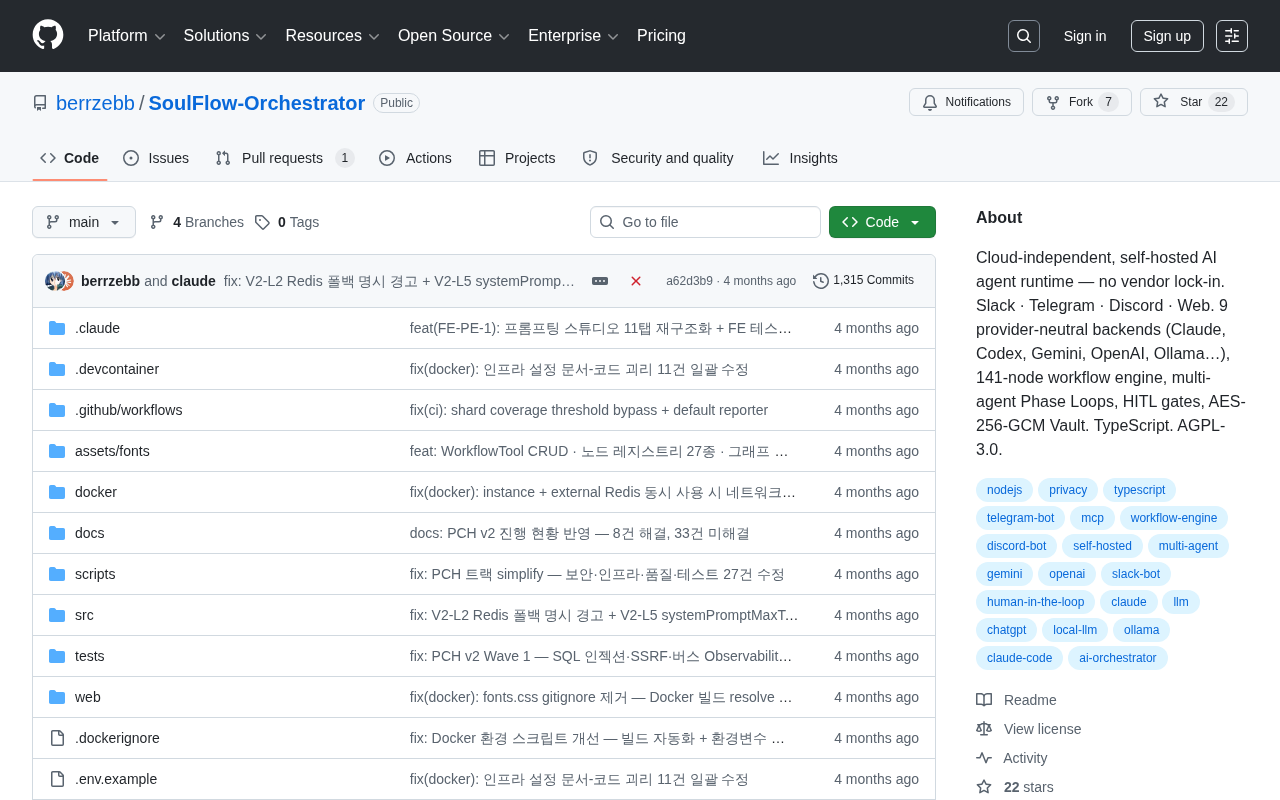
SoulFlow-Orchestrator: A Self-Hosted, Vendor-Lock-In-Free AI Agent Runtime
SoulFlow-Orchestrator is an open-source, self-hosted AI agent runtime with no vendor lock-in. Supports 9 neutral backends (Claude, OpenAI, Ollama), 141-node workflow engine, multi-agent loops, and HITL gates.
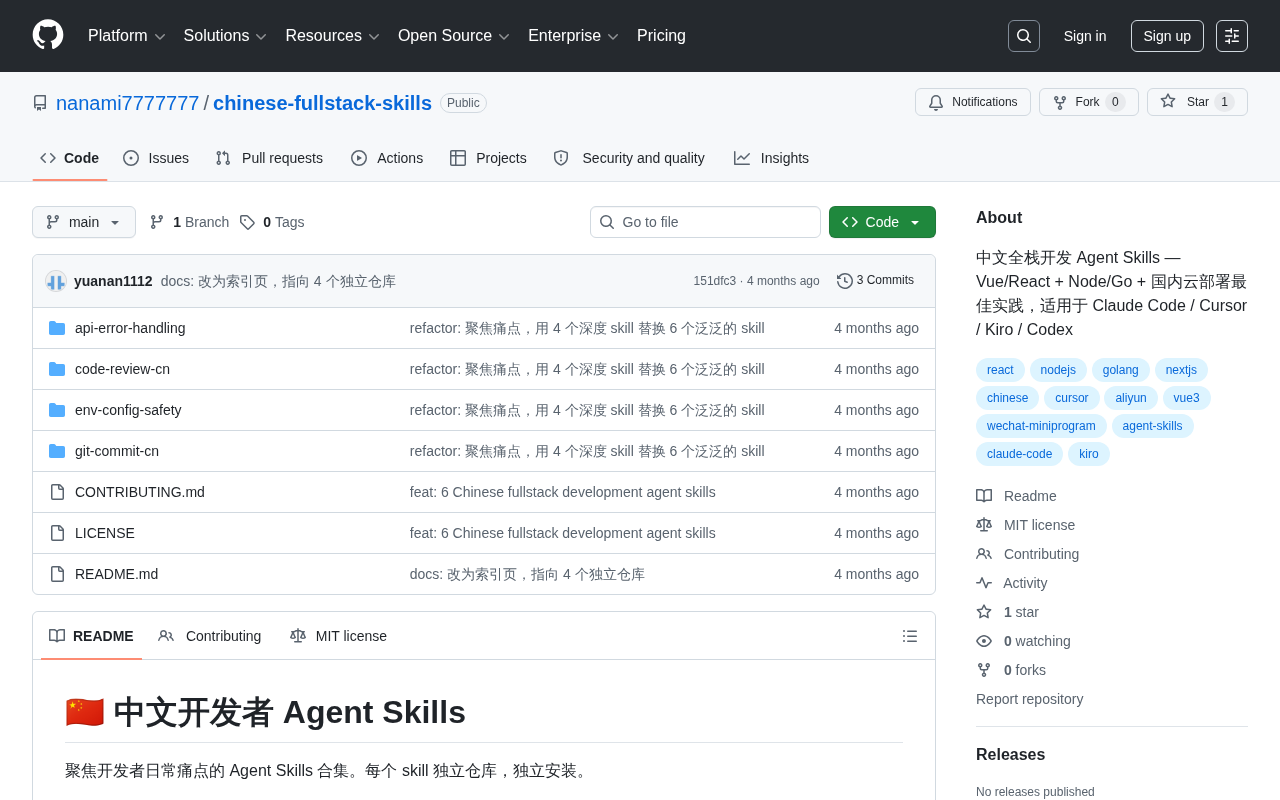
Chinese Full-Stack Agent Skills: A Skill Library Tailored for Domestic AI-Assisted Development
chinese-fullstack-skills is an Agent Skills library for Chinese full-stack development, covering Vue/React, Node/Go, and domestic cloud deployment best practices. Compatible with Claude Code, Cursor, Kiro, and Codex.

Paradigm Memory: A Local-First Memory System for AI Coding Assistants
paradigm-memory is a local MCP memory tool for Claude Code, Cursor, and Cline. It uses SQLite local storage, zero cloud, full audit trails, and a navigable cognitive map instead of bloated context files.