Building a Self-Hosted Research AI Agent: A Tool Selection Guide Without Paid APIs

The hardest part of a self-hosted research AI Agent isn't the model — it's stably scraping the web without paid APIs.
This article explores how to build a self-hosted, research-oriented AI Agent without relying on paid APIs, sparked by a Reddit discussion. The real challenge isn't model capability — it's the stability of data acquisition, especially against anti-bot mechanisms and CAPTCHAs. The piece reviews tools like Crawl4AI, self-hosted Firecrawl, and webcmd, and outlines practical anti-bot strategies including browser rendering, fingerprint spoofing, and prioritizing low-protection sources. It also emphasizes that mature research Agents need skills like query decomposition, deduplication, source credibility assessment, and graceful degradation — not just scraping tools.
In a Reddit tech community, a developer posed an increasingly common question: how to build a research-oriented AI Agent capable of autonomously browsing the web — entirely self-hosted, without using any paid APIs or cloud-based scraping services. What seems like a niche requirement actually touches on one of the most painful challenges in building AI applications today: how to reliably feed an Agent internet information in a constrained environment.
The Real Bottleneck: Search and Scraping
This developer is building an Agent on top of Hermes and has already deployed two core components on a personal VM: SearXNG (an open-source aggregating meta-search engine) and Scrapling (a Python web scraping library). In theory, this combination covers the basic "search + scrape" pipeline — but real-world usage keeps running into problems.
The most common obstacle is anti-bot mechanisms. Many websites identify automated requests as bot traffic and trigger CAPTCHAs that the current toolstack can't bypass. This reveals a fundamental tension in self-hosted research Agents: the most valuable information tends to live behind anti-scraping protections, and free, self-hosted solutions are inherently disadvantaged when it comes to defeating those defenses.
In other words, model capability is never the bottleneck in these projects — the stability and coverage of data acquisition is.
SearXNG is an open-source Python-based meta-search engine that maintains no index of its own. Instead, it forwards user queries simultaneously to dozens of search engines — Google, Bing, DuckDuckGo, etc. — and aggregates the results. Because requests originate from the user's own server rather than exposing a personal IP directly, it offers a degree of search privacy. But this is also its limitation: SearXNG still depends on the result quality of upstream engines, and heavy usage can easily trigger upstream bot detection, causing certain backends to become temporarily unavailable. Scrapling is a Python scraping library designed for "anti-anti-bot" scenarios, with built-in request fingerprint spoofing strategies. However, it fundamentally still makes HTTP requests, which limits its coverage on pages requiring JavaScript rendering or active cookie-challenge responses.
Tool Candidates Overview
The original poster listed several directions they're considering — these are also the most actively discussed options in the self-hosting community:
Crawl4AI
An open-source crawler framework designed specifically for LLM use cases, capable of directly outputting structured Markdown suited for feeding into large language models. It integrates well with AI Agent workflows, is a top choice for many self-hosted projects, and is fully open-source and locally deployable — fitting squarely within the "no paid API" constraint.
Self-hosted Firecrawl
Firecrawl offers a managed commercial service, but it also open-sources a self-deployable version. Self-hosting avoids cloud service costs, but it also means taking on the burden of anti-bot countermeasures, proxy management, and maintenance. Given the constraints of this use case, self-hosted Firecrawl is a reasonable middle-ground option.
webcmd
A relatively obscure option with limited community discussion. Worth evaluating as a supplementary tool, but unlikely to serve as a primary scraping engine.
Faced with so many tools, the original poster admitted it's "not easy to find the right one" — which speaks to a paradox of the thriving open-source ecosystem: the more tools there are, the higher the cost of choosing between them.
Crawl4AI's core strength lies in its output layer design — it not only renders JavaScript but also includes a built-in LLM-consumption-optimized Markdown converter that automatically strips noise like navigation bars, ads, and footers while preserving body structure. Under the hood, it defaults to driving a real Chromium engine via Playwright, giving it a clear advantage over pure HTTP scraping when dealing with JavaScript-heavy pages. Self-hosted Firecrawl, by contrast, has a much heavier architecture — it depends on Redis queues and multiple microservices, making deployment significantly more complex than Crawl4AI. It's better suited for scenarios requiring large-scale concurrent scraping with solid DevOps resources; for a single-machine personal project, the operational overhead often outweighs any benefit over lighter alternatives.
Practical Approaches to Bypassing Anti-Bot Defenses
CAPTCHAs and bot detection are unavoidable obstacles in these projects. Without paid services, there are several layers of mitigation:
Browser automation beats raw HTTP requests. Using Playwright or scraping solutions backed by real browser engines (Crawl4AI supports this natively) renders JavaScript and simulates genuine user behavior, making detection far less likely than direct HTTP requests.
Request fingerprint spoofing. Properly configuring User-Agent headers, request headers, and access pacing — while avoiding high-frequency, pattern-like requests — reduces the probability of getting flagged.
Reduce reliance on heavily protected sites. Rather than brute-forcing CAPTCHAs, design the Agent to prioritize data sources with weaker anti-bot protections (e.g., Wikipedia, open APIs, RSS feeds, academic repositories) and treat high-protection sites as supplementary.
It's important to be clear-eyed about this: under fully free, no-proxy-pool conditions, no tool can guarantee 100% bypass of all anti-bot protections. This is a reality that must be accepted given resource constraints.
The underlying logic of CAPTCHAs is to distinguish "human users" from "automated programs." Modern sites widely use behavior-analysis-based verification like Google reCAPTCHA v3 or Cloudflare Turnstile, which no longer pop up image recognition challenges but instead continuously monitor mouse trajectories, page dwell time, browser fingerprints, and dozens of other signals in the background. This means the traditional "identify text in an image" approach is essentially obsolete, and the difficulty of bypassing these systems has increased dramatically. Paid CAPTCHA-solving services (like 2captcha) or dedicated anti-detection browsers (like Camoufox or undetected-chromedriver) can partially address this, but the former has a financial cost and the latter requires ongoing maintenance to keep up with site-side updates. For fully self-hosted scenarios, the most sustainable strategy is actively avoiding such sites rather than confronting them head-on.
What Skills Should the Agent Have?
Beyond tool selection, the original poster also asked what "skills" an Agent should have. A mature research Agent typically needs the following capability modules:
- Query rewriting and decomposition: Break down vague user questions into multiple searchable sub-queries to improve recall quality.
- Deduplication and aggregation: After scraping from multiple sources, identify duplicate content and synthesize it into coherent knowledge.
- Source credibility assessment: Make preliminary judgments about the reliability of scraped results to avoid contamination by low-quality content.
- Failure retry and graceful degradation: When a scraping tool fails (e.g., hits a CAPTCHA), automatically switch to a backup tool or alternative information source.
- Context management: Maintain the research objective across multiple retrieval rounds to avoid drifting off-topic.
Separating "tools" from "skills" in your thinking is critical — tools solve the question of "can we get the data," while skills solve "what do we do with the data once we have it."
Recommendations for Self-Builders
Taking everything into account, a pragmatic path for developers with similar needs would be: use SearXNG as the search layer, Crawl4AI as the primary scraping layer (browser rendering + LLM-friendly output), keep Scrapling for lightweight pages, and design a multi-tool degradation mechanism into the Agent. As for CAPTCHAs — under free constraints, accept partial failures rather than chasing universal coverage.
This Reddit thread doesn't offer a definitive answer, but it precisely reflects the universal dilemma of self-hosted AI applications: making trade-offs between privacy, cost, and capability. Choosing to self-host means trading higher operational overhead for data sovereignty and zero API fees — and for research Agents that require extensive scraping, this trade-off deserves serious upfront consideration.
Related articles
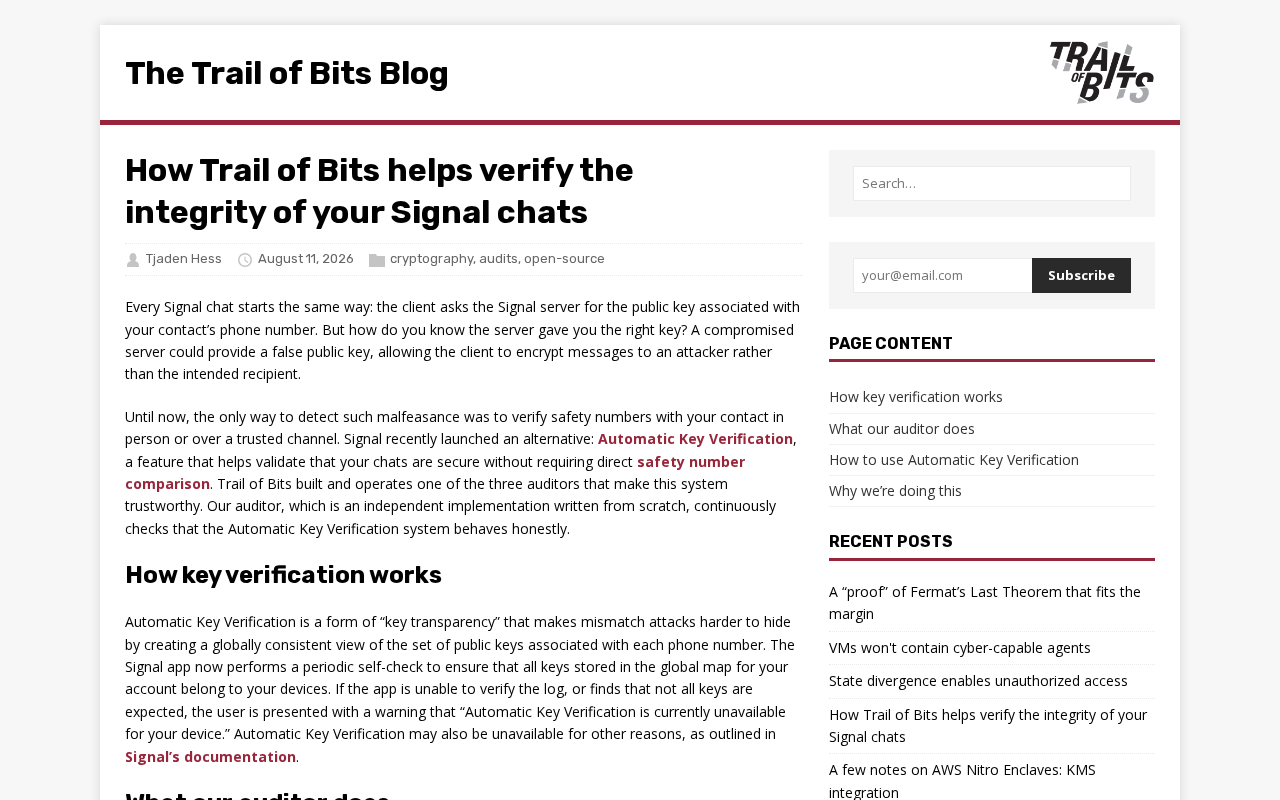
How Trail of Bits Verifies the Integrity of Signal Chat Logs
How does Trail of Bits, as an independent security auditor, help verify the integrity of Signal's end-to-end encrypted chat logs? A technical overview of chat integrity verification and the value of third-party audits.
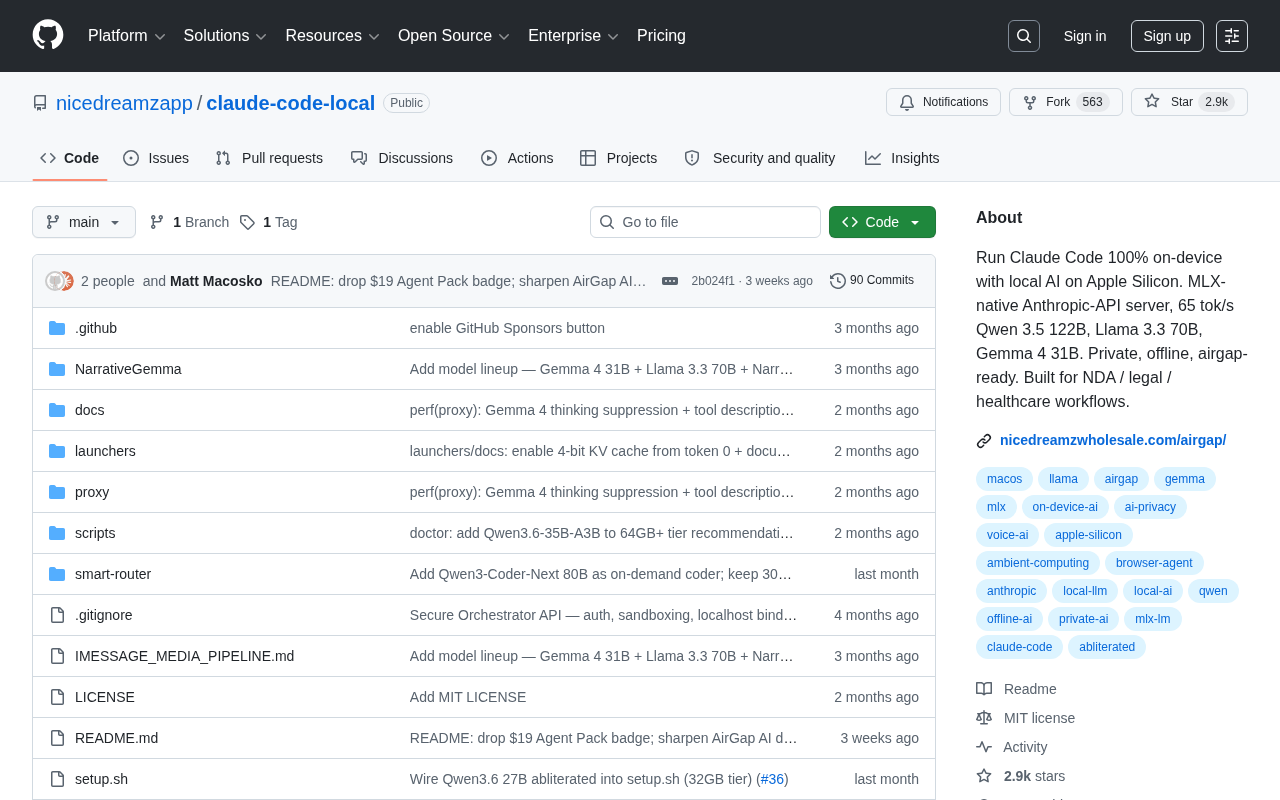
Running Claude Code Locally: A Fully Offline AI Coding Solution for Apple Silicon
claude-code-local runs Claude Code 100% offline on Apple Silicon via MLX, supporting Qwen 3.5 122B at 65 tok/s — built for NDA, legal, and medical privacy workflows.
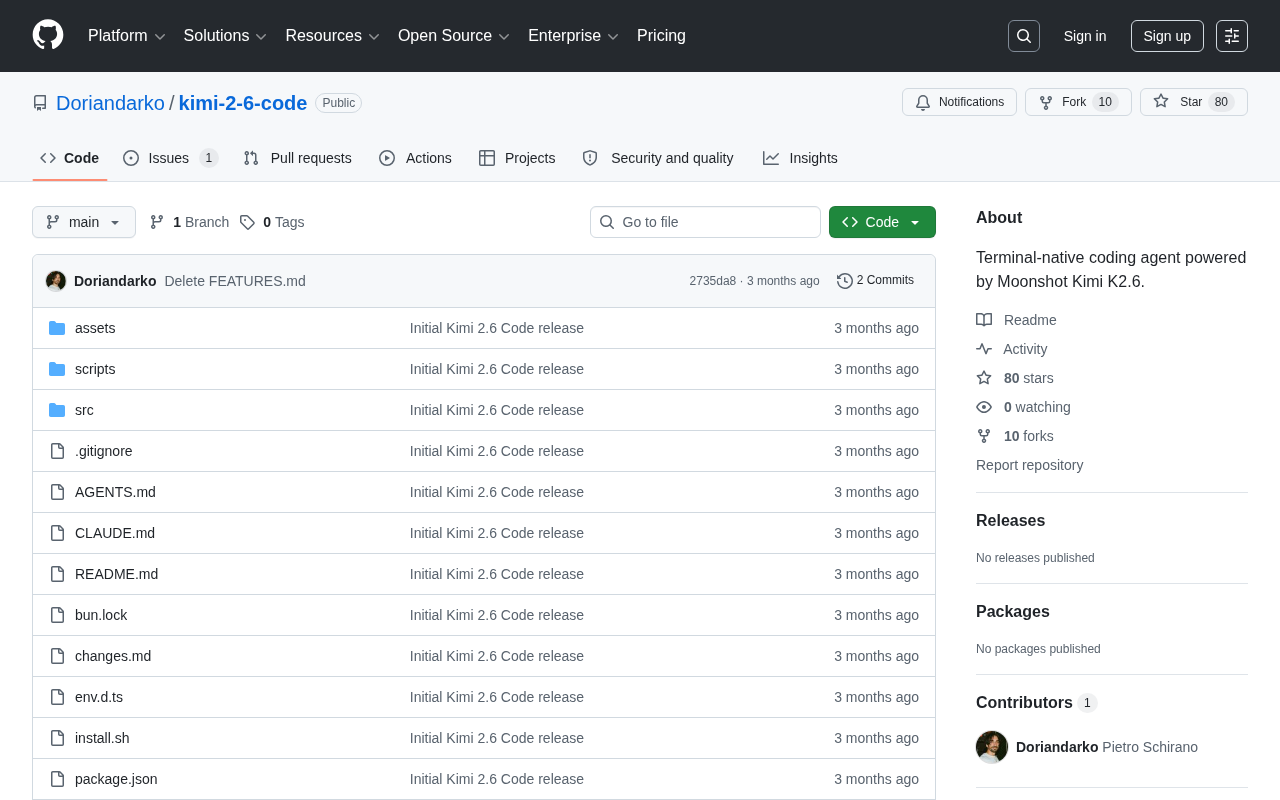
Kimi 2.6 Code: A Terminal-Native Coding Agent Built on the Moonshot Model
kimi-2-6-code is a terminal-native coding agent built in TypeScript on Moonshot's Kimi K2.6 model. Learn about its design, model choice, and maturity level.