How Trail of Bits Verifies the Integrity of Signal Chat Logs
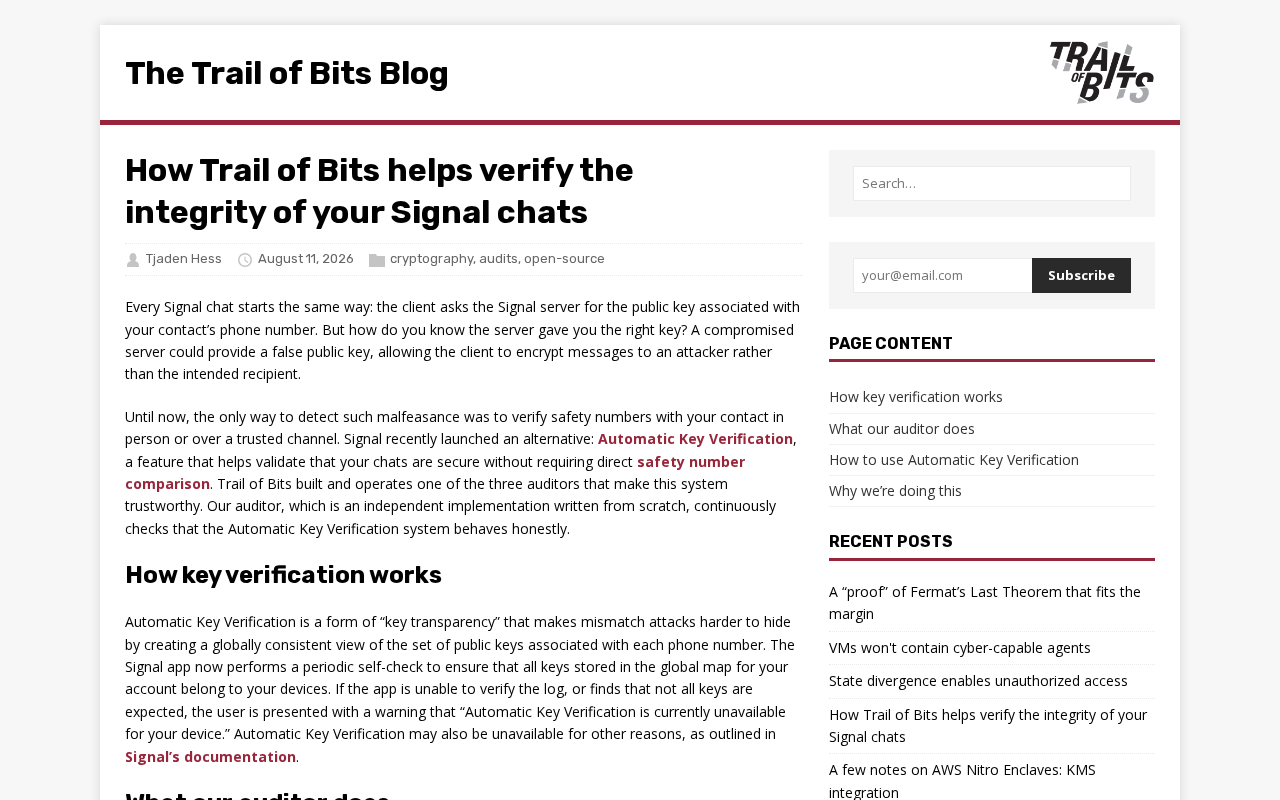
Trail of Bits provides third-party cryptographic audits of Signal chat log integrity across storage, backup, and migration scenarios.
This article explores the technical challenges of verifying chat log integrity in Signal, the end-to-end encrypted messaging app, and the role played by security audit firm Trail of Bits. It argues that encryption in transit is only part of the security picture — local database storage, backup files, and cross-device migration all carry tampering risks. Integrity verification relies on cryptographic tools such as MACs, hash chains, and digital signatures, while independent audits add value by catching implementation flaws developers may miss and building open-source community trust through public reports. The author also acknowledges that the source material is limited, and that the technical approaches described are informed speculation rather than confirmed findings.
Introduction: Why Security Audits Matter
Signal, the end-to-end encrypted messaging app, has long been regarded as a gold standard for privacy protection. Yet the security of the encryption protocol itself is only one piece of the puzzle. How to ensure that chat logs remain untampered during storage, export, and migration is an equally important technical concern. The work of security consulting firm Trail of Bits in this area offers a valuable reference for understanding how Signal chat integrity can be verified.
It's worth noting upfront that the source material for this article is quite limited — it contains only a title and attribution, with no specific technical details, methodology, or supporting data. The following discussion draws on general knowledge of Signal's security mechanisms and third-party auditing practices to provide useful context for readers interested in this topic.
What Is Chat Log Integrity Verification?
Chat log integrity refers to the assurance that message content has not been illegally modified, deleted, or forged after being sent. For a security-focused application like Signal, integrity encompasses not only in-transit encryption but also local database storage, backup files, and cross-device migration scenarios.
In practice, users may need to export Signal chat logs as evidence or transfer them between devices. In these situations, proving that the records have not been tampered with becomes a critical problem. Third-party security auditors can help verify data authenticity and integrity through cryptographic techniques — such as message authentication codes (MACs), hash chains, and digital signatures.
A message authentication code (MAC) is a cryptographic primitive that uses a shared secret key to generate a short checksum over a message. The recipient can recompute this value using the same key and compare the results, confirming both that the message hasn't been altered and that it came from a trusted source. A hash chain works by concatenating each message's hash with the hash of the previous message before hashing again, creating an interlocked chain — if any message in the middle is modified, all subsequent hashes become invalid, making tampering immediately detectable. Digital signatures take this a step further by introducing asymmetric cryptography: the sender signs with a private key, and anyone can verify the signature using the corresponding public key, proving both content integrity and signer identity. Signal's encryption protocol (the Signal Protocol) already makes extensive use of these mechanisms at the transport layer, but whether the local database and backup files are protected with equal rigor is a key question that security audits must examine.
Trail of Bits' Role
Trail of Bits is a well-regarded software security firm specializing in cryptographic review, vulnerability research, and security engineering. Its collaborations with open-source security projects like Signal typically involve auditing codebases, validating cryptographic protocol implementations, and designing integrity verification schemes for specific use cases.
The value of this kind of engagement lies in the independent perspective: a third-party reviewer can surface implementation flaws that the development team may have overlooked. For open-source projects, publicly released audit reports also strengthen the community's confidence in the tool's security.
Founded in 2012 and headquartered in New York, Trail of Bits has provided security audits for numerous prominent open-source projects including Ethereum, Kubernetes, and OpenSSL, with its published reports widely cited across the industry. The firm also maintains several open-source security tools — such as the MATE framework for binary analysis and Echidna for smart contract fuzzing — giving it deep hands-on experience in cryptographic implementation review and vulnerability research. Unlike firms that focus solely on penetration testing, Trail of Bits typically goes down to the protocol design level, evaluating deviations between implementation and specification. This depth is especially critical for highly customized encryption schemes like those used in Signal.
Possible Technical Approaches
From a technical standpoint, a scheme for verifying Signal chat integrity might involve the following directions:
- Message hash chains: Generating a hash for each message and linking it to adjacent messages, so that any tampering breaks the chain's continuity.
- Digital signature verification: Ensuring the origin and content of messages can be independently verified.
- Backup encryption auditing: Examining whether the encryption used for exported and backup files contains weaknesses.
These methods are well-established in cryptographic engineering. The key challenge lies in the correctness of the specific implementation — and that is precisely what a security audit is designed to assess.
It's worth noting that Signal's local database is by default encrypted using SQLCipher, an open-source library that implements AES-256 encryption on top of SQLite. SQLCipher provides confidentiality — it prevents unauthorized parties from reading the database contents — but it does not directly provide tamper-resistance. An attacker with physical access to the device or elevated privileges could theoretically replace or delete specific database records and re-encrypt them without breaking the encryption layer. This means that integrity verification requires an additional layer on top of SQLCipher — such as a cryptographic commitment scheme or hash chain — to defend against this class of threats. This architectural consideration, the layering of confidentiality and integrity protections, is one of the key points a security audit must clarify.
Conclusion
Third-party security audits are essential to the trustworthiness of privacy-protection tools. Trail of Bits' work on verifying Signal chat integrity demonstrates the value that independent auditing brings to the open-source security ecosystem.
Given the limited information in the original source material, this article cannot present specific technical solution details or audit conclusions. Readers interested in this topic are encouraged to consult the Trail of Bits official blog and Signal's public audit documentation for authoritative and complete information.
Related articles
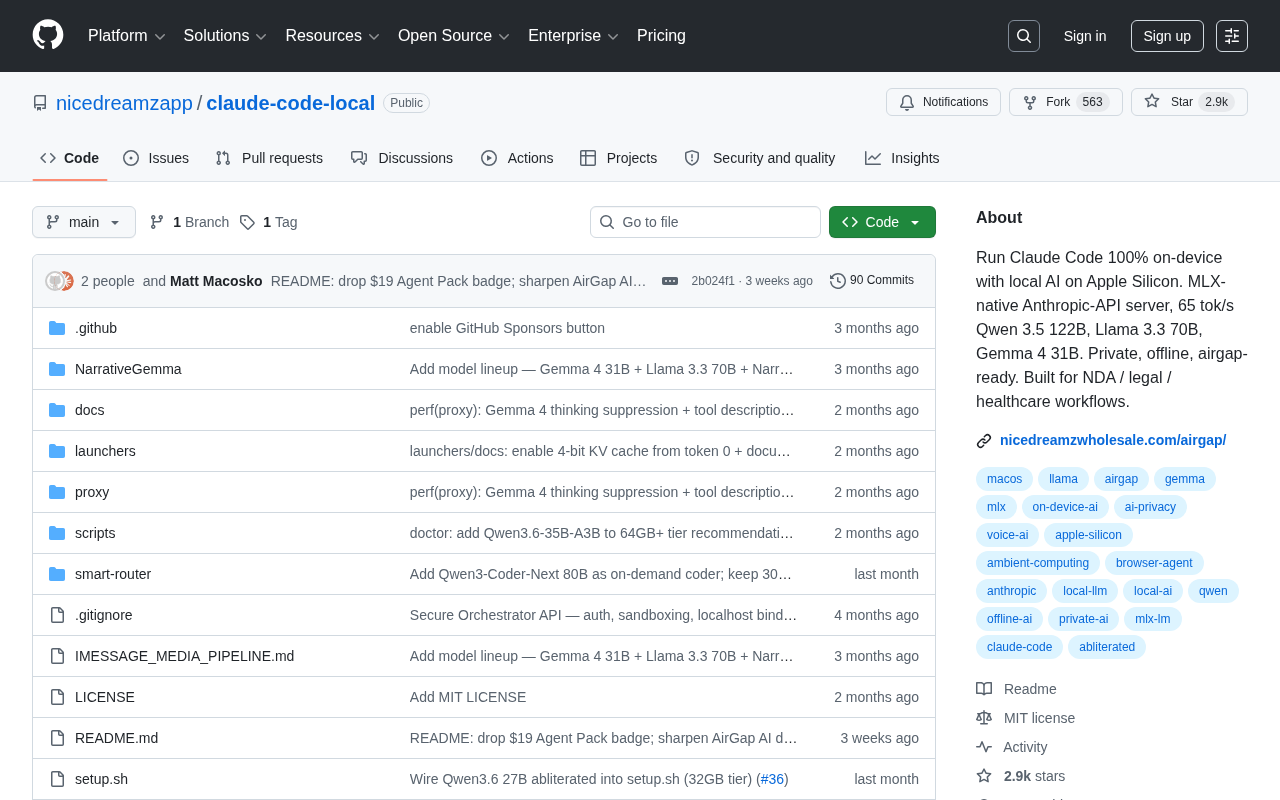
Running Claude Code Locally: A Fully Offline AI Coding Solution for Apple Silicon
claude-code-local runs Claude Code 100% offline on Apple Silicon via MLX, supporting Qwen 3.5 122B at 65 tok/s — built for NDA, legal, and medical privacy workflows.
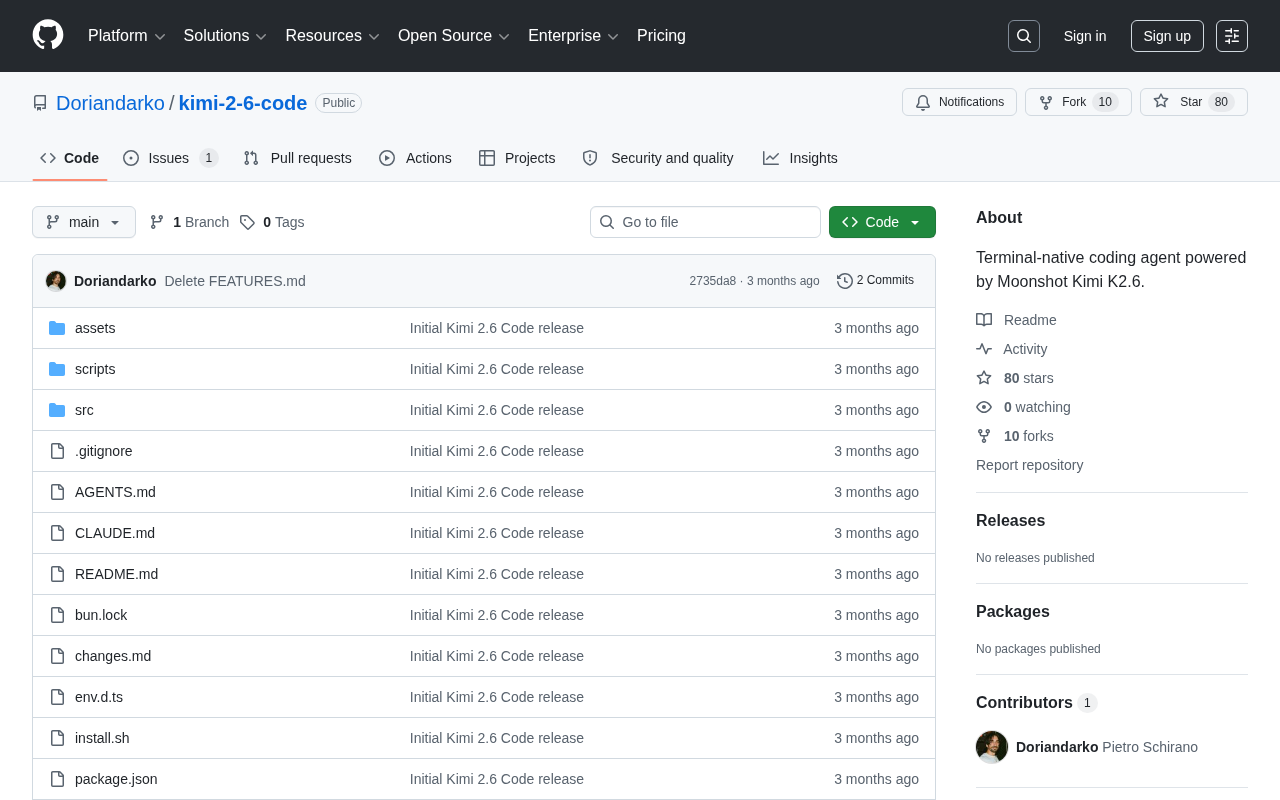
Kimi 2.6 Code: A Terminal-Native Coding Agent Built on the Moonshot Model
kimi-2-6-code is a terminal-native coding agent built in TypeScript on Moonshot's Kimi K2.6 model. Learn about its design, model choice, and maturity level.

TeleChat: An Open-Source Telegram AI Bot Integrating GPT-5, Gemini, and Claude
TeleChat is an open-source Telegram AI bot integrating GPT-5, DALL·E, Groq, Gemini 2.5, and Claude 4.1. Supports web search and deploys on Zeabur, fly.io, and Replit. 1,242 Stars on GitHub.