Building AI Agents: Why Humans Still Need to Keep Their Hands on the Wheel
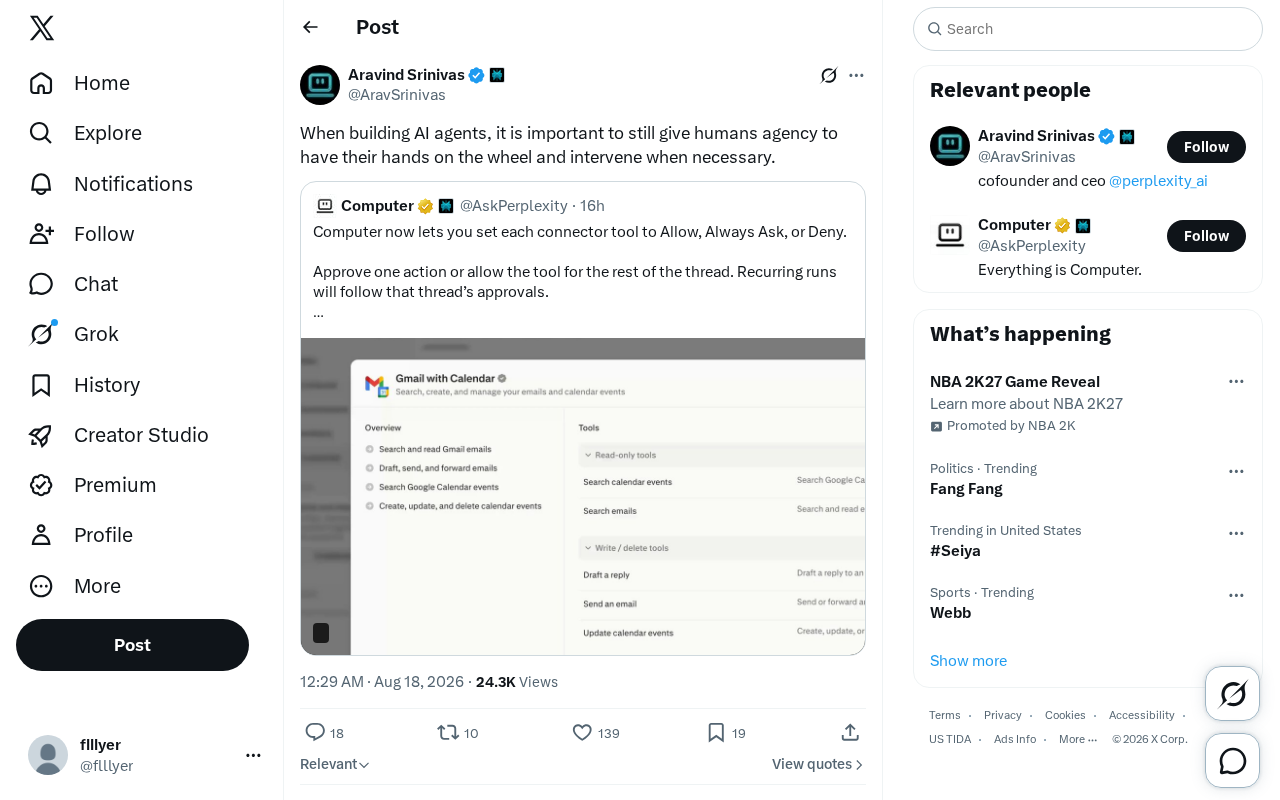
Why AI Agents need human intervention: balancing autonomy with control for trustworthy automation
As AI Agents become more autonomous, retaining human control remains critical. This article explores Human-in-the-loop architecture, graduated autonomy strategies, and explainability practices that enable effective human oversight while leveraging AI efficiency—building systems that augment rather than replace human judgment.
Introduction: Automation Doesn't Mean Hands-Off
As AI Agent technology rapidly evolves, more developers are attempting to build systems capable of autonomously executing complex tasks. AI Agents are software systems that can perceive their environment, make autonomous decisions, and take actions to achieve specific goals. Unlike traditional single input-output models, agents possess core capabilities including Planning, Memory, Tool Use, and Reflection. Typical agent architectures include the ReAct (Reasoning + Acting) framework and Plan-and-Execute patterns, which allow large language models to decompose complex tasks across multiple interactions, invoke external APIs, and dynamically adjust strategies based on intermediate results. In recent years, with improvements in foundation models like OpenAI's GPT-4 and Anthropic's Claude, and the maturation of agent development frameworks like LangChain, AutoGen, and CrewAI, AI Agents have moved from laboratory concepts to engineering practice.
From code generation and data analysis to business process automation, AI Agents are becoming a new paradigm in software engineering. However, a principle that's repeatedly emphasized yet still easily overlooked is: When building AI Agents, we must still empower humans with the ability to intervene, keeping human hands on the wheel and allowing timely intervention when necessary.
This seemingly simple viewpoint touches upon one of the most core challenges in current AI application deployment—how to retain necessary human control (Human Agency) while pursuing automation efficiency. This article will deeply explore the technical logic and engineering practices behind this principle.
Why AI Agents Need "Human-in-the-Loop"
The Tension Between Autonomy and Reliability
The core value of AI Agents lies in their autonomy—they can complete multi-step tasks without continuous supervision. But the stronger the autonomy, the greater the potential risk of losing control. Current large language models still have inherent limitations such as hallucinations, logical errors, and context misjudgments.
Among these, Hallucination is one of the most representative flaws of large language models, referring to the model generating content that appears reasonable but is actually incorrect or completely fabricated. LLMs are essentially probabilistic next-token predictors that optimize for generating statistically likely text sequences rather than guaranteeing factual accuracy. Hallucinations can be categorized into factual hallucinations (fabricating non-existent facts), faithfulness hallucinations (deviating from input instructions or context), and reasoning hallucinations (introducing erroneous steps in logical chains). In agent scenarios, the hallucination problem is particularly dangerous because an incorrect intermediate reasoning result may be treated as factual basis by subsequent steps, forming Error Cascading that ultimately causes the entire task chain to deviate from the correct direction.
An agent completely detached from human supervision might "efficiently" execute numerous operations in the wrong direction, causing irreversible consequences. Imagine an agent responsible for financial processing or production environment deployment—if it misunderstands instructions or makes decisions based on incorrect information, and the system has no human intervention checkpoints, errors will be rapidly amplified. This is the deeper meaning of the "hands on the wheel" metaphor: No matter how advanced autonomous driving is, the driver must be ready to take over at any time.
Building Trust Requires Transparency and Control
Human trust in AI systems is not built on "complete hands-off" but on "always controllable." When users know they can intervene, review, correct, or even terminate the agent's behavior at any critical juncture, they become more willing to entrust important tasks to AI. This Sense of Control is the psychological foundation for widespread adoption of AI products. Research shows that user trust in AI systems follows a "calibration curve"—both Overtrust and Undertrust reduce system utility. Providing transparent intervention mechanisms is precisely the key means to help users establish Calibrated Trust: after multiple successful interventions and confirmations, users gradually increase their trust in the system while maintaining necessary vigilance.
Engineering Practices for Implementing Human-in-the-Loop
Setting Confirmation Checkpoints for Critical Decisions
Identifying "high-risk" or "irreversible" operations in the agent's workflow and introducing human confirmation mechanisms at these nodes is the most direct approach. For example:
- Requiring human approval before operations involving fund transfers, data deletion, external communications, etc.
- Setting Checkpoints in multi-step tasks to allow humans to review intermediate results
- Providing "pause-resume" capability so humans can freeze agent execution at any time
This design is commonly called "Human-in-the-loop" (HITL) architecture. HITL was originally widely applied in Active Learning scenarios during machine learning model training and was later introduced into agent workflow design. In agent architectures, HITL implementation mainly comes in three forms: Synchronous blocking—the agent pauses execution at critical nodes and waits for human approval before continuing; Asynchronous notification—the agent continues execution but marks decisions as "pending confirmation," allowing humans to review and rollback afterward; Hybrid—dynamically deciding whether human intervention is needed based on confidence thresholds. Modern agent frameworks like LangGraph natively support interrupt mechanisms and human approval nodes, allowing developers to explicitly specify which state transitions require human participation when defining workflow graphs. The core challenge of this architecture lies in setting appropriate intervention granularity—too fine leads to frequent interruptions reducing efficiency, while too coarse may miss critical risk points. HITL doesn't weaken automation; it retains safety valves at critical junctures.
Explainability and Observability
Simply providing an intervention button is insufficient. For humans to intervene effectively, they must be able to understand "what the agent is doing" and "why it's doing it." In AI Agent systems, Explainability and Observability are two related but differently focused concepts.
Explainability focuses on "why"—the reasoning basis for the agent's decisions. Common implementation methods include Chain-of-Thought display, decision tree visualization, and analysis of LLM internal attention weights. Observability focuses on "what"—monitoring system runtime state, borrowing from software engineering's three pillars of observability: Logs, Metrics, and Traces. In the agent domain, tools like LangSmith, Phoenix, and Helicone provide specialized LLM call tracing capabilities that can record input-output, token consumption, latency, tool call chains, and other information for each model invocation.
Therefore, excellent AI Agent systems should have:
- Clear execution logs and reasoning chain displays
- Real-time state visualization
- Explanatory output for critical decision bases
These tools and capabilities enable developers and operators to "replay" the agent's complete execution process like debugging traditional software, thereby providing an information foundation for effective human intervention. Only when humans can quickly understand the agent's behavior does intervention have meaning; otherwise, the "steering wheel" is just a decoration.
Balancing Automation Efficiency and Human Control
Graduated Autonomy Strategy
Not all tasks require the same degree of human supervision. A mature approach is adopting a Graduated Autonomy strategy: for low-risk, reversible, highly repetitive tasks, grant agents higher autonomy; for high-risk, irreversible, high-impact tasks, tighten control and mandate human intervention.
The concept of graduated autonomy originates from Human-Computer Interaction (HCI) and autonomous systems fields, sharing lineage with the "levels of automation" theory proposed by Sheridan and Verplank in 1978. That theory divided automation levels from 1 (fully manual) to 10 (fully automatic) into multiple grades. In modern AI Agent practice, this theory has been reinterpreted as a more operationally practical graduated framework:
- Level 1—Agent only provides suggestions, all execution done by humans
- Level 2—Agent executes but requires human confirmation at each step
- Level 3—Agent autonomously executes low-risk operations, high-risk operations require confirmation
- Level 4—Agent fully autonomous execution, but humans can take over and rollback at any time
- Level 5—Fully autonomous, only post-hoc reporting
In actual deployment, the same agent system often needs to flexibly switch between different levels based on specific task types, user permission levels, and organizational risk preferences. This dynamic graduated strategy also echoes the "principle of least privilege" in Zero Trust security architecture—granting agents only the minimum autonomy needed to complete the current task.
This graduated approach both avoids dragging down efficiency with excessive approvals and holds the line at genuinely important junctures. It requires developers to classify task risks during the design phase and configure different intervention strategies accordingly.
From "Replacing Humans" to "Augmenting Humans"
At a deeper level, this principle reflects a shift in AI role positioning. Ideal AI Agents should not be designed as black boxes that "replace humans" but as collaborators that "augment humans." Humans are responsible for setting goals, maintaining direction, and making value judgments; agents are responsible for execution, acceleration, and extending the boundaries of human capabilities.
This concept can be traced back to Doug Engelbart's 1962 framework of "Augmenting Human Intellect" and J.C.R. Licklider's classic discourse on "Man-Computer Symbiosis." In contemporary practice, this idea manifests as the "Copilot mode"—AI as co-pilot rather than pilot. The naming of products like GitHub Copilot and Microsoft Copilot is a direct tribute to this philosophy. Research and practice repeatedly prove that human-AI collaboration often outperforms either humans or AI working alone, because the two form complementary advantages in creativity, common-sense judgment, computational speed, and information processing scale.
The steering wheel remains in human hands; AI is the powerful engine. This human-machine collaboration model both leverages AI's efficiency advantages and retains human judgment and accountability.
Conclusion: Responsible AI Agent Design
Building AI Agents is not merely a technical problem but a design problem concerning responsibility and trust. The temptation to pursue full automation is strong, but truly sustainable, trustworthy agent systems are precisely those that understand "when to relinquish control and when to reclaim it."
From an engineering perspective, this means developers need to treat human intervention as a First-class Citizen from the initial system design, not as an afterthought patch. From choosing HITL architecture, integrating observability tools, to configuring graduated autonomy strategies, every technical decision shapes the system's safety boundaries and user experience. With the gradual implementation of regulatory frameworks like the EU AI Act, retaining "Meaningful Human Oversight" for high-risk AI systems has evolved from best practice to legal requirement.
Keeping human hands on the wheel is not distrust of AI capabilities but clear recognition of complex reality. As AI Agents move toward large-scale deployment, this principle deserves to be remembered by every developer.
Related articles

Giving Agents a Screen: The Open-Source Story of a DeepSeek Visual Workbench
An architecture-industry developer open-sourced a visual workbench plugin for DeepSeek Harness, upgrading Agent interaction from pure chat to graphical UI with six real-world project demos.
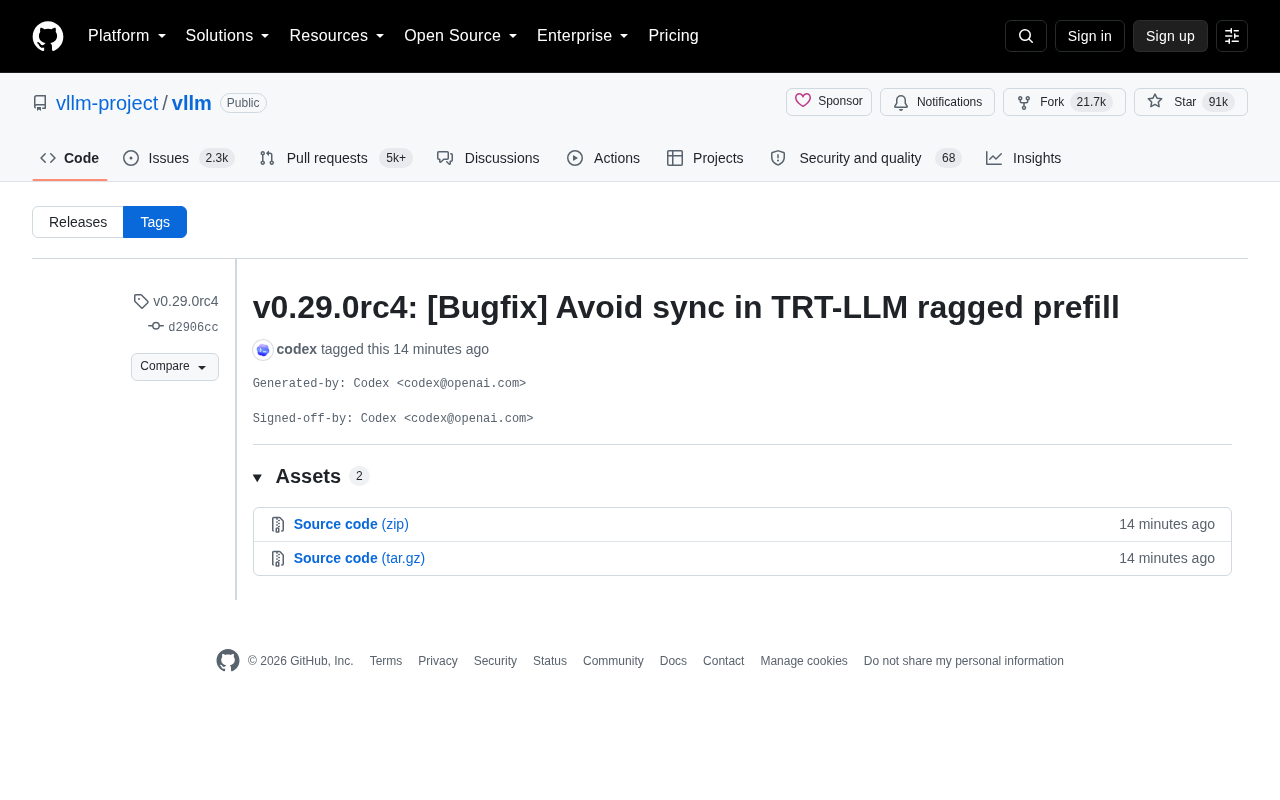
vLLM v0.29.0rc4 Released: Fixing the TRT-LLM Inference Synchronization Bottleneck Explained
Deep dive into vLLM v0.29.0rc4: fixing unnecessary GPU sync in TRT-LLM ragged prefill to eliminate CPU-GPU overhead and boost inference throughput.
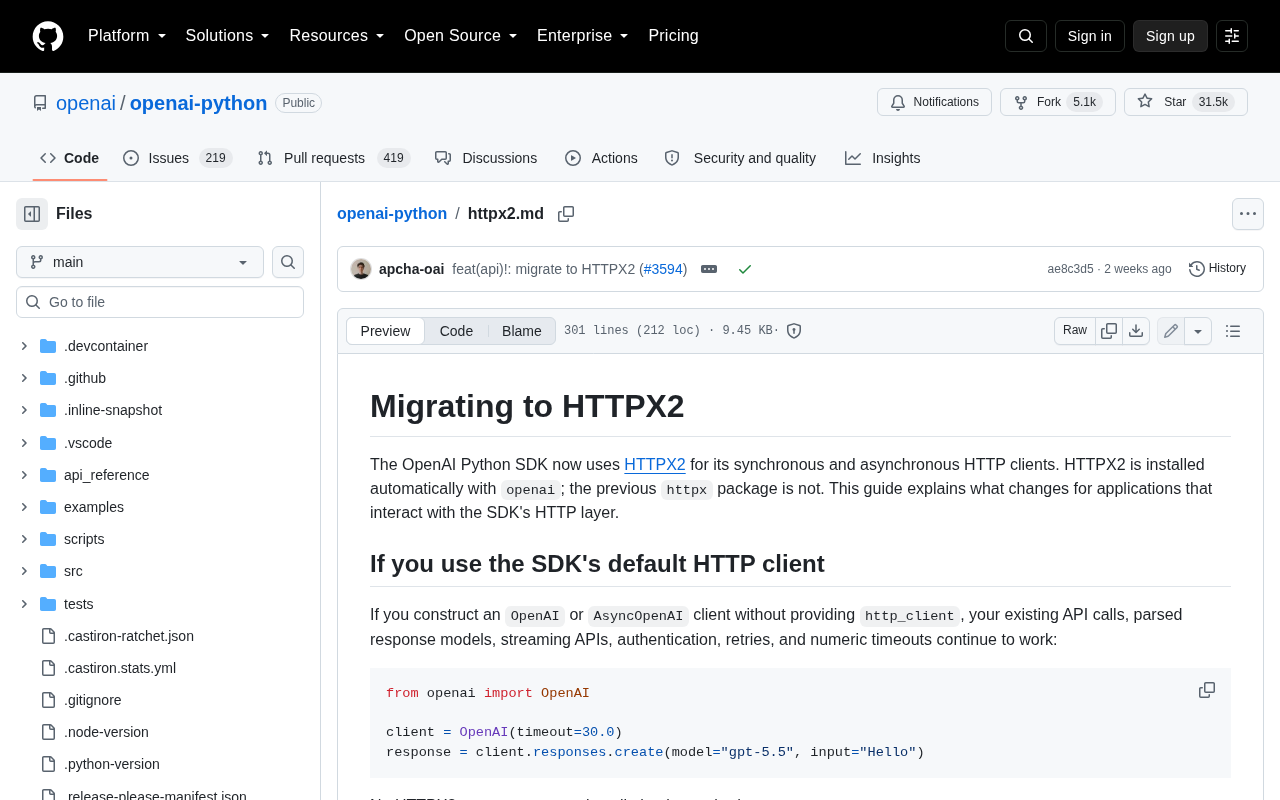
OpenAI's Migration to HTTPX: Why They Abandoned the requests Library
In-depth analysis of why OpenAI migrated its Python SDK from requests to HTTPX, covering async dual-mode support, HTTP/2 multiplexing, and the real impact on developers.