Building an AI-Powered B2B Customer Churn Early Warning System with n8n

Use n8n and an AI Agent to automatically detect B2B customer churn signals and send real-time Slack alerts.
This article presents a B2B customer churn early warning solution built on n8n. Since B2B churn typically manifests as a gradual decline in order volume, it's easy to miss manually. The system monitors each customer's ordering behavior via n8n automation, triggers alerts when orders fall below historical averages, and pushes real-time Slack notifications to the customer success team. To tackle false positives from this simple rule, an AI Agent layer is added to identify seasonal fluctuations and continuously learn the company's own business logic. The article recommends starting with a minimal viable pipeline before incrementally introducing AI capabilities.
Why B2B Companies Need Customer Churn Early Warning
In B2B businesses, customer churn tends to be gradual — unlike consumer products where a user simply cancels a subscription, B2B clients quietly reduce order volumes and lower repurchase frequency. By the time the sales team notices, the customer may have already switched to a competitor. This "boiling frog" style of churn is precisely the kind that's easiest to overlook and hardest to win back.
The approach showcased in the original material targets exactly this pain point: automatically monitoring the ordering behavior of every B2B customer, and triggering an alert the moment a customer's order volume drops below their historical average. This kind of early signal detection based on behavioral data is far more timely than relying solely on quarterly business reviews.
Implementing Automated Monitoring with n8n
n8n is an open-source workflow automation tool well-suited for chaining together data monitoring, conditional logic, and message notifications into a complete automated pipeline. In this case, the core logic is straightforward: continuously track customer order data, calculate each customer's average order volume, and trigger the workflow when actual orders fall below that average.
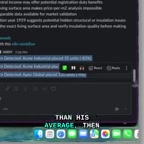
The advantage of this type of workflow is that it can be implemented without writing large amounts of code. n8n provides a visual node-based interface where data sources, conditional logic, and notification nodes can all be connected via drag-and-drop — allowing even non-developers to quickly build a functional monitoring system.
Real-Time Slack Notifications
When the system detects an anomaly, it automatically pushes a notification to the relevant team members on Slack. Compared to email or manual reports, Slack notifications allow the customer success team to intervene immediately — proactively reaching out to clients to understand the situation and investigate churn risk. This "monitor → alert → act" feedback loop is key to reducing customer churn rates.
n8n operates in a self-hosted model, meaning companies can deploy it on their own servers without sensitive data passing through third-party cloud services — particularly important when handling customer orders and other confidential business data. Its node ecosystem covers hundreds of commonly used services (databases, CRMs, messaging tools, etc.), with workflows triggered via webhooks or scheduled timers. Compared to similar tools like Zapier or Make (formerly Integromat), n8n's key differentiators are its open-source and free nature, support for complex branching logic, and the ability to execute JavaScript code directly within nodes — giving it a clear edge in scenarios requiring custom data processing, such as calculating per-customer order averages. For this use case, a typical deployment would involve a scheduled trigger pulling daily order records from a database or ERP, a Function node calculating averages and performing comparisons, and then routing results to either a Slack notification or an AI Agent node.
How the AI Agent Reduces False Positives
A simple rule based purely on "orders below average" can easily generate a flood of false positives. For example, a customer temporarily reducing orders due to seasonal purchasing cycles doesn't necessarily indicate they're about to churn. The system described in the source material addresses this by incorporating a lightweight AI Agent.
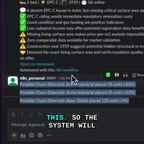
This Agent's role is to identify false positives and inconsequential fluctuations, automatically filtering out situations that don't require human attention. In other words, it adds an intelligent judgment layer on top of the raw rules, making alerts more aligned with real business logic.
Teaching the System Your Business Logic
Going a step further, the author mentions that the Agent can "automatically conform to and continuously supplement your business logic." This means the system is not a rigid set of fixed rules, but one that continuously adjusts based on the company's own judgment criteria.
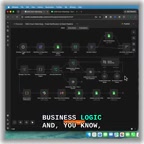
For businesses across different industries and with different customer structures, the threshold for "what kind of order decline truly signals churn" varies enormously. Delegating this flexible judgment to AI preserves the efficiency of automation while avoiding the noise that comes from overly simplistic rules.
False positives are the most common quality problem in rule-based monitoring systems: the trigger condition is met, but there's no actual risk. In the context of customer churn, seasonal demand fluctuations, major holiday stocking cycles, and changes in a client's internal procurement process can all cause short-term order declines that are entirely normal business rhythms. Too many false alarms put customer success teams in a "cry wolf" situation — after repeatedly receiving invalid alerts, staff gradually start ignoring all notifications, ultimately rendering the entire monitoring system ineffective. Introducing an AI Agent fundamentally upgrades "anomaly detection" from a rigid threshold check to a context-aware reasoning process: the Agent can factor in a customer's historical purchasing patterns, industry cycles, past communication records, and other multi-dimensional signals to determine whether a current decline constitutes a genuine churn signal, dramatically improving the signal-to-noise ratio of alerts.
The Value and Limitations of This Automation Approach
This case study illustrates a compelling trend: embedding AI capabilities into automated workflows to solve specific business problems. Its value lies in the low barrier to entry and fast time-to-value — even small teams can use off-the-shelf tools to build a practical customer health monitoring system.
That said, its limitations deserve honest consideration. The source material is fairly brief on technical details — for instance, how exactly the Agent is trained, how business logic is captured and stored, and how data sources are connected are all left unexplored. In real-world implementations, the choice of monitoring metrics, the quality of historical data, and the accuracy of AI judgments will all directly impact the system's effectiveness.
For teams looking to try a similar approach, the recommendation is to start with a minimum viable version: first get the basic monitoring and notification pipeline working with simple rules, then gradually introduce AI to reduce false positives. This incremental approach is far more prudent than trying to build a sophisticated intelligent system from day one.
Related articles

MCP Protocol in 60 Seconds: A Real Session, Message by Message
Dissecting a real MCP session message by message: how an Agent dynamically discovers tools, forwards call requests, and has an MCP server execute them — all in just 9 JSON messages, with the model and reasoning loop untouched.

n8n 40-Minute Masterclass: Build Your First AI Automation Workflow from Scratch
Distilled from a 40-minute n8n masterclass: the core differences between automation, AI, and AI Agents, a comparison of n8n's four deployment methods, and a complete guide from dashboard to your first workflow.

Why Does a 35GB Quantized Model Blow Up an 80GB GPU? The Truth About KV Cache VRAM
Why does a 35GB 4-bit quantized LLM still blow up an 80GB GPU? This article breaks down the four components of inference VRAM, provides precise KV Cache formulas, compares GQA vs DeepSeek MLA memory, and offers production-grade OOM prevention like FP8 KV Cache.