Building Enterprise-Grade AI Agents from Scratch: A Deep Dive into DeepAgent and Skill Sandboxing

Build enterprise OpenClaude with DeepAgent: Skills, subprocess isolation, and sandbox security explained.
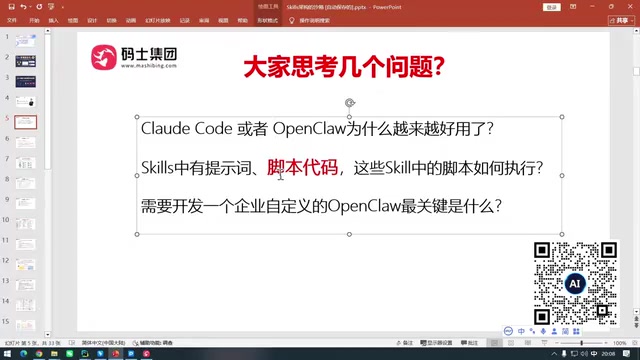
This article breaks down why Claude Code and OpenClaude keep improving — driven by both quarterly LLM capability gains and an exploding Skill ecosystem built on unified standards. It clarifies the key difference between Skills (subprocess/out-of-process execution) and Agent Tools (in-process execution), showing why the subprocess model is critical for enterprise security. The real challenge of building OpenClaude in-house isn't private model deployment — it's safely running third-party Skill code via sandboxing. The solution uses LangChain's new DeepAgent framework as the orchestration core, layered with Skill management and sandbox execution.
Why OpenClaude and Claude Code Keep Getting Better
Recently, many developers have noticed something intuitive: both Claude Code and the open-source OpenClaude feel smoother and more capable with each passing month. There are actually two reasons behind this.
The first is the evolution of the underlying models. Today's leading LLMs follow roughly a three-month release cadence, with each generation delivering somewhere between 30% and 50% improvement in intelligence over the last. A stronger foundation model naturally lifts everything built on top of it.
But the experience is really shaped by a second factor — the explosion of the Skill (skill package) ecosystem. Once you install OpenClaude, you can download any Skill package you need from the internet. One not enough? Install a hundred. It's these Skills that give OpenClaude its real-world capabilities: data analysis, generating analytical reports, operating WeChat or Feishu, and more.
The reason Skills can achieve this kind of network effect is that they establish a unified standard. Everyone writes to the same spec, and once written, anyone can reuse them immediately. Today someone contributes a Skill for fine-tuning small models; tomorrow someone else publishes one for stock analysis — and OpenClaude's capability boundary keeps expanding through continuous community contributions.
The Fundamental Difference Between Skills and Agent Tools
Many developers conflate Skills with Agent Tools, but the two differ fundamentally in how they execute.
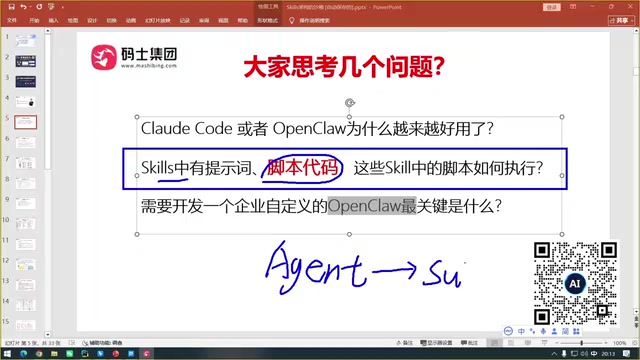
An Agent Tool is a component that conforms to the agent standard. In LangChain, for example, you add a tool decorator to a function or inherit from a specific parent class. These tools are invoked directly by the Agent's main process — the entire execution happens within the agent's own process, with no need to spin up a child process.
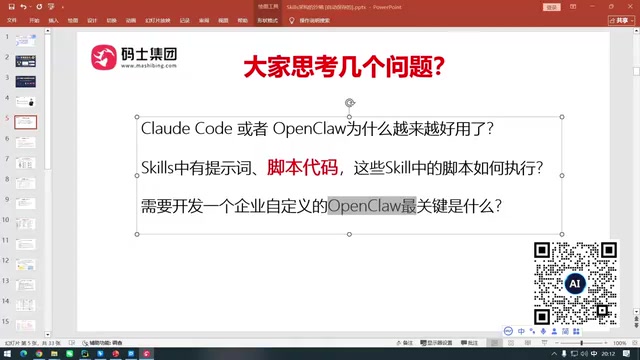
Skills work completely differently. A Skill also contains prompts and script code, but that script code does not run inside the agent's main process. When the agent determines that a Skill's code needs to run, it spawns a subprocess to execute the script. After execution completes, the result is passed back to the agent via inter-process communication.
To put it simply: Tools execute in-process; Skills execute out-of-process via a subprocess. This distinction may seem subtle, but it has direct implications for code execution isolation and security — which is exactly what enterprise environments care about most.
Technical deep dive: The subprocess mechanism at the OS level means the parent process (the agent's main process) forks an independent child process with its own memory space, file descriptors, and permission controls. A crashed child process won't directly affect the parent, and malicious code can't easily infect the main process environment through memory overflow. Parent and child processes communicate via stdin/stdout, pipes, or sockets — this is the underlying implementation of "passing results back via inter-process communication." By contrast, in-process Agent Tools that encounter uncaught exceptions or infinite loops can at best hang the entire agent instance, and at worst crash the service entirely. This explains why the Skill subprocess model provides cleaner security boundaries when dealing with third-party code of unknown origin — making it far more suitable for production environments.
The Core Challenges of Building OpenClaude In-House
If your goal is to build a customized OpenClaude inside your organization, what's the most critical challenge?
Most people's first instinct is to privately deploy a large model. But in practice, private model deployment isn't that hard — it's not the bottleneck.
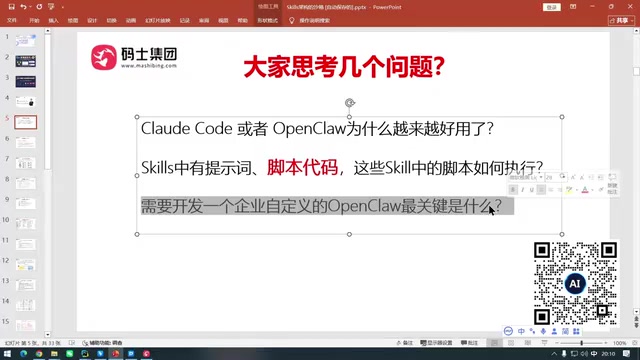
The real challenges come down to three things:
- How to develop an Agent to serve as the central orchestration core
- How to manage both your own Skills and publicly available third-party Skills within that agent
- How to make sure those Skill scripts run safely and stably on your own servers
The third point is paramount. Since Skill code comes from a variety of sources, allowing unrestricted execution on your servers introduces obvious security risks. This is exactly why you need a Sandbox mechanism for isolation. Once you've solved this, building a customized OpenClaude for internal enterprise use becomes entirely achievable.
To be clear: the goal of this walkthrough isn't to teach you how to use an existing OpenClaude — it's to build your own version of OpenClaude for enterprise or personal use.
Technical deep dive: A sandbox is a security isolation technique that restricts code execution to a controlled environment. In AI agent scenarios, common sandbox implementations include: filesystem and network isolation via Docker containers, system call whitelisting via seccomp/AppArmor, and bytecode sandboxing via WebAssembly (WASM). The container approach is most common — each time a Skill script runs, the system dynamically launches a lightweight container, the script executes inside it, and the container is destroyed when done. This prevents scripts from reading or writing sensitive host files and blocks lateral movement. For enterprise deployments, sandbox design must also balance execution performance against resource quota management, ensuring that poorly written or malicious Skill scripts can't exhaust server CPU or memory.
Technology Choice: Why DeepAgent?
This walkthrough uses the DeepAgent framework, released by the LangChain team. It was published publicly around October 2025, making it a relatively new addition to the ecosystem.
On the topic of framework selection, here's a quick take on a common question: LangChain or Dify? From a career standpoint, the answer is LangChain. There are virtually no job postings that explicitly require Dify, whereas LangChain has much broader recognition in the industry — the return on your learning investment is clearer.
As for Skills themselves, community resources are already quite rich. You can find a large number of ready-to-use Skills and Agent components on Hugging Face, available for direct download and reference.
Technical deep dive: LangChain is currently the most mature LLM application development framework, offering core abstractions like Chains, Memory management, Tool integration, and Agents. DeepAgent is LangChain's next-generation framework built on top of this foundation, specifically targeting multi-agent collaboration and long-horizon task planning. It further strengthens task decomposition, sub-Agent scheduling, and cross-process execution — making it a natural fit for Skill's subprocess execution model. Dify, by contrast, is positioned as a low-code/no-code platform for building AI applications, better suited for business users who need to rapidly prototype. However, its flexibility is limited when it comes to code-level customization, complex Agent logic orchestration, and deep integration with existing enterprise systems — which is the primary reason it sees lower recognition in engineering job postings.
Summary of the Implementation Approach
Putting all of this together, a clear development path for an enterprise-grade OpenClaude emerges: use DeepAgent as the agent framework, build Skill loading and management capabilities on top of it, and use a sandbox mechanism to ensure third-party Skill scripts execute safely inside subprocesses.
For teams looking to deploy AI agents inside their organization, the value of this architecture is that it lets you leverage the community's vast Skill ecosystem while keeping code execution firmly within a security boundary you control. Compared to simply doing a private deployment of a large model, this is the direction that actually delivers business value.
Related articles

WorkBuddy Full Guide: How an AI Coworker Takes Over Workplace Automation
What is WorkBuddy? This article analyzes the core capabilities of this full-scenario AI agent: autonomous execution with deliverable results, local file processing, multi-agent parallelism, and workplace automation workflows, helping you judge its essential difference from ordinary AI chat tools.

The Truth About AI Agents: A Hundred Lines of Code + an LLM, Deconstructing the Agent's Underlying Logic
AI agents aren't a new AI species—just a language model plus tools, a loop, and a goal. Here's the underlying logic: how 100 lines of Python hit a 75% fix rate, why the harness beats the model, and Gartner's "agent washing."

AI Agent Deployment: Three Things Developers Should Do
AI Agent deployment doesn't require rushing into multi-agent systems. This article outlines an actionable deployment path and engineering acceptance thresholds for developers, covering human baselines, bounded single-agent scope, and a controlled code-modification loop.