Building Production-Grade Agents from Scratch: A Full Breakdown of LLM Application Development

A complete guide to building production-grade LLM applications from model selection to private deployment.
This article systematically breaks down a Bilibili LLM development tutorial, covering the full pipeline for building production-grade AI applications: model selection and prompt engineering lay the foundation; RAG-based knowledge bases handle proprietary data; Agent orchestration enables multi-step reasoning and tool use; and debugging, optimization, and private deployment get you to production. The key insight is that LLMs differ fundamentally from rule-based chatbots in their generalized reasoning and dynamic decision-making — and that the "last mile" from demo to production is where most projects fail.
Why LLM Application Development Has Become an Essential Skill
Everyone's talking about AI application development as the next big wave — enterprise demand is surging and the market is exploding. But here's the real question: what does the complete development pipeline actually look like, from model selection all the way to deployment? Most tutorials stop at "call an API and build a chat UI," carefully sidestepping how to actually build something that ships and delivers real value.
This is exactly where the Bilibili tutorial series stands out — it walks through the entire chain: model selection, prompt engineering, knowledge base construction, agent orchestration, functional debugging, performance optimization, and private deployment. These are the stages where real projects get stuck and where solid resources are hardest to find.
The Fundamental Difference Between LLMs and Ordinary Chatbots
A common misconception is treating LLM applications as just "smarter chatbots." Traditional chatbots rely on predefined rules and fixed intent recognition — clear boundaries, but rigid. LLMs, by contrast, have generalized reasoning, contextual understanding, and tool-calling capabilities, enabling them to dynamically orchestrate behavior based on the task at hand.
This distinction fundamentally changes how you approach development: building a chatbot means "hardcoding a flow," while building an LLM application means "designing a system capable of autonomous decision-making." Once you internalize this, it becomes clear why Agents are emerging as the core form of AI deployment heading into 2026.
A Complete Application Development Pipeline
The tutorial makes one thing clear: a commercially viable LLM application requires walking through a complete pipeline. Breaking it down, there are several key stages.

Model Selection and Prompt Engineering
The first step in development isn't writing code — it's choosing the right model. Different models vary enormously in reasoning capability, context length, cost, and ease of private deployment. Blindly chasing "the most powerful" model often backfires in terms of cost and latency.
Prompt engineering is another heavily underestimated piece. With the same model, the difference between a well-designed and a poorly-designed prompt can be several orders of magnitude in output quality. Systematic prompt templates, role definitions, and few-shot examples are the foundation for stable, consistent application output.
Knowledge Base Construction and Retrieval-Augmented Generation
Enterprise applications almost always involve proprietary data. Connecting documents and databases to an LLM requires building a knowledge base and implementing a Retrieval-Augmented Generation (RAG) pipeline — document chunking, vectorization, and recall ranking each affect the accuracy of the final answer. This is also where pitfalls cluster: poor chunking granularity or imprecise retrieval will cause the LLM to "confidently fabricate nonsense."
The core idea behind RAG (Retrieval-Augmented Generation) is to avoid stuffing all proprietary knowledge into the model's context window (which is extremely expensive and limited in length). Instead, when a user asks a question, the most relevant chunks are first retrieved from the knowledge base, and those chunks — along with the question — are sent to the LLM to generate an answer. The pipeline has two phases: offline indexing and online retrieval. In the offline phase, documents are split into chunks, each chunk is converted into a high-dimensional vector via an embedding model, and the vectors are stored in a vector database (such as Faiss, Chroma, or Milvus). In the online phase, the user's question is similarly vectorized and used to perform a similarity search in the database, retrieving the Top-K most relevant chunks. Chunking strategy (by paragraph, sentence, or fixed character count), chunk overlap length, choice of embedding model, and post-retrieval reranking all significantly affect final answer quality — and are the most time-consuming parts of RAG optimization.
Agent Orchestration and Tool Calling
When an application needs to execute multi-step tasks and call external tools, you enter the realm of Agent orchestration. How to decompose tasks, how to let the model decide which tool to call, and how to handle failures and retries — these are what determine whether an application can actually "get things done." This layer of complexity is simply beyond the reach of ordinary chatbots.
An Agent is essentially a cyclical decision-making framework that uses an LLM as its "brain": the model receives a task, autonomously selects which tools to call (search, code execution, database queries, etc.), observes the results, and decides on the next action — repeating until the task is complete. This pattern is commonly known as the ReAct (Reasoning + Acting) loop. On the engineering side, mainstream frameworks include LangChain, LlamaIndex, and domestic options like Dify and FastGPT, all of which encapsulate tool registration, memory management, and multi-turn conversation state tracking. Multi-agent collaboration — where a "planner" decomposes tasks and multiple "executors" handle subtasks in parallel — further extends feasibility for complex business scenarios, but also raises the debugging bar significantly. Any intermediate step that fails can cause the entire pipeline to break down, making comprehensive logging and error-retry mechanisms essential for stable Agent systems.
The Last Mile: Debugging, Optimization, and Deployment
Many projects die in the gap between Demo and production.

Functional Debugging and Performance Optimization
Debugging LLM applications is fundamentally different from debugging traditional software — outputs are non-deterministic, and the same input can yield different results. This requires developers to build observable logging and evaluation systems to isolate problems. Performance optimization involves concurrency handling, caching strategies, and streaming output, all of which directly affect user experience and API costs.
Private Deployment
For enterprise clients, data security is often a hard requirement, making private deployment a commercial dividing line. From hardware resource assessment to model quantization and inference service setup, this stage has a high technical bar — and is where resources are scarcest and detours most likely.
Private deployment typically follows one of two paths: deploying open-source models (such as LLaMA, Qwen, or DeepSeek) on your own servers or private cloud using inference frameworks like vLLM, Ollama, or TGI to serve an API; or purchasing a privately licensed version of a commercial model. On the hardware side, 7B-parameter models can run on a single consumer GPU (e.g., RTX 4090), while 70B-level models typically require multiple A100s or H100s. To reduce VRAM usage, model quantization (INT8, INT4) is common practice — it can compress memory requirements to 1/2 or even 1/4 of the original with manageable precision loss. Inference throughput optimization relies on KV Cache management and Continuous Batching, which directly determine response speed and service cost under concurrent user load.
Who Should Follow This Tutorial

The tutorial is positioned as a beginner-friendly, hands-on course — a "seven-day guide to building a production-grade Agent from scratch." From its content structure, it genuinely covers the full loop from concept to deployment, making it well-suited for developers who want a systematic introduction to AI application development but lack a complete roadmap.
That said, it's worth being realistic: no "seven-day crash course" can make anyone truly proficient in every area — RAG tuning, Agent orchestration, and private deployment are each long-term engineering disciplines in their own right. A more reasonable expectation: treat this tutorial as a complete "map." Use it to first build a full-pipeline understanding — what each stage is trying to solve and what the common pitfalls are — then go deep on your weakest areas through focused practice.
Conclusion
The bar for LLM application development is shifting from "can you call an API" to "can you get the entire pipeline running and ship it to production." The value of this tutorial isn't in any single technique — it's in connecting model selection, prompt engineering, knowledge bases, Agent orchestration, and deployment into a coherent whole, rather than treating them as isolated topics. For anyone looking to capitalize on this wave of AI deployment, getting the full picture first and then tackling each piece systematically is the surest way to avoid unnecessary detours.
Related articles
Automattic Executives Signed Reciprocal Severance Agreements During Mullenweg's Brief Ouster
Automattic's CFO and General Counsel signed reciprocal severance agreements during Matt Mullenweg's brief ouster, covering one year's salary and accelerated equity vesting, raising corporate governance concerns.
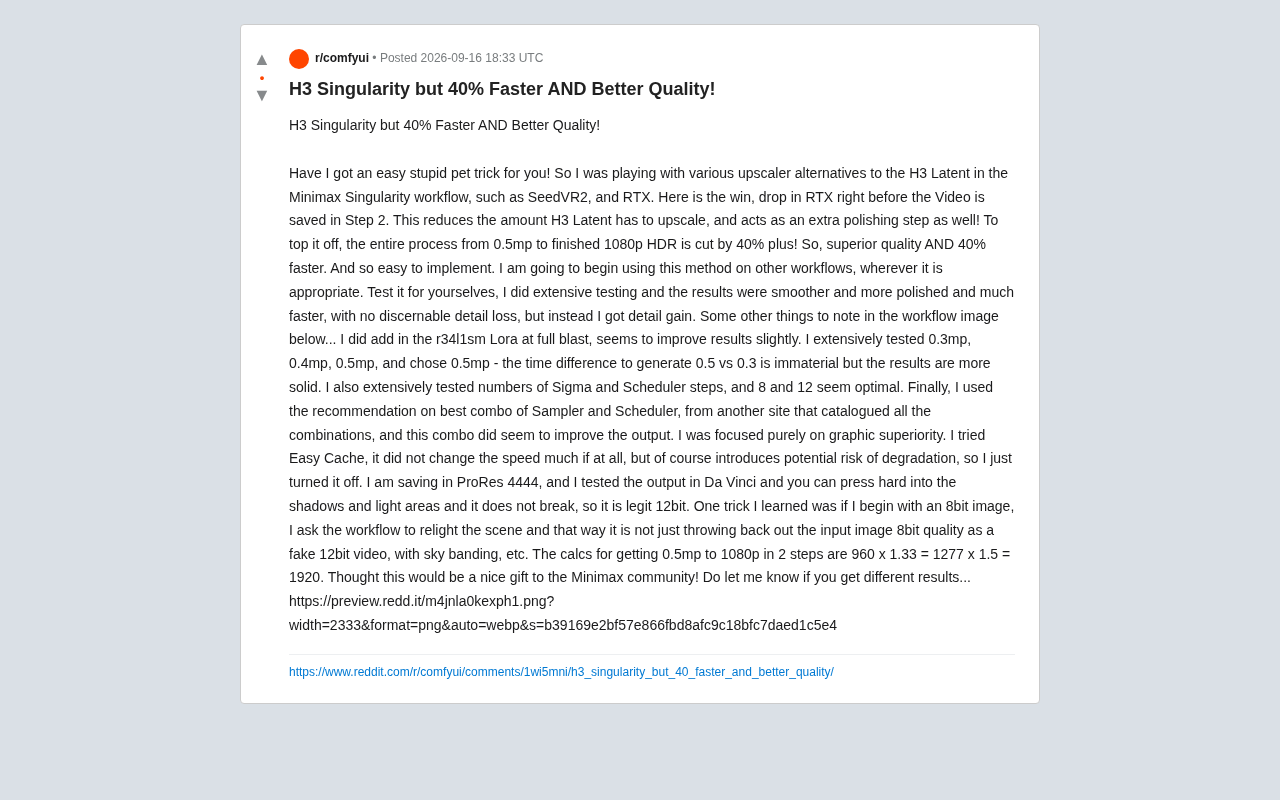
H3 Singularity Optimization: 40% Speed Boost With Better Image Quality
A Reddit user's Minimax Singularity workflow tip: insert an RTX upsampler before H3 Latent for 40%+ speed gains and better quality. Covers parameters, 12-bit output, and more.
Glyph: A Multi-Strategy Agent System for Automated Enterprise Data Catalog Annotation
Glyph is a multi-strategy LLM agent system for enterprise data catalogs that automates column description generation and sensitivity ontology tagging, grounding outputs in pipeline source code to improve accuracy.