Bun Now Generates CLAUDE.md by Default: The AI-Native Development Era Has Arrived

Bun now creates CLAUDE.md by default, marking AI assistants as first-class citizens in dev toolchains.
Bun's decision to auto-generate a CLAUDE.md file during `bun init` signals a major shift: AI programming assistants are moving from optional plugins to native components of the development toolchain. While the move sparks debate over vendor lock-in and user choice, it reflects the reality that most developers now rely on AI tools daily. This change previews a future where AI context files become as standard as package.json.
A Default Behavior That Sparked a Discussion
Recently, a discussion about Bun on Hacker News caught the attention of the developer community: when you run bun init to initialize a new project, this high-performance JavaScript runtime now automatically creates a CLAUDE.md file by default.
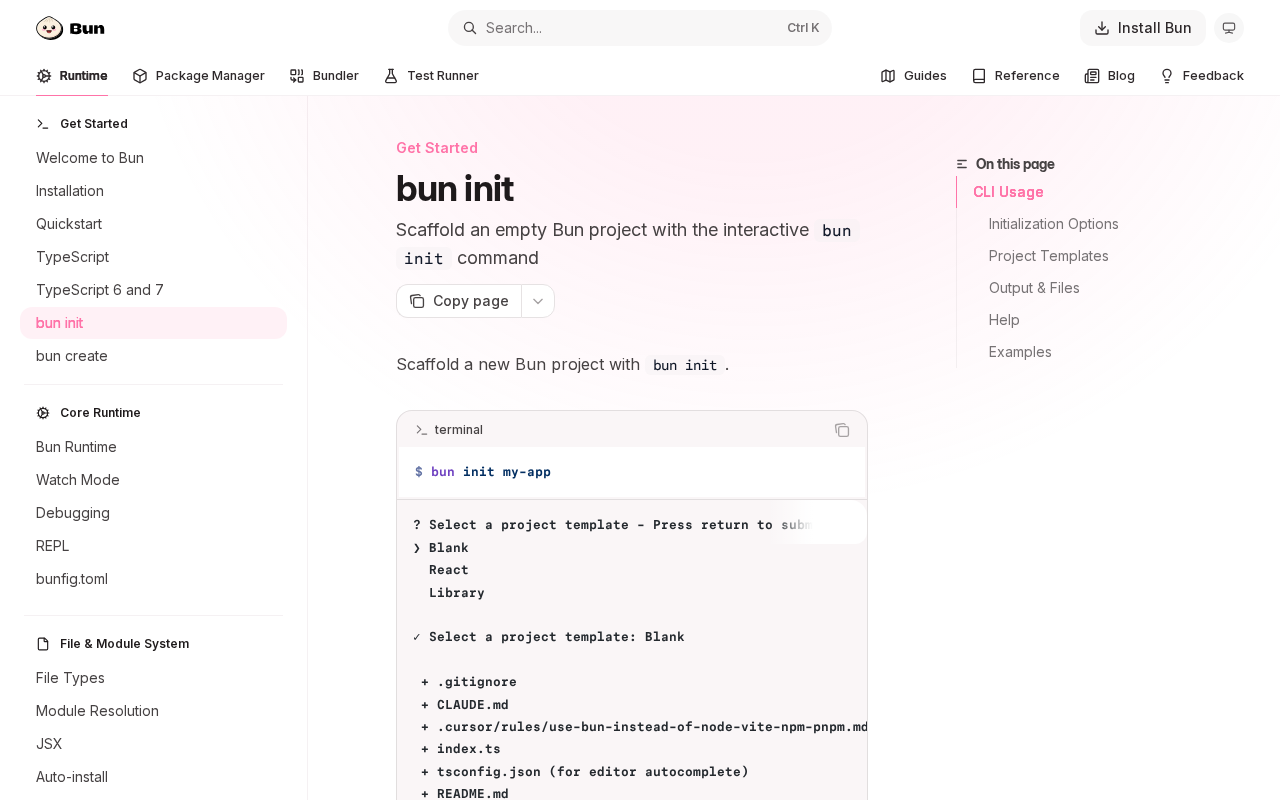
This seemingly minor default behavior actually reflects a profound transformation happening in software development toolchains — AI programming assistants have evolved from "optional plugins" to "first-class citizens," and are now influencing the default configurations of project scaffolding.
What Is Bun?
Bun is a high-performance JavaScript/TypeScript runtime released by Jarred Sumner in 2022, written in Zig and built on Apple's JavaScriptCore engine (rather than the Google V8 engine used by Node.js). Unlike Node.js, Bun integrates the runtime, package manager (replacing npm/yarn/pnpm), bundler (replacing webpack/esbuild), and test runner (replacing Jest/Vitest) into a single unified binary. This "all-in-one toolchain" design gives it a significant edge over traditional solutions in cold start speed and dependency installation efficiency — official benchmarks show Bun's startup speed is over 4x faster than Node.js in certain scenarios. Because Bun has always positioned itself around the ultimate developer experience, every decision it makes in project scaffolding design gets amplified scrutiny from the community.
What Is a CLAUDE.md File?
CLAUDE.md is a project context file designed specifically for Anthropic's AI programming tools (such as Claude Code). It functions like a "README for AI" — when an AI assistant takes on a project, it reads this file first to get key information about the project.
Specifically, Claude Code is Anthropic's terminal-level AI programming agent. Unlike traditional in-editor auto-completion (such as early Copilot's line-by-line suggestions), Claude Code operates in "Agentic Mode" — it can autonomously browse the entire codebase, plan multi-step modification strategies, execute shell commands, run tests, and iteratively fix issues based on results. CLAUDE.md serves as the "memory anchor" that gets automatically loaded at the start of each session, ensuring the AI doesn't need to explore the project structure from scratch every time. This practice of solidifying Prompt Engineering from one-off conversations into version-controlled files represents an important evolutionary direction in AI-assisted development.
What a CLAUDE.md File Typically Contains
A typical CLAUDE.md file might include:
- Project structure overview: Directory organization, core module locations
- Tech stack and conventions: Frameworks used, code style, naming conventions
- Common commands: How to build, test, and run the project (e.g.,
bun test,bun run dev) - Important notes: Boundaries and constraints the AI should respect when modifying code
In other words, it's a "handoff document" from human developers to AI assistants. With this file, the AI can reduce trial-and-error exploration, understand project intent more quickly, and produce code that better matches expectations.
Why Bun Generates CLAUDE.md by Default
As a high-performance JavaScript runtime that has risen to prominence in recent years, Bun has always made "developer experience first" its core selling point. Including CLAUDE.md in the default scaffolding reflects several layers of consideration.
Embracing AI-Native Development Workflows
More and more developers use AI programming assistants in their daily work. Bun's decision essentially acknowledges a reality: when writing code, AI assistants have become standard tools alongside editors and terminals. Given this, pre-configuring an AI context file for new projects is as natural as including a .gitignore or README.md.
Looking at industry data, GitHub's 2024 report indicated that over 92% of U.S. developers are already using AI programming tools at work. Stack Overflow's 2024 survey also showed that adoption of AI-assisted coding tools climbed from 44% the previous year to 76%. In this context, Bun's approach can be understood as a pragmatic response to developers' actual workflows.
Lowering the Barrier to AI Collaboration
For developers unfamiliar with how to configure AI context, a default-generated template serves an educational and guiding role. It essentially tells users: "If you use Claude, you can write your project description here." This "defaults as best practices" design philosophy is quintessentially Bun's style.
Behind this is the "Convention over Configuration" principle extended into the AI era — by presetting reasonable defaults, it reduces the number of decisions developers need to make, allowing them to enter a productive state faster.
Community Divisions and Concerns
Despite the good intentions behind this feature, the Hacker News discussion revealed the community's complex attitudes. This type of default behavior tends to trigger several typical categories of debate.
"Why Lock In to a Specific AI Vendor?"
The most direct criticism is: as a general-purpose tool, why should Bun default to favoring Anthropic's Claude? The market has many other AI programming tools — GitHub Copilot, Cursor, Gemini, and more — each with different context file conventions (such as .cursorrules, AGENTS.md, .github/copilot-instructions.md, GEMINI.md, etc.). Generating only CLAUDE.md by default is, to some degree, an "implicit endorsement" of one specific vendor.
It's worth noting that the AI programming tools space has not yet converged on a unified context file standard. Each tool promotes its own format: Cursor uses .cursorrules, Windsurf uses .windsurfrules, Google's Gemini CLI reads GEMINI.md, and there have been community proposals for a universal AGENTS.md scheme to unify them all. This fragmented landscape means Bun's choice of any single format will inevitably trigger "picking sides" controversy. That said, some developers have pointed out that Bun's founder Jarred Sumner currently works at Anthropic, which provides a pragmatic explanation for this default choice.
"I Don't Use AI — Can You Not Force This on Me?"
Another camp consists of developers who don't use AI assistants. For them, an empty or useless CLAUDE.md is just noise cluttering the project root directory. This raises the classic tooling design dilemma: should defaults serve the majority, or respect everyone's individual choices?
This isn't a new debate. The open-source community has had countless similar arguments throughout history — the security controversy over npm's early default execution of postinstall scripts, discussions about ESLint enabling specific rules by default, even UX debates about macOS defaulting to various iCloud sync behaviors. The core tension is always: can tool maintainers' assumptions about the "typical user profile" truly represent the diverse actual user base?
Configurability Is Key
In the long run, the ideal solution is probably to provide options — such as skipping generation with bun init --no-ai, or letting users select their target AI tool during interactive initialization. Controversies over default behavior are typically resolved by adding configurability.
The Bigger Trend: AI Is Reshaping the Development Toolchain
Setting aside specific controversies, Bun's move is a signal worth paying attention to. It indicates that AI programming assistants are penetrating from the application layer into the infrastructure layer.
In the past, AI integration stayed at the editor plugin level — for example, when GitHub Copilot first debuted as a VS Code extension in 2021, it was a completely optional feature layer added on top of existing tools. Now, AI is beginning to influence the default behavior of project scaffolding, build tools, and even package managers. The essence of this shift is: AI is no longer just "an aid for using development tools" — it is itself becoming a first-class object that development tools need to "natively support."
It's foreseeable that more development tools will treat "AI context" as a standard component of projects, just like package.json or tsconfig.json today. In fact, we can already see more signals of this trend: Vercel's v0 generates project templates with AI instructions, and communities around frameworks like Next.js and Nuxt are discussing whether to include AI configuration files in their scaffolding.
For developers, this is both a convenience and a reminder: knowing how to write clear project descriptions for AI is becoming a new fundamental skill. A high-quality CLAUDE.md (or similar file) may become a hallmark of professional projects, much like clean code comments. This skill is sometimes called "Project-level Prompt Engineering" — unlike ad-hoc questions in a chat window, it requires developers to systematically think about how to convey architectural decisions, coding standards, and domain knowledge to AI agents through structured natural language.
Conclusion
bun init generating CLAUDE.md by default is a small change that carries a big trend. The discussions it sparks about vendor neutrality, user choice, and default philosophy are essentially the industry's collective thinking as it confronts "AI-native development."
Whether you're an early adopter enthusiastic about AI-assisted programming or a traditionalist who insists on writing every line of code by hand, this change is worth noting — because it signals that our development tools are preparing for a future where AI is deeply involved.
Related articles
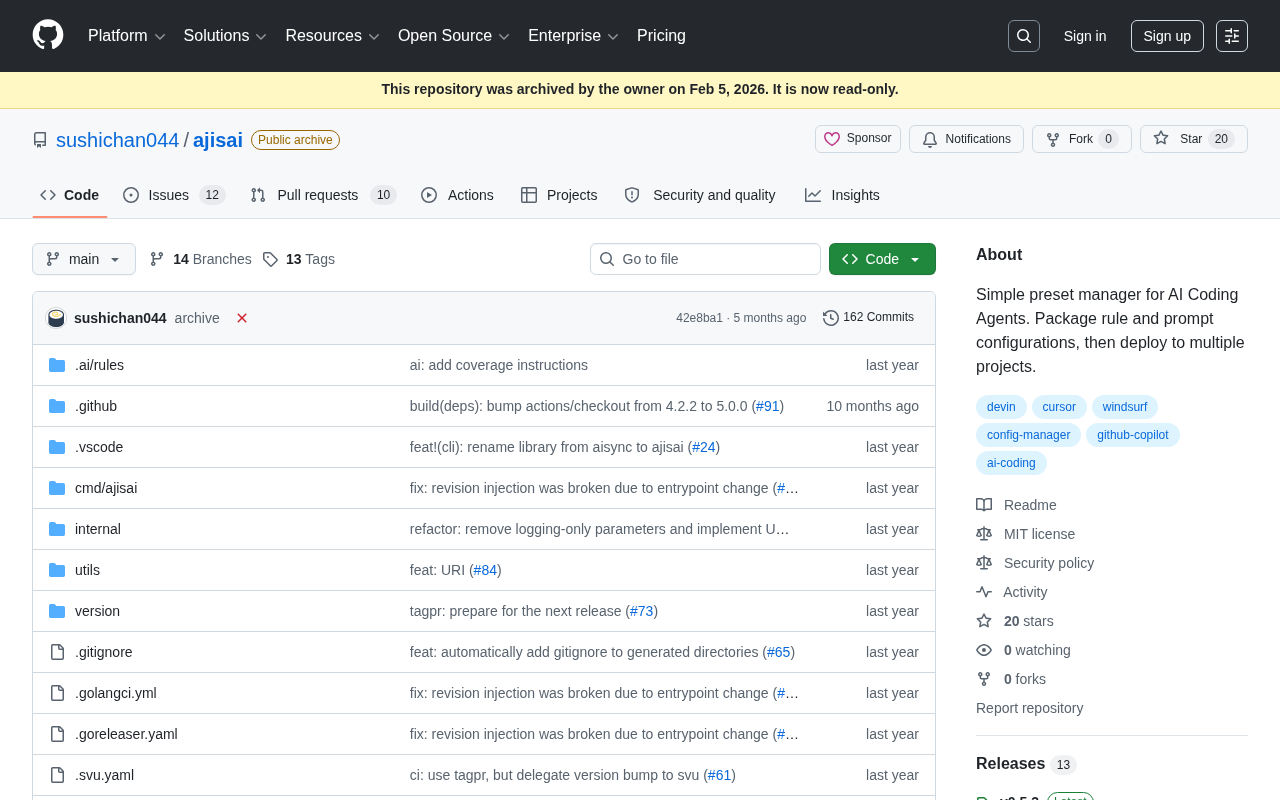
ajisai: A Preset Management Tool for Unifying Rules and Prompts Across AI Coding Assistants
ajisai is a Go-based preset manager for AI coding assistants like Cursor and Claude Code. Package rules and prompts once, deploy everywhere. Early-stage but promising.
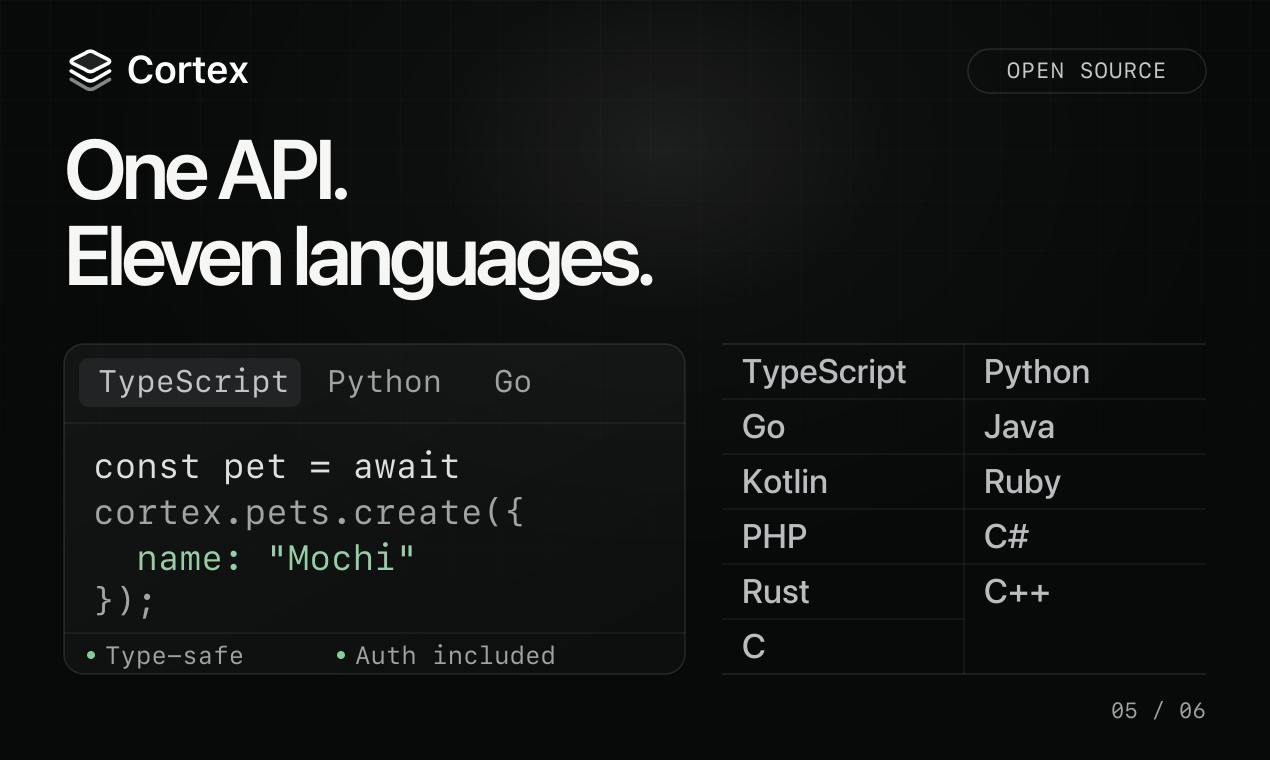
Cortex: Convert API Specs into Docs, SDKs, and MCP Servers in One Click
Cortex is an open-source tool that converts OpenAPI, GraphQL, gRPC and more into interactive docs, typed SDKs in 11 languages, and MCP servers for AI agents.
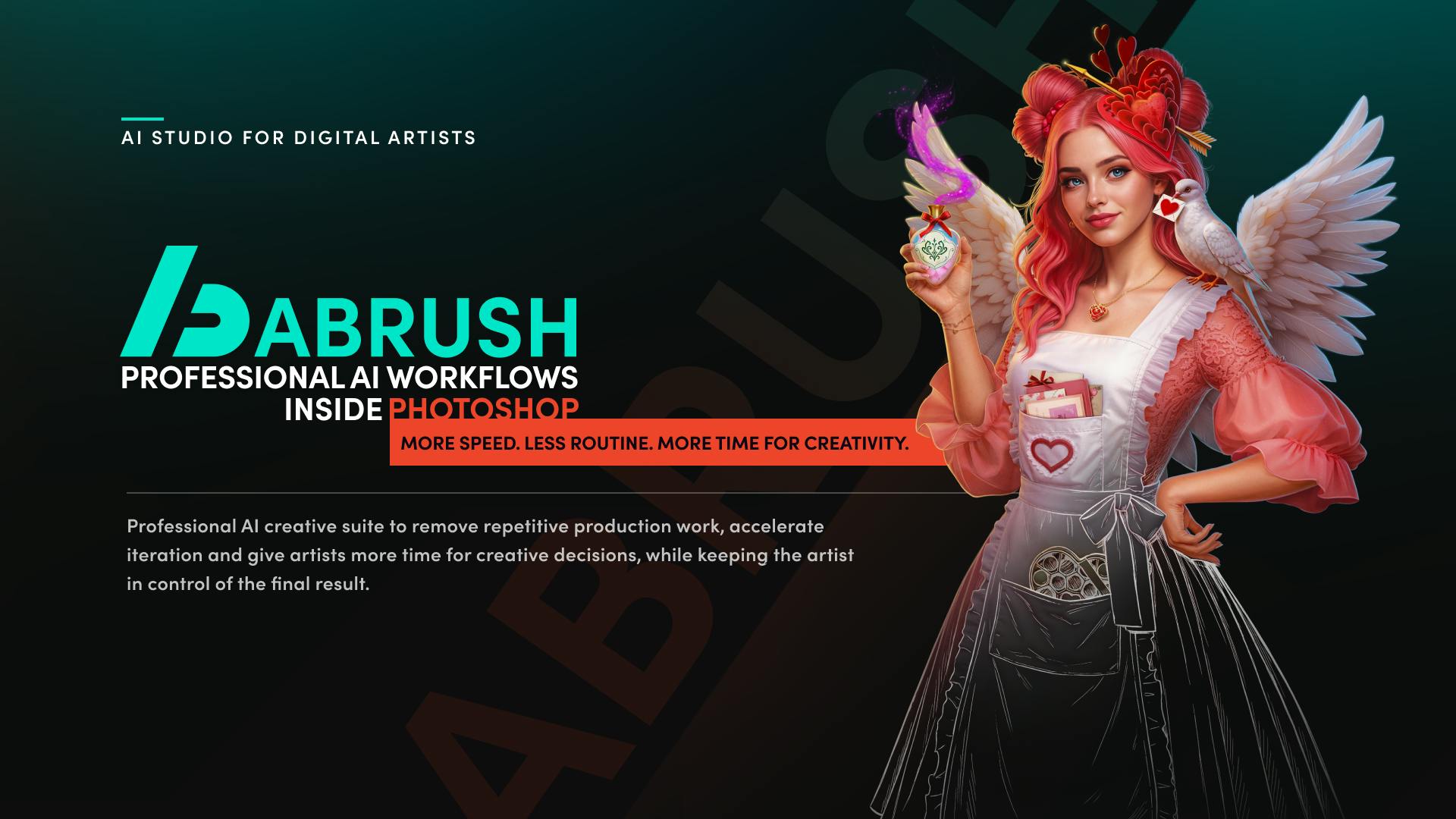
ABrush: An AI Studio Built for Digital Artists
ABrush is an AI studio for digital artists, ranked #4 on Product Hunt. It embeds leading AI models into existing workflows to remove repetitive tasks, speed up iteration, and keep artists in control.