Buy or Rent: A 30-Year Financial Comparison Between Two Twins

Buying isn't always better than renting: opportunity cost, interest traps, and lifestyle flexibility all shape the real answer.
TED-Ed's story of twins Morgan (buyer) and Lisa (renter) over 30 years systematically dismantles the notion that buying always beats renting. Morgan's hidden costs far exceed her down payment — early mortgage payments are mostly interest, repairs fall on her, and her total 30-year spend hits $1.4M. Lisa pays $900K in rent but invests her savings, earning ~$460K in returns. Morgan ends up $100K in the red; Lisa $440K — giving buying a narrow financial edge, but renting a clear advantage in flexibility. The core takeaway: the buy-vs-rent outcome depends heavily on interest rates, home appreciation, and investment returns, with no one-size-fits-all answer.
Is buying or renting a home the smarter financial move? This question has puzzled generations. TED-Ed's Ella Feldman uses the story of a pair of twin sisters to break down this seemingly complex personal finance puzzle — and the answer is far more nuanced than the conventional wisdom of "buying is always better."
Starting From the Same Line: The Upfront Cost Gap Between Buying and Renting
The story follows Morgan and Lisa, inseparable twin sisters who move into two identical, side-by-side two-bedroom homes. The only difference: Morgan buys her place, while Lisa chooses to rent.
Their initial costs immediately diverge. Morgan purchases her home for $400,000 and, like most buyers, takes out a mortgage. With a 10% down payment plus additional fees known as closing costs, she pays $50,000 upfront. Meanwhile, Lisa signs a one-year lease at $1,800 per month and, including her deposit, hands over just $3,600 to get her keys — a fraction of what Morgan pays.
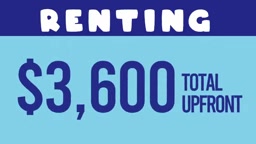
This contrast highlights the most obvious advantage of renting: an extremely low barrier to entry. Buying requires locking up a large sum of cash — and where that money goes is the key thread running through the rest of the story.
The Early Mortgage "Trap": Where Does the Money Go?
Fast forward to year five. Lisa's rent has been climbing at roughly 2% per year, now exceeding $2,000 a month (plus a new pet fee), with a five-year cumulative spend of about $112,000.
Morgan, meanwhile, is on a 30-year fixed-rate mortgage at 6%. The video notes that this type of long-term fixed-rate loan is common in the US, though shorter-term, adjustable-rate mortgages are more typical elsewhere in the world. Longer loan terms reduce monthly payments by spreading them out over more time. Including taxes and insurance, Morgan pays around $2,500 per month.

But here lies a truth many homebuyers overlook: a large portion of early mortgage payments goes toward interest, not principal. Five years in, Morgan has spent $150,000 on her home — $38,000 more than Lisa — yet has only paid down about $25,000 in principal. The silver lining: market interest rates have fallen, and she refinances at 5%, dropping her monthly payment to around $2,300.
The phenomenon of high early interest payments stems from amortization. With a fixed monthly payment on a long-term loan, the ratio of interest to principal isn't fixed — it shifts dynamically. Early on, when the outstanding balance is largest, the absolute interest amount is highest and principal repayment is minimal. Only as the balance shrinks does interest decrease and principal repayment accelerate. On a 30-year loan at 6%, over 80% of early monthly payments may go toward interest rather than principal. This means that if a homeowner sells during the early years of a loan, their actual equity (home value minus remaining balance) grows far more slowly than expected. Refinancing essentially replaces an old loan with a new one, locking in a lower rate when market rates fall and reducing monthly payments — but it typically resets the amortization clock, pushing interest back to a higher share of payments. The actual total interest savings require careful calculation.
The Turning Point at Year 15: The Landlord Absorbs Your Risk
By year 15, Lisa's rent has finally surpassed Morgan's monthly mortgage payment. On the surface, buying appears to be pulling ahead — but you can't just look at the monthly payment.
That year, a storm triggers flash flooding in the neighborhood. As a homeowner, Morgan must pay out of pocket to repair the damage; Lisa simply lets her landlord handle everything. This is one of renting's most underappreciated advantages: maintenance, upkeep, and the costs of unexpected disasters all fall on the landlord.

At this point, Morgan's total housing expenditure has exceeded $500,000, while Lisa's cumulative rent sits at around $380,000. Owning an asset means owning its responsibilities — every bit of wear and tear comes with a real price tag.
The 30-Year Final Tally: Don't Forget Opportunity Cost
After 30 years, Morgan has finally paid off her mortgage. Adding up the home price, interest, taxes, and insurance, she's spent roughly $1 million; factoring in maintenance and repairs, total expenditure reaches $1.4 million. Lisa's rent has risen to $3,300 a month, and her 30-year cumulative rent payments total about $900,000.
But before tallying the final score, there's one decisive variable to consider: opportunity cost. When Morgan put $40,000 into her down payment, she gave up the chance to invest that money in a diversified retirement account. Lisa did exactly that, and the investment grew to approximately $500,000 (the video also references a figure of $460,000 in investment returns).

Final scorecard: Morgan spent $1.4 million on a home now worth $1.3 million, coming out roughly $100,000 in the hole. Lisa paid $900,000 in rent but earned $460,000 through investing, leaving her about $440,000 in the red. In this scenario, Morgan wins — and once the mortgage is paid off, she only has to cover taxes, insurance, and maintenance.
Opportunity cost is a core concept in economics, referring to the potential return of the next-best alternative foregone when choosing a particular course of action. In the buy-vs-rent comparison, it's often the most overlooked but most impactful variable. A down payment and closing costs are funds that must be locked in all at once, and once converted into home equity, they become highly illiquid — you can't sell "just a small piece of your house" in an emergency. By contrast, if that same capital were invested in the stock market or a diversified retirement account (such as a US 401(k) or IRA), historical long-term annual returns have averaged roughly 7%–10% (net of inflation), and the compounding effect over 30 years is substantial. The ~$500,000 gain used in the video corresponds to investing $40,000 at roughly 8% annually compounded over 30 years. It's worth noting that this return is highly dependent on investment discipline and market performance — it is not a guaranteed outcome, and in reality, many people don't consistently channel the money they save on rent into investments.
No Universal Answer: Value Beyond the Numbers
That said, Lisa is no loser. She enjoyed more than a decade of lower monthly expenses, giving her room to spend on hobbies and travel — or to invest those savings and let them grow. Most importantly, renting kept her from being tied to a single property. At the end of the story, she's just received a job offer in another city and is ready to freely start the next chapter of her life.
The real lesson of this case is that the buy-vs-rent verdict depends heavily on specific assumptions — interest rate trends, home price appreciation, investment returns, rent growth rates. Change any one of those variables and the conclusion could flip entirely. The conventional wisdom that "buying always beats renting" is simply not a universal truth.
Rational decision-making isn't just about who wins on the final balance sheet — it also weighs liquidity, flexibility, responsibility burden, and personal lifestyle preferences. Morgan wins on net worth; Lisa wins on freedom. Which matters more to you depends entirely on what you value most in your own life.
The outcome of a buy-vs-rent comparison is extremely sensitive to its underlying assumptions. Take home price appreciation: the video's $400,000 home rising to $1.3 million over 30 years implies an average annual growth rate of roughly 3.9%, close to the US historical long-term average. But actual appreciation varies enormously by city and market cycle — some areas have seen prices stagnate or even fall. Similarly, changes in rent growth rates, loan interest rates, whether a refinance occurs, the scale of maintenance costs, and whether a renter actually invests the savings can all shift the final verdict. Add in tax incentives (such as the US mortgage interest deduction), capital gains tax exemptions on home appreciation, and the widely varying levels of tenant protection across different jurisdictions, and the real-world financial outcomes shift significantly. The value of this kind of analysis lies not in producing a single correct answer, but in helping decision-makers identify which variables matter most for their own situation — enabling a more informed and grounded personal judgment.
Related articles

Amphibious Transforming Drone: Beyond 100x Power Savings, What Are the Real Needs?
Is the amphibious transforming drone just a gimmick? Starting from the 100x power difference of the M4 Morphobot, explore real application scenarios and thesis topic ideas, analyzing boundary conditions where pure drones and pure ground robots both fail.

Warhound Raises $200 Million: Genetically Engineered "War Dogs" Paired with Anduril Gear
Warhound raises $200M, backed by Ben Lamm and Palmer Luckey, to genetically engineer dogs for military and law enforcement use and equip them with Anduril gear. This article analyzes its technology direction, funding logic, and ethical controversy.

Claude API Comes to Google Cloud: IAM Integration and SDK Access Guide
Anthropic hosts the full Claude API on Google Cloud with IAM-controlled permissions and unified billing. This guide covers the Vertex AI and Anthropic-hosted entry points, IAM role configuration, and SDK access.