Buzz Multi-Agent Collaboration in Practice: A Team-Based Development Guide for the 30K-Star Open Source Dark Horse
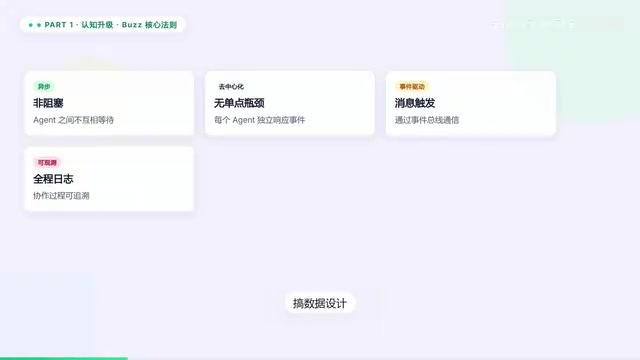
Buzz replaces single-agent coding with a channel-based multi-agent architecture, turning developers into AI team commanders.
Buzz is a 30K-star open-source multi-agent collaboration framework that introduces Slack-style channels so multiple AI agents can share context and divide labor, solving the persistent memory and cascading bug problems of single-agent coding. Its three-layer architecture decouples CLI execution, Harness runtime scheduling, and underlying models, letting developers flexibly swap between Claude, Kimi, and DeepSeek to control costs. Real-world practice demands hard role boundaries for each agent and a V3 human-in-the-loop workflow — with human checkpoints, JSON contract alignment, and independent QA — learned after failures with full-AI and fully-automated pipelines. Ultimately, multi-agent collaboration is revealed as a discipline of management, not coding.
Tired of playing "messenger" between your codebase and an LLM all day? You paste a wall of error messages, the AI confidently hands you a fix, and then one patched bug nukes your entire dependency tree — this is practically a rite of passage for every developer who's tried single-agent coding. The open-source project we're dissecting today, Buzz, has racked up 30,000 stars by building a multi-agent collaboration layer between local codebases and cloud LLMs. This article is based on a hands-on breakdown from a Bilibili creator, walking you through Buzz's architecture, team-building approach, and hard-won lessons.
The Pain of Single-Agent Coding — and How Buzz Breaks Through
Single-agent coding has two fundamental problems: first, there's no persistent context — after a few exchanges the AI starts "forgetting," and you have to keep feeding it background information. Second, it's purely a suggestion generator. Fixing one error often triggers a cascade of new problems, and while the AI proposes the solution, you end up working overtime implementing it.
Buzz's core insight is importing the channel concept familiar from tools like Slack or Microsoft Teams. Your AI colleagues now work inside the same channel, sharing context. When the frontend hits an API issue, it can directly @ the backend Agent right there in the channel, and the two coordinate automatically — you just watch them "group chat" while sipping your coffee, no more agonizing copy-paste between a dozen windows.
That said, stay clear-headed: don't use a sledgehammer to crack a nut. Writing a regex or looking something up in the docs? A single agent is perfectly fine. Multi-agent systems deliver real value in complex collaborative scenarios — say, building a complete login module from scratch that needs a React frontend component, a backend API, database schema design, and security hardening. Tasks like these follow three guiding principles: the channel is the project room; agents only work when called (no wasted tokens); and each role has an independent configuration. Split frontend and backend across different agents, and you'll witness the 1+1>2 effect firsthand.
Three-Layer Architecture and Pitfalls to Avoid
Pop the hood and you'll find an elegantly designed three-layer architecture:
- Layer 1 (CLI Layer): The key to giving AI a "physical body." It can directly read the local filesystem, run build commands, and auto-execute test scripts.
- Layer 2 (Harness Runtime Framework): The central nervous system — managing agent memory, task scheduling, routing, and state machines. Without it, agents are chronic amnesiacs.
- Layer 3 (Model Layer): The actual thinking brain, supporting Claude, Kimi, DeepSeek, and other models.
This design that decouples the runtime framework from the underlying model is genuinely clever: dirty work like running tests or cleaning data can be offloaded to cheap lightweight models at any time, while core business logic gets routed to top-tier models like Claude with one click. As the architect, you hold all the resource allocation cards. Setting up a custom agent is as simple as snapping Lego bricks together in system settings — connect the Harness and model, enter your API key, and you're off.
A Hidden Bug Worth Its Weight in Gold
Many newcomers encounter a spooky phenomenon: you assign work to an agent in the channel, it crunches away furiously in the background, but it never actually responds in the public channel — like an employee who finishes the job but refuses to hand it in. This isn't a permissions issue; the routing is being blocked.
The fix: you must inject a highest-priority rule directly into the agent's system prompt, ordering it to call a specific CLI command on output and precisely specifying the current channel's UUID and the event ID to reply to. In plain terms: you're giving the agent a hard mandate — finish the job, then broadcast the results to the "public square."

It's worth deeply understanding the role the Harness runtime framework plays in a multi-agent system. A traditional single-agent call is a one-shot request-response cycle. Harness introduces the concept of a persistent state machine: it tracks which task phase each agent is currently in (waiting, executing, completed, failed) and passes structured context snapshots between agents rather than re-feeding the full conversation history every time. This transforms memory management from an "infinite scrolling chat window" into "selective working memory," reducing both token consumption and the probability of hallucinations in overly long contexts. On the task scheduling side, Harness is essentially an event bus: when an agent completes its output, it fires an event, and the routing layer decides which agent should be woken up to respond. This is precisely the root cause of hidden bugs like "routing is blocked" — if a routing rule is missing, the event is silently discarded.
Building Your AI Team: Role Boundaries Are the Rules
To prevent AI agents from derailing each other in a feedback loop of compounding errors, you must lock down hard boundaries for each role. The creator's recommended "golden lineup" looks like this:
- Claude — Product Manager (PM): Rigorous and big-picture, holds sole authority over acceptance criteria.
- Kimi — Frontend: Fast and efficient at churning out UI.
- Codex — Backend: Rock-solid logic, the workhorse for heavy lifting.
- DeepSeek — Post-Mortem Analyst: Extracts reusable components after the project wraps up.
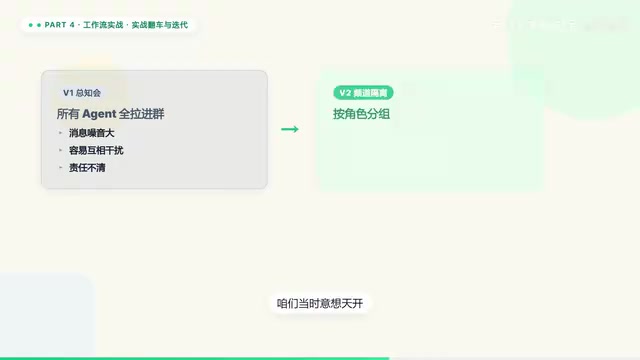
A great lineup alone isn't enough — you also need an extremely strict "employee handbook." Two iron rules stand out:
- Frontend contract-first development: Use exactly what the API documentation specifies. Never guess or forcibly mock data.
- Backend silent-fix prohibition: If Codex notices something is off with the data, it reports immediately to the PM and the human — it does not take matters into its own hands. Imagine it encountering an unexpected field type during a database migration and quietly wiping the column — on a production environment, that's catastrophic.
Clearly bounded prompt rules are the foundation that keeps these AIs from going rogue.
The role-anchoring mechanism in system prompts is the linchpin of stable multi-agent collaboration. LLMs are stateless, general-purpose text predictors at heart — they have no innate understanding of "I am a frontend engineer." Every conversation starts from zero. System prompts counter this by force-injecting a role definition, responsibility boundaries, and a list of prohibited behaviors before each inference pass, effectively fitting the model with a persistent identity filter. Research consistently shows that specific, actionable constraints ("on detecting a data anomaly, immediately report it — never fix it yourself") are far more effective than vague role descriptions ("you are a meticulous backend engineer"). In multi-agent collaboration, each agent's system prompt also needs to explicitly acknowledge the other agents' existence and division of labor — otherwise a model may repeatedly attempt to complete tasks that belong to another agent, causing output conflicts and wasted tokens.
Workflow Evolution: Humans Must Own the Master Rhythm
The creator candidly shared three iterations of trial and error from real-world use:
V1 — Full AI Command Mode: Let Claude act as the Leader and call the shots. The "cyber foreman" occasionally had a brain glitch, forgot to @ a specific agent, and the whole channel went dead silent — a glaring single point of failure.
V2 — Fully Automated Pipeline: A finishes and passes to B, B passes to C. Sounds sleek, but it's like driving a car off a cliff with no brakes. Even a millimeter of drift in the initial requirements interpretation, with no one in the middle to course-correct, compounds rapidly — by delivery, you're staring down disaster-level rework costs.
V3 — The Ultimate Human-AI Collaboration: The core insight is that the master rhythm must be firmly held by a human. It breaks down into three phases:
- Phase 1 (Human Checkpoint): After the frontend produces a demo, you absolutely do not jump straight into full-scale development. The human acts as the central hub: confirm whether the UI style has drifted, whether the technical architecture makes sense, whether the core PRD has been misunderstood. Lock down the baseline first, then unleash the AI to output at full throttle.
- Phase 2 (JSON Contract Alignment): Frontend and backend no longer haggle in vague natural language. They align on the API through a well-defined JSON contract — request paths, methods, payload parameters, all spelled out. Both sides develop independently in parallel: a "seamless handshake."
- Phase 3 (Independent QA): Bring in a Claude instance that had zero involvement in writing the code as a cold, impartial tester, running through the original requirements document line by line. This separation of "athlete and referee" — multi-party checks and balances — is the essence of modern software engineering.
Advanced Technique: The Art of Prompt Whitespace
Many beginners try to specify everything down to variable names, and the resulting code is as rigid as a block of wood. The expert move is: define the big goal, set the standards, then leave space. For example: "The goal is high-concurrency order writes. Must follow Redis conventions. Specific data structures and locking mechanisms are your professional call." Give the AI room to breathe, and it'll often surprise you.

It's also worth being honest about the limitations: multi-agent collaborative inference carries hardware-level network latency, and early versions of open-source tools will have occasional bugs. Know the boundaries, and you can avoid both blind faith and throwing the baby out with the bathwater.
JSON Contract-First Development isn't a new invention of the AI era — it's a battle-tested engineering practice from microservice architecture. The core idea: before anyone writes a single line of code, frontend and backend reach a written consensus on the API interface structure, including request paths, HTTP methods, request and response field names and types, and error code definitions. Once this JSON contract is signed, the frontend can generate a mock server for independent development, the backend implements the real logic against the contract, and both sides advance in parallel without blocking each other. In a multi-agent context, this mechanism's value is amplified further: AI naturally tends to "reasonably guess" missing information when generating code. With a mandatory JSON contract in place, the frontend agent can't freely invent non-existent fields, and the backend agent can't unilaterally modify agreed-upon data structures — eliminating integration failures caused by interface misinterpretation at the source.
A Deep Takeaway: Multi-Agent Collaboration Is Fundamentally Management
After going deep on this, you realize multi-agent collaboration isn't really a coding technique at all — it's management science. The Journey to the West team analogy fits perfectly:
- The most powerful and intelligent model is Sun Wukong — godlike ability, but prone to going off-script. You need a strict system prompt as his golden headband to keep him in check.
- Mid-tier models are Zhu Bajie — capable, but occasionally slacks off. Human checkpoints need to be watching closely for sign-off.
- Cheap, fast models are Sha Wujing — tireless and reliable for mechanical dirty work like data cleaning and format conversion.
So who are you? You're Tang Sanzang. Your core value is no longer personally swinging the staff at demons or banging out CRUD operations. It's setting the direction, controlling the rhythm, and coordinating resources.
Delegating, handoffs, and acceptance testing will become the fundamental skills of the AI-era super-individual. Master a multi-agent framework like Buzz, and you've essentially bootstrapped a software company that never gets tired. Stop grinding away like a lone coder — the future version of you commands an army.
Related articles
PyTorch Day Japan 2026 Coming to Tokyo on December 10
PyTorch Day Japan 2026 takes place in Tokyo on December 10, featuring technical talks and interactive discussions for the open-source AI community.
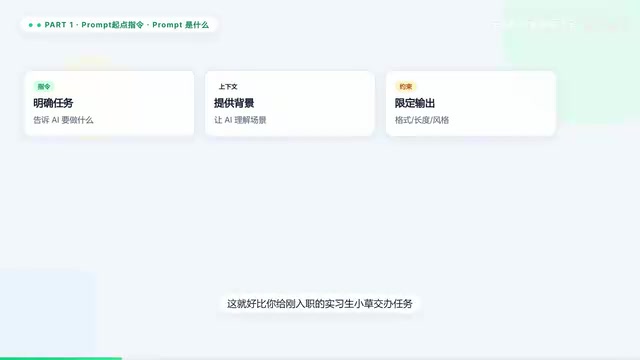
Prompt → MCP → Agent → Skill: The AI Terminology Evolution Chain Explained in 5 Minutes
A clear guide to five core AI concepts — Prompt, MCP, Agent, Skill, and Cowork — and how they connect in a layered evolution chain from simple instructions to multi-agent teamwork.
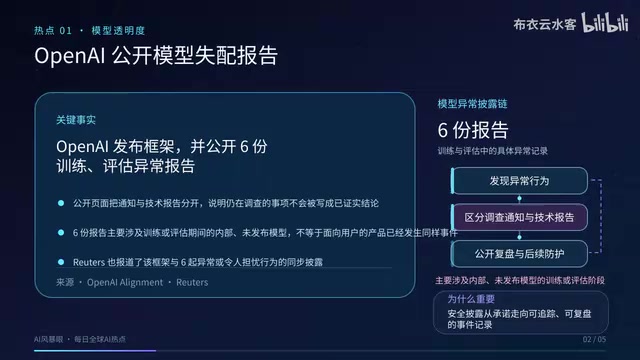
OpenAI Discloses Model Anomalies, DeepMind Launches AGI Forum, NVIDIA Partners on Grid Power Management
Sept 17 AI roundup: OpenAI publishes model anomaly disclosure framework with 6 reports, Google DeepMind launches AGI public forum, NVIDIA leads AI energy management alliance with 18 partners.