Can a Civilization Forget Its Own Technology? The Hidden Risks of Black-Box Dependency

Civilizations don't forget that technology existed — they forget the entire chain of capability that made it work.
Drawing on SFIA's 900th episode, this article explores a deep civilizational risk: societies highly dependent on automation and black-box infrastructure can quietly lose the ability to understand and repair their own technology — without any dramatic catastrophe. The core argument hinges on the distinction between knowledge and capability. Books preserve principles, but the tolerances, tooling, apprenticeships, and institutional memory that make technology actually function evaporate when experts retire, supply chains break, and economic incentives disappear. NASA's Saturn V engine reconstruction and thought experiments about interstellar colonies and the Fermi Paradox all point to the same conclusion: the antidote is not nostalgia, but keeping civilization's memory alive simultaneously through practice, lower-level technology, repairable tools, and a culture that keeps curiosity respectable.
"We live in a society exquisitely dependent on science and technology, in which hardly anyone knows anything about science and technology." — Carl Sagan
This quote captures a paradox: technology is not some accidental artifact dug out of the ground — it was designed, built, and maintained by human hands. Yet the vast majority of people use devices every day that they couldn't build, couldn't repair, and couldn't even explain. In an episode marking its 900th installment, the science and futurism channel Science & Futurism with Isaac Arthur (SFIA) raises a darker question: could a civilization, through over-reliance on "black box" machines, inherited automation, and self-maintaining infrastructure, completely forget how its own technology works?
Knowledge Is Distributed — and Fragile
The episode begins by clearing up a common misconception: modern technology working fine doesn't mean any single person "understands" it. Knowledge is distributed — scattered across universities, factories, standards documents, supply chains, software repositories, testing equipment, machine shops, and the minds and hands of millions of specialists, each holding only a small piece of the puzzle.
"Civilization is not a single brain — it's a network of brains, tools, institutions, habits, and documentation."
The trouble is, networks can fracture. When a machine runs perfectly for a long time, it degrades in the user's mind from "machine" to "scenery" — and scenery rarely gets maintained, until it falls on someone's head. This is the episode's central metaphor.
Knowledge Is Not Capability: The Weight-Bearing "Footnote"
The episode draws a crucial distinction between knowledge and capability. A book can preserve the fact of "how a turbine works," but knowing that antibiotics exist doesn't mean you can manufacture them safely at scale; knowing the periodic table doesn't mean you can run a semiconductor fab.
Technology has not just "recipes" but "craft" — tolerances, tooling, inspection methods, calibration procedures, institutional memory, and the small habits that were never written down because everyone in the shop already knew them. This leads the author to argue that the concept of "lost technology" is both less realistic and more realistic than most people think:
- Less realistic: As long as records and physical artifacts survive, a civilization almost never forgets the basic concept of something useful — waterwheels, stirrups, generators, steam engines. Even a broken engine is a kind of book, giving future inventors a clear target.
- More realistic: The capability to do things well, cheaply, safely, and reliably can evaporate entirely when experts die, tooling is scrapped, supply chains break, and apprenticeship traditions are interrupted.
The author offers a sharp metaphor: civilizations rarely forget that something existed — what they forget is "the chain of tools, skills, suppliers, teachers, and habits that made it possible." The ladder is still there; it's just missing the bottom rungs.
Black Boxes, Sacred Buttons, and Maintenance Guilds
Automation moves skill out of human bodies and into machines. That's not inherently bad — we don't need everyone to be able to hand-copy manuscripts, navigate by sextant, or shoe a horse. The danger arises when automated systems are still needed, but humans are no longer trained to understand what they're doing.
The episode maps out a gradual path toward "technological amnesia" — not the result of stupidity, but of the accumulation of locally rational decisions:
- A century in, few people know how the ships, habitats, and farms actually work;
- Five centuries in, maintainers may have become hereditary guilds;
- Five millennia in, it may have become a temple.
The author borrows the imagery of Warhammer 40K's Adeptus Mechanicus — rituals can preserve procedures; checklists, uniforms, oaths, hierarchies, and jargon all help humans maintain consistency in critical behaviors. The real risk has two layers: first, maintenance guilds may devolve from public service into monopoly, hoarding manuals, access keys, and apprenticeships — even encrypting, booby-trapping, or holding knowledge hostage; second, and more insidiously, ritual survives while understanding dies. When "never ignore a red light" degrades from an engineering imperative into a mystical doctrine, and someone replaces a panel and the light turns orange, nobody knows what orange means.
Space habitats are the clearest example. A village on Earth can retreat to low-tech and still breathe. A rotating habitat, lunar base, or deep-space ark has no such luxury — atmosphere, pressure, radiation shielding, power, water cycling, thermal balance, food production: all of it is a technical system. Isolation turns every maintenance problem into a civilization-level crisis.
The Adeptus Mechanicus from Warhammer 40K is the fictional universe's religious organization responsible for maintaining technology. In that imagined future, after humanity has survived multiple "Dark Ages" and lost the ability to manufacture advanced machinery, the surviving technical knowledge has been monopolized by the Mechanicus and preserved in the form of sacred ritual — engineers are called "Tech-Priests," repair procedures are acts of religious worship, and equipment blueprints are esoteric scripture. The episode borrows this image not as mockery, but to point out that ritualized knowledge preservation has its own internal logic: rituals can transmit critical operational steps across linguistic shifts, regime changes, and the limits of individual memory. The problem is that practitioners of a ritual need not understand its meaning. When environmental change renders the original procedure obsolete, operators without understanding cannot judge when to adapt and when to hold firm — turning a once-effective engineering protocol into a curse that can neither be modified nor abandoned.
Economic Forgetting: Nobody Pays to Remember
Beyond deliberate suppression, there is a quieter path — economic forgetting. Civilizations lose technology not only because books were burned, but because nobody pays anyone to remember it anymore.
When a technology becomes automated, cheap, and reliable, the labor market stops rewarding the old skills. Companies stop training, schools drop it from curricula, suppliers go out of business, and documentation gets locked inside obsolete file formats, corporate archives, legal disputes, or subscription systems. When the last expert retires, everyone says "we can always reach him if we need to" — an optimistic estimate of human longevity.
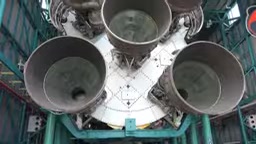
There are real-world signs of this already. The episode cites NASA: decades after the Apollo program ended, engineers had to fire surviving Saturn V F-1 engine hardware and reconstruct components using modern CAD just to recover technical details whose original production ecosystem had long since vanished. Scale this forward to a future civilization — where design templates are proprietary, factories are fully automated, and citizens treat equipment as sealed "services" rather than tools they own and understand — and the more advanced the technology, the more skill is required to maintain it, and some of that skill becomes genuinely dangerous to lack.
If the network then fails, the machines are physically present, but the right to repair, the unlock keys, the model files to print replacement parts, and the diagnostic AI that can read error codes are gone. For people stranded in a failing habitat, a lost encryption key can be just as lethal as a demon.
A bit more background on NASA's F-1 reconstruction effort: the F-1 is the highest-thrust single-combustion-chamber liquid-fueled rocket engine ever built — five of them powered the first stage of every Apollo mission. After Apollo ended, the production lines were shut down, and vast amounts of manufacturing know-how existed only in the minds of retired engineers or in un-digitized paper drawings and internal memos. Around 2012–2013, NASA launched a reverse-engineering project to explore whether F-1 technology could be applied to a new generation of heavy-lift rockets. They used modern CT scanning and CAD to reconstruct the internal structure of surviving hardware — and discovered that many critical parameters simply didn't exist in the original documentation, or were contradictory. They had lived only in the experience of workers and the physical geometry of jigs and fixtures. The warning this case carries: this was only a few decades of elapsed time, involving a project with enormous physical hardware surviving and national-archive-level support. Over longer timescales and more diffuse technology ecosystems, the pace of forgetting can only accelerate.
Colonies That Inherited Too Much, and the Fermi Paradox
This problem is especially acute for interstellar colonies. A colony ship would carry vast libraries, automated factories, medical systems, agricultural templates, and robots. This looks like good insurance — but if the colony becomes over-reliant on automation, it may arrive "capable of building a city, yet with no colonist who truly understands how the city works."
The first century looks like a miracle. The second may become maintenance, cannibalization, rationing, and the slow discovery that the "colony starter pack" didn't include a backup factory — you need to build a factory to build the backup factory, and standard templates to build those factories. This is a plausible path to a long "technological dark age": not stupidity, but a civilization built on a technology stack too deep for its population, culture, and industrial base to support.
The author extends this thinking to the Fermi Paradox: perhaps some civilizations neither destroy themselves, nor transcend, nor hide — they build automation sufficient for their needs, and then gradually lose the cultural habit of understanding and extending it. They remain technological civilizations, but stop exploring — becoming curators of ancient knowledge, stewards of planet-scale museums. Such civilizations would be far quieter than aggressively expansionist ones, and might never attract our attention at all.
The author then draws the key distinction: caution says "understand the machine before you change it"; stagnation says "don't understand the machine, because understanding will tempt you to change it." That difference may determine whether a civilization survives its next failure.
The Fermi Paradox takes its name from physicist Enrico Fermi. In 1950, over lunch with colleagues, he asked a simple question: "Where is everybody?" The universe is nearly 14 billion years old; the Milky Way contains hundreds of billions of stars; probability suggests vast numbers of civilizations should have arisen, some with enough time to colonize the entire galaxy — yet we have detected no unambiguous signals or visits from any alien civilization. Dozens of hypotheses have been proposed to explain this contradiction, including the "Great Filter" (civilizations almost inevitably perish at some stage of development), the "Zoo Hypothesis" (advanced civilizations deliberately avoid contact with us), and "interstellar travel being prohibitively costly." The article adds "technologically stagnant civilizations" as a supplementary explanation: such civilizations neither destroy themselves nor actively expand, but instead slowly turn inward in the comfortable equilibrium automation provides — generating neither the large-scale engineering signatures that would be detectable nor the interstellar probes that would reach us. They disappear from the cosmic directory in silence.
How Not to Forget: Keeping Memory Alive in Multiple Forms
The episode's prescription is not nostalgia, nor a demand that everyone become an engineer — it is to keep civilization's memory alive in more than one form:
- Preserve records, but don't worship them. Manuals are not maintainers; knowledge must be practiced. Society needs schools, apprenticeships, labs, makerspaces, and people paid to understand old systems.
- Keep the lower rungs of the ladder. A civilization dependent on hyper-advanced manufacturing should also retain simpler manufacturing capabilities — from stone tools, steel chisels, steam engines, radio, and transistors to solar panels and fusion reactors — because simple tools are the path to recovery.
- Avoid unnecessary black boxes. Everyday tools should be repairable, inspectable, and teachable. A civilization where everything is sealed, leased, encrypted, and dependent on remote servers is very convenient before the network collapses — and an archaeological site afterward.
- Honor maintenance. Exploration and invention are glamorous; maintenance is civilization's immune system — you only notice it when it fails.
- Keep curiosity respectable. A culture that punishes all questioning will eventually be governed by people who don't know which questions matter.
"Technology is not just artifacts — in many ways, it is memory given form. The real danger is not that technology becomes indistinguishable from magic; it is that we stop caring about the difference."
The author's closing wish: may the great civilizations of the future, spanning planets, habitats, and stars, not become mere "tenants" in houses their ancestors built — but continue to be "builders"; may they treat orbital rings, fusion grids, planetary engineering engines, and starships older than nations not as sacred relics beyond question, but as heirlooms of a living craft. Machines should not be gods. They should be tools — and tools are made to be understood, improved, repaired, and passed on.
Related articles

Amphibious Transforming Drone: Beyond 100x Power Savings, What Are the Real Needs?
Is the amphibious transforming drone just a gimmick? Starting from the 100x power difference of the M4 Morphobot, explore real application scenarios and thesis topic ideas, analyzing boundary conditions where pure drones and pure ground robots both fail.

Warhound Raises $200 Million: Genetically Engineered "War Dogs" Paired with Anduril Gear
Warhound raises $200M, backed by Ben Lamm and Palmer Luckey, to genetically engineer dogs for military and law enforcement use and equip them with Anduril gear. This article analyzes its technology direction, funding logic, and ethical controversy.

Claude API Comes to Google Cloud: IAM Integration and SDK Access Guide
Anthropic hosts the full Claude API on Google Cloud with IAM-controlled permissions and unified billing. This guide covers the Vertex AI and Anthropic-hosted entry points, IAM role configuration, and SDK access.