Canon EOS R8 Mark II Announced: The Lightest Full-Frame Camera with Stabilization
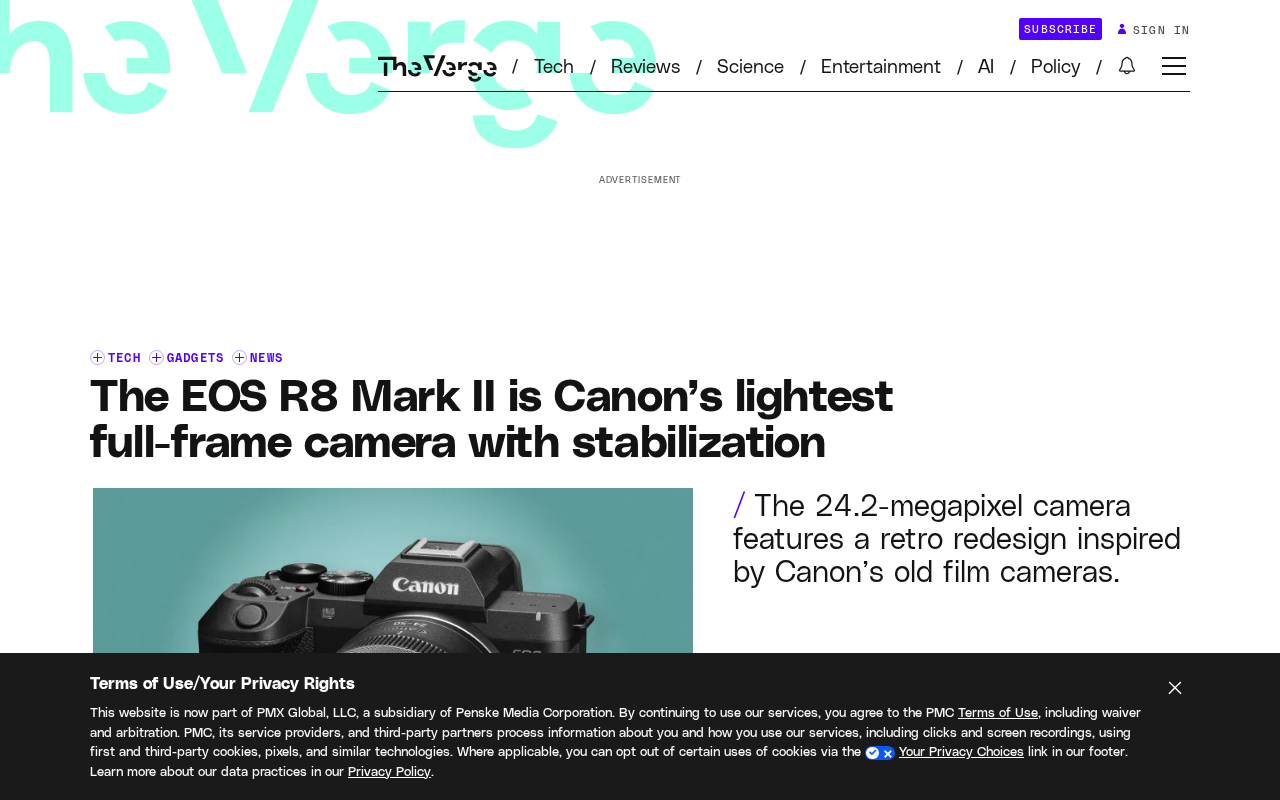
Canon EOS R8 Mark II adds IBIS and a retro design, becoming Canon's lightest stabilized full-frame camera.
Canon has unveiled the EOS R8 Mark II, with the headline upgrade being in-body image stabilization (IBIS) — the most criticized omission of the original model. Canon positions it as the lightest full-frame camera in its lineup to feature stabilization, so users no longer have to trade portability for stability. The camera also debuts a retro-style redesign, following the vintage aesthetic trend led by Fujifilm and Nikon. It continues the original's entry-level full-frame positioning while closing key feature gaps with higher-end models. Sensor specs, autofocus, video capabilities, and pricing have yet to be announced.
Canon has unveiled the second-generation EOS R8, bringing a redesigned retro-style body and — for the first time — in-body image stabilization (IBIS). The absence of IBIS was one of the most criticized shortcomings of the original R8, and the Mark II finally addresses that gap.
From Entry-Level to Feature-Complete
The original EOS R8 launched as a smaller, more affordable, and more accessible full-frame camera, positioned as an alternative to the R6 Mark II for photographers who wanted a larger sensor without the weight or price tag of a flagship body.
However, the first-generation R8 sacrificed several features to keep size and cost down — most notably, it lacked in-body image stabilization. For handheld shooting, low-light environments, and video work, stabilization is a fairly critical capability. Its absence put the R8 at a disadvantage against competitors in the same price range.
The core upgrade in the second generation is filling exactly that gap. Canon claims the EOS R8 Mark II is the lightest full-frame camera in its lineup to feature stabilization, meaning users no longer have to choose between portability and stability.
A Shift Toward Retro Design
Beyond the functional improvements, the R8 Mark II also features a redesigned retro aesthetic. Vintage-inspired camera design has made a comeback in recent years, with brands like Fujifilm and Nikon releasing products that lean into nostalgic styling — and Canon is clearly following suit.
Retro design isn't just an aesthetic choice; it often comes with a rethought control philosophy, such as more dedicated physical dials for more intuitive parameter adjustment. This approach tends to appeal to users who value the tactile experience and ritual of shooting, while also giving the camera a stronger visual identity.
The retro design wave in the camera market took shape in the mid-2010s, largely driven by Fujifilm's X-series. The X-Pro and X-T lines built a loyal following by reviving film-era dial-based controls. Since then, the Nikon Zf, Zfc, and Sony ZV-E10 II have adopted similar design languages. These cameras typically expose controls like shutter speed and exposure compensation as physical dials, allowing users to make adjustments without diving into menus — a different interaction paradigm from the touchscreen- and scroll-wheel-dominated approach of modern cameras. For Canon, this represents a notable stylistic shift, as the EOS R lineup has consistently favored a more modern, business-oriented industrial design.
Why the Lightest-with-IBIS Claim Matters
Combining in-body image stabilization with a claim of being the lightest full-frame body is the most noteworthy aspect of this product. IBIS modules typically add both weight and bulk to a camera body, so achieving that functionality while maintaining a lightweight form factor is a genuine engineering challenge.
For travel photography, street shooting, vlogging, and other mobility-focused use cases, a full-frame camera that is both lightweight and stabilized holds obvious appeal. It lowers the barrier to entry for full-frame photography, allowing more creators to step into that space without the added physical burden.
In-body image stabilization (IBIS) works by using a floating sensor assembly to compensate for camera shake across X and Y-axis shifts and rotational movement, typically delivering 3 to 8 stops of stabilization. Compared to optical image stabilization (OIS) in lenses, IBIS has the advantage of working with any lens — including older or third-party optics. The key engineering challenge is that the sensor needs room to move, along with dedicated actuators and gyroscopic sensors, all of which inevitably add thickness and weight to the body. The Sony A7C series and Panasonic S9 have made similar attempts to combine lightweight bodies with IBIS. If Canon can pull off both in the R8 Mark II, it would represent a meaningful achievement on the engineering side.
Potential Market Impact
The R8 Mark II continues the original's "entry-level full-frame" positioning, but by filling in critical missing features, it significantly narrows the gap between itself and mid-to-high-end models. For users on the fence about moving up to full-frame, this makes for a more compelling proposition.
The information available so far centers on the redesigned body and the addition of IBIS. Further details on sensor specs, autofocus system, video capabilities, and pricing have yet to be officially disclosed. Taken as a whole, this product continues Canon's exploration of the lightweight full-frame space and reflects the company's responsiveness to real-world user feedback.
Related articles
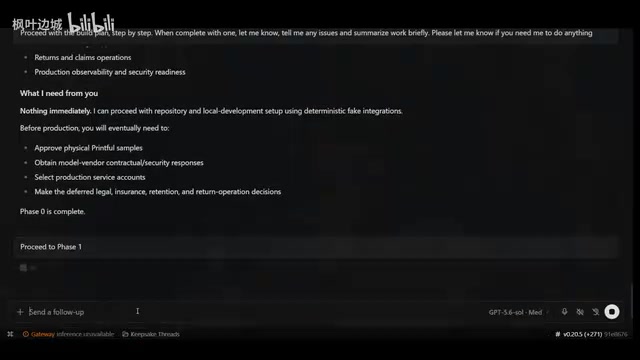
Building an AI-Powered E-Commerce Business from Scratch: A Real-World Account of Multi-Agent Architecture for Print-on-Demand
A blogger builds a print-on-demand e-commerce company from scratch using AI agents — documenting specialized Agent profiles, GPT-5.6 vs Claude Fable multi-model orchestration, and reusable skill accumulation.

AI Agent Earns $10K in One Week: 3 Key Upgrades Explained
A blogger shares how he earned $10K in a week with an AI Agent — not by adding more skills, but through verification, approval gates, and subagents to raise trust and enable true automation.
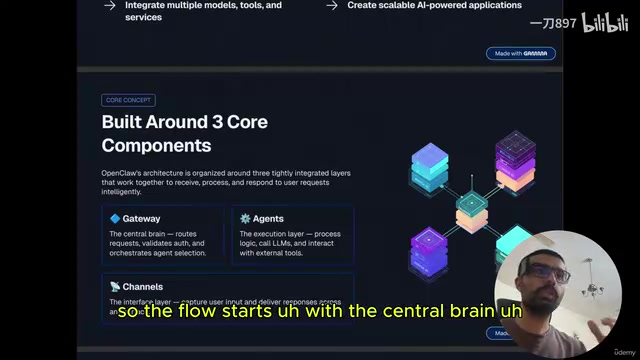
Getting Started with OpenClaw: Multi-Channel AI Agent Gateway and Automated Workflow Guide
OpenClaw is an open-source multi-channel AI agent gateway. This guide covers its three core components — gateway, agents, and channels — plus tool integration and memory mechanisms.