Canvas Technology Explained: How AI Is Moving from Chat Mode to Interactive Workspaces

Canvas technology transforms AI from linear chat into interactive visual workspaces for complex task collaboration.
Canvas technology marks a pivotal shift in AI interaction design, moving beyond linear conversations to spatialized, editable workspaces. By enabling users to visualize information, explore multi-step workflows, and take direct action, Canvas transforms AI from a passive Q&A tool into an active collaborative partner. With GitHub integrating Canvas into Copilot and industry leaders like OpenAI, Anthropic, and Google pursuing similar paradigms, this approach is poised to redefine how developers and professionals collaborate with AI on complex tasks.
From Chat Boxes to Interactive Canvases: A New Paradigm for AI Applications
For a long time, our interaction with AI has been confined to a back-and-forth conversational model: the user types text, and the AI returns text. While this approach is simple and straightforward, it falls short when handling complex tasks — when we need to visualize information, explore multi-step workflows, or iterate repeatedly within a single task, plain-text conversations quickly descend into chaos.
Traditional conversational AI operates on a "turn-based" interaction model, where each exchange consists of a user input (prompt) and an AI output (completion). This model originates from the classic command-line interaction paradigm, and its core issues are threefold: first, the context window is limited — as conversation turns accumulate, earlier information gets "forgotten" or diluted; second, all information is presented as a flat text stream, lacking hierarchical structure and spatial organization; third, users cannot make local edits to content the AI has already generated or explore branching paths — they can only "overwrite" previous output by appending new messages. These limitations aren't particularly noticeable in simple Q&A scenarios, but they significantly reduce collaboration efficiency when dealing with multi-step complex tasks like code refactoring, document collaboration, or data analysis.
According to a recent technical article published on the GitHub official blog, Canvas technology is changing this landscape. Canvas transforms AI from a simple Q&A assistant into an interactive workspace where users can visualize information, explore workflows, and take concrete action on complex tasks.
This shift carries profound implications. It marks AI applications evolving from "information generation" to "task collaboration" — users are no longer passive recipients of AI output but can work alongside AI in a persistent, editable interface.
What Is Canvas Technology?
An Interaction Model Beyond Linear Conversation
Traditional chat interfaces are inherently linear — messages are arranged chronologically and are difficult to modify once generated. Canvas, by contrast, provides a spatialized, structured workspace where AI-generated content is no longer ephemeral chat bubbles but objects that can be continuously edited, organized, and manipulated.
In Canvas mode, code, documents, diagrams, and flowcharts produced by AI can all be presented in more appropriate formats. Users can make edits directly on the canvas, and the AI can understand those edits and respond accordingly. This bidirectional, ongoing collaborative relationship is something pure text conversations simply cannot achieve.
Canvas technology relies on several key underlying technologies. First, rich text editor frameworks (such as ProseMirror, Slate.js, etc.) provide real-time editing capabilities for structured content. Second, CRDT (Conflict-free Replicated Data Type) or OT (Operational Transformation) algorithms solve the conflict problem when human users and AI agents simultaneously edit the same document, ensuring consistency in multi-party collaborative editing. Additionally, streaming rendering technology enables AI-generated content to appear incrementally in real time on the canvas, rather than waiting for the complete response before displaying it all at once. The combination of these technologies allows Canvas to break through the limitations of traditional chat interfaces and provide a truly "shared workspace."
The Three Core Capabilities of Canvas
According to GitHub's description, Canvas provides three core capabilities:
- Visualize information: Present abstract data, structures, and relationships in graphical form, helping users intuitively understand complex content.
- Explore workflows: Enable users to map out the logic and flow of multi-step tasks on the canvas, rather than being confined to single Q&A exchanges.
- Take action: Translate AI suggestions directly into executable operations, shortening the distance from "idea" to "implementation."
Together, these three capabilities make Canvas an ideal medium for handling complex tasks and the key differentiator from traditional conversational AI.
Why Developers Should Pay Attention to Canvas
Effectively Solving Collaboration Pain Points in Complex Tasks
When tasks involve multiple components, multiple steps, or require repeated iteration, the limitations of traditional chat interfaces become glaringly apparent. Users need to scroll back and forth through lengthy conversation histories, and the AI struggles to maintain a clear grasp of the overall task structure.
Canvas solves this problem by providing a persistent shared space. All relevant information is centralized in a visual interface where both the user and AI can clearly see the full picture of the task. This not only improves work efficiency but also significantly reduces cognitive load.
Deep Integration with Developer Workflows
You may not have noticed, but this article comes from the GitHub Copilot section of the GitHub blog. This means Canvas technology is very likely to be deeply integrated with developers' actual workflows.
GitHub Copilot was initially launched in 2021 as a VS Code extension, based on OpenAI's Codex model (a code-fine-tuned version of GPT-3), with code autocompletion as its core feature. It has since undergone several major upgrades: in 2023, Copilot Chat was introduced, bringing conversational programming assistance; that same year, Copilot for Pull Requests extended AI capabilities to the code review process; in 2024, Copilot Workspace was launched, introducing for the first time the concept of task-level AI collaboration. The emergence of Canvas can be seen as a natural extension of this evolutionary trajectory — from single-point code completion to conversational assistance, and then to a full-fledged visual collaborative workspace. With over 100 million registered users in its developer tool ecosystem, GitHub has a unique scale advantage and ecosystem influence in driving new AI collaboration paradigms.
For software development, programming itself is an inherently highly structured, multi-step task: from requirements analysis and architecture design to code writing, debugging, and refactoring, each step involves substantial visual information and iterative operations. Bringing Canvas into programming scenarios means developers can collaborate with AI across the complete chain from conception to implementation within a unified interactive space.
Trend Analysis for Interactive AI Experiences
From Tool to Collaborative Partner
Canvas technology reflects an important trend in AI product design: AI is evolving from a "tool" into a "collaborative partner." A tool is passive — you use it to complete specific tasks. A collaborative partner is proactive — it understands context, participates in decision-making, and jointly drives tasks forward.
This role transformation has deep theoretical roots in the field of Human-Computer Interaction (HCI) research. As early as 1960, J.C.R. Licklider proposed the concept of human-computer symbiosis in his paper Man-Computer Symbiosis, envisioning humans and computers forming a close collaborative relationship where each contributes their respective strengths. Ben Shneiderman further elaborated on "Human-in-the-loop" design principles in his 2022 book Human-Centered AI, emphasizing that AI systems should augment rather than replace human judgment and creativity. The Canvas model embodies precisely these ideas: it places AI's generative capabilities alongside human review, modification, and decision-making abilities within the same visual space, creating a truly symbiotic working model. Users retain control over the final output while gaining AI's powerful support in content generation, pattern recognition, and information organization.
The interactive canvas is the vehicle for this collaborative relationship. It transforms AI from a black-box answer generator into a transparent, participatory member of the workspace.
A Widely Shared Direction Across the Industry
In fact, Canvas is not an isolated product innovation. In recent years, multiple leading AI companies have been exploring similar interaction paradigms — embedding AI capabilities into visual, editable work interfaces.
OpenAI launched its Canvas feature for ChatGPT in October 2024, allowing users to collaboratively edit text and code with AI in a separate editing panel. Anthropic introduced Artifacts, enabling Claude to generate independent, interactive content panels alongside conversations (including runnable code, SVG graphics, web prototypes, etc.). Google's NotebookLM takes a different approach, organizing multiple document sources within a notebook space where AI provides analysis and summaries within this structured context. Additionally, emerging AI coding tools like Cursor and Windsurf have implemented similar canvas-like collaborative experiences at the editor level. While these explorations differ in their specific forms, they all point in the same direction: breaking free from the constraints of chat boxes and enabling AI to collaborate with users in structured visual spaces.
Behind this wave of exploration is the entire industry's collective response to a core challenge: "How can AI truly integrate into complex workflows?" GitHub's long-standing deep expertise in developer tools gives it a unique advantage in this direction. Combining Canvas with Copilot will very likely bring developers an entirely new, more efficient human-AI collaboration experience.
Conclusion: Canvas Opens a New Chapter in AI Collaboration
Canvas represents an important leap in AI interaction design — from linear conversation to spatialized workspaces, from passive Q&A to proactive collaboration. It enables AI to help users visualize information, explore workflows, and take concrete action, better addressing the challenges of complex tasks.
For developers and technology professionals, understanding and mastering these interactive AI experiences will become an increasingly vital skill in future work. As more companies invest in this direction, the way AI and humans collaborate will undergo even more profound transformation.
Key Takeaways
Related articles
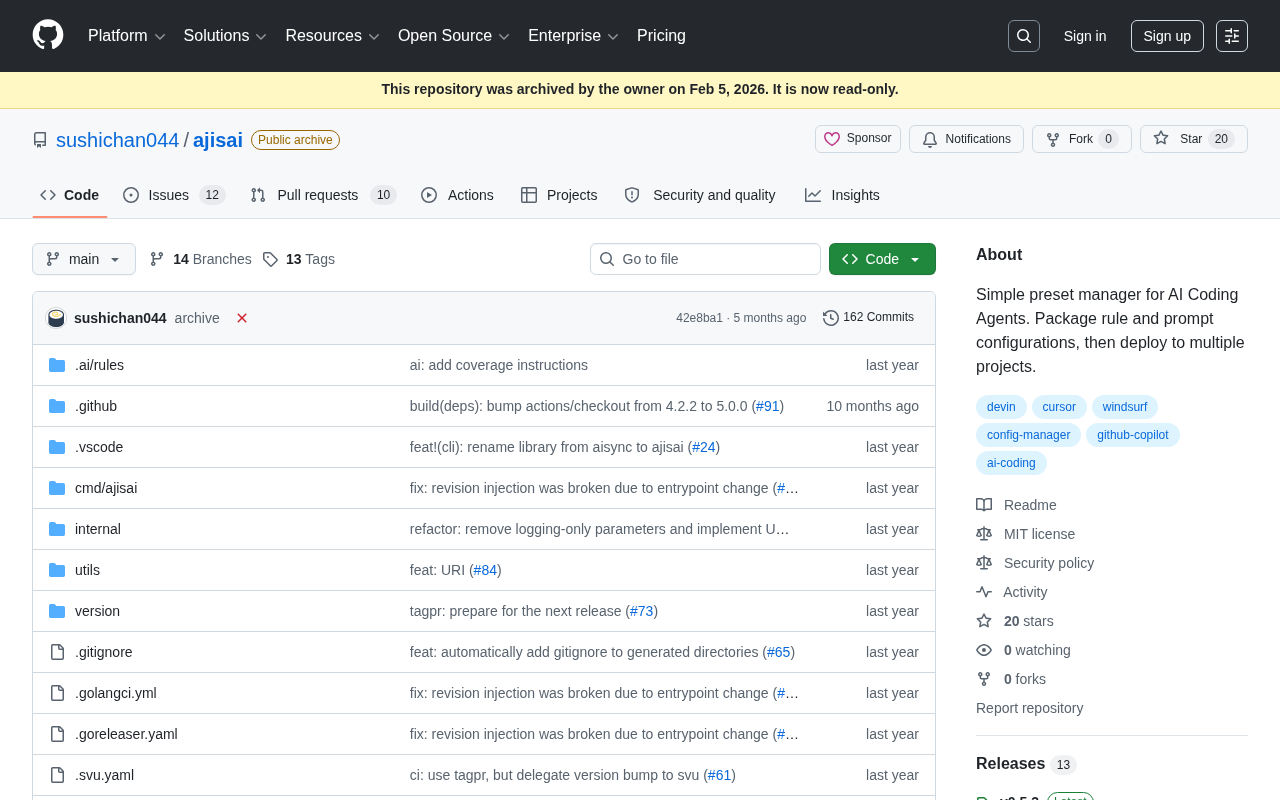
ajisai: A Preset Management Tool for Unifying Rules and Prompts Across AI Coding Assistants
ajisai is a Go-based preset manager for AI coding assistants like Cursor and Claude Code. Package rules and prompts once, deploy everywhere. Early-stage but promising.
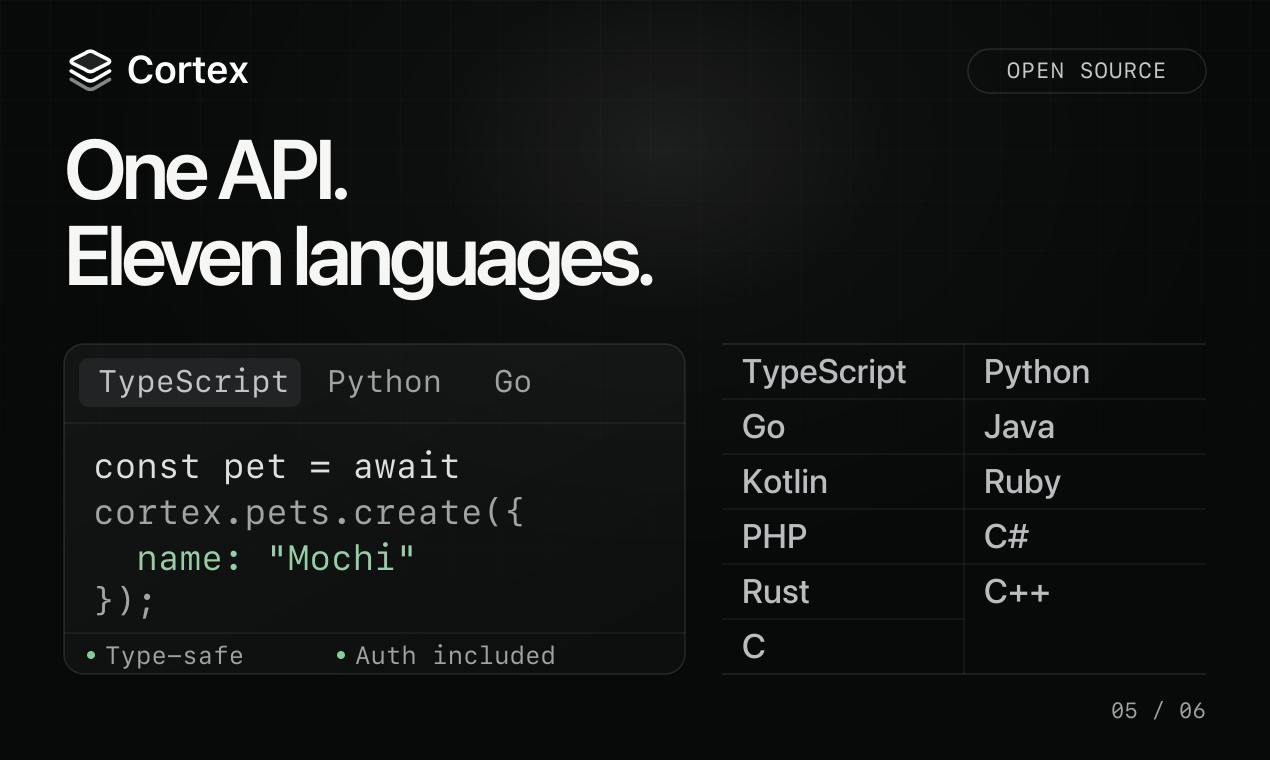
Cortex: Convert API Specs into Docs, SDKs, and MCP Servers in One Click
Cortex is an open-source tool that converts OpenAPI, GraphQL, gRPC and more into interactive docs, typed SDKs in 11 languages, and MCP servers for AI agents.
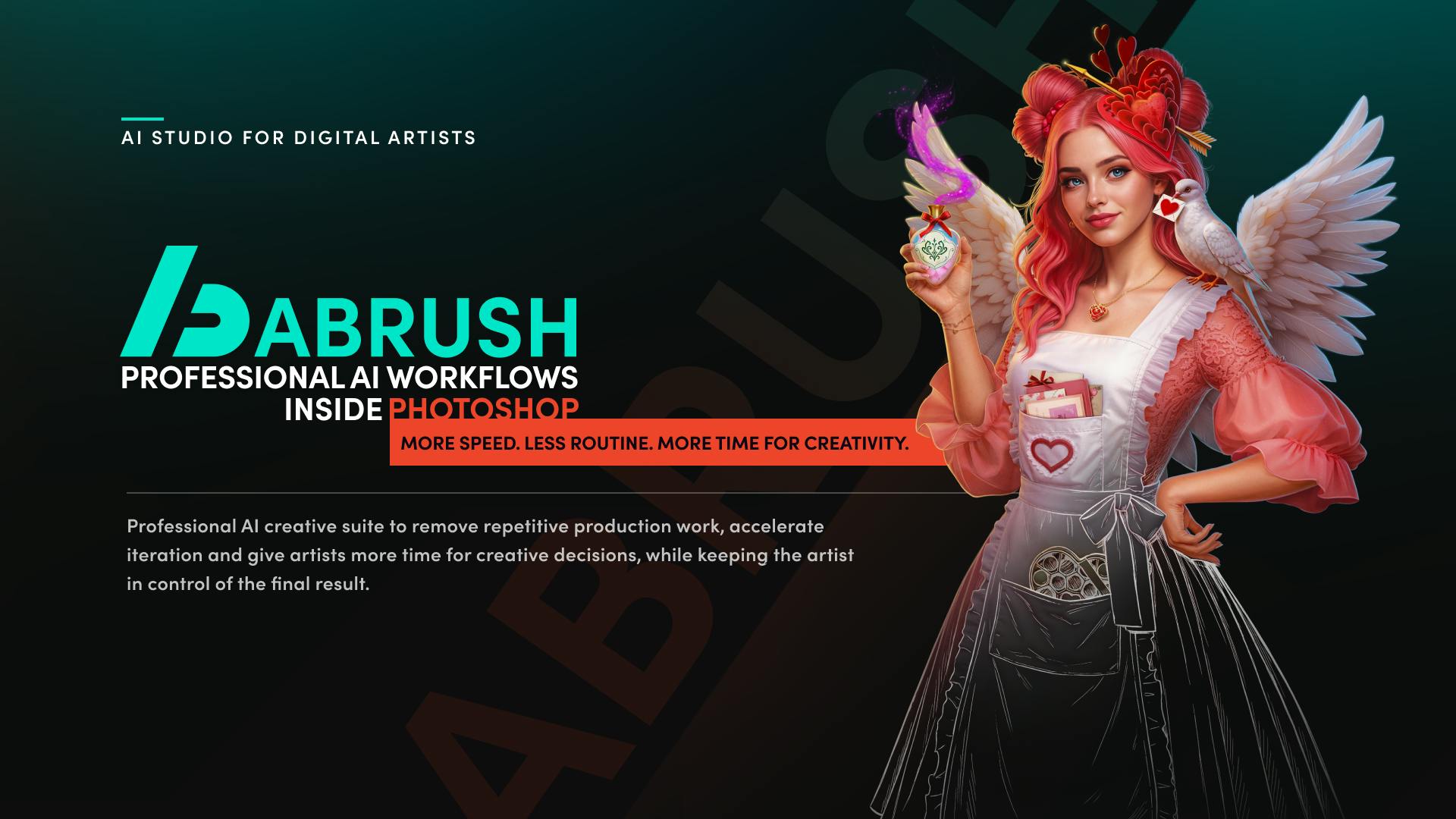
ABrush: An AI Studio Built for Digital Artists
ABrush is an AI studio for digital artists, ranked #4 on Product Hunt. It embeds leading AI models into existing workflows to remove repetitive tasks, speed up iteration, and keep artists in control.