CapCover Filter: Semantic Approximate Membership Queries Without Neighbor Search

CapCover Filter uses spherical-cap geometry to pre-filter semantic approximate membership queries, guaranteeing no false negatives and greatly boosting vector retrieval throughput.
This article introduces the CapCover Filter, a geometric filter for semantic approximate membership queries (SAMQ). SAMQ only checks whether the vector store has an entry exceeding a similarity threshold, rather than returning top-k results, with no false negatives but allowing false positives. The filter summarizes embeddings with spherical caps, letting a query be accepted or rejected by checking whether it falls within any cap, supporting any threshold without rebuilding. On five datasets at cosine threshold 0.95, it uses only 2% of FP32 embedding memory yet eliminates roughly 20%-100% of index accesses; placed before a FAISS flat index, throughput rises up to 382% (avg ~116%) with identical range-search results. Benefits are greatest with tight thresholds, costly retrieval, and highly clustered embeddings; the authors open-sourced the implementation and evaluation framework.
Vector database query performance bottlenecks often arise in nearest neighbor search. But if the goal of a query is merely to determine "does a sufficiently similar vector exist" rather than finding the most similar one, is it still necessary to perform a full KNN search? A study titled "CapCover Filter: Semantic Approximate Membership Queries over Embeddings" argues no.
Problem Background: Semantic Approximate Membership Queries (SAMQ)
Traditional vector retrieval revolves around top-k nearest neighbors, where the system must return the results most similar to the query vector. However, in many practical scenarios, what users really care about is a threshold judgment: does the vector store contain an entry whose similarity to the query vector exceeds a certain threshold? If not, the query can be rejected outright without entering the expensive index access process.
The authors define this type of query as Semantic Approximate Membership Queries (SAMQ). Its core requirement is to reject as many queries that cannot possibly match as possible while guaranteeing no false negatives. In other words, the filter may occasionally let through queries that do not actually satisfy the condition (false positives), but it must never incorrectly reject queries that truly do satisfy it.
No false negatives is a core correctness constraint in filter design. Under this semantics, the filter allows two types of results: true positives (actually satisfy the threshold and are let through) and false positives (do not actually satisfy the threshold but are let through); but it never allows false negatives, i.e., vectors that truly satisfy the similarity threshold being incorrectly rejected. This asymmetry stems from the query semantics: range search requires returning all entries that satisfy the condition, so once the filter misses a vector that should have matched, the result is wrong. Therefore, the filter can only reject a query when it is "certain that no match is possible"; in all other cases it must let it through. In engineering terms, this means the filter's recall must be strictly 1, while precision can be less than 1; the optimization goal is to maximize the rejection rate without sacrificing recall, thereby reducing backend index accesses.
Design Approach of the CapCover Filter
The research team proposes the CapCover Filter as a geometric data structure that summarizes the distribution of a set of embedding vectors using spherical caps. Each spherical cap covers a region in the embedding space, and at query time one only needs to determine whether the query vector falls within any spherical cap to quickly decide whether to let it through.
The key advantage of this representation is that it is independent of the query threshold: the same filter structure can support any similarity threshold without rebuilding the index for different thresholds. In contrast, many competing filters must be built separately for each threshold, limiting flexibility and storage efficiency.
The paper also explores different construction methods and quantization strategies, and systematically compares the CapCover Filter with competing filters.
A spherical cap is the portion of a sphere cut off by a plane, which can be understood as "a circular region on the sphere surface," uniquely determined by the direction of the sphere center and an angular radius. After normalizing embedding vectors onto the unit sphere, a spherical cap corresponds to a set of vectors with similar directions: the cap's axis represents the central direction of the cluster, and the angular radius determines the coverage. To determine whether a query vector falls within a spherical cap, one only needs to compute whether the angle between the query direction and the cap's axis (equivalent to cosine similarity) is less than the angular radius, which is far cheaper than accessing a high-dimensional index. Covering the embedding set with a set of spherical caps yields a conservative outer envelope: as long as the query is sufficiently similar to some vector within any spherical cap, it must fall within the corresponding cap and can therefore be safely let through; otherwise it is rejected, achieving fast filtering without false negatives.
Experimental Results: Significant Throughput Improvement
The authors evaluated on five real datasets. At a cosine similarity threshold of 0.95, the CapCover Filter eliminates approximately 20% to 100% of index accesses while occupying only 2% of the memory of the original FP32 embeddings.
When placed before a FAISS flat index, the filter increases query throughput by up to 382%, with an average improvement of about 116% across the five datasets, while the returned range-search results are exactly identical to those without the filter.
The study also evaluated lower similarity thresholds. The results show that the CapCover Filter's throughput improvement for vector stores is particularly pronounced when the similarity threshold is tight, retrieval is costly, and the indexed embeddings are highly clustered.
A FAISS flat index is the most basic exact retrieval structure in the Facebook AI Similarity Search (FAISS) library. It performs brute-force distance computation over all vectors without any approximate pruning, so recall is highest but the per-query cost grows linearly with data size. Placing the filter before the flat index essentially builds a two-stage "filter–exact retrieval" pipeline: the filter first blocks queries that cannot possibly match at very low cost, and only the queries that are let through enter the flat index for full distance computation. Since each access to the flat index has a fixed and relatively high cost, the filter's rejection rate translates directly into throughput gains; and because the filter guarantees no false negatives, the final range-search results are exactly identical to those without the filter, which explains the experiment's conclusion that "results remain consistent."
Applicable Scenarios and Engineering Significance
The value of the CapCover Filter lies in adding a lightweight pre-filter layer to vector databases. It does not replace existing index structures but instead intercepts a large number of invalid queries at extremely low memory overhead (only 2% of the original embeddings), thereby reducing the load on the backend index.
For semantic search services that require high throughput and low latency—especially those where a significant proportion of queries will not actually match any result—the benefits of this filter can be substantial. The authors have open-sourced an optimized implementation and evaluation framework to facilitate reproduction and integration by engineering teams.
The paper also notes that the filter's effectiveness depends on the degree of embedding clustering and the strictness of the threshold—in scenarios with dispersed embedding distributions or loose thresholds, the gains are correspondingly reduced.
One-line Summary
CapCover Filter uses a spherical-cap geometric structure to pre-filter semantic approximate membership queries, guaranteeing no false negatives and greatly improving vector retrieval throughput.
Paragraph Summary
This article introduces the CapCover Filter, a geometric filter for semantic approximate membership queries (SAMQ). SAMQ only determines whether a vector store contains an entry whose similarity exceeds a threshold, rather than returning top-k results, and its core constraint is no false negatives while allowing false positives. The CapCover Filter summarizes the embedding distribution with spherical caps; at query time it only needs to determine whether the query falls within any cap to decide whether to let it through or reject it, and the structure supports any similarity threshold without rebuilding. On five real datasets at a cosine threshold of 0.95, it occupies only 2% of the memory of the original FP32 embeddings yet eliminates about 20%–100% of index accesses; placed before a FAISS flat index, throughput improves by up to 382%, averaging about 116%, with range-search results exactly identical. The filter yields the greatest benefits when thresholds are tight, retrieval is expensive, and embeddings are highly clustered, making it suitable as a lightweight pre-filter layer for vector databases; the authors have open-sourced the implementation and evaluation framework.
Related articles
No OBD2? How Claude Reverse-Engineered a '94 Jeep
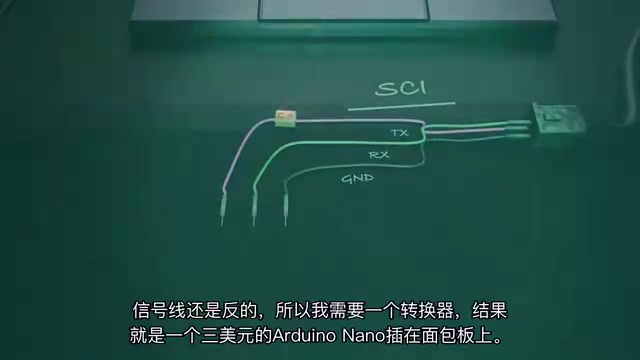
A 1994 Jeep failed emissions. With Claude and Codex, the owner bypassed the missing OBD2 port using a $3 chip to read ECU data, control the fuel pump, and write Flash code—passing inspection. Full wiring and AI reverse engineering details.

Claude Meets a 32-Year-Old Jeep: An AI Reverse-Engineering Journey from Reading Codes to Controlling the Car
A 1994 Jeep Cherokee failed California's smog test due to high NOx. Using Claude Code to reverse-engineer the SCI protocol and a $3 Arduino to read the ECU, plus Codex injecting code into EEPROM, it passed.

GTA 6: How Rockstar Is Building Its Most Detailed — and Most Romantic — Open World
GTA 6 is billed by Rockstar as its most detailed and most romantic entry yet, starring a pair of thieves who fall in love while stealing a car. This analysis explores what that premise could mean for open-world narrative and gameplay design — and the risks Rockstar is taking.