No OBD2? How Claude Reverse-Engineered a '94 Jeep
AI agents bypassed OBD2 with a $3 chip to read and rewrite a 1994 Jeep's ECU, passing emissions.
A 1994 Jeep Cherokee failed its emissions test due to high NOX. Abandoning conventional parts swapping, the owner had AI agents (Claude Code and Codex) interact directly with the ECU. Using a $3 Arduino Nano and inverted SPI protocol, the AI read real-time data, found abnormal fuel trim and low fuel pressure, and controlled the fuel pump. It then copied the ECU program for offline analysis, identifying that the California-spec computer cut too much fuel under test load—the main cause of high NOX. Since the hardware predated the programmable version, flashing Federal firmware failed; Codex ultimately bypassed the limitation by writing custom code into Flash memory, allowing the vehicle to pass. The project shows the potential of general AI in reverse engineering and hardware interaction, with hardware costing only about $15.
When a 1994 Jeep Cherokee faced the prospect of being unable to register because it failed its emissions test, the conventional repair approach—replacing oxygen sensors and swapping parts—proved futile after repeated failures. The owner decided to take a different path: let AI agents talk directly to the old truck's onboard computer. With no OBD2 port and no off-the-shelf diagnostic tools, Claude and Codex pulled off the leap from reading data to writing code using a three-dollar chip and a pile of jumper wires.
Starting from an Emissions Test Failure: Why Read the Computer?
The story begins with an emissions test in California. The '94 Jeep failed at the 25 mph test condition due to high NOX (nitrogen oxides). NOX formation is closely tied to a lean mixture: when the engine runs lean, excess oxygen combines with nitrogen at high temperatures and exits through the exhaust. The owner first replaced the oxygen sensor, but the 15 mph test value jumped from around 80 to 900—the problem actually got worse.
Each test costs about $10, and the cost of repeated parts swapping and re-testing was becoming unbearable. The owner realized that rather than blindly guessing, it would be better to read real-time data directly from the onboard computer. The problem: this vehicle predates the OBD2 era and can't be read through an under-dash connector or Bluetooth. Chrysler offered a dedicated tool in the late '90s, but it's hard to find and only provides a handful of fault codes—you can barely touch the computer's internal real-time data.
A Three-Dollar Chip and Inverted Signals: Establishing the Physical Layer
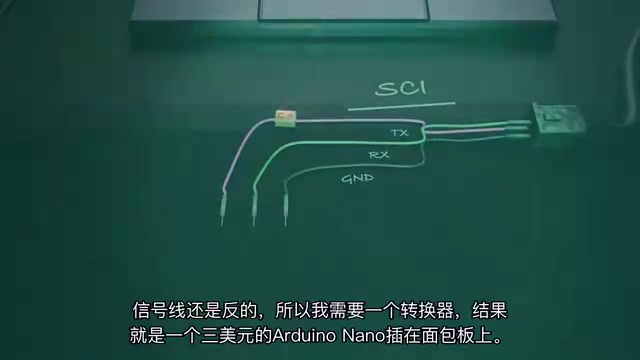
Once Claude Code got involved, it first discovered that this vehicle uses an old slow SPI protocol, and the signal line is inverted, so a converter was needed. The solution landed on a three-dollar Arduino Nano plugged into a breadboard. Cloud guided the wiring step by step, but because the instructions were too long, the owner wired it according to his own understanding of the connector—and the first attempt read nothing: the resistor was suppressing the signal. On Cloud's advice he pulled the resistor, and at 1:30 AM he finally read the first data: coolant temperature 138, battery voltage 12.38, no fault codes.
This was the first time AI actually read data from this vintage computer. Although it was just a few numbers, it meant that subsequent judgments could be based on real data rather than random parts swapping.
SPI (Serial Peripheral Interface) is a synchronous serial communication protocol typically used for short-distance, high-speed data transfer between chips, employing a master-slave architecture and four wires (clock, data in, data out, chip select). In the early '90s, some automakers used simplified or proprietary SPI variants on onboard computer diagnostic interfaces, with rates far below modern CAN bus—hence "slow SPI." Inverted signals mean the signal level logic is flipped (high goes low, low goes high), which often appears in old differential or open-collector outputs; connecting directly to a modern microcontroller won't be recognized and requires an inverter or software-level logic inversion. The Arduino Nano works because its ATmega328P chip can bit-bang SPI timing in software, flexibly adapting to non-standard protocols at extremely low cost.
From Reading to Control: The First Time AI Touched the Car
The first batch of data showed fuel trim was adding 22% more fuel than the factory spec, which is basically the computer's default value. The owner put the MacBook in the passenger seat and had Cloud log data throughout the drive, maintaining 15 to 25 mph. Cloud quickly noticed that the vehicle speed reported by the computer was doubled—that's the internal calculation method; divide by 2 for the real reading.
The more critical discovery came from the fuel pressure gauge: rail pressure was severely insufficient. Cloud proposed controlling the fuel pump itself. The owner thought it couldn't be done, but Cloud began pumping fuel to the rail, and after about ten seconds the owner panicked and told it to stop immediately. This was the first time Cloud actually executed an operation inside the computer and made the vehicle react—moving from read-only to controllable.
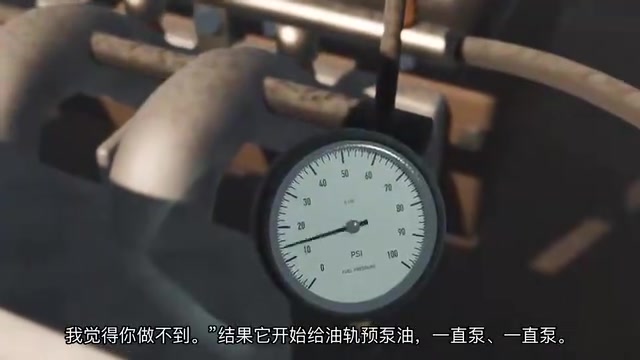
Afterward, the owner started the engine and pulled each injector one by one while Cloud read fuel pressure changes and oxygen sensor data, simultaneously doing a bubble test to check for leaks—and found almost nothing.
Fuel trim is a key parameter in closed-loop control of electronic fuel injection engines, divided into short-term (STFT) and long-term (LTFT), expressed as a percentage of the computer's adjustment to injection pulse width. Positive values mean the computer is adding fuel to compensate for a lean mixture; negative values mean reducing fuel to correct a rich condition. The "22% more fuel than factory spec" mentioned here is long-term fuel trim of +22%, which usually suggests a vacuum leak, insufficient fuel pressure, or sensor deviation. Insufficient fuel pressure leads to inadequate injection, the oxygen sensor feeds back a lean signal, and the computer keeps increasing trim—forming a vicious cycle. Reading fuel trim alongside fuel pressure gauge data can quickly distinguish a fuel delivery problem from a control logic problem, avoiding blind parts swapping.
Copying the Entire Program: Offline Analysis on a Laptop
Cloud copied the entire program running in the onboard computer to the laptop, so it could be analyzed without going into the car. Comparison revealed that this computer was made specifically for California: under the specific load conditions of the emissions test, the California version cut far more fuel than the Federal version. The Federal fuel curve stays smooth, while the California version simply cuts fuel without adding extra fuel, easily causing severe knock.
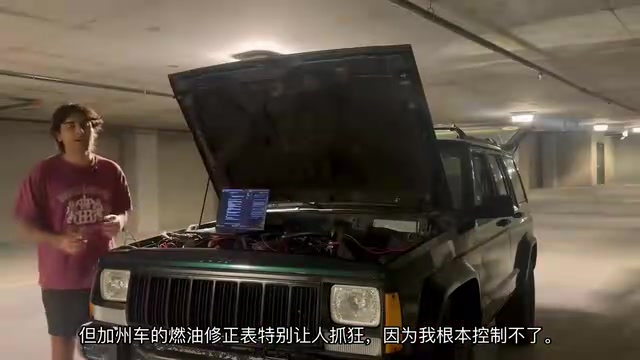
This explained why fuel trim showed +22% yet the mixture was normal—the computer was actually cutting fuel. This was Cloud's first mistake, but the fault wasn't in the AI itself—it was that the off-the-shelf tools available online simply didn't apply.
Codex Enters: Writing Code to a 1994 Computer
The most obvious fix was to flash the entire computer to Federal settings. Cloud built a complete kit for this and backed up the computer, but when testing in the car, it couldn't enter programming mode no matter what. The reason: this computer was built in December 1993, about 4 months before the programmable version, and physically lacks the parts needed to enter programming mode.
So OpenAI's coding agent Codex took over. Codex discovered that it could send a small program over the same three wires to this 1994 computer and have it run directly. The program ran alongside the computer's loop every cycle, about 90 times per second. The initial version just counted and sent numbers to the laptop, but RAM gets overwritten by the computer's own code within seconds. Codex changed to writing the actual program into Flash memory, so the contents persist after power-off, and the onboard computer can run its own code without touching the programming chip at all.
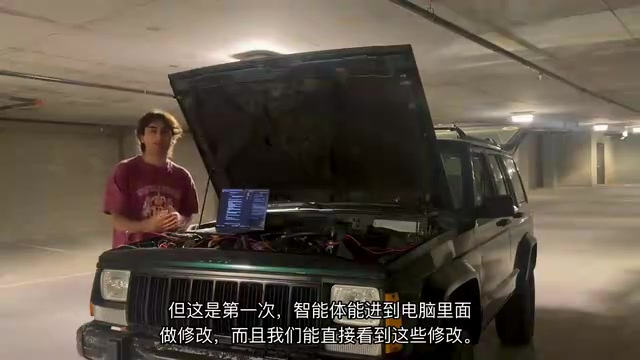
This was the first time an agent could get inside the onboard computer and make modifications, with the results directly visible. The owner no longer had to be constantly pulling wires and swapping parts—the agent could handle it itself. Ultimately, after much trial and error, the agent read all the information in the computer and wrote its own code, and the vehicle passed inspection.
Flash memory is non-volatile memory that retains data after power loss and is electrically erasable, widely used in onboard computers to store program code and calibration data. In the early '90s, some ECUs used EPROM or one-time programmable ROM requiring a dedicated programmer; the introduction of Flash made in-circuit programming possible, but early implementations often required specific voltages and timing to enter programming mode. The computer in this article lacks the parts needed for programming mode, so conventional flashing wasn't possible; Codex instead wrote a small program into an unused area of Flash, leveraging the ECU's own loop execution mechanism to run custom code. This is similar to modern "flashing" but bypasses the official programming interface—a low-level reverse engineering technique.
Hardware List and Wiring Tips
The complete wiring and code will be on GitHub. Required hardware includes an Arduino Nano, a breadboard, and a few Dupont wires—about $15 on Amazon. The diagnostic connector is under the hood with six pins, numbered per column from top to bottom: left column 1 and 2, middle 3 and 4, right 5 and 6. Only three are used: bottom-left pin 2 is ground, top-middle pin 3 is the computer's receive signal, bottom-middle pin 4 is the computer's reply. Pins 1 and 5 are empty, but be especially careful with pin 6—it carries 12 volts with the key on, same as the ground wire, so never connect anything to it or you'll fry the board.
Route the wiring through the firewall grommet and secure the converter with zip ties so it doesn't fly out during sharp turns. The owner suggests cloning this project and having Claude Code, Codex, or any agent walk through it to help with the build; if you don't know how to set it up, ask ChatGPT or another web chat tool and they'll teach you how to configure it.
What This Means
This 1994 Jeep has no OBD2, no Bluetooth, no off-the-shelf tools—yet AI agents managed, through inverted SPI protocol, a three-dollar chip, and反复 trial and error, to complete the entire process from reading real-time data, controlling the fuel pump, offline program analysis, to writing Flash code. The owner summed it up: most of the work was done by Codex—Codex basically did everything memory-related, while he just handled wiring and driving. No mechanic needed, no Chrysler dealer tools needed.
For vintage car enthusiasts and embedded hobbyists, this path demonstrates the potential of general-purpose AI agents in reverse engineering and hardware interaction: when official tools are absent, AI can be the partner willing to stay up with you at 1:30 AM tuning resistors.
Related articles

FBI Warns About AI Hacking Tool Artex: Systems Breached in Three Hours
FBI warns about AI hacking tool Artex: describe targets in natural language for automated scanning and intrusion, with some attacks achieving full privileged access within three hours. It affected over 2,000 Microsoft 365 organizations and South Korean banks. Copies still circulate after the developer took it down in October; security fundamentals remain key.

FBI-Warned AI Hacking Tool ARTEX: Cost Disruption and Defensive Restructuring
The FBI-warned AI hacking tool ARTEX reduces penetration testing costs to $150-$1,500, causing financial data breaches and supply chain attacks. Learn how it works, real cases, and a five-step defense strategy.
FBI Warns: ARTEX AI Hacking Tool Breaches Systems in Three Hours
FBI warns the open-source AI pentesting framework ARTEX is being abused, with some intrusions gaining privileged access in under three hours, over 1,600 consoles exposed, and links to South Korean financial data breaches and the ConnectWise supply chain attack.