Claude Meets a 32-Year-Old Jeep: An AI Reverse-Engineering Journey from Reading Codes to Controlling the Car
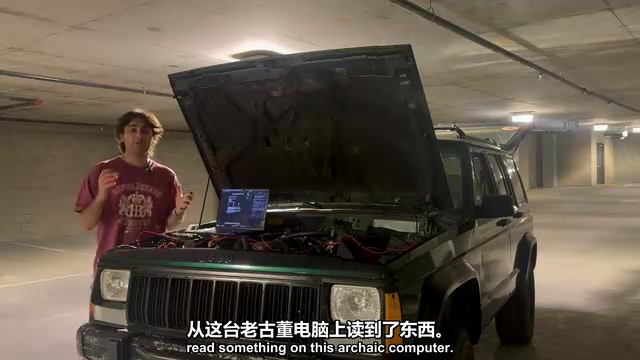
AI agents reverse-engineered a 1994 Jeep's ECU with a $3 chip, diagnosed the California fuel calibration, and passed smog.
A 1994 Jeep Cherokee failed California's smog test due to excess NOx. With Claude Code, the owner identified the legacy SCI protocol and used a ~$3 Arduino Nano to read live ECU data. Claude moved from read-only to executing operations, even driving the fuel pump; offline analysis revealed the California-spec ECU sharply reduces fuel under test conditions, unlike the federal curve — the root cause. Since the December 1993 computer lacked programmable hardware, flashing failed, and OpenAI Codex injected a program into EEPROM to bypass the limit. The car passed, with ~$15 hardware. Claude handled diagnostics, Codex the memory layer, and the owner only wired and drove.
An old car that couldn't pass inspection forced an AI reverse-engineering breakthrough
According to Bilibili creator Muhammad Zulali, he owns a 1994 Jeep Cherokee that has repeatedly failed California's smog test due to excess NOx at the 25 mph test condition. Each test costs about $100, and after replacing the oxygen sensor, the 15 mph reading actually jumped from around 80 to 900 — the problem remained.
He realized that instead of repeating the "replace parts—retest—fail" cycle, he should directly read real-time data from the vehicle's computer. But this car predates the widespread adoption of the OBD2 standard, has no standard diagnostic port, and Chrysler's proprietary tools from that era are long gone. So he asked Claude Code: is there any way to talk directly to this old computer?
Smog Test is a mandatory emissions inspection for registered vehicles in California and is part of the annual registration process. The test typically includes idle and different vehicle-speed conditions (such as 15 mph and 25 mph), simulating driving load on a chassis dynamometer while measuring pollutant concentrations such as CO, HC, and NOx with an exhaust gas analyzer. NOx (nitrogen oxides) forms under high-temperature, oxygen-rich conditions; emissions rise significantly when the mixture is too lean or combustion temperature is too high. Therefore, the operating state of the oxygen sensor, fuel pressure, fuel injectors, and catalytic converter all affect NOx readings. Each test costs roughly tens to one hundred dollars; if it fails, repairs and a retest are required. This is also why the creator wanted to read data directly from the vehicle computer and avoid blindly replacing parts.
A three-dollar chip pries open the 1994 vehicle computer
Claude's answer: this car uses an old slow protocol called SCI, and the signal line logic is inverted, so a translator is needed. The final solution was an Arduino Nano costing about $3 plus a breadboard.
The wiring process was not smooth sailing. Claude's instructions were overly verbose; after wiring it according to his own understanding, the creator initially read nothing because a resistor was drowning out the signal. Claude suggested removing the resistor, and at 1:38 a.m. they finally read the first data: basic information such as coolant temperature and battery voltage.
This was the first time Claude had read anything from this "ancient" computer. Although it was only the most basic readings, it was significant — he finally had real data to rely on instead of guessing.
SCI (Serial Communication Interface) is a single-wire, low-speed serial communication protocol used by Chrysler before OBD2, commonly found on models from the late 1980s to the mid-1990s. Its physical layer uses an open-collector/open-drain structure, and its logic levels are inverted relative to common UART — the definitions of idle state and dominant level are opposite to standard serial ports. As a result, ordinary serial modules often cannot read data directly and require an inverter or software-level level inversion. The communication rate is low (typically tens to hundreds of bits per second), and the frame format and addressing are vendor-proprietary with no public common standard. This is exactly why a programmable microcontroller like the Arduino Nano is needed as a protocol translator: it can handle inverted logic, send and receive data according to SCI timing, and then send the content to a laptop via USB-to-serial.
From read-only to controllable: an accidental throttle
At first Claude only read data. The first reading that drew attention was the fuel trim value: the computer showed an additional 22% fuel, meaning the engine should be in a rich-mixture state and unlikely to produce high NOx. Claude inferred that either aging fuel injectors were causing insufficient actual fuel delivery, or there was a leak after the oxygen sensor and before the catalytic converter.
During road testing, Claude found that the vehicle speed reported by the computer was twice the actual value. After applying a divide-by-two correction, it found that the mixture ratio during driving was actually normal all along — that 22% "extra fuel" made no logical sense.
The turning point came the next day. The creator connected a fuel pressure gauge and read only 10 PSI, indicating severely insufficient fuel rail pressure. Claude proactively offered to drive the fuel pump itself, then kept the pump running for about 10 seconds. The creator became nervous and called it off, because this was the first time Claude had done more than read — it had executed an operation inside the computer and caused a real physical response in the vehicle.
"It was like a key that unlocked Claude from a read-only tool into an agent that could control this Cherokee." After that, they conducted a series of experiments, including unplugging fuel injectors and blocking the exhaust to observe oxygen sensor changes.
The truth: the California-version computer's "crippled" fuel table
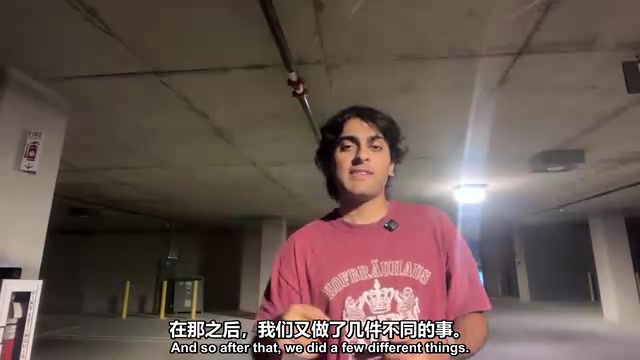
During nighttime road testing, Claude confirmed a frustrating fact: the direction of that 22% fuel trim was reversed — the computer was actually reducing fuel, not adding it. The commonly used Chrysler scanner tool had misjudged his model; the mixture ratio had never been a problem, and the high NOx had another cause.
This was Claude's first mistake, but the cause was inheriting the wrong assumptions of an existing tool.
Claude then copied the entire vehicle computer program to a laptop for offline analysis and found the key difference: his computer was a California-specific version. In the specific load range corresponding to the smog test, the California version significantly reduces fuel, while the federal version maintains a smooth fuel delivery curve. This calibration was hard-coded before California's standardized smog test existed, yet it happens to align closely with his vehicle's model year and test conditions. Measured over an hour, the difference was about a quarter of a percentage point — enough to push NOx over the limit.
Fuel Trim is a key parameter in the closed-loop control of electronic fuel injection engines and is divided into short-term fuel trim (STFT) and long-term fuel trim (LTFT). The oxygen sensor feeds back the oxygen content in the exhaust, and the ECU uses this to determine whether the mixture is rich or lean and adjusts injection pulse width: positive trim means increased fuel (enrichment), negative trim means reduced fuel (enleanment). If the "22%" in the article is misread in direction, "reducing fuel" would be mistaken for "adding fuel," leading to a completely opposite diagnostic conclusion. The catalytic converter can efficiently convert CO, HC, and NOx simultaneously only near the stoichiometric air-fuel ratio; a persistently lean mixture reduces NOx conversion efficiency. The difference between California and federal ECU calibrations is essentially a different mapping of injection quantity under specific test conditions — a manifestation in firmware of regional differences in emissions regulations.
Flashing failure and Codex's "memory side door"
The obvious solution was to flash the computer to federal-spec settings. Claude built a complete toolkit for this, including a backup of the original computer, and took thorough safety precautions. The program read the vehicle computer perfectly, but the computer consistently failed to enter programming mode.
The reason was brutal: this computer was manufactured in December 1993, and Chrysler began producing programmable versions only about four months later. A few physical components were missing, making flashing impossible at the hardware level.
Then OpenAI's coding agent Codex entered the picture. It discovered that a small program could be sent to this 1994 computer over the same three wires, and the computer's main loop runs about 90 times per second, allowing the program to "hitch a ride." The initial version could only run for a few seconds because the computer's own code would overwrite the program in RAM. Codex therefore wrote the program into EEPROM — storage that persists even without power — allowing custom code to run inside the vehicle computer without touching the programming chip.
This meant that for the first time, the agent could enter the computer on its own, write code, run it, and observe the effects, without a human standing by the car plugging and unplugging parts.
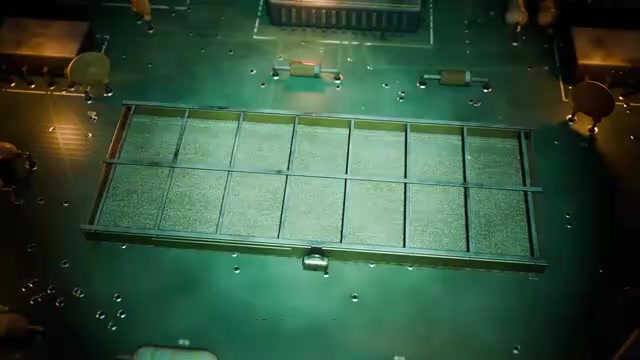
ECU reflash refers to writing new calibration or programs into the programmable memory (usually Flash or EEPROM) of the engine control unit through the diagnostic interface. The ECU must enter a special programming mode, and a bootloader receives the data. Early ECUs did not all have programmable capability: some models used one-time-write ROM or OTP memory, and some had a reserved programming interface but lacked the boost/programming components on the circuit board, so even a perfect software-side setup could not complete a flash. EEPROM (electrically erasable programmable read-only memory) allows byte-by-byte erase and write and retains data when power is removed, and is often used to store calibration parameters or small code snippets. Codex's approach was to write custom programs into EEPROM and execute them by "hitching a ride" in the gaps of the ECU's periodically called main loop, thereby bypassing the official programming mode and gaining the ability to run code inside the vehicle computer without modifying the factory program.
Passing the smog test, and a bigger question
Test day was full of mishaps: the dynamometer at the first shop was broken, and the second shop required a full tank, otherwise the evaporative emissions test equipment would have problems, so they had to fill up first. After multiple attempts, the agents finally read the full computer information, injected custom code, and the vehicle passed the smog test.
Reviewing the division of labor: Claude handled most of the diagnostic work, Codex completed almost all memory-level work, and the creator only handled wiring and driving. No mechanic was hired, and no Chrysler dealer proprietary tools were used.
The complete wiring diagram and code have been open-sourced on GitHub. The required hardware is roughly an Arduino Nano-compatible board, a breadboard, and jumper wires, costing about $15. The creator specifically warns: of the six holes in the diagnostic connector, only pins 2, 3, and 4 are used (ground, computer receive, computer return). Pin 6 carries 12V when the key is on; wiring it incorrectly will burn out the board.

What this really means
This is not a novelty story about "AI repairing cars." It demonstrates a path that is taking shape: when an AI agent can understand proprietary protocols, reverse-engineer firmware, write and inject runtime code, and then iterate based on real-world feedback, its scope extends from software on a screen to physical devices.
The boundaries worth noting are equally clear. This success relied heavily on human judgment — wiring, driving, physical experiments, and calling a halt to risk. The difference between California and federal calibrations is a product of specific historical conditions and is not universal. The flashing failure also shows that no matter how strong the software capability is, missing hardware remains an unsolvable obstacle.
The truly open question is the one the creator raised at the end: what other devices can you plug your agent into? Legacy industrial controllers, home appliances, vehicle buses — anywhere there is a protocol, an interface, and writable storage is theoretically a candidate. And the safety and liability questions that follow are likely harder to answer than the technology itself.
One-line Summary
An AI agent used a $3 chip to reverse-engineer a 1994 Jeep's vehicle computer, diagnose and bypass the California-spec fuel calibration, and ultimately pass inspection.
Paragraph Summary
A 1994 Jeep Cherokee failed California's smog test due to excess NOx. With Claude Code's help, the owner identified the car's legacy SCI protocol and built a readout solution using an approximately $3 Arduino Nano, reading real-time data from the vehicle computer for the first time. Claude progressed from read-only to executing operations, proactively driving the fuel pump; offline analysis revealed that the California-spec ECU significantly reduces fuel under test conditions, unlike the smoother federal curve, which was the root cause of the high NOx. Because the computer was manufactured in December 1993 and lacked programmable hardware, flashing failed, so OpenAI Codex instead injected a program into EEPROM to bypass the limitation. The vehicle ultimately passed the smog test, with hardware costing about $15. Claude handled diagnostics, Codex handled memory-level operations, and the owner only wired and drove.
Related articles
Appwrite: The Open-Source Cloud Built for AI Agents
Appwrite is an open-source cloud platform offering Auth, databases, storage, functions, messaging, hosting, realtime, and WAF for AI agents and developers. With 58K+ GitHub stars, it supports self-hosting.
Is jQuery Still a Frontend Cornerstone? The Vitality Behind Nearly 60K GitHub Stars
jQuery has nearly 60K GitHub stars and over 20K forks, still gaining 268 stars in a single day. This article analyzes why this veteran JavaScript library remains vital through legacy project inertia, a low barrier to entry, and its ecosystem reference network, with practical advice on selection and maintenance.
OpenVINO: An Open-Source AI Inference Optimization and Deployment Toolkit
OpenVINO is Intel's open-source AI inference optimization toolkit supporting model conversion, graph optimization, and cross-platform deployment. Learn its core features, workflow, use cases, and community updates.