Career Switch to AI Agent Development from Scratch: A Three-Month Learning Roadmap

A realistic 3-month roadmap for career switchers targeting AI Agent development roles, from Python basics to shipping real projects.
This article outlines a practical AI application development learning roadmap for career switchers with no prior background. The core argument: landing a quality offer in AI requires at least three months of systematic study, not the "learn in days" promises of quick-fix courses. The roadmap is divided into three phases — Month 1 covers Python, Prompt Engineering, and vector retrieval fundamentals; Month 2 focuses on mainstream frameworks and building a complete RAG pipeline; Month 3 centers on Agent service development and polishing two to three demo-ready projects. The author also notes that most self-taught learners fail not due to lack of talent, but due to impatience and chasing shortcuts.
Don't Fall for "Learn in Three Days" Hype: There Are No Shortcuts in AI Application Development
Salaries for AI application development roles are surging, and offers of 30K+ are attracting a wave of career switchers. But here's the harsh reality: the vast majority of people teaching themselves AI are spinning their wheels — picking up random topics one day, chasing the latest tech trends the next. They seem to know a little about everything, yet can't actually ship a single project.
The creator of this Bilibili video draws on personal experience to make a grounded point: for an average person to establish themselves in the AI space and land a quality offer, a minimum of three months of systematic study is required. Those marketing pitches about "getting started in three days, interview-ready in five" are essentially monetizing anxiety.
The author started from zero at the beginning of the year, consistently putting in two hours a day to build up foundational technical knowledge, and didn't receive a formal AI application development offer until May. That timeline speaks for itself: switching careers isn't a sprint — it's a long-distance race that demands a steady pace. You don't need to burn the midnight oil early on; what matters is consistency.
Month One: Build the Foundation and Develop an AI Technical Mindset
Too many people rush into complex large model architectures before they can even read code fluently — that's completely backwards. The core task of month one is to lay a solid foundation.
Core Skills to Master
- Python basics: This is the bedrock for everything that follows. There's no skipping it.
- Prompt Engineering: Understanding how to communicate effectively with large models is the entry point for AI application development.
- Streaming API calls for LLMs: Learn how to call mainstream large model APIs, including streaming output and other scenarios you'll encounter in real development.
- Fundamentals of vector retrieval: Build the theoretical groundwork for RAG (Retrieval-Augmented Generation) later on.
Beyond hard skills, this phase is also about studying high-quality open-source projects, reading industry reports, and consuming technical content to gradually develop your own AI technical intuition. This "input → process → internalize" cycle builds longer-lasting competitiveness than blindly grinding through exercises.
The core idea behind vector retrieval is converting text into high-dimensional numerical vectors (Embeddings), so that semantically similar content ends up closer together in vector space — enabling semantic search rather than keyword matching. This is fundamentally different from traditional BM25 keyword retrieval: "Apple phone" and "iPhone" share no keywords, yet can be correctly matched via vector similarity. Popular vector databases include Chroma, Milvus, and Qdrant, all optimized for storing high-dimensional vectors and performing Approximate Nearest Neighbor (ANN) search. Understanding this principle is a prerequisite for learning RAG, since the quality of the entire retrieval-augmented pipeline depends heavily on the choice of Embedding model and the accuracy of vector retrieval.
Month Two: Master the Core Frameworks and Complete a Full RAG Pipeline
With the basics in place, month two shifts into hands-on work with frameworks and core technologies. The goal is to move from "understanding" to "being able to write it yourself."
Key Skills to Develop
- Mainstream development frameworks: Get hands-on with the leading AI application development frameworks.
- Text chunking and vectorization: Deeply understand chunking strategies and vectorization methods.
- Hybrid retrieval: Learn hybrid retrieval techniques to improve retrieval quality.
- Private knowledge base construction: Be able to independently build a private knowledge base from scratch.
The benchmark for this phase is clear: you should not only be able to explain how RAG works, but also write runnable code that walks through a complete retrieval-augmented pipeline end to end. RAG is one of the most common deployment patterns in enterprise-level AI applications today. Getting this pipeline working means you're starting to look like a practitioner.
RAG (Retrieval-Augmented Generation) is currently the dominant technical paradigm for deploying large model applications in enterprise settings. The core logic is this: LLMs have a training data cutoff, can't include proprietary company data, and are prone to hallucination when answering questions directly. RAG addresses this by retrieving relevant document chunks before generating an answer, injecting external knowledge into the Prompt context so the model can respond based on real evidence. A complete RAG pipeline looks like: document loading and chunking → Embedding vectorization → storage in a vector database → retrieval of relevant chunks at query time → Prompt assembly → LLM response generation. Hybrid retrieval layers BM25 keyword search on top of vector semantic search, with results fused via reranking to compensate for pure vector retrieval's weakness in exact keyword matching — significantly improving recall quality.
Month Three: Ship Projects and Build a Demonstrable Portfolio
Month three is the critical phase where everything from the previous two months comes together. The author's recommendation: pick one or two real-world business scenarios and polish two to three complete, demo-ready projects.
Core Features to Implement
- Tool Calling: Enable the model to call external tools to complete tasks.
- Agent service development: This is the dividing line between a "chatbot" and an actual intelligent agent.
- Multi-turn conversation memory management: Give your application contextual memory across turns.
- API integration: Wire all the modules together into a complete business workflow.
The goal is to evolve simple demos into AI applications with real business logic. The author emphasizes that reaching this level is what actually makes you competitive for interviews. A working, demonstrable Agent project with genuine business logic is far more convincing than a resume full of technologies you've merely "heard of."
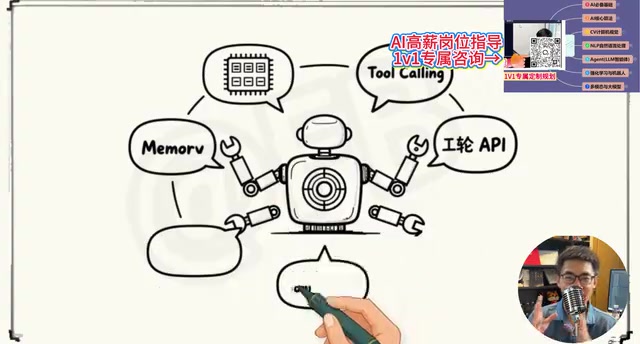
The fundamental difference between an Agent (intelligent agent) and an ordinary chatbot is that an Agent can plan, make decisions, and call external tools — breaking a complex goal into multi-step actions and executing them autonomously. Tool Calling is the key mechanism that makes this possible: developers define tool functions in advance (e.g., web search, database queries, code execution), and the LLM autonomously decides during inference when to call which tool, what parameters to pass, and how to integrate the results into the final response. OpenAI, Claude, and other mainstream APIs all natively support Function Calling. Multi-turn conversation memory management solves the stateless nature of LLMs: each API call is independent by design, so developers must manually maintain conversation history and handle context window overflow through summarization or sliding window techniques — enabling the application to "remember" what the user has said.
Why Do 90% of Self-Taught Learners Fail to Land an Offer?
The author makes a blunt observation: the reason nine out of ten people teaching themselves AI can't find suitable work isn't a lack of talent — it's an overly restless mindset. They're always waiting for someone to hand them ready-made answers, willing to believe "get rich quick" marketing pitches rather than putting in the steady, unglamorous work of actually building skills.
This learning path isn't for everyone. It's only for those who genuinely want to break into the field and are willing to commit to long-term, disciplined growth. That honesty is worth acknowledging — the barrier to entry in AI application development is being lowered by better tools, but what actually separates candidates is deep understanding and the ability to ship real projects.
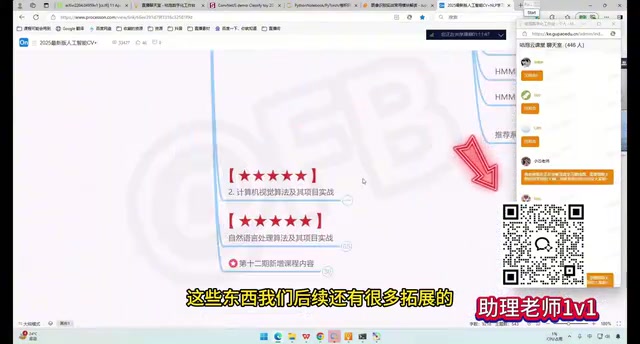
From a structural standpoint, this roadmap covers the path from foundational algorithms and programming skills to both CV (Computer Vision) and NLP (Natural Language Processing) career tracks — a classic "career-switch-to-offer" framework. One caveat worth noting: the video ends with clear promotional content for courses and coaching programs (roadmap downloads, source code, team mentorship, etc.). This is commercial marketing and should be evaluated with appropriate skepticism — keep the focus on the methodology itself.

The Practical Value of This Roadmap for Career Switchers
Setting aside the marketing elements, the three-month learning framework itself has a clear and logical structure: from Python and Prompt Engineering fundamentals, through the middle layer of RAG and vector retrieval, up to advanced Agent development — each stage builds on the last in a way that mirrors a genuine AI application engineer's growth curve.
For someone starting from zero, the greatest value of this path isn't any specific course — it's the methodology it embodies: invest consistently every day, set capability milestones for each phase, and treat a demonstrable project as your final deliverable. Those three principles are closer to the truth than any "fast-track" promise.
If you're considering entering the AI application development space, use this roadmap as a reference framework and adjust it to fit your own pace. Real competitive advantage has always been earned through sustained effort — not copied from someone else's shortcut.
Related articles
Three Stages of AI LLM Testing: A Practical Guide from Core Concepts to API Calls
A learning path for testers covering LLM fundamentals, prompt engineering, OpenAI SDK calls, API Key vs Token differences, streaming output, RAG, and Agent systems.
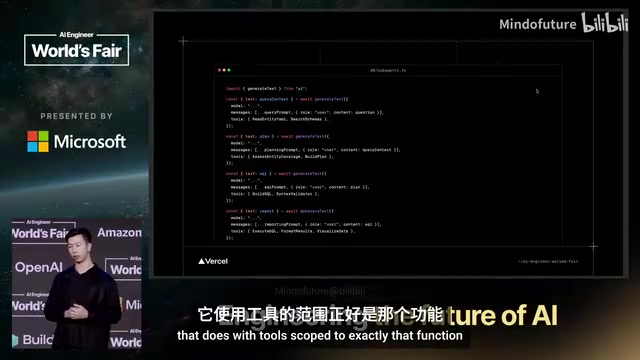
Vercel's Chief of Software Looks Back: The Evolution of Agent Building — From Multi-Agent Chains to File System Agents
Vercel's Chief of Software Andrew recaps the agent-building journey at AI Engineer: from giant prompts to multi-agent chains, monolithic memory, file system agents, and the open-source EVE framework.
Tencent's Open-Source BSK in Action: Letting AI Take Over Your Already-Logged-In Browser
Tencent's open-source BSK (Browser Skill Kit) lets AI take over your real, logged-in Chrome via WebSocket. We break down the architecture, setup, and three key pitfalls from real-world testing.