Career Switch to NLP at 30 with Zero Experience: How a Linguistics-Tech Background Can Seize Opportunities in the AI Era
A practical guide for 30-year-old linguistics grads to leverage their background and break into NLP in the LLM era.
This article addresses how a 30-year-old Human Language Technology graduate with no industry experience can transition into NLP. It explains why the LLM era has created unprecedented demand for linguistics-tech hybrid talent, and provides a three-phase restart path: rebuilding technical foundations, building a project portfolio, and entering through bridge roles like AI data specialist or language evaluator.
A Real Career Dilemma
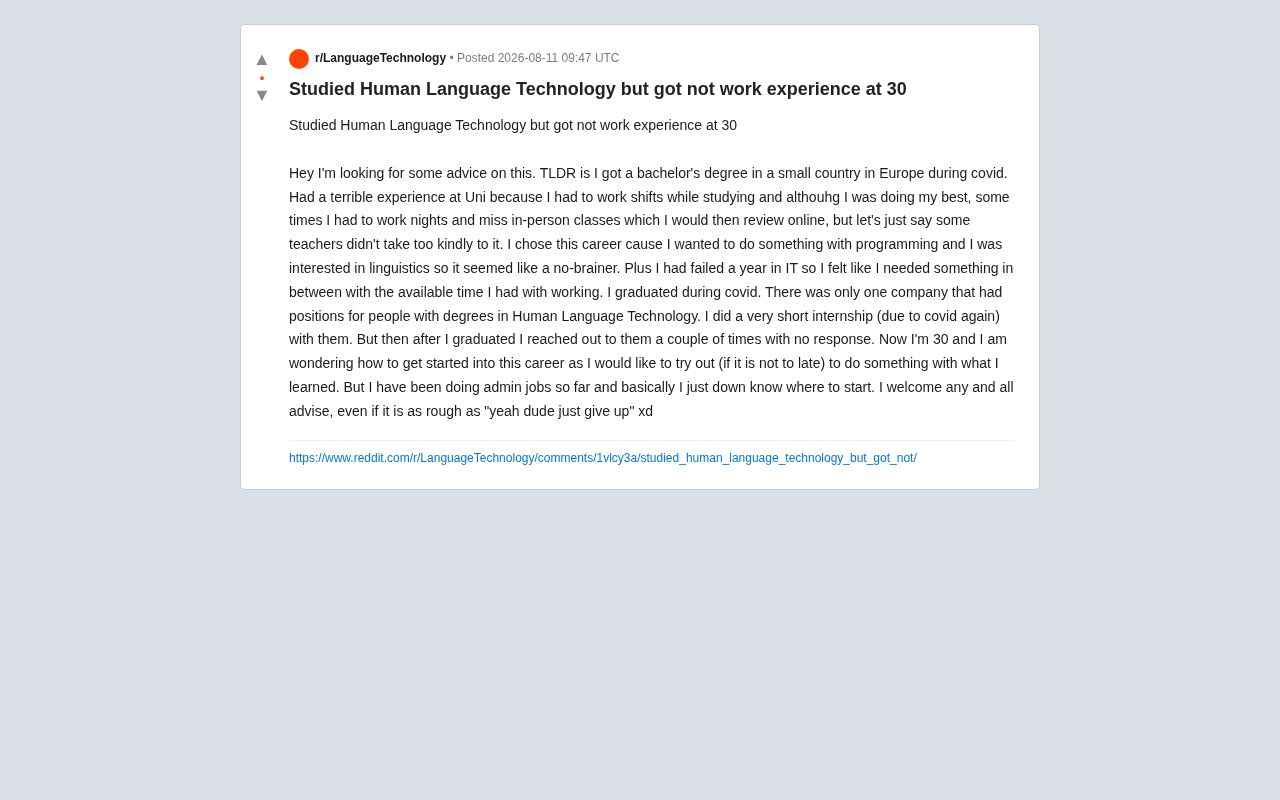
In a Reddit career development community, a 30-year-old user shared his confusion: he earned a bachelor's degree in Human Language Technology (HLT) from a small European country, but due to the pandemic and juggling work with studies, he never managed to break into the field after graduation. Now stuck in an administrative job, he had no idea how to start over.
This story may seem like an isolated case, but it reflects a universal problem: How do graduates from niche interdisciplinary programs find their place in the AI wave? Human Language Technology sits right at the intersection of computer science and linguistics — and this field is undergoing seismic changes thanks to the explosion of Large Language Models (LLMs).
What Is Human Language Technology?
Human Language Technology is a branch of Natural Language Processing (NLP) that typically covers speech recognition, machine translation, text analysis, and corpus linguistics. It naturally blends programming with linguistics — as the poster put it, he "wanted to do something related to programming and was interested in linguistics," so he chose what seemed like a "no-brainer" major.
Historically, HLT traces its roots back to machine translation research in the 1950s. During the Cold War, both the U.S. and the Soviet Union invested massive resources in attempting to use computers to automatically translate each other's documents, giving rise to the interdisciplinary field of computational linguistics. European universities — particularly those in the Nordics and Central-Eastern Europe — have deep academic traditions in this area, with many offering standalone HLT undergraduate or master's programs. Their curricula often balance formal linguistic theory (such as syntactic analysis and semantics) with computational implementation (such as writing parsers and training statistical models). However, this academic structure creates a structural contradiction: the academic positioning is highly specialized, but the corresponding industry jobs are concentrated in a handful of tech hub cities. In smaller European countries, the local NLP industry might consist of just a few companies — or rely entirely on regional offices of multinational corporations.
The problem was that when he graduated, there was "only one company" locally offering HLT-related positions. This narrow job market is a common dilemma for students in small-language countries with niche majors. The commercial value of language technology is often directly tied to the scale of a language's speaker base — major languages like English, Chinese, and Spanish have massive user bases and commercial markets, while languages spoken by only a few million people naturally have limited demand for localized language technology.
Why Now Is Actually a Great Time to Transition into NLP
Interestingly, the poster worried that "it might be too late," but industry trends suggest the opposite.
The LLM Era Has Redefined NLP Talent Demand
After ChatGPT launched, the talent demand structure across the entire NLP field shifted dramatically. In the past, NLP positions were scarce because traditional methods (rule-based systems, statistical models) had high barriers to entry and narrow applications. Today, a massive number of roles have emerged around large language models.
To understand the depth of this shift, it helps to review the three paradigm eras of NLP technology. The first generation was the rule-based era (1950s–1990s), where engineers hand-wrote grammar rules and dictionaries so computers could process language according to predefined logic. This approach required deep linguistic expertise but was extremely costly to maintain and couldn't handle the infinite variation of language. The second generation was the statistical model era (1990s–2017), represented by Hidden Markov Models (HMMs), Conditional Random Fields (CRFs), and bag-of-words models. These methods used large amounts of annotated data to let machines "learn" language patterns, but each specific task required its own feature engineering — an enormous amount of work. The third generation is the deep learning / large model era (2017–present). In 2017, Google's paper Attention Is All You Need introduced the Transformer architecture, which fundamentally changed the NLP paradigm. Transformers use a "self-attention mechanism" that allows models to capture relationships between any positions in a text, rather than processing sequentially like earlier recurrent neural networks. This architecture became the foundation for GPT, BERT, LLaMA, and all modern large language models.
Because of this paradigm leap, NLP job demand has shifted from "a few expert-level roles" to "large-scale, multi-tiered" positions:
- Prompt Engineering: Requires understanding language structure and model behavior. The core of prompt engineering is carefully designing input text (i.e., "prompts") to guide large language models toward desired outputs. While it may seem simple, it involves deep understanding of pragmatics, contextual effects, and the model's internal attention allocation mechanisms. Excellent prompt engineers need to understand ambiguity resolution, referential relationships, and discourse structure like linguists, while also conducting systematic experiments and evaluations like engineers.
- Data Annotation and Evaluation: Linguistics backgrounds offer unique advantages in building high-quality corpora and designing evaluation standards.
- Model Fine-tuning and Alignment: Techniques like RLHF (Reinforcement Learning from Human Feedback) require extensive linguistic intuition. RLHF was one of the key techniques OpenAI used when training ChatGPT. The core idea is to first have human annotators rank multiple model outputs (e.g., judging which response is more accurate, safer, or more helpful), then use that ranking data to train a "reward model," and finally use reinforcement learning to make the language model's outputs increasingly aligned with human preferences. In this process, the annotators' judgment of language quality — including logical coherence, factual accuracy, and appropriate tone — directly determines the final model's performance, which is precisely a strength of linguistically trained individuals.
- Multilingual / Localization: Small-language skills become a scarce resource. Current mainstream LLMs perform best in English, but when companies expand internationally and deploy globally, they need models that reach usable levels across various languages. Training data for less-resourced languages is scarce, and technical personnel who understand these languages are even scarcer — which actually creates unique job demand.
This poster's linguistics background is no longer "without a place to shine" in the LLM era — it's a differentiating advantage. Many engineers with purely computer science backgrounds lack deep understanding of linguistic phenomena.
Switching to NLP at 30 Is Not Too Late
One of the biggest characteristics of the tech industry is that it's "results-oriented." Compared to degrees and age, employers care more about whether you can deliver real value. Age 30 is firmly within the career prime for AI — you have work discipline (administrative work demonstrates stable professional habits) and still have ample energy for learning.
In fact, according to Stack Overflow's annual developer survey, the average age of developers worldwide falls between 30 and 35, and a large number of successful tech professionals completed their career transitions between ages 25 and 35. This is especially true in AI — the industry itself has only just entered its large-scale commercialization phase, and the vast majority of practitioners aren't "traditionally trained" but transitioned from backgrounds in mathematics, physics, linguistics, psychology, and other fields. The real advantage of transitioning at 30 is that you already know what interests you, have enough self-discipline to complete systematic study, and have accumulated basic professional skills.
A Concrete Restart Path for Transitioning to NLP with Zero Experience
For those feeling lost about "where to begin," here's a three-phase plan.
Phase 1: Rebuild Your NLP Technical Foundation
Studying part-time during the pandemic likely left some gaps in the fundamentals. Focus on filling these first:
- Python programming: This is the lingua franca of NLP — mastery is essential. Python became the language of choice for NLP and AI because it has the richest ecosystem of machine learning and natural language processing tools — from data processing (pandas, NumPy) to model training (PyTorch, TensorFlow) to deployment (FastAPI, Streamlit). Nearly every stage has mature Python library support. For career changers who have some programming experience but aren't proficient, it's best to improve Python skills through actual projects (not just tutorials) — for example, writing a simple text sentiment analysis script in Python while brushing up on data structures and object-oriented programming.
- Machine learning fundamentals: Understand the basic principles of neural networks and the Transformer architecture. The Transformer architecture is the technical cornerstone of all current large language models. Understanding its core mechanisms — Multi-Head Self-Attention, Positional Encoding, and Encoder-Decoder structure — is crucial for any NLP-related work. You don't need to derive mathematical formulas from scratch, but you should at least understand why the attention mechanism allows models to "see" the context of an entire sentence, and why scaling up model size leads to emergent capabilities. Andrew Ng's Machine Learning course on Coursera and 3Blue1Brown's neural network visualization video series are excellent starting resources.
- Modern tool chains: Hugging Face Transformers, LangChain, vector databases, and other contemporary NLP tools. Hugging Face has become the de facto standard platform for NLP, providing a unified interface for using tens of thousands of pre-trained models (from BERT to LLaMA), allowing developers to accomplish text classification, named entity recognition, machine translation, and more with just a few lines of code. LangChain is a framework specifically designed for LLM application development, helping developers connect LLMs with external data sources, APIs, and tool chains to build complex AI applications. Vector databases (such as Pinecone, Weaviate, ChromaDB) are key components of the RAG architecture — they convert text into high-dimensional mathematical vectors and perform similarity searches, enabling LLMs to "consult" external knowledge bases rather than relying solely on training data.
Recommended learning paths include Coursera's NLP specialization courses and Hugging Face's free official NLP course for systematic study. Most of these resources are free or low-cost and regularly updated. Additionally, fast.ai's hands-on courses are worth recommending — they use a "top-down" teaching approach, letting students run through complete projects first before circling back to understand underlying principles, which is especially suitable for career changers who have some foundation but need to get up to speed quickly.
Phase 2: Replace Work Experience with Projects
The poster's biggest weakness is "no work experience." But in tech, a portfolio is often more convincing than work experience. According to multiple hiring surveys, over 60% of technical hiring managers say a candidate's GitHub projects and technical blog influence their judgment as much as — or even more than — traditional work history on a resume. This is because technical ability can be directly assessed through code quality, project complexity, and problem-solving approach, while work experience alone doesn't guarantee someone has truly mastered a skill.
Here are some project ideas that showcase NLP capabilities to put on GitHub:
- Build a text classification or translation tool targeting your country's less-resourced language using open-source models. This project directly demonstrates the combination of a linguistics background and technical skills, and competition in small-language directions is far less intense than in English, making it easier to produce results with real practical value.
- Build a Q&A application based on RAG (Retrieval-Augmented Generation). RAG is one of the most mainstream architectural patterns in enterprise AI applications. It works like this: when a user asks a question, the system first retrieves the most relevant document snippets from a knowledge base (using semantic search via a vector database), then feeds those snippets as context to the large language model, which generates an answer based on this real information. Compared to having an LLM rely solely on its training data "memory," RAG dramatically reduces "hallucinations" (the phenomenon of models fabricating facts) and allows real-time knowledge base updates without retraining the model. Building a RAG application demonstrates your complete understanding of modern AI engineering — from data processing, vectorization, and retrieval to generation.
- Contribute to open-source NLP projects, even if it's just documentation translation or bug fixes. Open-source contribution is one of the most effective ways to enter the tech community. For beginners, you can start with Hugging Face model card translations, spaCy's small-language support, or Mozilla Common Voice speech data validation. These contributions may seem "small," but they'll appear in your GitHub contribution history, showing potential employers that you actively participate in the tech community.
These projects not only prove technical ability but also provide concrete talking points during interviews, filling the gap on your resume.
Phase 3: Enter the NLP Industry Through Bridge Roles
If competing directly for algorithm engineer positions feels too daunting, consider entering through "bridge" roles first:
- AI Data Specialist / Annotation Quality Lead: Directly aligned with a linguistics background. As RLHF and model evaluation become core workflows at AI companies, data quality has been elevated to unprecedented importance. Data annotation companies like Scale AI, Appen, and Surge AI, as well as internal annotation teams at major companies like Google and Meta, are actively hiring annotation quality leads with linguistics backgrounds. The core work involves designing annotation guidelines, training annotation teams, and conducting quality audits. Salaries in the European and American markets typically range from $50,000 to $80,000, with a clear development path toward NLP engineering roles.
- Localization Engineer: Leveraging small-language expertise.
- AI Product Language Evaluator: An increasing number of companies need to evaluate model output quality. This emerging role is sometimes called "Red Teamer," with responsibilities including systematically testing AI model language outputs to identify biases, errors, harmful content, and logical flaws.
- Technical Support / Solutions Engineer: Leveraging the communication and coordination skills gained from administrative experience.
These roles have relatively lower barriers to entry. Once you're in, you can gradually transition toward core technical positions — a much more realistic path. Many people who now hold senior NLP engineer positions at AI companies initially entered the industry through "non-core" roles like data annotation, technical writing, or technical support. The key is that once you're inside a company, you gain access to real business scenarios, internal training resources, and technical mentors — advantages that self-study alone cannot provide.
Career Transition Insights for All Niche-Major Graduates
This poster's experience offers valuable lessons for anyone in a similar situation.
Skills Matter More Than Diplomas
A degree is just a foot in the door — what truly determines your career ceiling is continuous learning ability. Technology iterates rapidly; NLP knowledge from five years ago and today are practically two different worlds. Instead of dwelling on "my major is too niche," focus on "what skills does the current market need?"
A clear example: Before 2019, an NLP engineer's core skill list still included "mastery of Word2Vec and GloVe word vectors" and "familiarity with CRF sequence labeling models." By 2024, while these skills still have value, hiring demand has shifted significantly toward "familiarity with LLM fine-tuning workflows," "mastery of RAG architecture," and "Prompt Engineering experience." This rapid evolution of skill requirements means that regardless of your degree, the ability to continuously learn and adapt to change is your true core competency.
An Interdisciplinary Background Is an Asset, Not a Burden
In today's era of extreme specialization, cross-domain capabilities are actually scarce. People who understand both linguistics and programming are exactly the kind of hybrid talent the LLM era needs most. The key is to proactively "stitch" these two capabilities together into a clear value proposition.
The applications of linguistic knowledge in large model development are far more extensive than most people realize. During model training, morphological knowledge from linguistics can help design better tokenization strategies, and syntactic knowledge helps understand why models fail when processing complex sentence structures. During model evaluation, frameworks from pragmatics and discourse analysis can systematically assess model performance across dimensions like conversational coherence, implicature understanding, and politeness strategies. During application development, "Frame Semantics" theory from semantics is being used to design smarter intent recognition systems and knowledge graphs. Top AI labs like OpenAI, Anthropic, and Google DeepMind are all actively recruiting researchers with linguistics PhD backgrounds, precisely because they've found that purely engineering approaches hit bottlenecks when solving deep language understanding problems.
Proactively Create Job Opportunities
Applying to only one company at graduation and shelving the effort after rejection — this is a common pitfall. Tech job searching is a numbers game that requires casting a wide net, consistently producing work, and actively building industry connections (LinkedIn, open-source communities, tech conferences).
For job seekers in small countries facing narrow local markets, the rise of remote work is a massive structural advantage. According to remote work surveys by GitLab and Buffer, AI/NLP has one of the highest remote job ratios among all tech fields — many data annotation, model evaluation, and development roles are naturally suited for remote collaboration. This means you're no longer limited to that "one local company" but can apply for opportunities globally. It's recommended to set your LinkedIn work preferences to "Remote" and follow platforms like AngelList, Remote OK, and AI-Jobs.net that focus on AI and remote positions.
Conclusion
"Is it too late?" The answer to this question is almost always "no." For a 30-year-old job seeker with a dual background in linguistics and programming, right in the middle of an AI technology explosion, now might be one of the best times ever to enter NLP. The real obstacle isn't age or past gaps — it's hesitation to act.
Start today — take a course, write a line of code, build a project. The value of a niche major often only becomes apparent when the era takes a turn. And right now is that turning point.
Related articles

AI Penetration Testing Learning Roadmap: Four Stages from Beginner to Advanced
A systematic breakdown of the four-stage AI penetration testing roadmap covering AI-assisted vulnerability discovery, automated asset collection, enterprise security integration, and intelligent Agent development.

AI Ghostwriting Government Reports Triggers Trust Crisis: A Deep Dive into the Wellington City Council Incident
Wellington City Council's Deloitte report exposed as heavily AI-generated, sparking debate on consulting transparency, government procurement, and AI accountability.
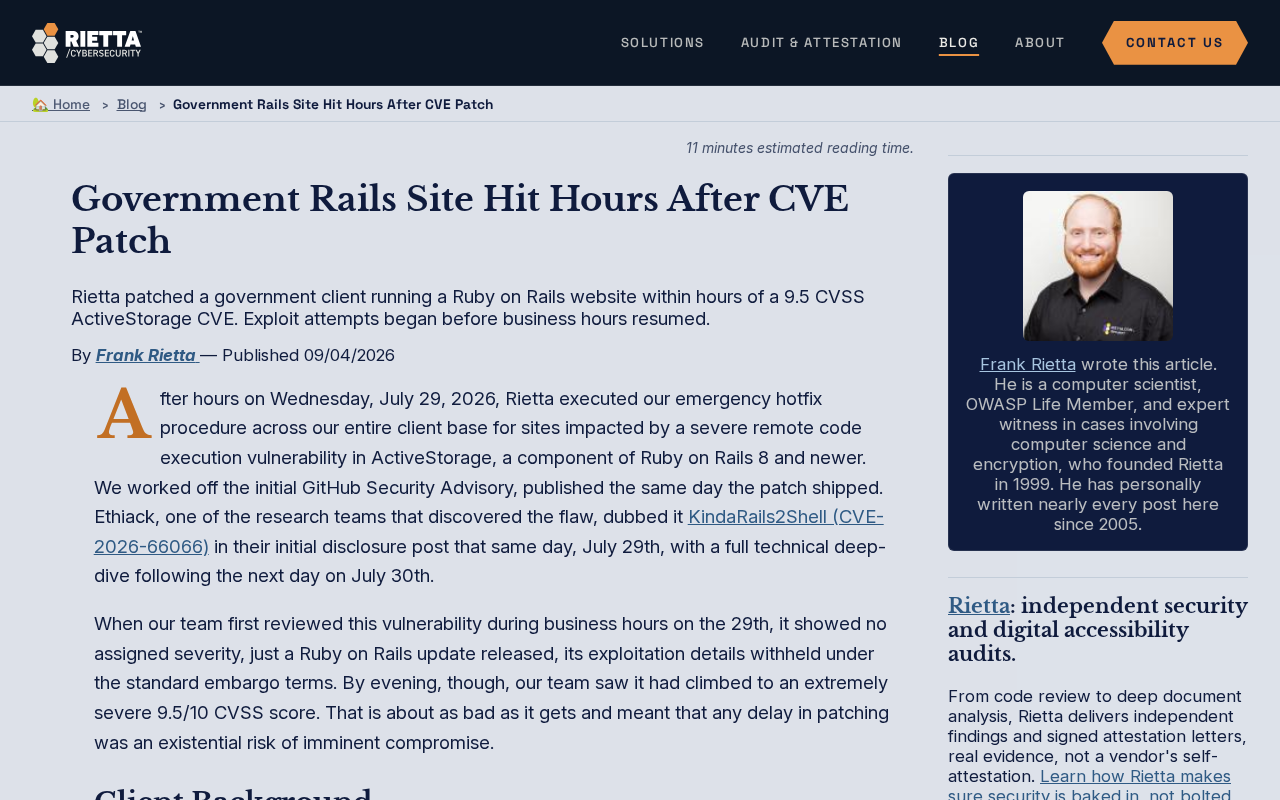
Government Rails Site Breached Hours After Patch Release: A Wake-Up Call on n-day Vulnerability Threats
A government Rails site was breached hours after a CVE patch release. Deep analysis of patch racing, n-day threats, and defense strategies for developers.