Casio CT-FS1 Keyboard: Play Along with Zero Wrong Notes, a New Option for Beginners
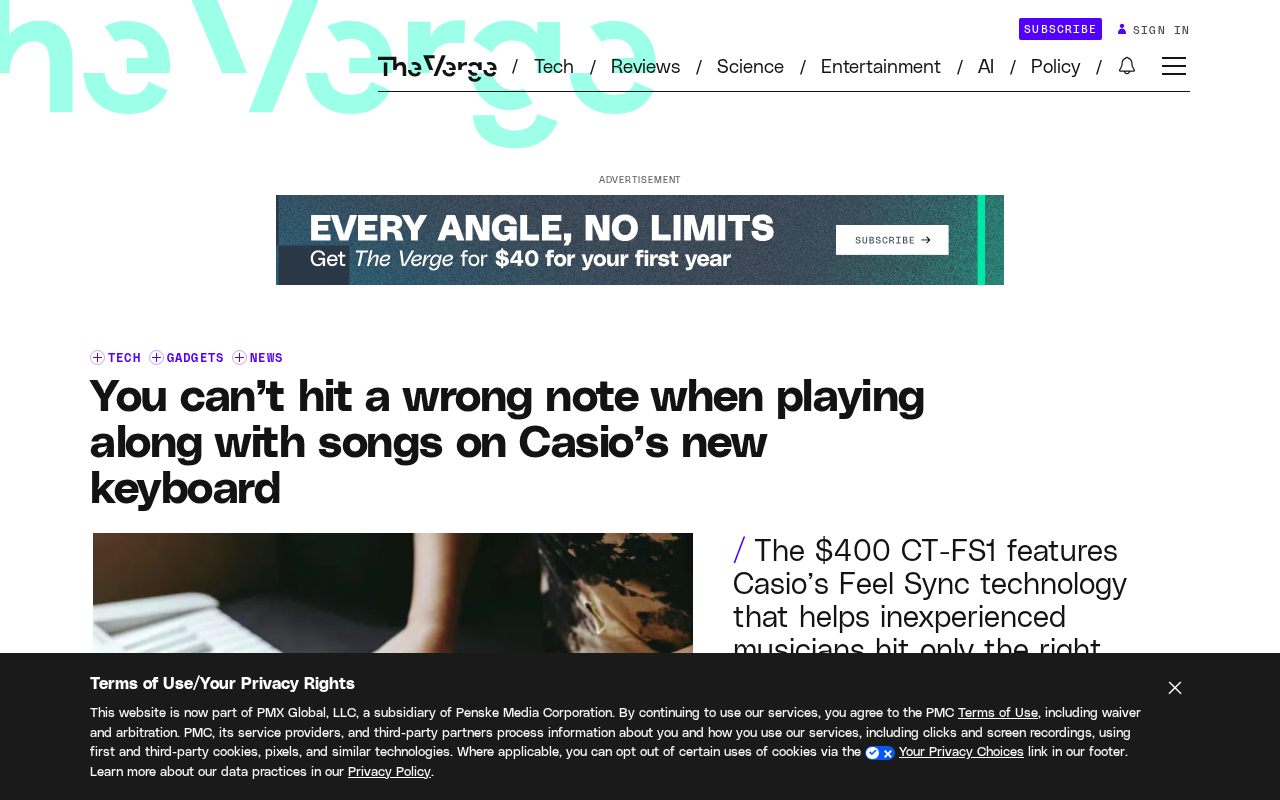
Casio CT-FS1 electronic keyboard features zero wrong-note performance to lower the entry barrier for beginners, priced at $399.99.
Casio has launched the CT-FS1, a new member of the Casiotone series, priced at $399.99 and available in black and white. Its core selling point is the zero wrong-note performance feature, designed to help beginners master rhythm and note duration and avoid discouragement from playing wrong notes. The feature uses some mechanism to ensure no wrong notes occur when playing along with songs, but the specific implementation has not been disclosed. The article's analysis suggests that this design can lower the initial psychological threshold and is suitable as a rhythm training tool, but cannot replace systematic learning of pitch accuracy, fingering, etc. The product has clear positioning and reflects electronic instrument manufacturers' attempts to lower the learning curve; actual effectiveness awaits hands-on verification.
Casio has recently launched the CT-FS1, a new member of its Casiotone series of portable electronic keyboards, featuring a function that is extremely friendly to beginners: when playing along with songs, you'll hardly produce a "wrong note." For many people who want to learn music but are put off by "playing wrong," this design approach is worth noting.
Zero Wrong-Note Performance: A Key Design to Lower the Entry Barrier
According to the original report, the core selling point of the CT-FS1 is helping aspiring music learners master skills such as rhythm and note duration while avoiding the frustration or discouragement caused by playing wrong notes. Simply put, the keyboard uses some mechanism to ensure that playing along with songs won't produce "wrong notes," making practice smoother.
The significance of this feature lies at the psychological level. In traditional keyboard learning, beginners often interrupt their practice rhythm by pressing the wrong key, and repeated failure easily wears down enthusiasm. The CT-FS1 removes this negative feedback of "wrong notes," allowing learners to focus more on grasping rhythm and note duration, first building a sense of fluency in performance before gradually going deeper.
However, the original material does not detail how this feature is implemented—whether it automatically corrects pitch, restricts notes to a specific scale, or uses some other mechanism. This point needs to be confirmed through official explanations or hands-on testing.
"Rhythm" and "note duration" are two fundamental concepts in music learning. Rhythm refers to the organization of notes in time, involving beats, time signatures, and tempo; note duration refers to the length of time a single note lasts, such as whole notes, half notes, quarter notes, etc. Beginners often have unstable rhythm due to inaccurate grasp of note duration. The CT-FS1's emphasis on helping master these two skills indicates that its design focus is on training the temporal dimension rather than pitch accuracy. If the zero wrong-note feature can ensure correct pitch, learners can concentrate on rhythm and note duration, contrasting with the cognitive load of simultaneously handling pitch and rhythm in traditional keyboard practice.
Automatically correcting pitch or restricting to a specific scale are two common approaches to "zero wrong notes." Automatic pitch correction typically detects the pitch being played and maps it to the nearest target note, similar to "pitch quantization" in electronic instruments; restricting to a specific scale maps the keyboard to the scale within the current song's key so that any key press produces a consonant note. Additionally, there is a "guided mode" approach that only allows sound to be produced when the correct key is pressed at the correct time. These mechanisms each have advantages and disadvantages: pitch quantization may affect expressiveness, scale restriction simplifies melody but may limit harmony, and guided mode is closer to a rhythm game. The specific implementation of the CT-FS1 awaits official disclosure.
Appearance and Pricing: Minimalist Black and White, $399.99
The CT-FS1 is now available, priced at $399.99, offered in solid black and solid white versions. From a product positioning perspective, it belongs to the Casiotone portable electronic keyboard line, continuing the series' approach aimed at entry-level and portable scenarios.
The monochrome design is more minimalist in appearance, which has some appeal for users seeking home decor coordination or stage visual consistency. The $399.99 price point places it in the mid-range of portable electronic keyboards, and combined with the zero wrong-note feature, Casio clearly hopes to win over beginners with limited budgets but serious intentions to try by "lowering the learning barrier."
What It Means for Beginners
From a learning path perspective, the CT-FS1's zero wrong-note feature is better suited for use as a "rhythm and note duration trainer." When playing doesn't go wrong, learners can focus on keeping time and feeling the song structure, which has practical help for building musicality.
But it should also be viewed rationally: not playing wrong notes doesn't mean you've learned to perform. Skills such as pitch accuracy, fingering, and dynamics control still require traditional practice. The CT-FS1 is more like a tool that reduces the resistance to getting started, not a replacement for systematic learning. For absolute beginners, it can help you cross the initial psychological threshold; for users with some foundation, its value may be limited.
Pitch accuracy, fingering, and dynamics control are the three core skills of keyboard performance. Pitch accuracy refers to pressing the correct keys to produce the correct pitch; fingering involves the use of fingers and the arrangement of finger order, affecting fluency and technical development; dynamics control produces dynamic contrast through variations in key-touch force and is key to musical expressiveness. The zero wrong-note feature mainly eliminates pitch errors, but fingering and dynamics control still require traditional practice. For beginners, long-term reliance on the zero wrong-note feature may delay the development of pitch hearing and finger positioning abilities. Therefore, it is recommended to use such features as auxiliary tools combined with traditional practice.
Product Positioning and Market Observations
Casio's Casiotone series has always targeted the portable and entry-level market, and the CT-FS1's addition of the zero wrong-note feature reflects electronic instrument manufacturers' ongoing attempts to "lower the learning curve." Whether such features can truly help users persist in learning depends on whether they work in conjunction with teaching content, song libraries, and practice modes.
Currently, the available information is limited: the official side has not yet disclosed details such as the size of the song library, connectivity, or teaching support. For users considering a purchase, it is advisable to watch for follow-up hands-on reviews, focusing on verifying the actual performance of the zero wrong-note feature across different songs and performance modes.
Overall, the CT-FS1 is a product with clear positioning—using technology to eliminate the frustration of the beginner stage. It may not suit everyone, but for those who "want to learn but are afraid of playing wrong," it offers a starting point worth trying.
One-line Summary
Casio's CT-FS1 electronic keyboard features zero wrong-note performance to lower the entry barrier for beginners, priced at $399.99.
Paragraph Summary
Casio has launched the CT-FS1, a new member of the Casiotone series, priced at $399.99 and available in black and white. Its core selling point is the zero wrong-note performance feature, designed to help beginners master rhythm and note duration and avoid discouragement from playing wrong notes. This feature uses some mechanism to ensure no wrong notes occur when playing along with songs, but the specific implementation has not been disclosed. The article's analysis suggests that this design can lower the initial psychological threshold and is suitable as a rhythm training tool, but cannot replace systematic learning of pitch accuracy, fingering, etc. The product has clear positioning and reflects electronic instrument manufacturers' attempts to lower the learning curve; actual effectiveness awaits hands-on verification.
Related articles
 Tech Frontiers
Stylome Bot Slammed as Useless Junk: Why Do AI Detection Tools Keep Failing?
Reddit users test the Stylome AI detection bot: Gemini-rewritten text judged human-written, consistently low confidence. An analysis of AI text detection's technical dilemmas, privacy concerns, and credibility crisis in community governance.
 Tech Frontiers
When AI Becomes a Productivity Divide: Clarity or "AI Psychosis"?
A civil engineer's deep use of agentic AI boosted efficiency but bred contempt for peers who refuse to learn. Is this clarity or AI psychosis? An analysis of the cognitive and psychological challenges behind the AI productivity divide.
 Tech Frontiers
Opus 5.5 Benchmark Scores Climb, Community Says Its "Weights Are Blessed"
Reddit community discusses Opus 5.5's rising scores on the Benchmaxxing Bench, with users describing its performance as "weights are blessed." This article interprets the community reaction and cautions against conflating benchmark scores with real capability.