Character.AI Bankruptcy: A Five-Year Rise and Fall, and Disney's Acquisition

Character.AI goes bankrupt five years after founding and sells part of its assets to Disney for $20 million, raising fresh doubts about the AI companion sector's business model.
AI chatbot platform Character.AI filed for bankruptcy five years after its founding and sold part of its assets to Disney for $20 million. Once seen as a benchmark for consumer generative AI, it struggled with high inference costs, limited paid conversion, and content moderation and copyright risks. Disney's low-priced, partial-asset deal suggests it wanted technology and talent rather than a full takeover. The case warns the AI companion sector that even large user bases cannot guarantee survival without a sustainable profit model.
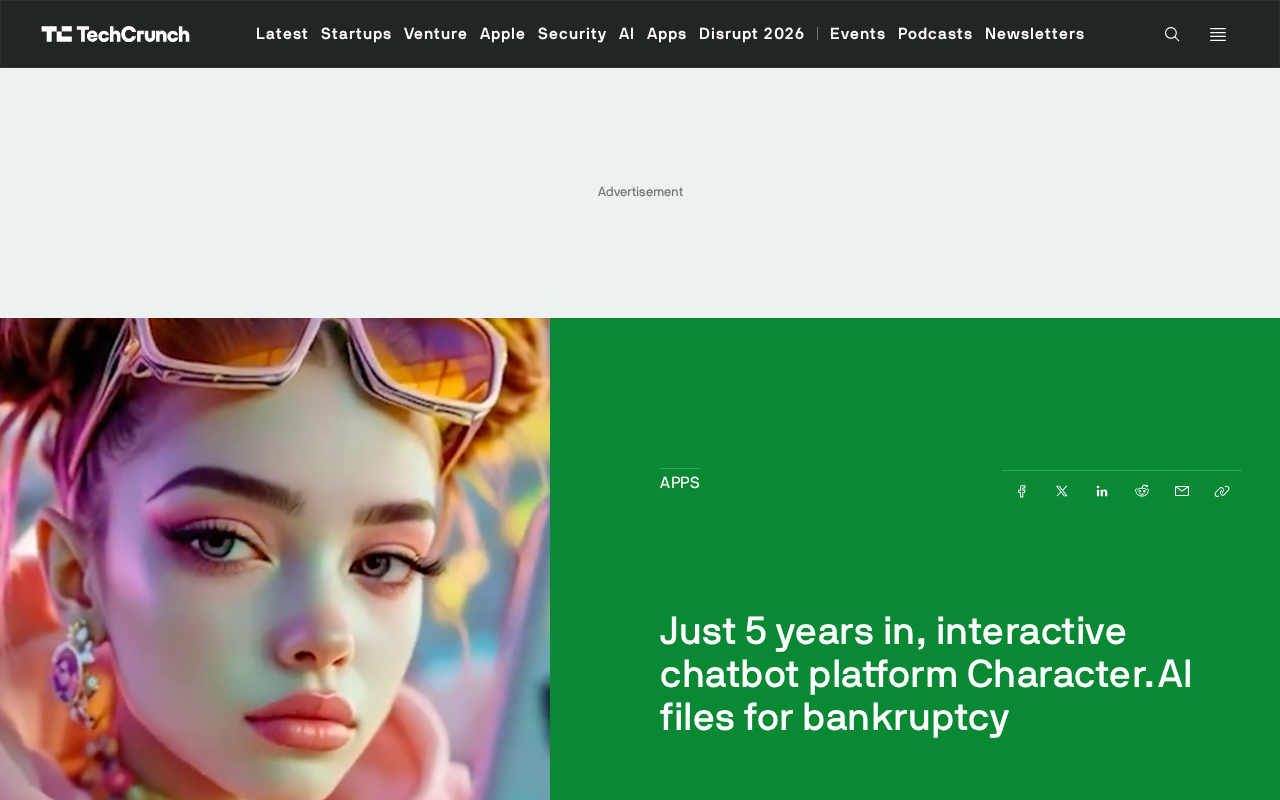
AI chatbot platform Character.AI has filed for bankruptcy five years after its founding and will sell part of its assets to Disney for $20 million. The news marks the end of a startup once hailed as a star of the AI companion sector.
From Star to Bankruptcy in Five Years
Character.AI was founded five years ago and quickly built up a user base through customizable, highly interactive AI character chats. Users could create virtual characters and converse with them, covering scenarios such as entertainment, companionship, and learning. The company was once regarded as a benchmark for consumer-grade generative AI applications. However, the bankruptcy filing shows that its business model could not sustain continued operations. According to RSS sources, Character.AI has initiated an asset sale process, with Disney taking over part of its assets for $20 million.
The business model dilemma of consumer-grade generative AI applications: The operating cost structure of platforms like Character.AI is fundamentally different from that of traditional internet products. Every conversation between a user and an AI character requires invoking a large language model for inference, generating continuous GPU compute costs, and this cost grows linearly with user activity and conversation duration. At the same time, there is a natural ceiling on users' willingness to pay for AI companion products—the psychological price users are willing to pay for "companionship" is far lower than what they would pay for enterprise-grade productivity tools. More critically, a large portion of Character.AI's core user base consists of teenagers with limited spending power, while the platform struggles to insert ads at scale without ruining the experience. This structural contradiction of "high cost, low conversion" is a common commercialization challenge for many consumer-grade generative AI applications.
Why Disney Stepped In
Disney's acquisition of part of the assets for $20 million is a relatively modest sum and may be intended to obtain the technical team, IP character interaction capabilities, or user data. Disney owns a massive library of classic characters, and combining them with Character.AI's interactive chat technology could enhance the immersive experience of its parks, streaming, and gaming businesses. But the deal involves only part of the assets, not a full acquisition, indicating that Disney remains cautious about taking over the whole company.
The difference between an asset purchase and a full acquisition: In bankruptcy proceedings, an "asset sale" and a "full acquisition" have important legal and commercial differences. An asset purchase allows the buyer to selectively acquire patents, technical teams, user data, or specific intellectual property while avoiding the original company's debts, litigation, and ongoing operational obligations. Disney's takeover of part of the assets for $20 million means it may want only Character.AI's technical capabilities or talent, without being willing to bear its server costs, content moderation responsibilities, or potential legal disputes. This kind of "cherry-picking" acquisition is becoming increasingly common in AI startup bankruptcy cases, reflecting big companies' cautious attitude toward the valuation bubble of AI startups.
Industry Warning
Character.AI's bankruptcy sounds an alarm for the AI companion sector. High inference costs, pressure from user growth and paid conversion, and content moderation and copyright risks are all difficult problems such platforms face. Even with a large number of users, if a sustainable profit model cannot be found, survival may still be difficult.
Content moderation and copyright risks in the AI companion sector: Character.AI allows users to create any character and converse with it, which creates a double legal risk. One is content moderation—AI characters may generate inappropriate content, especially when minors are involved, and the platform must bear regulatory responsibility, while large-scale real-time moderation requires additional manpower and AI costs. The other is copyright risk—users can create characters based on well-known IPs (such as anime or film and television figures), and if the platform has not obtained authorization, it may face infringement lawsuits from IP holders. These two risks amplify in tandem as user scale expands, becoming a "sword of Damocles" hanging over AI companion platforms.
Aftermath
The bankruptcy proceedings will determine the ownership of the remaining assets. For users, the service may be interrupted or migrated. For the industry, this case reminds entrepreneurs that AI applications need to find a balance between technical showmanship and commercial reality.
One-line Summary
Character.AI goes bankrupt five years after founding, selling part of its assets to Disney for $20 million, raising fresh doubts about the AI companion sector's business model.
Paragraph Summary
AI chatbot platform Character.AI filed for bankruptcy five years after its founding and sold part of its assets to Disney for $20 million. The company once quickly built a user base through customizable AI character chats and was seen as a benchmark for consumer-grade generative AI applications, but high inference costs, limited paid conversion, and content moderation and copyright risks made its business model unsustainable. Disney's acquisition amount is low and covers only part of the assets, possibly intended to obtain the technical team and IP interaction capabilities rather than take over the whole company. This case sounds an alarm for the AI companion sector: even with a large user base, without a sustainable profit model, it may still be heading toward the end.
Related articles

When Did Paid Childcare Become the Norm? Working Mothers and the Evolution of Childcare
When did paid childcare become the norm? This article traces the evolution from the rise of childcare centers in the 1970s–80s and the 1990s linking of federal subsidies to work requirements, to declining stigma and rising costs, and explores advocates' 25-year effort to catch up with other countries on childcare and paid parental leave.

Red Flags for Product-Market Fit: A Practical Guide from Top VCs and the Superhuman Founder
Investors from Iconiq and Sapphire Ventures and Superhuman founder Rahul Vohra share PMF red flags and practical methods, including the 40% disappointment rule, retention curves, and acquisition costs.

What Task Should AI Agents Take Over Most? Heated Reddit Discussion
Reddit discussion: Which task do you most want AI agents to take over completely? Cross-app data migration, CRM updates, and report generation top the list, but insufficient reliability and the trust gap are the biggest obstacles to automation adoption.