ChatGPT Free Trial Scam? Users Complain It Hasn't Been Honored for a Year

ChatGPT's free trial entry point has long existed but cannot be honored, leading users to question it as a fake promotion or dark pattern.
The article centers on a Reddit user's complaint about ChatGPT's "one month free trial" offer. The user tried multiple times over a year; after entering bank card and address information, the trial never activated, and only direct paid subscription worked. The article analyzes from three angles: technically, there may be a long-unfixed bug in payment gateway, address verification, and trial eligibility verification logic; commercially, it may be a dark pattern guiding payment to filter high-willingness users and reduce freebie risk. Industry comparison points out that transparent and clear trial rules are basic requirements, and a long-standing entry point inconsistent with promotion seriously damages trust. The article concludes with self-check advice for users and calls on the platform to either fix the flow or remove the misleading entry point.
Introduction: A "Free Trial" That Leaves Users Confused
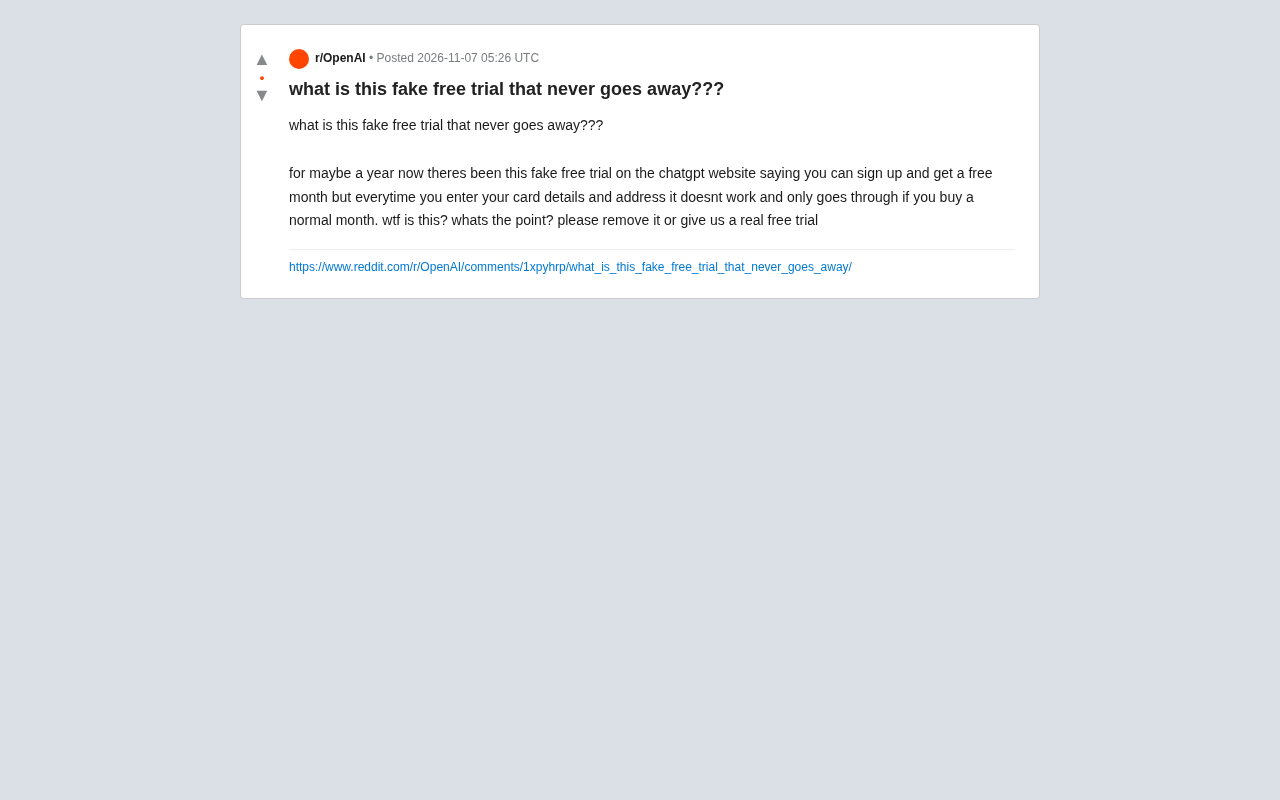
Recently, a Reddit user posted a complaint that the "one month free trial" offer on the ChatGPT website has been around for about a year, but every time they enter their bank card and address information, the trial fails to activate—only purchasing the regular monthly subscription goes through. The user questioned: "What is this? What's the point? Please remove it or give us a real free trial."
This is not an isolated case. Many users have reported similar experiences: the page clearly advertises a free trial, but the final flow leads to a paid subscription. Is this a technical glitch or a deliberately designed marketing tactic? This article analyzes it from three angles: user experience, industry norms, and business logic.
The User's Experience: Why Does the Free Trial "Never Expire"?
According to the original post, the user tried multiple times over the past year to sign up for ChatGPT's free trial. Each time, after filling in credit card and address information, the system did not provide the free month as expected but instead jumped directly to the paid subscription flow. Only after paying the full monthly fee would the service activate.
This experience made the user feel deceived. The post repeatedly emphasizes "fake free trial" and questions its purpose. From the user's perspective, a promotional offer that is displayed long-term but cannot be honored not only wastes time but also erodes trust in the platform.
Interestingly, the user did not mention a specific region or account type, so the problem may not be universal. But feedback spanning a year suggests that this is at least a systemic experience defect that has not been properly addressed.
Possible Causes: Technical Bug or Marketing Strategy?
Technical Possibilities
One explanation is that there is a bug in the payment gateway or trial eligibility verification logic. For example, the system may incorrectly flag certain users as "not eligible for the trial," while the front-end page still displays the trial entry point. Or data synchronization between the address verification service and the trial issuance system may fail, causing the flow to break down.
However, if it were only a technical issue, why hasn't it been fixed for a year? This leads to the second possibility.
Payment gateways and address verification are key technical components in online subscription flows. Payment gateways (such as Stripe, Adyen) handle credit card authorization, typically by initiating a small pre-authorization or zero-amount verification ($0 authorization) to confirm the card is valid; address verification systems (AVS, Address Verification System) compare the billing address entered by the user with the card issuer's records. When AVS matching fails, the card type is unsupported (such as some prepaid cards), or the risk control system determines the account is abnormal, the flow will be blocked or downgraded. If the front end still displays the trial entry point without synchronizing the back-end verification results, the phenomenon of "filling in information but being unable to enter the trial" occurs—this is one of the most likely technical causes of the problem described in the article.
Business Considerations
Free trials are a common customer acquisition tool in the SaaS industry, but a poorly designed trial flow can turn into a "dark pattern." For example, the page prominently displays "free trial," but actually requires users to pay the first month's fee in advance, or automatically charges after the trial period ends with a complicated cancellation process.
From a business logic perspective, this design can filter out users with stronger willingness to pay while reducing the risk of "freebie hunters." But the cost is damage to brand reputation, especially when users clearly feel misled. The question "whats the point?" in the original post is exactly the expression of this negative sentiment.
Dark patterns is a term in the field of user experience design, coined by Harry Brignull in 2010, referring to interface designs that intentionally mislead, induce, or force users to make choices they did not intend, usually serving corporate interests rather than user interests. Common forms include: pre-checked add-on services, ads disguised as close buttons, hidden cancellation entry points, and "free trials" that are actually mandatory paid subscriptions. At the regulatory level, the U.S. FTC and the EU's Digital Services Act have both classified certain dark patterns as illegal. In SaaS subscription scenarios, dark patterns often appear at the trial conversion stage—the page emphasizes "free," but the actual flow requires binding a payment method and defaults to automatic renewal, so users are charged if they are not careful.
SaaS (Software as a Service) refers to a model of delivering software over the Internet on a subscription basis, where users do not need local deployment and pay periodically for use. Free trials are the most typical customer acquisition funnel entry point in the SaaS industry: first let users experience core functions at zero cost, then convert them into paying users through trial expiration reminders. Industry-standard health metrics include the "trial-to-paid conversion rate," typically between 10% and 25%. Because trials are directly tied to conversion rates, some vendors manipulate the flow design—for example, requiring credit card binding in advance, shortening the trial period, or creating technical barriers that make the "trial unavailable" in order to filter out users with low willingness to pay.
Industry Comparison: Common Practices and Boundaries of Free Trials
In the AI product space, free trials usually take two forms: time-limited free (such as 7 or 30 days) and usage-limited free (such as a certain token quota). In either case, clear rules and a smooth flow are basic requirements.
By contrast, the controversy with ChatGPT this time is that the trial entry point has existed for a long time, but the actual conversion path does not match the promotion. This is fundamentally different from other products' practice of "reminding users to pay after the trial period ends"—the latter at least lets users experience the service first.
Some analysts believe that OpenAI may be guiding users to subscribe directly in this way, but designs lacking transparency are prone to backlash. The original poster explicitly requested "remove it or provide a real trial," indicating that users are not opposed to paying but opposed to being misled.
User Advice and Future Outlook
For users who encounter similar situations, you can try the following methods:
- Check whether the account has already used the trial eligibility (some platforms limit it to once per account)
- Try changing browsers or clearing cache to rule out front-end display errors
- Contact customer service to confirm whether the trial offer is still active
From the platform's perspective, fixing this experience defect is not complicated: either ensure the trial flow actually works or remove the misleading entry point. In the long run, a transparent promotional strategy is more important than short-term conversion, especially in the increasingly competitive AI assistant market.
Conclusion
The "fake free trial" controversy surrounding ChatGPT reflects the balancing challenge AI products face between growth pressure and user experience. An obvious problem that has existed for a year without being resolved is worth the platform's reflection. For users, before clicking "free trial," carefully reading the terms and confirming the billing rules remains necessary self-protection.
(This article is based on Reddit user feedback and public industry observations and does not constitute any purchasing advice.)
Related articles
 Tech Frontiers
Google Omni 1.2 Flash: 15-Second AI Video at Just $0.07 per Second
Google DeepMind releases Gemini Omni 1.2 Flash: 15-second video, 720p at $0.07/sec (30% cheaper), multi-turn editing without regeneration, draft upscaling to 4K.
 Tech Frontiers
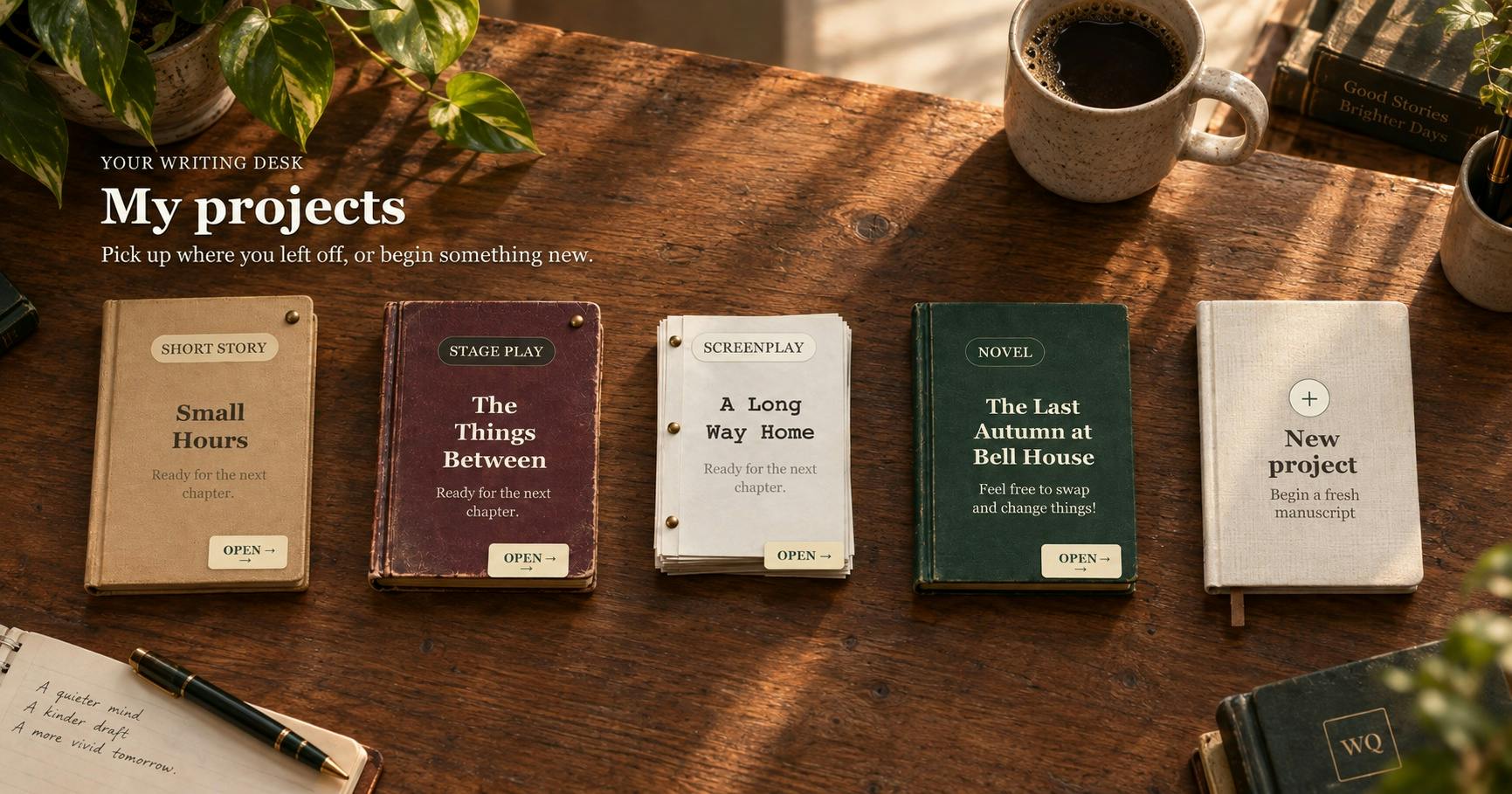
No AI Ghostwriting: Writer's Quarter Reinvents Novel Writing with a Visual Workbench
The Writer's Quarter is an AI-free novel writing and planning tool that unifies character building, story planning, and manuscript writing in one visual workbench. This article analyzes its positioning, target users, and differentiated value amid the rise of AI writing tools.
 Tech Frontiers
Fleeep: A Unified Inspiration Collection Notes App for Creatives
Fleeep is a notes app for creatives that unifies screenshots, bookmarks, saved posts, and inspiration into one calm, cross-device, offline-capable space. This article analyzes its positioning, differentiation, and target users.