ChatGPT Isn't an Agent? A Clear Explanation of What AI Agents Really Are
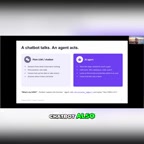
Chat products like ChatGPT are only Agentic AI; a true Agent is a program built for a specific task that can autonomously call tools.
The article clarifies the essential difference between AI Agents and chat products like ChatGPT, Gemini, and Claude. An Agent is a program entity built around a specific task, with an LLM as its brain, that proactively calls external tools; chat products provide an Agentic AI experience, possessing a degree of autonomy but lacking task orchestration and autonomous tool calling. The article reviews the evolution from rule-based chatbots relying on NLP and preset flows to modern Agents, noting that the latter can make autonomous decisions in an open task space. To judge whether a system is an Agent, look at three things: a clear goal, autonomous tool calling, and adjusting actions based on feedback. Distinguishing these concepts helps avoid confusion at different levels during technology selection and architecture.
Many people, upon first encountering Gemini, ChatGPT, or Claude, instinctively treat them as "AI Agents." After all, they can hold conversations, answer follow-up questions, and handle complex tasks—they already seem quite "intelligent." But if you really break down the definition of an Agent, you'll find that these chat tools are still some distance away from being true Agents.
What Exactly Is an Agent?
Let's first clarify a concept that's easy to confuse: an Agent is a piece of code specifically designed to call a large language model (LLM) to accomplish a specific task, using various tools during execution. In other words, the LLM is the Agent's "brain," but the Agent itself is a program entity with a clear goal that can invoke external capabilities.
This is fundamentally different from the experience of opening ChatGPT in your browser, typing a question, getting an answer, and asking a follow-up. The latter is a general-purpose conversational interface—it responds to whatever you give it; the former is an automated system built around a specific task.
According to analyses from multiple tech creators on YouTube, this distinction matters because it determines how you design systems, how you evaluate results, and whether you actually need to introduce the "Agent" layer of abstraction at all.
LLM (Large Language Model) refers to a neural network model trained on massive text data with natural language understanding and generation capabilities, such as GPT-4, Claude, Gemini, etc. It is itself a passive function: input a prompt, output text or structured content—it has no memory, goals, or ability to act proactively. In an Agent architecture, the LLM typically plays the role of a "reasoning engine" or "decision core"—the Agent packages the task context, list of available tools, and constraints into a prompt and hands it to the LLM; the LLM returns which tool to call next and what parameters to pass, and the Agent's code then executes accordingly and loops forward. Therefore, the LLM's capability boundaries (context length, reasoning accuracy, tool-calling format adherence) directly determine the Agent's ceiling, but the LLM itself is not equal to an Agent.
Why ChatGPT Only Qualifies as "Agentic AI"
A more accurate way to put it: products like ChatGPT, Gemini, and Claude provide an "Agentic AI" experience, not an Agent itself. They possess a degree of autonomy—they can understand intent, maintain multi-turn context, and give coherent answers—but they lack the core characteristics of an Agent: being built for a specific task, proactively calling tools, and autonomously driving a process forward.
Here's a loose but intuitive analogy: ChatGPT is like a learned consultant—it answers whatever you ask; an Agent is more like an assistant dispatched to get things done—it has a clear task list, goes off to find information, call APIs, and run processes on its own, and finally delivers the results to you.
This distinction is crucial in practical applications. If you just need an assistant that can answer questions, a chat product is already sufficient; if you want AI to automatically complete a chain like "query data → analyze → generate report → send email," that's when you need a true Agent.
Agentic AI is a descriptive term commonly used in the industry over the past two years, referring to AI systems with certain autonomous behavioral characteristics—able to understand vague intent, plan multi-step responses, maintain goal consistency across a conversation, and even trigger web search or code execution as needed. The key difference from an "Agent" lies in the source and scope of autonomy: Agentic AI's autonomy is mainly manifested at the interaction level, driven by the platform's preset capability switches and the user's explicit instructions; whereas an Agent's autonomy is manifested at the task orchestration level, where the system decides on its own—around a goal—which tools to call, in what order to execute, and when to terminate. In other words, Agentic AI describes the experience of "acting like an Agent," while Agent describes the architecture of "being built as an Agent." The two are not mutually exclusive: an Agent can externally present as an Agentic AI experience, but the reverse does not hold.
The Evolution from Rule-Based Chatbots to AI Agents
To understand Agents, it helps to look back at their "predecessors." Before large AI models became widespread, enterprises and bank websites deployed a large number of rule-based chatbots. You open a bank's official website, and the bot first asks for your phone number, then prompts "Press 1 to book a flight, press 2 to book a hotel, press 3 for inquiries"—this flow relies on NLP technology, rule engines, and traditional machine learning, not large models.
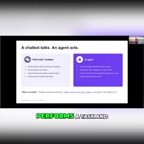
The limitations of such systems are obvious: they can only handle questions within preset paths, and once users go off-script, they're powerless. Modern Agents, leveraging the LLM's understanding capabilities, can make decisions in a more open task space and dynamically choose which tools to call. This is also why the term "Agent" has been repeatedly mentioned over the past two years—it represents a paradigm shift from "fixed processes" to "autonomous decision-making."
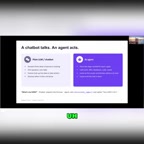
Rule-based chatbots typically consist of three parts: a natural language understanding (NLU) module responsible for intent recognition and slot filling, a dialogue management module that decides the next step based on a preset state machine or decision tree, and a response generation module that selects answers from a template library. The behavior of such systems is entirely determined by manually written rules and flowcharts, with no generalization ability—once a user says something outside the flow, the system can only reply "Sorry, I don't understand." Although modern Agents may also include rules as a fallback, their core decision-making is driven by the LLM: at runtime, the LLM dynamically generates an action plan based on the task description and tool list, without needing preset branches for every situation. This shift from "static flowcharts" to "dynamic reasoning" is precisely the fundamental reason Agents can handle open-ended tasks, and it also explains why traditional chatbots are difficult to evolve directly into Agents.
How to Tell Whether a System Is an Agent
You can ask yourself three questions: Does it have a clear task goal? Can it autonomously call external tools or APIs? Can it adjust its next action based on feedback during execution? Only when all three answers are yes is it closer to a true Agent.
By contrast, when you look at the ChatGPT conversations you use every day, you'll find that it's more passive-responsive: tool calls (such as web browsing or code execution) are triggered by the user or preset by the platform, rather than orchestrated autonomously by the system around a goal. This is why the tech community repeatedly emphasizes that "ChatGPT is not an Agent"—not to belittle it, but to remind developers not to conflate two concepts at different levels.
Final Thoughts
An AI Agent is not an upgraded label for a chatbot, but a system paradigm built around task goals, tool calling, and autonomous execution. Understanding this can help you avoid detours in technology selection and architecture: if you need conversation, use a chat product; if you need an automated closed loop, design an Agent workflow properly. Conceptual clarity is often more valuable than stacking up tools.
One-line Summary
Chat products like ChatGPT are just Agentic AI; a true Agent is a program built for a specific task that can autonomously call tools.
Paragraph Summary
The article clarifies the essential difference between AI Agents and chat products like ChatGPT, Gemini, and Claude. An Agent is a program entity built around a specific task, with an LLM as its brain, that proactively calls external tools; while chat products provide an Agentic AI experience—possessing a degree of autonomy but lacking task orchestration and autonomous tool-calling capabilities. The article reviews the evolution from rule-based chatbots relying on NLP and preset flows to modern Agents, noting that the latter can make autonomous decisions in an open task space. To judge whether a system is an Agent, look at three things: a clear goal, autonomous tool calling, and adjusting actions based on feedback. Distinguishing these concepts helps avoid confusion at different levels during technology selection and architecture.
Related articles

Vibe Coding Full-Stack in Practice: AI Programming from Beginner to Enterprise Deployment
From Cursor to Claude Code, this Bilibili AI programming course uses four progressive projects to cover full-stack development, open-source secondary development, and team collaboration. The article analyzes the shock to frontend roles, the efficiency shift from 50 people to 5, and the methodology required for enterprise-grade projects.

David Blaine's Global Quest for Real Magic: From South Africa to Japan and India
David Blaine travels to South Africa, Japan, and India in his Do Not Attempt special, documenting Spinning drivers, black mamba rescuers, iaijutsu masters, and ascetics—exploring the boundary between magic and real human极限 challenges.

Is a Touchscreen MacBook Coming? Vergecast Reveals Apple Executive's Response
Vergecast podcast reveals a conversation between a reporter and Apple executive John Ternus about a touchscreen MacBook and Apple Pencil support. Ternus says iPad is the best device for a stylus, while the reporter bets MacBook will eventually support Apple Pencil.