ChatGPT Plus Subscription Guide: Four Payment Methods Compared with Risk Warnings

Four ChatGPT Plus payment workarounds for China users, with a focus on third-party top-up risks.
This article addresses the challenge of subscribing to ChatGPT Plus/Pro without an overseas bank card, covering four common workarounds: virtual credit cards, US Apple ID in-app purchases, gift card top-ups, and Google Play. It closely examines third-party Alipay-based top-up platforms, explaining how they exploit iOS in-app purchases to bypass OpenAI's regional restrictions—and why submitting session credentials (cookies/tokens) gives these platforms effective control over your account, even without your password. Additional risks include unregulated platforms and potential account bans for ToS violations.
ChatGPT Plus Subscription Guide: Four Payment Methods Compared with Risk Warnings
For users in mainland China, the biggest hurdle to subscribing to ChatGPT Plus or Pro isn't the price — it's the payment step. OpenAI only accepts overseas credit cards, leaving users without a foreign bank card stuck at the very last stage. This pain point has spawned a variety of workarounds. This article breaks down four common payment routes, analyzing how each works and the risks involved, so you can decide which approach best fits your situation.
Overview of Four Common Payment Methods
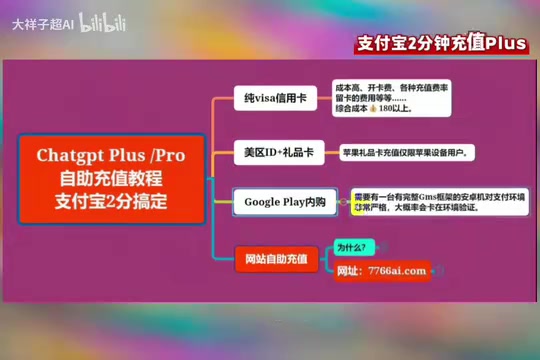
Users looking to bypass the overseas bank card requirement typically have four options:
- Direct payment via overseas credit card: Link a virtual credit card (e.g., Depay, WildCard) to your OpenAI account for direct billing;
- US Apple ID in-app purchase: Register a US Apple ID and subscribe through the iOS app;
- Gift card top-up: Purchase US App Store gift cards, top up your account balance, then subscribe;
- Google Play in-app purchase: Complete the subscription via Google Play on Android.
Each method comes with its own friction. The virtual credit card route requires applying for a card and completing the top-up and binding process — a fairly involved workflow. Setting up a US Apple ID involves registration, region-switching, and card binding, which can easily trigger fraud detection. Google Play purchases face their own payment hiccups under China's network conditions.
How Third-Party Subscription Services Work
Beyond these official-channel workarounds, a notable alternative is third-party top-up platforms. These services claim to support Alipay payments with no overseas bank card required. Their key selling point: users don't need to hand over their ChatGPT account password to the vendor, and there's no need to deal with virtual cards or region-switching.
The typical process goes something like this: visit the platform, select the plan you want (Plus or Pro), enter any email address as an order reference, then log into your ChatGPT account in your browser. Following the platform's instructions, you copy certain account-related information, paste it into the submission form, confirm the order, and pay via Alipay.
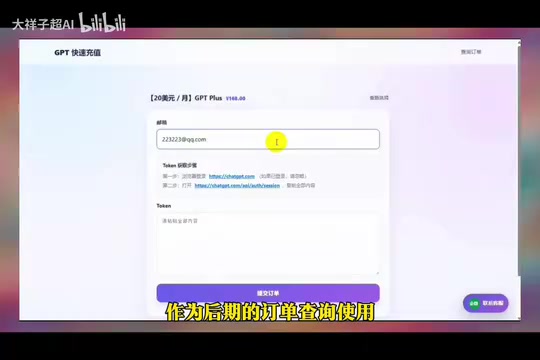
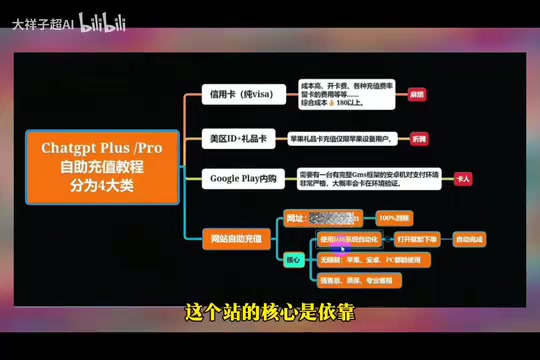
Once payment is confirmed and the success page appears, the subscription is considered active. Return to ChatGPT, refresh the page, and your membership status should be updated. These platforms typically describe their underlying mechanism as an "iOS fully automated top-up system," claiming the entire process runs on autopilot after you place the order, and that it supports Apple, Android, and web across the board.

The so-called "iOS fully automated top-up system" generally works like this: the platform pre-registers or acquires a large pool of US Apple IDs in bulk and stockpiles App Store credit. When a user places an order, the system automatically uses one of these accounts to complete an in-app purchase of the ChatGPT subscription on iOS on behalf of the target account. This circumvents OpenAI's regional credit card checks because the payment entity for Apple in-app purchases is Apple — not OpenAI directly. However, bulk-registering Apple IDs and stockpiling gift cards carries the risk of violating Apple's developer agreements. If Apple detects unusual transaction patterns and bans the associated Apple IDs, subscriptions already purchased may be terminated mid-cycle, leaving the platform's "guarantee" as the only recourse — a promise that is essentially unenforceable from a legal standpoint.
Security Risks Behind the Convenience
Third-party top-up services do lower the barrier to entry, but convenience is not the same as safety. Here are the key risks you need to be aware of:
Account credential exposure. The process described above requires users to "copy all the code from start to finish and paste it for submission." This information very likely includes your account session credentials (cookies/tokens). Once handed to a third party, they technically have the ability to operate your account. "Not sharing your password" does not mean your account is fully secure.
Platform disappearance and unreliable after-sales support. These platforms operate without formal regulatory oversight. Promises of "24/7 support" and "full refunds if anything goes wrong" carry no legal weight. If your account is banned or the subscription never activates after payment, you'll have almost no recourse.
Violation of OpenAI's Terms of Service. Using unofficial payment channels, cross-region purchases, and similar workarounds may violate OpenAI's usage policies, putting your account at risk of suspension. Funds paid through such channels are typically non-refundable after a ban.
A technical note on session credentials (Cookie/Token)
Cookies and Tokens are the core credentials websites use to identify logged-in users — think of them as a temporary digital access badge. When you log into ChatGPT, your browser stores an encrypted string locally (a Session Cookie or Access Token). Every subsequent request you make carries this string, and the server uses it to recognize you as an authorized user without requiring you to enter your password again. When a third-party platform asks you to "copy all the code and paste it for submission," what it's after is exactly these credentials. Whoever holds them can fully simulate your logged-in session until the token expires — reading your conversation history, changing account settings, or even binding a new payment method. Unlike passwords, token leaks are difficult for users to detect. Even if you change your password afterward, an already-leaked token can still be exploited until it naturally expires. This is why "not needing to enter your password" does not equal "your account is safe."
Practical Recommendations
When choosing a payment method, weigh the tradeoff between convenience and risk:
- If security is your priority: Go with a reputable virtual credit card provider. The initial setup takes some effort, but your account stays fully under your own control and follows the official payment flow;
- If simplicity matters most: If you choose a third-party top-up service, pick one with a reasonably established reputation, avoid using your primary account, and keep your order receipts;
- Handle sensitive data carefully: Regardless of which method you use, it's not advisable to store private conversations or work-sensitive content in any account involved in these workarounds.
To be clear: this article is an objective overview of methods currently circulating online, and does not constitute a recommendation or endorsement of any specific third-party platform. These top-up services operate in a legal gray area, and users must assess and accept the associated risks themselves. Ultimately, the payment accessibility problem for ChatGPT can only be truly resolved when OpenAI officially opens up payment support to more regions.
Related articles

Random Pruning of the DPO Computation Graph: 1.4x Training Speedup and Lower Peak Memory
DPO training too slow and memory-hungry? This paper proposes a random pruning framework for the DPO computation graph, sampling independently across position, sequence, and branch dimensions; branch pruning achieves a 1.426x step-time speedup and cuts training time by about 30%, with in-depth attribution of memory and time gains.

Why Does JEPA Underperform MLM in Longitudinal EHR Representation Learning?
New study compares JEPA and MLM for longitudinal EHR representation learning on MIMIC-IV: three JEPA variants train stably without collapse but underperform MLM; target size, not heterogeneity, drives prediction error.

Transfer Learning + Visible Light Communication: A New Approach to Energy-Efficient Indoor Positioning
A study proposes a transfer learning-based visible light communication indoor positioning method, achieving 47% accuracy improvement on the BOSCH factory dataset, 67.5% model efficiency under high noise, and introducing the ME composite metric for energy-efficient positioning in energy-constrained industrial IoT scenarios.